
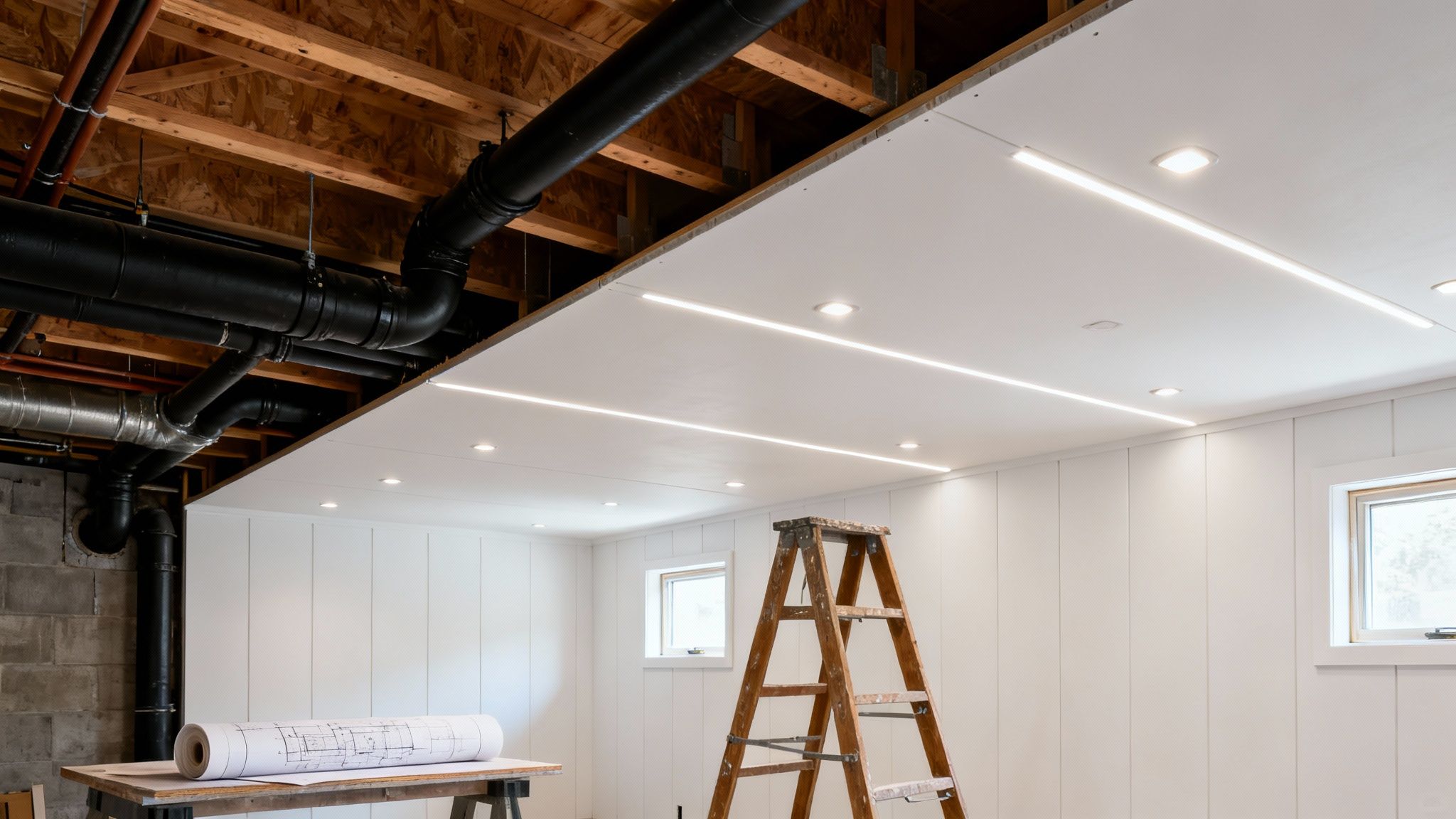
Your Guide to Basement Ceiling Finishing Ideas and Costs
Finishing a basement ceiling is all about covering up the exposed bones of your house—the joists, pipes, and ductwork—to create a polished, livable space. A great ceiling doesn't just look good; it can dramatically improve lighting and make the basement feel like a true extension of your home, adding some serious value along the way.
The Overlooked Key to a Great Basement Finish
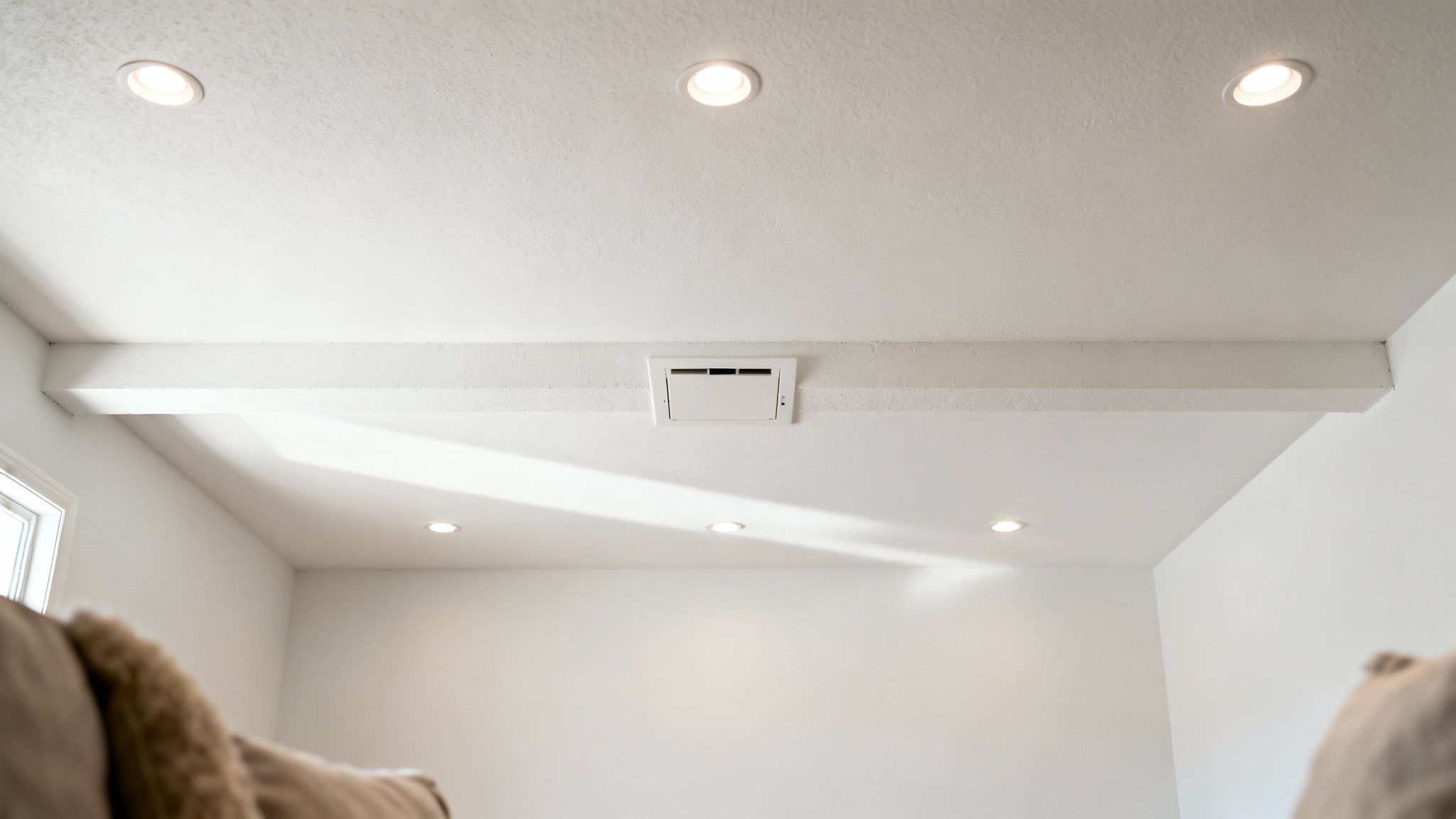
When people think about finishing a basement, their minds usually go straight to flooring and walls. But let's start by looking up. The ceiling is often the last thing homeowners consider, yet it's the one feature that can single-handedly transform a lower level from a storage area into a comfortable, welcoming part of your home.
Thinking about your basement ceiling isn't just about hiding the messy stuff. It's the key to unlocking the full potential of your new living area. Consider it the 'fifth wall' that ties the entire room together. The right choice sets the tone, plays with the perception of height, and directly impacts how comfortable the space feels.
Why Your Ceiling Choice Matters
Just like you'd approach planning your home renovation with a clear strategy, your basement ceiling deserves the same thoughtful consideration. A well-executed ceiling delivers core benefits that go way beyond just looking nice.
- It Defines the Atmosphere: An industrial-style exposed ceiling can give you a modern, spacious loft vibe. On the other hand, a smooth drywall finish offers that traditional, seamless look that makes the basement feel just like the upstairs.
- It Enhances Lighting: Your ceiling is the canvas for your lighting plan. Whether you want sleek recessed lights, versatile track lighting, or statement fixtures, the ceiling structure you choose is what makes it all possible.
- It Controls Sound: Nobody wants to hear every footstep from the floor above. A properly finished and insulated ceiling can drastically cut down on noise traveling between the basement and the main floor—a must-have for a home theater, office, or kid's playroom.
- It Provides Practical Access: Some options, like a drop ceiling, are incredibly practical. They allow for easy access to plumbing, wiring, and HVAC systems, which can be a lifesaver for future repairs or upgrades.
Your basement ceiling isn't just a cover-up; it's a foundational design element. Getting it right ensures the finished space is not only beautiful but also highly functional, comfortable, and a valuable asset to your property for years to come.
Ultimately, the decisions you make overhead will influence nearly every other aspect of your project, from where you put the walls to what flooring you choose. By giving the ceiling the attention it deserves right from the start, you set the stage for a successful renovation that truly adds to your home.
Comparing Your Basement Ceiling Finishing Options
Choosing the right finish for your basement ceiling is a big deal. This isn't just about looks; it's about balancing the style you want with the practical needs of your home and, of course, your budget. This decision sets the tone for the entire space, so let's walk through the three most common routes homeowners in the Orem and Provo area take: drywall, drop ceilings, and exposed ceilings.
Each one has a totally different feel. Drywall creates that seamless, "finished" look, making your basement feel like a true extension of your upstairs. Drop ceilings are all about function, giving you easy access to all the important stuff hidden overhead. And an exposed ceiling? That's for embracing a modern, industrial vibe and squeezing out every last inch of headroom.
The Classic Choice: Drywall Ceilings
If you want your basement to feel less like a basement and more like another level of your home, drywall is the way to go. We hang sheets of drywall directly onto the ceiling joists, then meticulously tape, mud, and sand the seams until we have a perfectly smooth, continuous surface.
The end result is a polished, permanent look that's the perfect backdrop for a cozy family room, a high-end home theater, or welcoming guest bedrooms. It gives you a clean canvas for any paint color and is ideal for modern lighting, like recessed "can" lights that sit flush with the ceiling for a clean, uncluttered look.
But that flawless finish has a catch. Once that drywall is up, getting to the plumbing, wiring, or HVAC ducts hidden above is no small task. If a pipe springs a leak, you’re cutting a hole in your beautiful ceiling, which means a repair job involving patching, sanding, and repainting.
The Functional Solution: Drop Ceilings
A drop ceiling—often called a suspended ceiling—is the undisputed champion of practicality. It's a simple system: a lightweight metal grid hangs a few inches below the ceiling joists, and we place acoustic tiles right into the grid.
The biggest win here is accessibility. Need to get to a leaky pipe, run a new ethernet cable, or check a junction box? You just pop a tile out. It makes any future maintenance or upgrades incredibly easy and mess-free, which is a massive relief for any homeowner.
A drop ceiling is really an investment in future convenience. It might look different than drywall, but the ability to get instant, no-mess access to your home's vital systems can save you a ton of time, money, and headaches down the road.
And forget the drab office look of the past. Today's drop ceiling tiles come in a huge variety of stylish textures, patterns, and designer looks that can elevate any decor. They’re also fantastic for sound dampening, which makes them a smart pick for a kids' playroom or a home gym. The only real downside is that you will lose a few inches of headroom to the grid system.
The Modern Approach: Exposed Industrial Ceilings
Want to maximize height and lean into a cool, urban loft vibe? Leaving the ceiling exposed is a fantastic option. This approach is all about cleaning up the joists, ductwork, pipes, and wiring you already have and then spraying everything with a single, uniform color—usually a matte black, crisp white, or a deep gray.
The number one benefit is height. By not adding anything below the joists, you gain several crucial inches of vertical space. This can make a basement with a lower ceiling feel dramatically more open and airy. It’s also the most budget-friendly option since the main material cost is just paint and primer.
This raw, industrial aesthetic isn't for everyone and fits best with modern or eclectic styles. It also demands careful prep work to make sure every exposed element is clean and properly painted for that cohesive, intentional look. One thing to keep in mind is that this method offers the least amount of soundproofing between floors, since there's no dense material like drywall or acoustic tiles to muffle noise.
When budgeting, the ceiling choice is a major factor. A drop ceiling might cost more upfront but saves on future repairs, while an exposed ceiling saves on materials for that industrial feel. On average, a new basement ceiling can run anywhere from $1,600 to $3,600, which is a significant part of a total basement finishing project that averages around $32,000 nationally. For a deeper dive into the numbers, it's helpful to learn more about basement remodeling costs and see how different choices add up.
Comparing Basement Ceiling Finishing Materials
To make the choice a little clearer, here’s a quick side-by-side look at how these three options stack up against each other based on what matters most to homeowners.
| Drywall | Creating a seamless, finished look that matches the rest of the house. | - Polished, high-end appearance- Can be painted any color- Ideal for recessed lighting | - Difficult and messy to access pipes/wires- Vulnerable to water damage- Can show imperfections if not finished well |
| Drop Ceiling | Prioritizing easy access to plumbing, wiring, and ductwork. | - Unbeatable access for repairs- Excellent sound absorption- Wide variety of modern tile styles | - Reduces ceiling height by a few inches- Can sometimes look less "finished" than drywall |
| Exposed / Painted | Maximizing ceiling height and achieving a modern, industrial aesthetic. | - Gains several inches of headroom- Most budget-friendly option- Unique, contemporary style | - Offers minimal soundproofing- Requires meticulous prep work- Not suitable for all home styles |
Ultimately, the best ceiling is the one that fits your family's needs, your personal style, and your home's unique layout. Each path offers a great result, just with different strengths along the way.
How to Budget for Your Basement Ceiling
Alright, let's talk about the money side of things. Nailing down a realistic budget is the single most important first step you can take for a smooth, surprise-free basement renovation. The final number on your invoice won't be a single line item; it's a mix of materials, the cost of labor, and just how complex the job really is.
Think of it like buying a car. An exposed ceiling, painted and clean, is your reliable, budget-friendly sedan—it gets the job done without any fuss. On the other hand, a high-end drywall ceiling with custom soffits and a dozen recessed lights is more like a luxury SUV. It’s loaded with features that elevate the whole experience, but that definitely shows up on the price tag.
Finishing a basement is still one of the most cost-effective ways to add a huge amount of living space to your home. Nationally, the average cost for a 1,000-square-foot basement falls somewhere between $7,000 and $23,000, which works out to about $7 to $23 per square foot. Keep in mind that labor often makes up around 40% of that total, which really shows how much value a professional crew brings to the table.
Breaking Down the Core Costs
When you start building your budget, you’re really looking at two main pillars: materials and labor. Material costs are pretty straightforward and hinge entirely on the ceiling type you land on. Labor, however, is the wild card; it can vary quite a bit depending on the skill and time required for the installation.
- Materials: This bucket includes everything from the big stuff like drywall sheets and acoustic tiles down to the small essentials like paint, primer, screws, and the lumber for framing out soffits.
- Labor: This is what you pay for professional installation. A simple exposed ceiling is a much lighter lift for a crew than a complex drywall job, which demands hours of hanging, taping, mudding, and sanding to get that flawless finish.
This chart gives you a quick visual on how the three main ceiling types generally stack up against each other when it comes to the total cost.

As you can see, exposed ceilings are usually the most budget-friendly option. Drop ceilings, because of the grid system and individual tiles, often come with the highest upfront investment.
What Factors Influence the Final Price?
Beyond just picking your ceiling type, a few other factors can really move the needle on your final bill. It's smart to account for these "hidden" costs during your planning phase to make sure you don't go over budget later.
- Size and Layout: A huge, wide-open basement will cost out differently than a smaller space that’s been carved into multiple rooms, which requires a lot more cutting and detail work.
- Obstructions: This is a big one. Having to work around a lot of ductwork, plumbing runs, or support columns adds a ton of complexity and labor time. This is where you get into building soffits or bulkheads, which bumps up both material and labor costs.
- Lighting and Electrical: How many recessed lights do you want? Ceiling fans? Every single fixture needs wiring, cutting, and installation, and those hours add up fast.
- Soundproofing: Tucking sound-dampening insulation or special acoustic panels into the ceiling is an extra cost, no doubt. But for a home theater, music room, or even just a kids' playroom, it's an investment you'll be thankful for.
Think of your budget as more than just a number—it’s the financial roadmap for your project. A detailed budget that accounts for materials, labor, and all those potential curveballs is the best tool you have to bring your vision to life without the financial headache.
Planning Your Budget for a Utah Home
For those of us here in Orem, Provo, and the rest of Utah County, local labor rates and material availability are going to be part of the equation. It’s always a good idea to get at least a few quotes from reputable local contractors who really know the regional building codes and where to source the best materials.
To get a more personalized number for your project, our basement finishing cost calculator is a great place to start. It can help you dial in the estimated expenses for your specific space and create a much more accurate financial plan.
In the end, a well-planned budget considers everything, from the big-ticket items like the ceiling installation itself to the smaller costs like paint and primer. That kind of careful planning is what ensures you get the perfect finished basement ceiling—one that fits your style and your wallet.
More Than Just a Pretty Ceiling: The Critical Factors You Can't Ignore

When you start dreaming up your finished basement, it’s easy to focus on the fun stuff—the paint colors, the flooring, the layout. But the ceiling does a lot more than just hide the joists and wires. The real magic happens with the "unseen" elements that make your new space comfortable, safe, and truly livable for the long haul.
Think of it this way: a beautiful ceiling is great, but if you're dealing with moisture issues, cold drafts, or constant noise from upstairs, you'll never truly enjoy the space. Nailing these behind-the-scenes factors is what separates a quick cosmetic fix from a smart, lasting investment in your home.
Taming Moisture and Preventing Mold
First and foremost, you have to get a handle on moisture. Basements are underground, which naturally makes them prone to dampness. If you trap that moisture behind a new ceiling, you’re basically rolling out the welcome mat for mold and mildew. This doesn't just lead to that classic musty smell—it can cause serious health issues and rot your home’s structure.
The key is to use materials that are built to withstand damp conditions from the get-go.
- Moisture-Resistant Drywall: This is non-negotiable. Often called "green board" or "purple board," this specially treated drywall is designed to fend off moisture much better than the standard stuff.
- Mold-Resistant Paint: Don’t skip the final step. A quality, mold-inhibiting primer and paint add another powerful layer of defense against any potential growth.
- The Right Insulation: Stick with inorganic options like fiberglass or mineral wool. Unlike some natural fibers, these materials don't give mold a food source to thrive on.
Think of moisture control as your basement's immune system. Building with the right materials from the start protects your home's health and stops problems before they even have a chance to begin.
Insulation for Comfort and Energy Savings
A properly insulated basement ceiling is a game-changer for two big reasons: comfort and energy efficiency. Without it, the cool air from your basement is constantly creeping upstairs in the summer, while the heated air from your main floor escapes down into the basement in the winter.
By creating a strong thermal barrier, insulation keeps the basement temperature much more stable and comfortable all year. More importantly, it means your HVAC system isn’t working overtime to compensate for that air exchange, which translates directly into lower energy bills month after month. It’s an upfront cost that absolutely pays for itself.
Creating a Quieter Home with Soundproofing
Let’s be honest: is there anything more annoying than trying to relax in the basement while hearing every footstep, conversation, and dropped object from the floor above? If you're planning a home office, a quiet guest bedroom, or a movie-watching sanctuary, soundproofing isn't a luxury—it's a necessity.
Luckily, there are some really effective ways to quiet things down.
Acoustic Insulation: This is your first line of defense. Denser insulation, like rockwool (mineral wool), is fantastic at absorbing sound waves. Stuffing this between the joists makes a huge difference.
Resilient Channels: These are clever little metal strips that attach to the joists before the drywall. They create a tiny air gap that effectively "disconnects" the ceiling from the floor framing, stopping vibrations in their tracks.
Acoustic Ceiling Tiles: If you're going with a drop ceiling, pay attention to the Noise Reduction Coefficient (NRC) rating on the tiles. A higher rating means the tiles are better at absorbing sound within the room, cutting down on echo and making the space feel much more peaceful.
Following Building Codes for Safety and Value
Finally, you have to play by the rules. Building codes aren't just there to make your project more complicated; they exist to keep your family safe. When it comes to basement ceilings, the big one is almost always headroom.
Most cities, including here in the Orem and Provo area, have strict rules on the minimum ceiling height required for a space to be considered legal living area. You can learn more about the specifics of basement ceiling height requirements to see how they’ll affect your plans.
On top of that, any electrical work—like installing can lights or ceiling fans—must be done to code by a licensed pro. This isn't just about passing inspection; it's about preventing fire hazards. Getting it all done right ensures your project is safe, compliant, and adds real, lasting value to your home. And once the functional parts are handled, you can focus on making it look great with the right paint colors that brighten basements.
Deciding Between DIY and Hiring a Professional
You’ve mapped out the possibilities, weighed the critical factors, and have a budget in mind. Now comes the big fork in the road for your basement ceiling project: do you roll up your sleeves and tackle this yourself, or is it time to call in the pros? Honestly, the right answer boils down to your skills, your schedule, and the complexity of the ceiling you’ve chosen.
Think of it like deciding to do your own taxes. If your situation is straightforward—maybe just painting an already exposed ceiling—you can probably handle it yourself and get a great result. But if you're suddenly dealing with framing soffits, running new electrical for a dozen recessed lights, and satisfying local building codes, an expert ensures it’s all done right, saving you from some potentially massive headaches down the line.
Assessing Your DIY Potential
For the confident DIYer, some basement ceiling jobs are absolutely within reach. If you’ve got a good handle on basic home improvement and can carve out a weekend or two, you can definitely pull off a fantastic result with the simpler options.
The most approachable project for a DIYer is easily the exposed industrial ceiling. The work here is mostly about prep and patience. You’ll be doing a lot of cleaning—getting years of dust off joists and ductwork—before applying a solid primer and spraying everything with a clean, uniform color. It’s more elbow grease than technical skill.
If you're leaning this way, you'll need a few essential tools on hand:
- Safety Gear: Don't even start without goggles, a good respirator mask, and gloves.
- Cleaning Supplies: Think stiff brushes, a degreasing cleaner, and plenty of shop rags to get those surfaces paint-ready.
- Painting Equipment: For a smooth, even finish, an airless paint sprayer is your best friend.
- Ladders or Scaffolding: You'll need a safe and stable way to reach every nook and cranny.
Even for a seemingly simple job, it’s important to be realistic about your limits. Painting is one thing, but starting to hang and finish drywall or wire in new light fixtures is a whole different ball game that requires a much higher level of precision and experience.
The Clear Advantages of Hiring a Professional
For most homeowners here in the Orem and Provo area, bringing in a professional to finish a basement ceiling is simply the smarter, safer move. A good contractor isn't just a laborer; they're a project manager, a code expert, and a quality control specialist all rolled into one.
That professional experience is priceless when you’re dealing with the unique quirks of a basement. They know exactly how to frame around awkward ductwork, ensure every electrical connection is up to code, and deliver that flawless drywall finish that’s almost impossible for an amateur to get right. They also manage all the logistics, from ordering the correct amount of materials to scheduling the necessary city inspections.
Hiring a professional isn't just paying for labor; it's an investment in peace of mind. You're buying the assurance that the job will be done right the first time, protecting your home's value and your family's safety.
A pro crew can also knock out the job in a fraction of the time it would take the average weekend warrior, meaning less disruption for your family. Plus, they often get better pricing on materials through their long-standing supplier relationships, which can help take some of the sting out of the labor cost.
When a Professional Is Non-Negotiable
While some projects fall into a gray area, others require a licensed professional, period. When it comes to the core systems of your home, there is simply no room for error.
Here are the situations where you absolutely need to call in an expert:
Any and All Electrical Work: This is a huge safety issue. A faulty wire is a serious fire hazard, and it's not worth the risk. Whether you’re adding a few can lights or a ceiling fan, a licensed electrician is a must. If you're curious about what goes into a proper installation, our guide on how to install recessed lighting in a ceiling walks through the kind of process a pro will follow.
Major Plumbing or HVAC Adjustments: If your dream ceiling design requires moving water pipes or rerouting air ducts, you need a professional. This ensures you won't have to deal with leaks, poor airflow, or code violations later on.
Complex Drywall Finishing: Achieving that perfectly flat, seamless drywall surface (often called a Level 5 finish) is a true art form that takes years to master. For a look that doesn't scream "DIY," hiring an experienced drywall crew is the only way to go.
At the end of the day, hiring a professional protects your investment. Their work is backed by a warranty and covered by insurance, giving you a safety net that just doesn't exist when you go it alone.
The True Return on Your Basement Investment
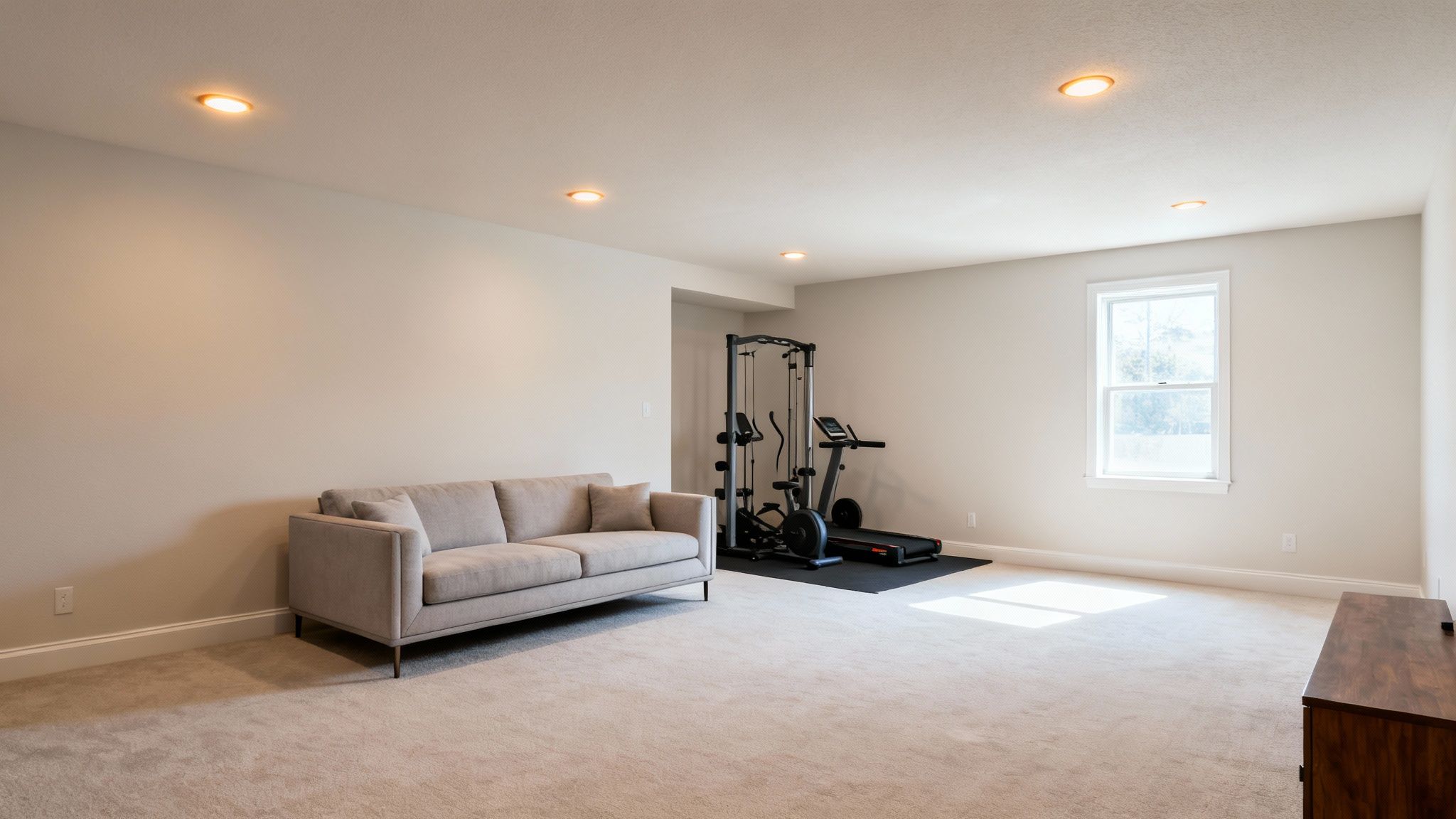
Now that we’ve walked through the nuts and bolts, let's talk about what this all really means for your bottom line. It's easy to see a basement project as just another expense, but a well-finished basement is one of the smartest investments you can make in your home. It’s not about spending money; it’s about converting it directly into equity.
Think about it: you're not just adding drywall and paint. You're adding real, functional living space that future buyers can immediately picture themselves using—a home gym, a cozy media room, or that much-needed guest suite. This transformation dramatically broadens your home's appeal on the market.
Maximizing Your Home's Value
This kind of project delivers a financial return that most other home upgrades simply can't compete with. Time and again, real estate and remodeling experts point to basement finishing as a top-tier renovation for recouping your investment when it's time to sell.
For homeowners in Utah County, where families are always looking for more room to grow, this is huge. Adding a fully finished level makes your property stand out in a competitive market like Orem or Provo. It’s a powerful selling point that translates to real dollars.
A finished basement is an investment in both your property's future and your family's present. It starts paying dividends in lifestyle enhancement from the day it's completed and delivers a strong financial return when it's time to sell.
The Numbers Behind the Value
So, what kind of return are we talking about? The numbers are pretty impressive. A quality basement remodel often yields a return on investment (ROI) of up to 70-75%.
According to industry data, for every $1,000 you put into a proper finish—ceiling, insulation, flooring, and all—you can reasonably expect to get about $700 of that back at resale. That’s a figure that often outpaces kitchen or bathroom remodels. You can dig deeper into the financial benefits of finishing your basement to see a full cost-versus-value breakdown.
Ultimately, a professional basement ceiling finishing project is the capstone that makes this entire investment pay off. It’s what ties the whole room together, turning a "potential project" in a buyer's mind into a move-in-ready asset that justifies a higher asking price.
Answering Your Top Basement Ceiling Questions
As you start planning your basement finishing project, a few common questions are bound to come up. It's totally normal. Getting the answers sorted out now will help you move forward with confidence and make sure the final result fits both your home and your budget.
What's the Cheapest Way to Finish a Basement Ceiling?
If you're looking for the most budget-friendly option, it's almost always the exposed industrial look. This is a really popular style right now, especially here in Utah. The process is straightforward: we thoroughly clean everything overhead—joists, pipes, ductwork—and then spray it all with a single, uniform color. Black, white, or a modern gray are the go-to choices.
The big win here is the savings on materials and labor. You skip the cost of drywall or a ceiling grid system entirely. Plus, as an added bonus, this approach gives you the absolute maximum headroom possible, which can make a huge difference in a basement.
How Do I Handle Low-Hanging Pipes or Ducts?
What if you want a clean, finished look but have a big HVAC duct or some plumbing running right through the middle of the room? You don't want to drop the entire ceiling just to hide one thing. This is where soffits or bulkheads come into play.
Think of a soffit as a custom-built box designed to enclose specific obstructions while leaving the rest of the ceiling as high as possible. It's a smart compromise. You get the clean, finished look of drywall where it matters most, without making the whole room feel short and cramped. It’s a hybrid approach that works beautifully.
One of the biggest myths we hear is that your ceiling choice locks you into certain lighting. The truth is, modern lighting is so versatile it can be adapted to work with just about any ceiling style you can dream up.
Take recessed lighting, for instance. It’s a homeowner favorite and we can install it in almost any ceiling type. For a drywall ceiling, we cut precise holes for a sleek, flush mount. With a drop ceiling, we use special fixtures that integrate right into the grid for a secure, clean look.
And even if you go with that cool industrial exposed ceiling, you've got great options. We can mount modern track lighting or canister lights directly to the joists, which not only provides fantastic light but also enhances that modern, industrial vibe.
Ready to turn that basement into a beautiful, functional space? The team at Northpoint Construction has been helping homeowners in Orem, Provo, and the surrounding areas do just that for years. Let's talk about your project—get started on our website.