

bathroom remodel ideas small space: 6 clever ideas
Living in the Orem/Provo area often means making the most of every square foot in your home. A small bathroom can feel like a design puzzle, but with the right approach, it can become a functional and beautiful sanctuary. Many homeowners believe a compact space limits their options, leading to cramped layouts and missed opportunities. However, the constraints of a small bathroom can inspire incredible creativity and smart design solutions.
This guide is designed to move beyond generic tips and provide actionable, space-saving strategies tailored for modern homes. We will explore specific bathroom remodel ideas for a small space that address common challenges like limited floor area, insufficient storage, and poor lighting. From innovative fixtures like wall-mounted vanities and corner sinks to clever visual tricks using vertical tile, these concepts are practical and impactful.
You will learn how to implement space-saving pocket doors, install recessed shelving for a seamless look, and maximize every inch with multi-purpose storage. Each idea is presented as a clear, actionable step to help you transform your bathroom from cramped to comfortable. This list proves that great design isn't about the size of the room, but the intelligence of the plan.
1. Wall-Mounted Vanities and Fixtures
One of the most effective bathroom remodel ideas for a small space is to elevate your fixtures off the floor. Wall-mounted, or "floating," vanities and toilets are secured directly to the wall, which eliminates the bulky base that consumes valuable floor area. This simple change creates an uninterrupted line of sight across the floor, making the room feel significantly larger and more open.
Beyond the visual benefits, this approach offers practical advantages. Cleaning is much easier without the need to navigate around a toilet base or vanity legs. The space underneath a floating vanity can also be used for discreet storage, such as a stylish basket for towels or a scale that can be tucked away. This modern, minimalist aesthetic is a hallmark of contemporary design, instantly updating the look of any small bathroom in Orem or Provo.
How to Implement This Idea
- Reinforce the Wall: Wall-mounted fixtures are heavy. It's crucial to ensure your contractor properly reinforces the wall with solid blocking between the studs to support the weight of the vanity and toilet, especially when loaded.
- Plan Plumbing Carefully: The plumbing for wall-mounted fixtures is hidden within the wall. This requires precise planning during the rough-in phase of your remodel, so be sure to select your fixtures before the plumbing work begins.
- Choose the Right Height: The standard height for a vanity top is 32-36 inches, but with a floating vanity, you have flexibility. Set the height based on the primary users for optimal comfort and ergonomics.
- Coordinate Fixtures: For a cohesive look, consider installing a wall-mounted toilet alongside a floating vanity. Brands like Kohler and Toto offer sleek, compact designs perfect for small spaces.
Key Insight: The success of a floating vanity lies in proper structural support. Never skip the step of adding blocking to the wall framing; it’s the foundation for a safe and durable installation.
For homeowners who prefer a unique, hands-on approach, the option to build a custom vanity provides complete control over dimensions, materials, and style, ensuring a perfect fit for your specific space. This is an excellent way to create a bespoke floating vanity that maximizes every inch of your bathroom.
2. Corner Sink and Vanity Solutions
One of the cleverest bathroom remodel ideas for a small space is to reclaim unused corner space. A corner sink or vanity is specifically designed to fit into a 90-degree corner, transforming an awkward, often-wasted area into a functional and stylish feature. This approach is a game-changer for exceptionally tight layouts, such as powder rooms or ensuite bathrooms, where a traditional vanity would obstruct traffic flow.
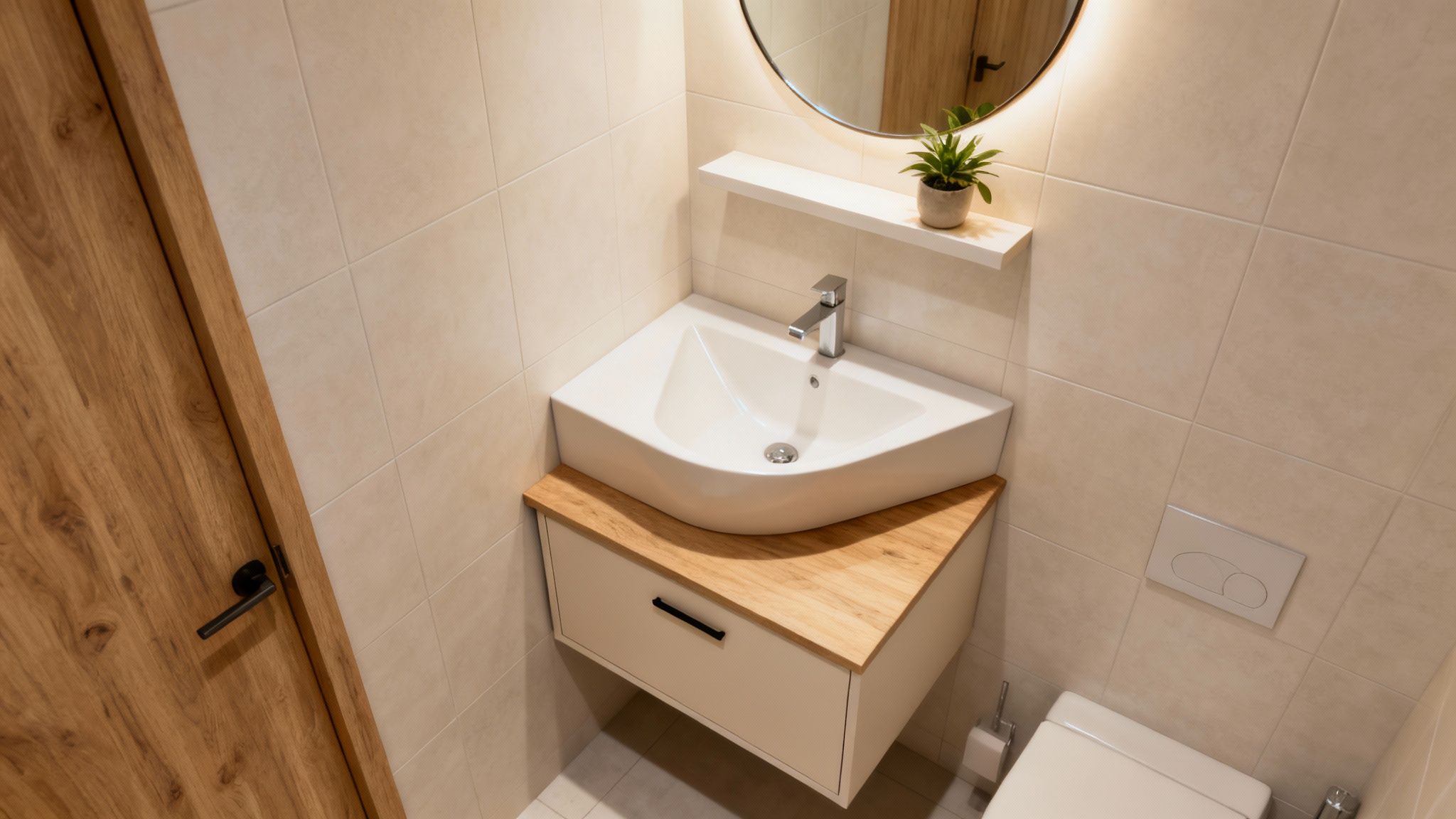
This strategy maximizes the usable floor area, creating a more open and navigable room. Inspired by efficient European and tiny home designs, corner fixtures are not just practical but also add a unique architectural element. They are an ideal solution for Provo-area homeowners looking to add a half-bath to a small footprint or optimize a compact primary bathroom without sacrificing essential functionality.
How to Implement This Idea
- Measure Accurately: Before purchasing, carefully measure the corner's angle and the available wall space on both sides. Ensure there is enough clearance for the door to swing open and for comfortable use of the toilet.
- Pair with Corner Storage: Maximize the vertical space above the sink by installing a corner medicine cabinet or open shelving. This creates a cohesive storage column that draws the eye upward and keeps countertops clear.
- Consider Pedestal or Wall-Mount: For the most space-conscious option, a corner pedestal sink offers a classic look while minimizing the footprint. Alternatively, a wall-mounted corner sink provides the same floor-clearing benefits as a floating vanity.
- Optimize Cabinet Access: If you choose a corner vanity with a cabinet, look for models with smart storage solutions like a lazy Susan, pull-out drawers, or a bi-fold door to make accessing the deep corner space easier.
Key Insight: A corner sink placement can fundamentally alter the layout of a small bathroom, often freeing up enough space to allow for a larger shower or a more comfortable toilet position. It is a strategic move, not just a fixture choice.
For homeowners in Utah County, where space can be a premium, embracing a corner solution is an effective way to unlock a small bathroom's full potential. You can find excellent corner models from brands like American Standard, who have long championed space-saving designs.
3. Recessed Shelving and Niches
One of the most ingenious bathroom remodel ideas for a small space is to utilize the hidden potential within your walls. Recessed shelving, or niches, are built directly into the wall cavity between studs, providing valuable storage without protruding into the room. This technique converts otherwise unused space into a functional and stylish feature, perfect for holding toiletries, towels, or decorative items.
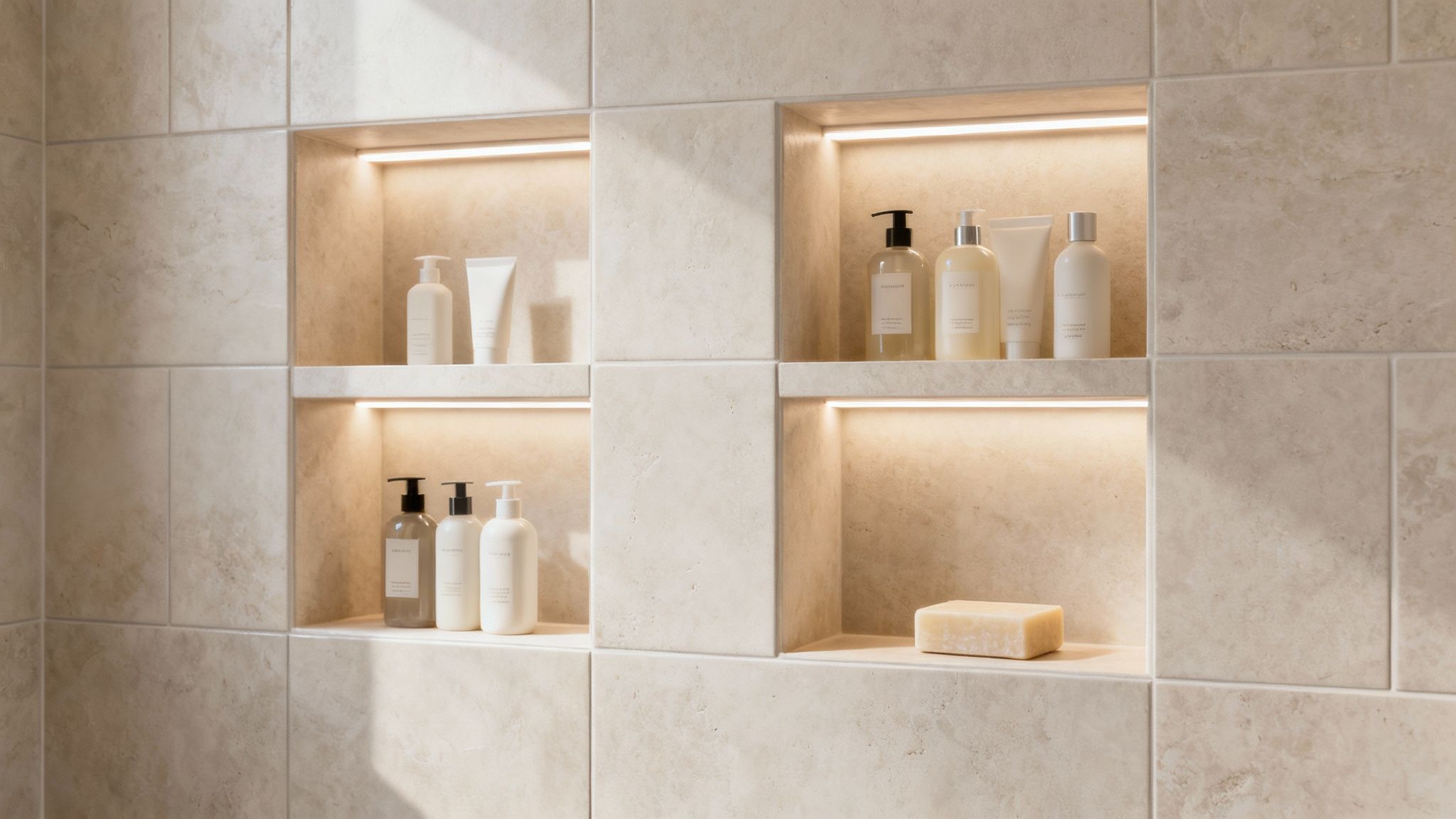
This approach is especially effective in showers and tub surrounds, where a niche eliminates the need for clumsy caddies or bottles cluttering the floor. By keeping surfaces clear and integrating storage seamlessly, recessed shelving maintains clean lines and enhances the feeling of spaciousness. This minimalist, high-end look is a favorite in modern Orem and Provo homes, adding both practicality and a touch of spa-like luxury.
How to Implement This Idea
- Plan During Framing: The ideal time to plan for niches is before or during the framing stage of your remodel. This allows your contractor to easily locate them away from plumbing, electrical wiring, and structural supports.
- Waterproof Meticulously: For niches in wet areas like showers, proper waterproofing is non-negotiable. A waterproof membrane, such as Schluter-KERDI, must be installed correctly to prevent leaks and moisture damage inside the wall.
- Incorporate a Slight Slope: Ensure the base of any shower niche has a subtle slope towards the shower. This allows water to drain out effectively, preventing pooling and the growth of mildew.
- Add Accent Lighting: For a dramatic and functional upgrade, consider installing waterproof LED strip lighting inside the niche. This creates a soft, ambient glow that highlights the feature and can serve as a nightlight.
Key Insight: Recessed storage is an architectural solution, not just a storage one. Its success depends entirely on planning before the drywall goes up to ensure it's structurally sound, waterproof, and clear of utilities.
4. Over-the-Toilet Storage Units
One of the most practical bathroom remodel ideas for a small space is to capitalize on the often-overlooked vertical area above the toilet. Over-the-toilet storage units, whether freestanding or wall-mounted, transform this empty wall into a valuable hub for towels, toiletries, and decor. This strategy adds significant storage capacity without consuming any of the limited floor space, a critical consideration in compact bathrooms.
This approach is especially effective in apartments, condos, or any bathroom where major structural changes are not feasible. These units are an affordable and stylish solution, offering accessible storage right where it's needed. Modern designs from brands like IKEA, Target, and Bed Bath & Beyond offer a range of finishes, from sleek metals to warm woods, ensuring they can complement the existing fixtures and aesthetic of your Orem home.
How to Implement This Idea
- Measure Carefully: Before purchasing, measure the width of your toilet, the height from the floor to the top of the tank, and your total ceiling height. This ensures the unit will fit properly without interfering with the toilet's function or overwhelming the space.
- Secure for Safety: Freestanding units should be stable, but wall-mounted versions must be anchored securely. Always attach them to wall studs or use appropriate heavy-duty drywall anchors to prevent accidents, especially in a household with children.
- Organize with Baskets: Use decorative baskets or bins on the shelves to group smaller items like extra soap, cotton balls, and cosmetics. This keeps the unit looking tidy and organized while concealing clutter for a clean, minimalist appearance.
- Balance Your Storage: Place heavier items, such as extra shampoo bottles or cleaning supplies, on the lower shelves for stability. Reserve the top shelf for lighter decorative objects or leave it partially empty to create a sense of visual lightness and prevent the room from feeling top-heavy.
Key Insight: The most successful over-the-toilet storage feels like an intentional design choice, not an afterthought. Select a unit with a finish that matches your vanity hardware, faucet, or light fixtures to create a cohesive and high-end look.
5. Pocket Doors and Sliding Barn Doors
A traditional swinging door can consume up to 10 square feet of precious floor space, a significant loss in a compact bathroom. One of the most impactful bathroom remodel ideas for a small space is to replace this swing door with a space-saving alternative like a pocket door or a sliding barn door. Pocket doors disappear neatly into the wall cavity, while barn doors glide along an exterior track, both eliminating the need for an intrusive door swing and freeing up valuable room for fixtures or movement.
This change fundamentally alters the layout possibilities of a small bathroom. The wall where a door would typically swing open can now accommodate a towel rack, a small cabinet, or even a section of your vanity. This solution is a favorite in modern farmhouse designs in the Provo area and is frequently used in contemporary condos where maximizing every square inch is critical. It's a functional upgrade that immediately makes a cramped bathroom feel more spacious and thoughtfully designed.
How to Implement This Idea
- Assess Wall Structure: For a pocket door, you need a wall cavity free of plumbing, electrical wiring, and structural supports. The wall must be deep enough to house the door frame kit. Barn doors are less invasive, requiring only sufficient wall space for the door to slide open.
- Choose the Right Style: Select a door style that enhances your bathroom’s aesthetic. A rustic wood barn door complements a farmhouse look, while a frosted glass pocket door maintains privacy while allowing light to pass through, creating a brighter feel.
- Invest in Quality Hardware: Opt for high-quality, smooth-gliding hardware. For pocket doors, a "soft-close" mechanism is an excellent upgrade to prevent slamming and ensure quiet operation. For barn doors, ensure the hardware is rated for a potentially humid bathroom environment to prevent rust.
- Professional Installation is Key: While a barn door can sometimes be a DIY project, installing a pocket door involves opening up the wall. This is a job best left to a professional who can handle framing, drywall, and finishing. For guidance on selecting the right expert for this kind of structural work, review this helpful article about how to choose a general contractor.
Key Insight: A pocket door installation requires careful planning before demolition. Confirm your wall is suitable for the modification early in the design process to avoid costly changes and delays during your remodel.
6. Combination Fixtures (Toilet-Sink and Shower-Tub)
When every square inch counts, another powerful bathroom remodel idea for a small space is to consolidate functions with combination fixtures. These innovative units, such as a toilet with an integrated sink on its tank or the classic shower-tub combo, merge two essential bathroom elements into a single footprint. This approach is a cornerstone of ultra-efficient design, popularized by the tiny home movement and Japanese bathrooms where space is at a premium.
The toilet-sink combination is particularly clever: fresh water is used for handwashing via a faucet on the tank lid, and the resulting greywater is then used to fill the toilet bowl for the next flush, saving both space and water. The shower-tub combo, a familiar sight in many homes, remains one of the most practical solutions for retaining the functionality of both a bath and a shower without dedicating separate areas. These fixtures are ideal for guest bathrooms, basements, or any compact layout in Orem where maximizing utility is the primary goal.
How to Implement This Idea
- Verify Local Codes: Before purchasing, confirm with your contractor that local building codes in Utah County permit the installation of specific combination fixtures, especially toilet-sink units, as plumbing requirements can vary.
- Plan for Plumbing: These fixtures require careful plumbing considerations. A toilet-sink combo needs a cold water supply line routed to the tank, while a shower-tub combo needs precise placement of the drain, faucet, and shower head.
- Select Quality Fixtures: Opt for well-known brands that offer reliable support and replacement parts. Since these are specialized units, finding components for lesser-known models can be challenging down the line. When planning for your combination shower-tub, consider exploring various styles by looking into the top bathroom remodel shower ideas to find a design that complements your small space.
- Factor in Maintenance: Understand the maintenance requirements. While efficient, integrated systems can sometimes be more complex to repair than their separate counterparts. This is a crucial aspect to consider when looking at your overall bathroom renovation cost breakdown.
Key Insight: Combination fixtures are the ultimate space-savers, but their success hinges on thoughtful planning. Prioritize fixtures from reputable brands and ensure your plumber is experienced with their specific installation requirements to avoid future complications.
7. Vertical Tile and Mirror Installation
A powerful optical illusion and one of the most impactful bathroom remodel ideas for a small space is to leverage vertical lines. Installing large-format tiles vertically and extending mirrors from the countertop to the ceiling draws the eye upward, creating an immediate sense of height and airiness. This design strategy manipulates perception, making a cramped bathroom feel dramatically larger and more open without altering its physical footprint.
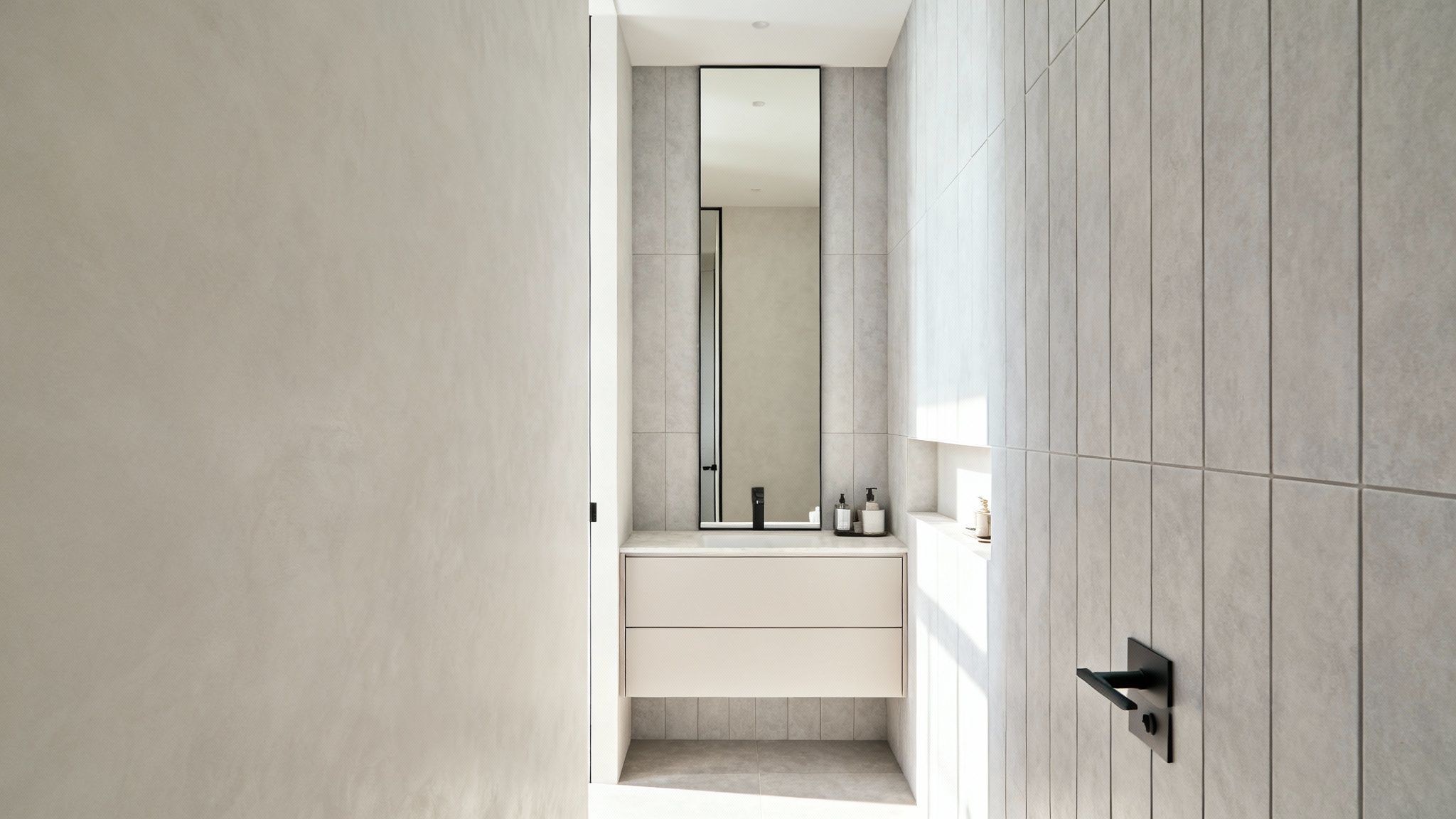
This technique is frequently used in luxury hotel bathrooms and modern apartment designs where space is at a premium but a feeling of grandeur is desired. The continuous vertical lines of the tiles, combined with the expansive reflection of a tall mirror, effectively erase the room's physical boundaries. For homeowners in the Orem and Provo areas looking to add a touch of modern sophistication, this approach delivers both aesthetic appeal and a functional sense of spaciousness.
How to Implement This Idea
- Choose Large-Format Tiles: Select large rectangular tiles (e.g., 12x24 or larger) and install them in a vertical orientation. This minimizes the number of grout lines, which are visual interruptions that can make a space feel busy and small.
- Match Grout to Tile: Use a grout color that closely matches the tile. This creates a more seamless, monolithic surface and enhances the vertical effect, rather than creating a distracting grid-like pattern.
- Extend Mirrors to the Ceiling: Instead of a standard-sized mirror, install a custom-cut mirror that extends from the top of your vanity or backsplash all the way to the ceiling. This doubles the visual height of the room and amplifies light.
- Integrate Lighting: Consider mounting sconces directly onto the mirror or installing overhead lighting that casts a downward glow. This enhances the reflective quality of the mirror and brightens the entire space, amplifying the illusion of size.
Key Insight: The goal is to create uninterrupted vertical lines. Combining vertically laid tiles with a floor-to-ceiling mirror on the same wall is a professional design trick that maximizes the illusion of height and space.
8. Multi-Purpose Vanity Cabinets with Hidden Storage
A cluttered countertop can make even the most spacious bathroom feel small and chaotic. One of the most intelligent bathroom remodel ideas for a small space is to invest in multi-purpose vanity cabinets that prioritize clever, hidden storage. These units go beyond simple shelves and drawers, incorporating custom solutions that maximize every cubic inch of space and keep your surfaces clear.
Modern vanity design focuses on smart internal organization. Think deep drawers with built-in dividers, pull-out trays for smaller items, and even integrated hampers or waste bins. By designing storage around your specific needs, you can eliminate the need for bulky, freestanding storage units. This approach keeps your toiletries, cleaning supplies, and styling tools accessible but out of sight, creating a serene, organized, and visually larger bathroom environment popular in high-end Orem and Provo homes.
How to Implement This Idea
- Audit Your Inventory: Before choosing a vanity, take stock of everything you need to store. This inventory will guide your design choices, ensuring you have dedicated spots for tall bottles, small cosmetics, and bulky items like hair dryers.
- Prioritize Drawers Over Doors: Deep, full-extension drawers are far more efficient than cavernous under-sink cabinets. They allow you to see and access everything at a glance, preventing items from getting lost in the back.
- Incorporate Power Outlets: A game-changing feature is adding a GFCI power outlet inside a drawer or cabinet. This allows you to keep electric toothbrushes, shavers, and hair tools plugged in and hidden away, eliminating cord clutter.
- Use Vertical Organizers: Maximize the vertical space within drawers and cabinets with stackable trays and custom-fit dividers. Brands like IKEA offer modular systems like GODMORGON that can be easily customized.
Key Insight: The ultimate goal of a multi-purpose vanity is to give every item a designated home. Thoughtful internal organization is more impactful than sheer size, turning a compact vanity into a powerhouse of storage.
Properly planning your storage needs is a critical first step in any remodel. To ensure your new vanity fits seamlessly into your overall design, you should learn more about how to plan your bathroom remodel before making any final decisions. This foresight guarantees a functional and beautiful result.
Small-Space Bathroom Remodel: 8-Option Comparison
| Wall-Mounted Vanities and Fixtures | High — requires structural reinforcement and professional installers | Moderate–High — studs reinforcement, wall plumbing, mounting hardware; $800–2000+ | Cleaner floor plane, perceived larger space, modern aesthetic, improved accessibility | Small bathrooms, modern/minimalist or accessible designs | Frees visual floor space; easier floor cleaning; adjustable height | Higher cost; limited storage; harder to repair wall plumbing |
| Corner Sink and Vanity Solutions | Low–Moderate — mostly standard installation, may need custom fit | Low — compact fixtures, possible minor plumbing reroute | Frees central floor area, fits tight layouts, modest storage | Powder rooms, tiny bathrooms, RVs, small apartments | Maximizes unused corner space; affordable; increases usable center space | Limited counter area; awkward ergonomics; fewer style options |
| Recessed Shelving and Niches | Moderate — requires wall opening/framing during build or renovation | Low–Moderate — framing, waterproofing, finishing; ~$150–400 per niche | Added storage without using floor space; streamlined look | Shower walls, medicine cabinet replacements, new builds/major renos | Space-efficient; customizable; can include integrated lighting | Not for concrete/renters; limited depth; potential utility conflicts |
| Over-the-Toilet Storage Units | Low — simple assembly or basic wall-mounting | Low — freestanding or lightweight materials; $50–300 | Quick vertical storage increase; removable and renter-friendly | Apartments, condos, budget remodels, temporary solutions | Inexpensive; easy to install/remove; no permanent changes | Can appear cluttered; weight/stability limits; may crowd small rooms |
| Pocket Doors and Sliding Barn Doors | High for pocket (framing changes); Moderate for barn (hardware retrofit) | Moderate–High — pocket needs 2x6 framing; rails/hardware; pocket $1000–2500+ | Saves door swing area; improves accessibility; modern look | Tight bathrooms, accessible designs; barn doors for retrofits | Recovers usable floor area; improves circulation; retrofit options | Pocket doors costly/complex to repair; barn doors less soundproof |
| Combination Fixtures (Toilet‑Sink, Shower‑Tub) | High — integrated plumbing and specialized installation | High — specialized units and fittings; $2000–8000+; possible code review | Large footprint reduction; potential water savings; minimalist function | Tiny homes, RVs, micro-apartments, sustainable designs | Maximizes space; water-efficient options; minimal plumbing runs | High cost; single-failure impacts multiple functions; limited replacements |
| Vertical Tile and Mirror Installation | Moderate — precise tile and mirror installation required | Low–Moderate — large-format tiles, full-height mirror, skilled installer | Illusion of height and openness; brighter, upscale appearance | Narrow/small bathrooms, modern renovations, hospitality spaces | Strong visual impact for low cost; reflects light; fewer grout lines | Shows water spots; requires precise alignment; can feel clinical if cold |
| Multi‑Purpose Vanity Cabinets with Hidden Storage | Moderate–High — custom design and coordinated installation | High — custom cabinetry, hardware, possible plumbing work; $1500–5000+ | Maximizes storage in small footprint; clutter-free counters; organized look | Small luxury bathrooms, homeowners prioritizing organization | Highly customizable organization; increases perceived value; tidy appearance | Expensive; complex install; some compartments hard to access |
Ready to Transform Your Orem Home?
Navigating the challenges of a compact bathroom can feel limiting, but as we've explored, a small footprint doesn't have to mean a small impact. Your journey through these bathroom remodel ideas small space has hopefully illuminated a path forward, transforming what might seem like constraints into opportunities for clever design and enhanced functionality. The core principle is simple: every square inch counts, and with strategic planning, your Orem or Provo home can boast a bathroom that feels both spacious and luxurious.
Recapping our key takeaways, the most impactful changes often come from rethinking how we use vertical and recessed space. From wall-mounted vanities that create an illusion of a larger floor area to recessed shelving that turns empty wall cavities into valuable storage, these solutions are foundational. We saw how something as simple as installing vertical tile patterns or a large, well-placed mirror can dramatically alter the perception of height and depth in a room.
From Ideas to Actionable Plans
The real magic happens when you combine these elements into a cohesive plan. Consider the flow of your daily routine. Would a pocket door eliminate the awkward swing of a traditional door, freeing up precious floor space? Could a corner sink be the perfect solution for an unconventional layout? These aren't just isolated tips; they are interconnected components of a comprehensive design strategy tailored to your specific needs.
Mastering these concepts allows you to move beyond the generic and create a truly personalized oasis. The value isn't just in the final aesthetic but in the improved daily experience. A well-designed small bathroom reduces clutter, streamlines your morning and evening routines, and can significantly boost your home's overall market value. It proves that thoughtful design can overcome physical limitations, creating a space that is not only practical but also a source of pride and comfort.
Ultimately, your small bathroom remodel is a chance to be intentional. It's about making smart choices that maximize both utility and style. Whether you're drawn to the minimalist appeal of floating fixtures or the clever efficiency of multi-purpose storage, the goal is to craft a space that works for you. Don't view your bathroom's size as a setback; see it as a canvas for innovative and resourceful design. The right combination of these ideas will unlock its hidden potential, proving that even the most compact bathrooms can achieve a grand vision.
Ready to bring these innovative bathroom remodel ideas for your small space to life in your Utah home? The experienced team at Northpoint Construction specializes in transforming challenging layouts into stunning, functional bathrooms. Contact us today to schedule a consultation and take the first step toward creating the beautiful and efficient bathroom you deserve.