
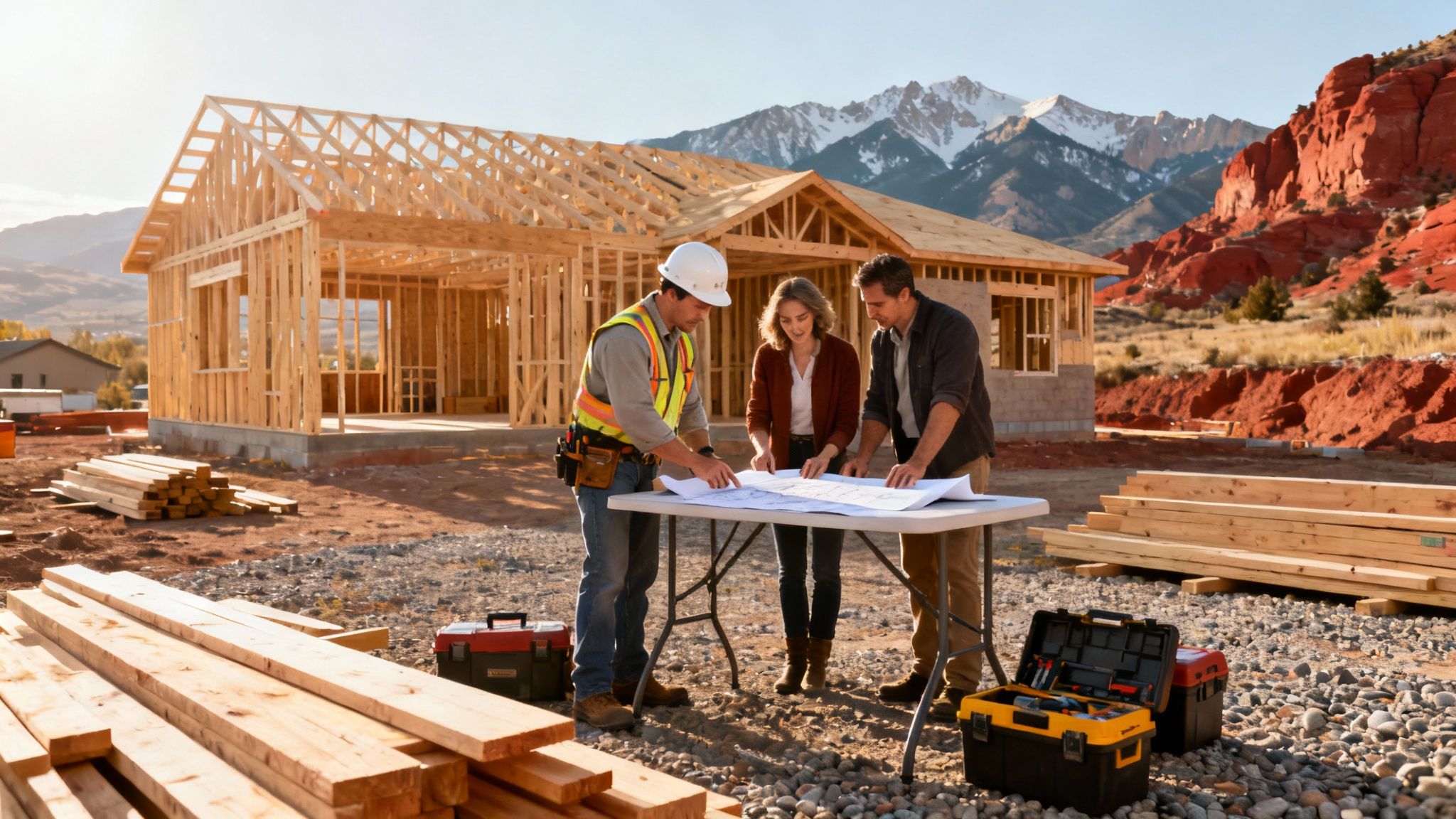
A Guide to Building a Home in Utah County
So, you're thinking about building a custom home in Utah County. It’s an incredible journey, one that takes your unique vision and turns it into a place you and your family will make memories for years to come. But getting there successfully starts with a solid plan. Honestly, the prep work you do now—from setting a real-world budget to picking the right piece of land and nailing down a design—is the single most important part of the entire process.
Your Foundational Blueprint for Building in Utah County
The dream of a custom home doesn’t start with a shovel in the ground; it begins with careful, deliberate planning. This initial phase is your project's true foundation. Every thoughtful decision you make here helps you sidestep costly headaches later on. Think of it as a period of discovery and design that sets a positive, exciting tone for the whole build.
This upfront work is especially crucial right now. Utah County is booming, and that growth has a direct impact on building. Between July 2024 and July 2025 alone, the county's population grew by nearly 16,000 new residents, leading the state. This influx creates a super competitive market for land, materials, and skilled labor, which makes strategic planning more critical than ever.
Setting a Realistic Home Building Budget
Your budget is the roadmap that will guide every single decision, from the size of your windows to the type of countertops you choose. A truly comprehensive budget needs to cover way more than just the physical structure. To avoid getting blindsided by unexpected costs, you’ll want to account for everything.
A solid financial plan should always include:
- Land Acquisition: The purchase price of your lot.
- Site Prep: All the costs for excavation, grading, and getting utilities to your home.
- Permit and Impact Fees: These are the fees required by the city, whether it’s Provo, Lehi, or another municipality.
- Design & Engineering: The cost for your architect and structural engineer to create the plans.
- Construction Costs: This is the big one—all materials and labor for the build itself.
- Finishing & Landscaping: The final touches like flooring, fixtures, appliances, and your yard.
- Contingency Fund: Set aside an essential 10-15% of the total project cost. Trust me, you’ll be glad you have it when something unexpected pops up.
A common mistake we see is people underestimating the "soft costs" like permits and design fees. Factoring these in from day one gives you a much clearer financial picture and keeps your budget from spiraling out of control.
Finding and Vetting the Perfect Plot of Land
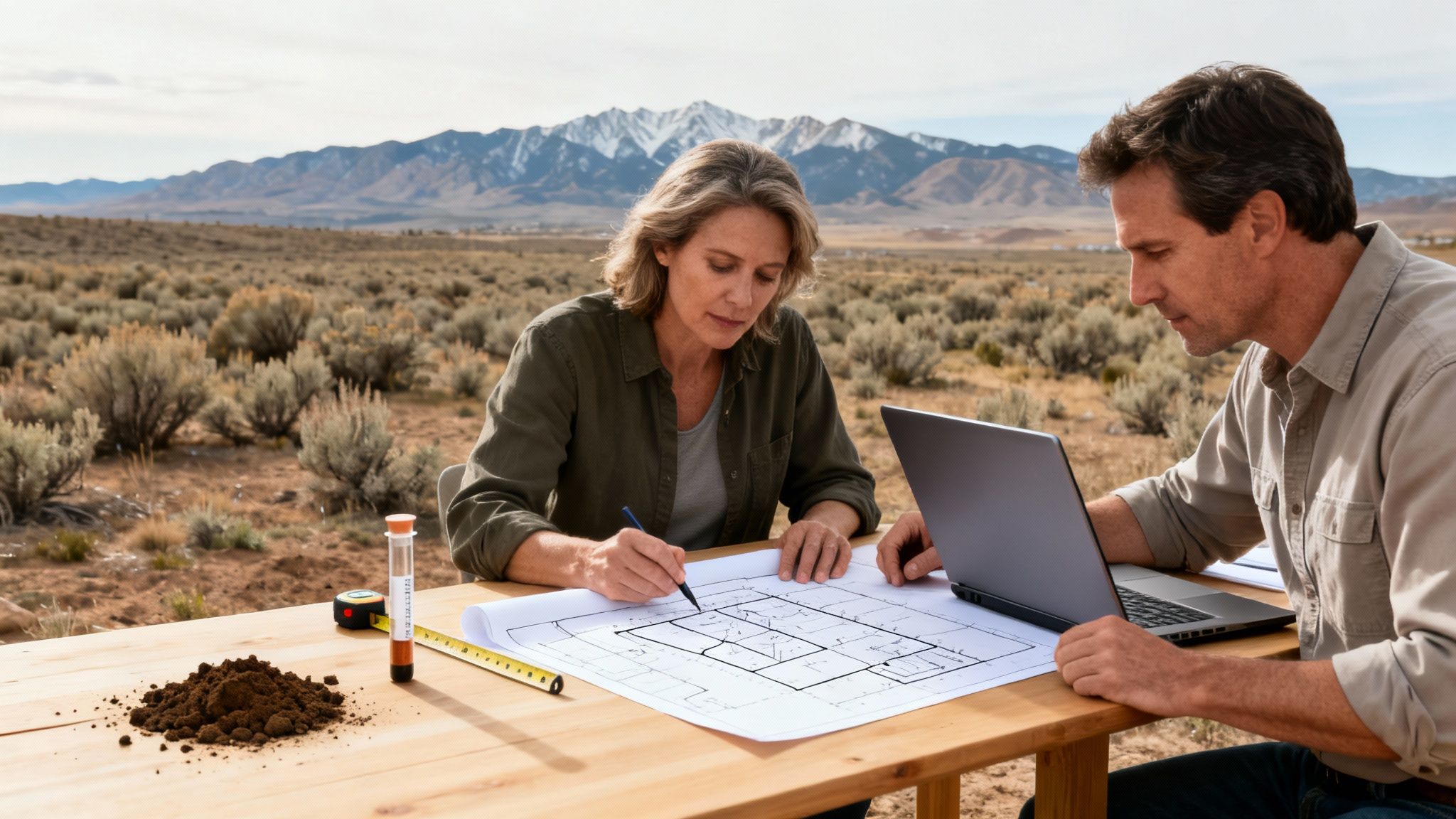
The piece of land you choose will fundamentally shape your home’s design, your final cost, and what it feels like to live there every day. Here in Utah County, our diverse terrain—from the valley floors in Orem to the benches of Alpine—offers some incredible opportunities, but each comes with its own unique challenges. Vetting a potential lot isn't just a good idea; it's a non-negotiable step.
Before you even think about making an offer, dig into these critical details:
- Zoning and Covenants: Check with the city and any HOA to confirm that the home you envision is actually allowed on the property.
- Utility Access: Are water, sewer, gas, and electricity already at the property line? If not, extending them can add tens of thousands to your site prep bill.
- Soil and Topography: A geotechnical report (or soil test) is a must. It tells you if the ground can support a foundation without needing complex—and expensive—engineering. Steep lots also drive up excavation and foundation costs significantly.
This is the perfect time to bring a builder into the conversation. An expert eye can help you spot potential red flags before you’re financially committed. For a deeper dive, you can check out our guide on what to know before building a house. This early collaboration can save you from the heartbreak of buying a beautiful piece of land that’s practically unbuildable. A builder can assess how the lot’s unique character will influence your home design and budget, making sure it’s the perfect fit for your dream.
Assembling Your Professional Build Team
Once you’ve got a good idea of what you want to build, it's time to put together the crew who will bring it to life. This is, without a doubt, one of the most critical parts of the entire process. Building a custom home is a huge investment—not just of money, but of your time and emotional energy. The success of your project really hinges on the team you assemble.
This isn’t just about finding people who can swing a hammer. You're looking for a partnership built on trust, deep local expertise, and crystal-clear communication.

Think of your general contractor (GC) as the quarterback of your project. They’re the one coordinating every single trade, from the crew pouring your foundation to the painter doing the final touch-ups. Nailing this decision is probably the single most important choice you'll make. You need someone who not only gets your vision but has a proven history of building similar homes right here in Utah County.
Vetting Your General Contractor
Choosing your builder shouldn’t be a gut decision; it needs to be a careful, methodical process. A great contractor will be an open book, ready to give you all the information you need to feel completely confident in them.
Before you even think about signing a contract, do your homework. Here’s a quick checklist to run through when you’re interviewing potential builders:
- Verify Credentials: First things first, ask for their state license number and proof of both general liability and workers' compensation insurance. Never work with an unlicensed or uninsured contractor. It’s a shortcut that exposes you to massive financial and legal risks.
- Review Their Portfolio: Take a hard look at their past projects. You want to see homes that are similar in style and scale to what you have in mind. Even better, ask if you can visit a current job site to get a feel for how they run things.
- Check Local References: This is non-negotiable. Talk to their past clients and ask the tough questions. How was their communication? What happened when unexpected problems popped up? Did they stick to the budget and the timeline?
For a deeper dive, we've put together a complete guide on how to choose a general contractor that walks you through exactly what to look for.
Deciding Between Design-Build and Architect Plus Builder
As you start your search, you'll run into two main ways to structure your project. Figuring out which one fits you best is key.
Design-Build Firm:
In this setup, a single company handles everything from the initial architectural design to the final nail. It's an all-in-one approach. The big advantage here is having one point of contact, which can seriously streamline communication, often shorten the timeline, and give you a clearer picture of the total cost from the very beginning.
Independent Architect and Builder:
This is the more traditional path. You hire an architect to create a full set of plans, and then you take those plans to several general contractors to get bids. This route can offer more creative freedom and lets you compare pricing, but it puts you in the driver's seat for coordinating between the design and construction teams.
There’s no single right answer here. The best path forward really depends on your personality and how involved you want to be. If you like the idea of a one-stop-shop with clear accountability, design-build is a fantastic option. If you prefer to lead the creative vision yourself and then find the perfect builder to execute it, the traditional model might be your style.
Understanding Construction Financing
Unless you're paying in cash, you’ll need a construction loan to fund the build. This isn't like a regular mortgage. A construction loan is a short-term loan specifically designed to cover the costs of building, and the money isn't handed over all at once.
Instead, the lender releases the funds in stages, called draws, as your project hits specific milestones. For example, once the foundation is complete, the builder can request a draw. The bank will often send an inspector to verify the work before releasing that portion of the funds. This continues for framing, drywall, and so on.
Once the house is finished and you have the Certificate of Occupancy, the construction loan is usually rolled into a standard, long-term mortgage. To get approved, lenders will want to see everything: your detailed financial picture, the architect’s plans, and a comprehensive budget from your builder. A solid contract and clear communication are the bedrock of a successful project, ensuring everyone is aligned on expectations, timelines, and costs from day one.
Getting the Green Light: Permits and Regulations in Utah County
Building a custom home in Utah County is exciting, but long before the first shovel of dirt is turned, you have to navigate the world of local permits and regulations. It can feel a little overwhelming, but this is a critical step to ensure your home is built safely and legally.
Every city, from Provo and American Fork to rapidly growing areas like Saratoga Springs, has its own set of rules and timelines. This is where having an experienced local builder in your corner makes all the difference. We know the ins and outs of each planning department, what they look for, and how to prepare a submission package that sails through without the frustrating back-and-forth that can add months to your project.
What Goes Into a Permit Application?
So, what exactly do you need to get approved? While the specifics can vary slightly from city to city, the core documents for any new home build are fairly standard. Your builder will pull together a comprehensive permit package that essentially serves as the complete playbook for your project.
This package demonstrates to city officials that every aspect of your plan adheres to local zoning laws, safety standards, and building codes.
- Building Permit: This is the big one—the official permission to start construction.
- Land Use/Zoning Permit: This confirms that what you want to build fits the local rules for property use, like how far the home must be from the property lines (setbacks) and how tall it can be.
- Site Plan: Think of this as a bird's-eye view of your property. It’s a detailed drawing showing exactly where the house will sit, plus the location of the driveway, utility hookups, and how the land will be graded for drainage.
- Architectural Plans: These are the full blueprints, detailing everything from the foundation and framing to the electrical and plumbing layouts.
It’s easy to see the permit process as just red tape, but it’s really a quality control system. It’s designed to protect you, your investment, and your family by making sure your home is built right from the ground up. A great team handles this for you, so it feels like a seamless part of the process, not a roadblock.
Timelines and What to Expect Around the County
How long does it take to get a permit? That's one of the biggest variables in the whole process. A straightforward, well-prepared application in a city like Spanish Fork might get approved in four to six weeks. But a more complex home design in a bustling city like Lehi could easily take eight weeks or more.
Understanding the local environment is key. New construction is booming here, especially in the northern part of the county. In fact, cities like Lehi, Saratoga Springs, and Eagle Mountain accounted for about 18% of all residential building permits in Utah back in 2025. Lehi alone had over 1,000 new residential units in its pipeline. You can dive deeper into these trends in the Utah County real estate market report for August 2025.
This high volume means planning departments are busy, which can sometimes slow things down. A builder who has a good working relationship with the local staff can often help keep things moving forward.
It's not just about the big permits, either. Code compliance covers every little detail of your home. For example, even something as simple as a dryer vent has specific rules that must be followed to pass inspection. While your builder manages this, you can get a sense of the details involved by reading up on dryer vent code requirements. Making sure every last detail is up to code is how you avoid delays during the inspection phase.
Building a home involves many moving parts, and having a clear sense of the timeline is crucial for planning. Here’s a look at what you can generally expect in Utah County.
Typical Utah County Home Building Timeline
An estimated timeline for the major phases of building a custom home, helping you set realistic expectations.
| Pre-Construction (Design, Permits, Financing) | 3 - 6 months |
| Foundation & Framing | 1 - 2 months |
| Exterior & Rough-Ins (Roofing, Windows, MEP) | 2 - 3 months |
| Interior Finishes (Drywall, Paint, Flooring) | 2 - 4 months |
| Final Touches & Landscaping | 1 - 2 months |
| Total Estimated Time | 9 - 17 months |
Keep in mind that these are just estimates. Factors like weather, supply chain availability, and the complexity of your design can all influence the final timeline. Your builder will provide a more detailed, project-specific schedule once your plans are finalized.
The Construction Journey: From Foundation to Finishes
With your plans approved and the build team ready to go, the real excitement begins. This is where blueprints and dreams start turning into a physical structure, rising right out of the ground. Watching this process is easily one of the most rewarding parts of building a home in Utah County, and knowing the sequence helps you appreciate the incredible coordination it takes.
It all starts with the groundwork—literally. The first major step is a precise footings excavation guide that lays the literal groundwork for your entire home. This isn't just about digging a hole; it's about carefully preparing the earth for a concrete foundation that will provide stability and strength for decades to come.
From the Ground Up: Laying the Foundation
Once the site is prepped, the crew pours the concrete footings and foundation walls. This is a make-or-break moment. Everything that comes after rests on this foundation, which is why it's subject to a critical inspection to ensure it meets strict structural engineering standards. Here in Utah, foundations have to be tough enough to handle our unique soil conditions and freeze-thaw cycles.
After the concrete has had time to cure, the skeleton of your home starts to emerge during the framing stage. This part moves fast. It's a dramatic phase where walls, floors, and the roof structure go up, often in just a few weeks. For the first time, you can actually walk through the rooms and get a real feel for the layout and flow of your new space.
Enclosing the Structure: The Shell and Rough-Ins
With the frame complete, the next goal is to create a protective shell. This means installing sheathing, roofing, windows, and exterior doors to make the home "weather-tight." Getting this done quickly is crucial to protect all that new interior framing from rain and snow.
Once the house is dried-in, it’s time for a flurry of activity behind the walls. This is the "rough-in" phase, where specialized trades work in a carefully choreographed sequence:
- Plumbing: All the pipes for your water supply and drainage systems are run throughout the house.
- Electrical: Wiring for every outlet, switch, and light fixture is pulled and put in place.
- HVAC: The ductwork for your heating, ventilation, and air conditioning system is installed.
The rough-in stage is a big deal and requires another crucial inspection. City inspectors will come out to verify that all the plumbing, electrical, and mechanical work is done correctly and safely before any drywall goes up. A good builder anticipates this and gets it right the first time to keep the project on schedule.
With a successful inspection in the rearview mirror, insulation is installed in the walls and ceilings—a key step for energy efficiency in Utah's hot summers and cold winters. Then comes the drywall, which is hung, taped, and textured, finally turning that open framing into defined rooms.
The permit process is the official green light for all this work. This flowchart breaks down the typical steps from application to approval.

As you can see, a successful project hinges on this sequential process, moving from a thorough submission to a final approval before any dirt can be moved.
Bringing Your Vision to Life with Finishes
The finishing stage is where your personality and style finally shine through. All those design selections you agonized over months ago are now being installed, transforming the house into your home. This final push includes everything from flooring and painting to cabinets and light fixtures.
This is also a great point to remember the big picture. Keeping an eye on the local market can help you make smart decisions on finishes or landscaping. For example, recent data for Utah County shows a competitive market, with the median single-family home price hovering around $600,087 and properties selling in about 37 days. It’s a good reminder that quality finishes don't just look great—they add real, lasting value.
The major components of the finishing phase include:
Interior Finishes: Walls get their primer and final coats of paint, flooring goes down (tile, hardwood, carpet), and cabinets and countertops are set in place.
Trim and Fixtures: Baseboards, door casings, and interior doors are installed, followed by the "jewelry" of the home: plumbing fixtures, light fixtures, and outlet covers.
Exterior and Landscaping: The exterior siding or masonry is completed, the driveway is poured, and the yard is graded in preparation for landscaping.
Each of these steps is another exciting milestone on the way to the finish line. For a more detailed look at the entire journey, you might find our guide on how to build a custom home useful. A skilled builder masterfully manages this intricate sequence, ensuring every detail is handled with quality craftsmanship, setting the stage for your final walkthrough.
Getting the Keys: The Final Walkthrough and Moving In
This is it—the moment you've been waiting for. After months of watching your vision come to life, from the foundation pour to the final coat of paint, you’re on the home stretch. But before you start unpacking boxes, there are a few final, but crucial, steps to take.
This last phase is all about the details. It's where you verify everything is perfect and officially take ownership of the beautiful home you’ve worked so hard to create. It all kicks off with the final walkthrough, which is easily one of the most important meetings you’ll have.
Nailing the Final Walkthrough
Think of the final walkthrough as your last quality-control check. It's your chance to walk through the completed home with us, your builder, and make sure every last detail is exactly as it should be according to your contract. This isn't just a casual tour; it's a meticulous inspection.
We'll be there to guide you room by room, but it helps to come prepared with your own list of things to check. You’re looking for anything from minor cosmetic touch-ups to ensuring everything works as it should.
Here's what you should have on your radar:
- Surfaces: Scan the walls, ceilings, and floors. Are there any scuffs, paint drips, or scratches? Check the trim and baseboards for clean, crisp lines.
- Fixtures & Appliances: This is the fun part. Flip every light switch. Test every outlet (a cheap phone charger is great for this). Turn on every faucet and flush every toilet. We'll even run a quick cycle on the dishwasher.
- Doors & Windows: You’ll want to open and close every single door and window. Do they move smoothly? Do they latch securely? Look closely for any cracks or fogging in the glass.
- Systems Check: We’ll give you a hands-on tutorial for your HVAC system, water heater, and any smart home tech we’ve installed. We’ll also point out the essentials, like where your main water shut-off valve and electrical panel are located—something you’ll be glad you know later.
During this process, we’ll create what’s called a punch list. It's simply a running list of any minor fixes or adjustments that need to be made before we hand over the keys. We’re just as invested as you are in making sure the house is perfect.
The punch list is really for the small stuff—a cabinet door that doesn’t close just right, a missing outlet cover, or a spot that needs a quick paint touch-up. Any larger issues would have been caught and corrected during earlier inspections, but this is our chance to make sure every last detail is flawless.
Before you step into your final walkthrough, it's wise to have a clear checklist of what to look for. This ensures you don't miss anything in the excitement of seeing your finished home.
Here is a simple checklist to guide you through the process, helping you cover all the bases from the big systems to the smallest cosmetic details.
Final Walkthrough Inspection Checklist
| Kitchen | Test all appliances (oven, microwave, dishwasher, disposal). Check for leaks under the sink. Inspect countertops. | Does the fridge water line work? |
| Bathrooms | Run all faucets and showers. Flush toilets. Check for leaks. Inspect tile, grout, and caulking. | Check for any wobbly fixtures. |
| Electrical | Test every light switch, outlet, and ceiling fan. Check doorbell and any smart home features. | Bring a phone charger to easily test outlets. |
| HVAC | Turn on both the heating and air conditioning to ensure they work. Check airflow from vents. | Ask where the filter is located. |
| Doors & Windows | Open, close, and lock every door and window. Check for smooth operation and intact screens. | Note any drafts or sticky locks. |
| Flooring & Walls | Look for scratches, dings, or scuffs on floors and walls. Check for any paint imperfections or nail pops. | View walls in different lighting if possible. |
| Exterior | Inspect siding, roofing, and paint. Check outdoor faucets and outlets. Ensure proper landscape grading. | Walk the entire perimeter of the house. |
Using a structured list like this helps keep the walkthrough focused and productive, ensuring every concern is documented and addressed before closing.
Getting Your Certificate of Occupancy
Once your home passes all its final inspections with Utah County or the city and we’ve completed everything on the punch list, the local building department will issue a Certificate of Occupancy (CO).
This document is the official green light. It certifies that your new home is safe, up to code, and officially ready for you to live in. You absolutely cannot move in or finalize your mortgage without it. We handle all the coordination with the inspectors to get this finalized, but it's the milestone that signals construction is officially done.
Closing Day and Moving In
With the CO in hand, it’s time to close. This is the final legal step where you sign the last of the paperwork, your construction loan gets paid off by your permanent mortgage, and the property title is officially transferred into your name. At the end of it all, you’ll get the keys!
Finally, the day you've been dreaming of arrives: moving day. A pro tip? Schedule your utility transfers a week or two in advance to avoid any hiccups. As you begin to settle in, start a "home binder." Keep all your appliance manuals, warranty information, and a list of the paint colors used in each room. You'll thank yourself later.
Building a new home is a huge achievement, and taking care of these final steps ensures you can start making memories in it right away, stress-free. Welcome home.
Common Questions About Building in Utah County
Building a custom home is a huge undertaking, and naturally, you’ve got questions. It’s one of the biggest investments you’ll ever make! From timelines to costs, getting clear answers upfront helps you plan with confidence and set expectations that match reality.
Let’s walk through some of the most common questions we hear from folks looking to build in Utah County. Keep in mind every project is unique, but this will give you a solid starting point.
How Long Does It Take to Build a Custom Home in Utah County?
This is usually the first thing people ask, and the honest answer is: it depends. The complexity of your home, how quickly your city’s permit office moves, and even the weather all play a big role. A good rule of thumb for the entire process—from dreaming on paper to getting your keys—is anywhere from 10 to 18 months.
Let's break that down a bit more.
- Pre-Construction (3-6 months): A lot happens before a single shovel hits the dirt. This is when we’re finalizing architectural plans, you’re securing financing, and we’re navigating the local permitting process.
- Active Construction (7-12 months): This is the main event. It covers everything from pouring the foundation and framing the walls to installing the very last light fixture.
It’s worth noting that high-growth cities like Lehi or Saratoga Springs might have efficient permitting systems, but that same growth means more competition for top-tier subcontractors, which can definitely influence the schedule.
What Is the Average Cost Per Square Foot to Build?
Cost per square foot is a helpful starting point, but it can be misleading without the right context. The final number gets pulled in a lot of different directions by things like the quality of your finishes, the complexity of the architecture, and how much work your land needs before we can even start.
Lately, we’ve seen the typical range for a true custom home in Utah County fall between $200 to $350+ per square foot. A home with standard, builder-grade finishes will be on the lower end. On the other hand, if you’re planning for high-end appliances, fully custom cabinetry, and intricate architectural details, you’ll be pushing the higher end of that range, or even beyond it.
The only way to truly understand your costs is with a detailed, line-item bid from a builder based on your specific plans. A simple cost-per-square-foot guess can't account for what makes your home and your land unique.
What Unexpected Costs Should I Budget For?
No matter how carefully you plan, surprises happen. That's why a contingency fund isn't just a good idea—it's absolutely essential. We always advise our clients to set aside 10-15% of the total construction cost to handle the unexpected.
So, what does this fund actually cover?
- Excavation Surprises: You never really know what’s under the ground until you start digging. Hitting a massive boulder or finding poor soil that needs extra engineering work is one of the most common curveballs.
- Weather Delays: A brutally cold winter or an unusually wet spring can halt foundation work or framing, sometimes leading to extra costs to get back on schedule.
- Supply Chain Hiccups: While things have settled down since the post-pandemic craziness, price spikes or delays for a specific material can still pop up.
- Your Own Great Ideas: Halfway through the build, you might decide you have to have those upgraded countertops or want to add built-in shelves in the family room. Your contingency fund gives you the freedom to make those calls without busting the budget.
A good builder who knows the local terrain can often spot many of these potential issues early on, helping you build a more realistic and resilient budget from day one.
Should I Buy Land Before I Hire a Builder?
It seems logical to find the perfect piece of land first, but we strongly recommend bringing a builder into the conversation before you sign on the dotted line for a lot. This one step can save you an incredible amount of money and headaches.
Think of a builder as your expert consultant. We can walk a potential lot with you and see things you might not—like steep slopes that will send foundation costs through the roof, poor soil that needs thousands in remediation, or tricky utility hookups that weren't obvious.
Bringing us in early ensures the land you’ve fallen in love with is actually a good fit for the home you want to build. It’s all about making sure your dream lot doesn’t turn into a budget nightmare.
Ready to take the next step toward building your dream home in Utah County? The team at Northpoint Construction has the local expertise to guide you through every phase of the process, from finding the perfect lot to handing you the keys. Visit us online to schedule your consultation today!