
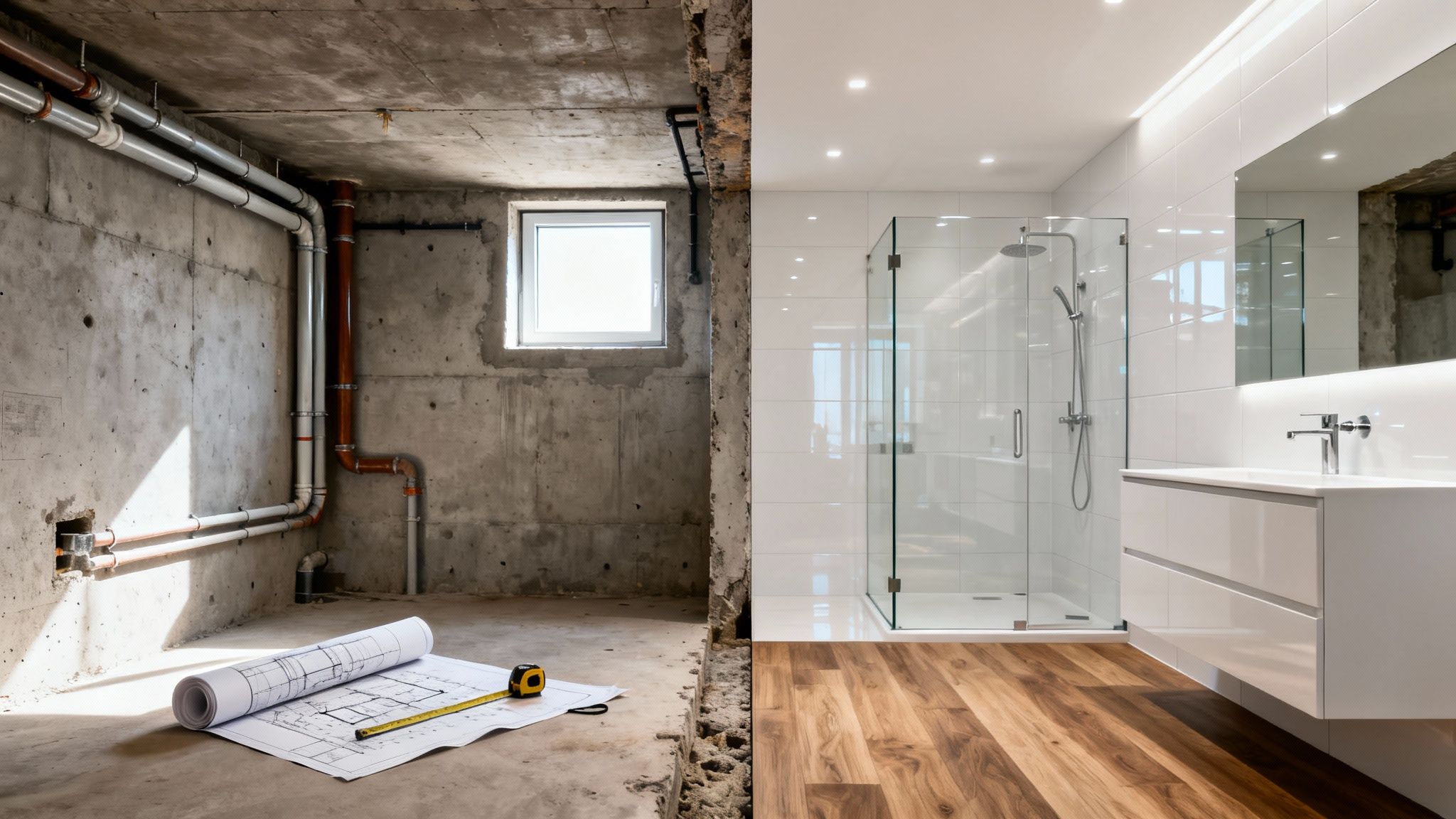
The Real Cost of a Basement Bathroom Your Complete Guide
So, you're thinking about adding a bathroom to your basement? It’s one of the best ways to transform that space from storage into a genuine living area. But the first question on everyone's mind is always: "What's it going to cost me?"
Generally, you can expect a new basement bathroom to cost somewhere between $15,000 and $35,000. Of course, some projects might come in a little lower, and others can easily climb higher. The final price really comes down to a few key things: how complicated the plumbing will be, the quality of finishes you choose, and the labor needed to get it all done.
Understanding Your Basement Bathroom Investment
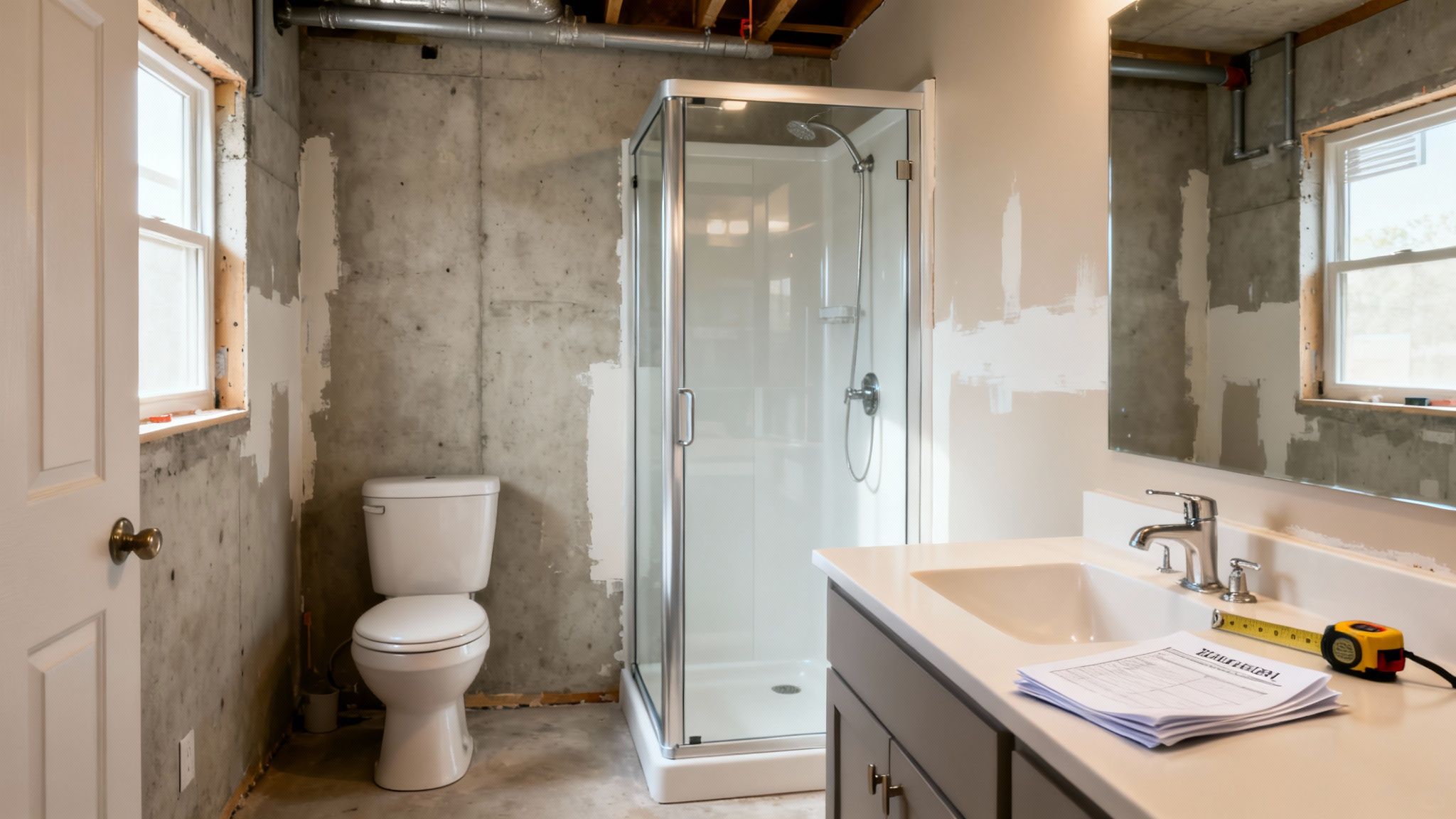
Turning a dusty corner of your home into a fully functional bathroom is a game-changer. It’s not just about adding convenience; it’s about making your basement a place people actually want to be, which in turn seriously boosts your home's value.
But why such a wide price range? The truth is, basements present unique challenges you just don't find on the main floors of a house. You're often dealing with concrete floors that need to be cut, new plumbing lines that have to fight gravity, and potential moisture issues.
Think of it this way: remodeling an upstairs bathroom is like giving an existing room a facelift. Building a new bathroom in the basement is often like constructing a mini-house from the ground up, all within a concrete shell.
Adding a bathroom can dramatically transform a storage area into a functional living space, but it comes with a price tag that has been climbing due to rising material and labor costs. According to recent data, the average cost for just the bathroom portion in a basement remodel ranges from $15,000 to $35,000, depending on the size, finishes, and installation complexity.
To get a real handle on where your project might land, it helps to think in terms of different tiers. For a more personalized estimate, especially if you're in the Orem or Provo area, our own basement finishing cost calculator is a fantastic resource to start with.
Basement Bathroom Cost at a Glance
Not every basement bathroom needs to be a luxury spa. Your vision and budget will likely fall into one of three common categories. This table gives you a quick snapshot of what to expect at each level.
| Low-End (Basic) | $12,000 - $20,000 | Prefabricated shower, basic fixtures, vinyl flooring, standard lighting, and minimal plumbing work. |
| Mid-Range (Standard) | $20,000 - $35,000 | Tiled shower, mid-grade vanity and fixtures, recessed lighting, and moderate plumbing adjustments. |
| High-End (Luxury) | $35,000+ | Custom walk-in shower, high-end vanity, heated floors, extensive lighting, and complex plumbing work. |
This is just a starting point, of course. The real cost comes into focus when we start digging into the details of your specific project. As we break down the key cost factors, you’ll get a much clearer idea of how to build a budget that matches your goals.
What Really Drives Your Basement Bathroom Cost
Trying to pin down the final cost of a basement bathroom is a bit like planning a road trip. You know the destination—a gorgeous, functional new bathroom—but the total cost really depends on the route you take and the car you're driving. Several key factors are the "mileage" and "fuel" of your project, each one bumping the final number on the invoice up or down.
While it's fun to think about tile and vanities, the things you can actually see, the biggest cost drivers are almost always hidden behind the walls and under the floor. This is where the real complexity of a basement project lives.
The Undisputed King of Costs: Plumbing
Let's be blunt: plumbing is, without a doubt, the single biggest variable in your budget. Unlike an upstairs remodel where you're just tapping into existing lines, a basement bathroom often means starting from square one. And you're fighting gravity the whole way.
Think of your home's main drain line as the sewer "highway." If your new bathroom is located right next to an existing "on-ramp" (a drain stub-out), connecting is pretty straightforward and affordable.
But what if your bathroom is clear across the basement? Now you have to build a whole new road to get to that highway. This means cutting into the concrete foundation, digging trenches, and laying brand new pipe. It’s a messy, labor-intensive job that can easily add $3,000 to $7,000 or more to your project.
To deal with the gravity problem, you generally have two solid options:
- Sewage Ejector Pump: This is the most common workhorse. We install a pump in a sealed pit below the floor that actively grinds and pushes waste up to the main sewer line. It’s a powerful, reliable system, but it requires breaking up the concrete.
- Up-Flush Toilet (Macerating Toilet): This is a fantastic alternative when breaking concrete isn't practical or desirable. The toilet sits right on top of your finished floor and has a built-in grinder that pumps waste up to the sewer line through a small pipe. This can save thousands in concrete work, though the toilet units themselves are pricier than standard ones.
Electrical and Ventilation: The Unseen Essentials
Next up are two critical systems you absolutely cannot skimp on: electrical and ventilation. Building codes are extremely strict here, especially in a damp environment like a basement, and for very good reason.
Every outlet in the bathroom must be GFCI (Ground Fault Circuit Interrupter) protected. These are the outlets that instantly cut the power if they sense a short, preventing a serious shock. You'll also need proper wiring for lights, an exhaust fan, and any extras you want, like a heated towel rack. This is not a DIY job—a licensed electrician is a must.
Good ventilation is just as vital. A high-quality exhaust fan is your number one weapon against moisture, which quickly leads to mold and mildew. This isn't just sticking a fan in the ceiling; it involves running ductwork from the bathroom all the way to the exterior of your home, another task that adds to the bottom line.
The reality is that cutting corners on electrical or ventilation will almost certainly create bigger, more expensive problems down the road. Getting it right from the start protects your family's safety and your home's value.
Waterproofing and Flooring: Your Shield Against Moisture
Basements and moisture go hand-in-hand, which makes serious waterproofing a non-negotiable part of the job. This is your frontline defense against dampness, water seepage, and mold. It’s a true investment in the long-term health of your entire home.
A solid waterproofing strategy might include:
- Sealing the foundation walls with a waterproof membrane.
- Installing a vapor barrier behind the new drywall.
- Making sure the grading and drainage outside your foundation are working properly.
Once the space is sealed tight, your choice of flooring is critical. You need something that can handle dampness without warping, rotting, or trapping moisture. Luxury Vinyl Plank (LVP) is a client favorite for a reason—it's 100% waterproof, incredibly durable, and looks fantastic. Ceramic or porcelain tile are also excellent, bulletproof choices. What you want to avoid at all costs is solid hardwood or most types of laminate flooring.
When you're mapping out your budget, remember to account for each major system. For example, the typical hot water system installation costs can be a significant part of the overall plumbing expenses, so it’s wise to factor that in early.
What Does a Basement Bathroom Really Cost? Low, Mid, and High-End Scenarios
Numbers on a page are one thing, but what can you actually get for your money? To really wrap your head around the cost of a new basement bathroom, it helps to visualize a few different scenarios. Let's walk through three distinct possibilities—from a straightforward, functional space to a full-blown luxury retreat—to see how your choices shape the final price tag.
You'll quickly see how the big three—plumbing, electrical, and finishes—drive the budget.
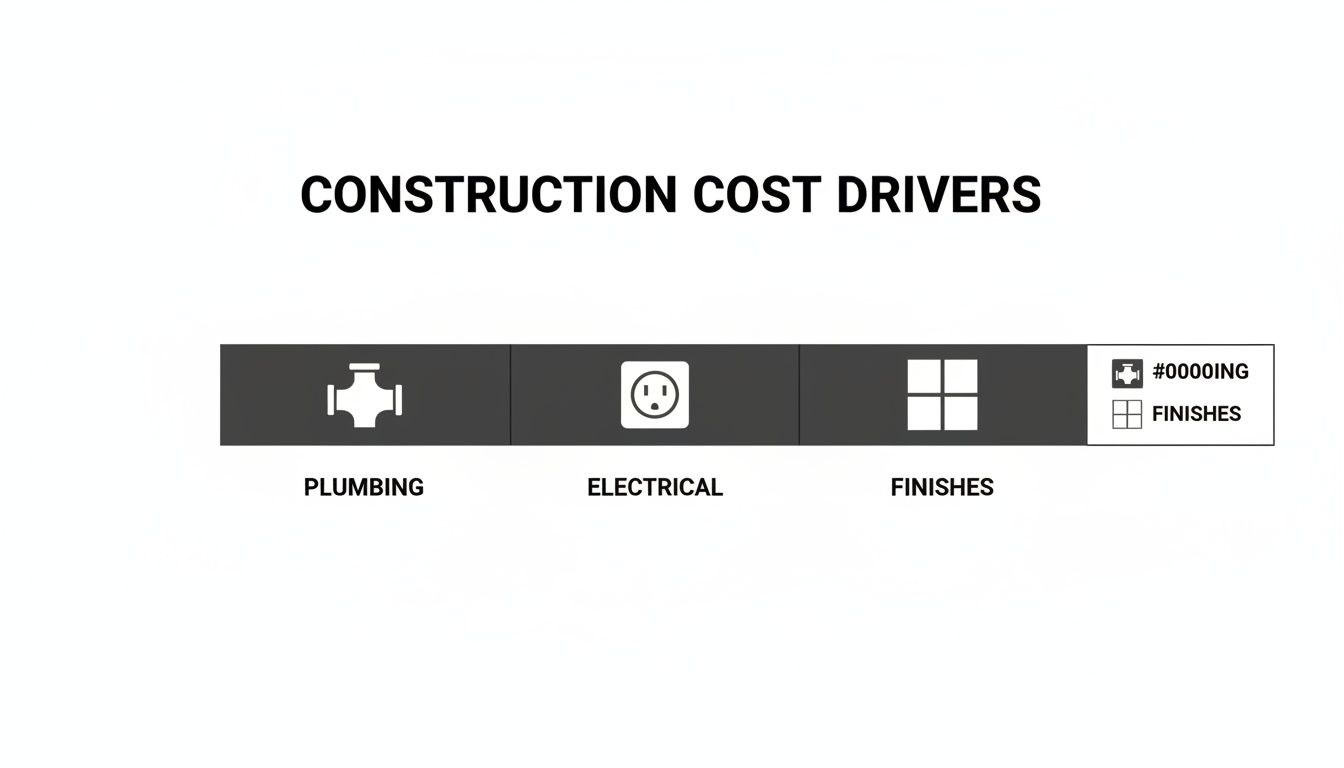
While the initial plumbing work is a significant investment, it’s the finishes—the tile, fixtures, and vanities—that can really make the budget climb, especially as you move into more high-end projects.
The Low-End Scenario: A Practical and Functional Space
Let's say you just need a simple, no-nonsense bathroom for a new basement bedroom or workout space. The goal here isn’t luxury; it’s all about function and sticking to a tight budget. This is where smart, cost-effective decisions are key.
For this kind of project, we’d aim to place the new bathroom as close as possible to existing plumbing stacks. This simple decision can save a ton of money by minimizing the need to break up concrete.
Key features usually include:
- Prefabricated Shower Stall: Instead of a custom-tiled shower, we’d install a one-piece acrylic or fiberglass unit. It’s a clean look that saves hundreds, if not thousands, on materials and labor.
- Basic Fixtures: Think standard, builder-grade toilets, a simple pedestal sink, or a small, off-the-shelf vanity with basic chrome faucets.
- Flooring and Walls: Durable and waterproof Luxury Vinyl Plank (LVP) is a fantastic choice for the floor, paired with standard drywall and a fresh coat of paint.
- Lighting and Ventilation: A single vanity light and a standard, code-compliant exhaust fan get the job done without any fuss.
A project like this typically lands in the $12,000 to $20,000 range. You get a clean, fully functional bathroom that adds essential utility to your basement without the high-end price.
The Mid-Range Scenario: The Perfect Balance of Style and Value
This is the sweet spot for most homeowners here in the Orem and Provo areas. It’s where you can blend durable, attractive materials with a few smart upgrades to create a space that feels comfortable and looks fantastic without completely blowing the budget.
This is by far the most common type of basement bathroom we build, and it adds serious usability and value to a home. While basement remodeling costs have definitely gone up, strategic choices here maximize your return. Research shows that 65% of homeowners who add a basement bathroom report a huge jump in home usability, and 40% see faster sales at 5-10% higher prices. The key is using quality mid-range finishes (around $50-$75/sq ft) like nice tile and recessed lighting, while avoiding luxury materials (over $130/sq ft) that can eat into your ROI. You can read more about basement remodel returns to see how the numbers break down.
Here’s what you can expect from a mid-range build:
- Tiled Shower: A walk-in shower with classic ceramic or porcelain tile and a nice glass door instantly makes the space feel more custom and upscale.
- Upgraded Vanity: A larger vanity with a solid countertop, like quartz or granite, provides much-needed storage and a touch of elegance.
- Improved Lighting: We’d install recessed lighting throughout the space, plus a more stylish vanity light, to create a much brighter and more inviting atmosphere.
- Nicer Finishes: This is where you can upgrade to fixtures in a brushed nickel or matte black finish and choose a nicer tile for the floor.
A mid-range basement bathroom usually falls between $20,000 and $35,000. It’s an investment that delivers a highly attractive and functional space that will seriously enhance your home’s appeal for years to come.
The High-End Scenario: Creating a Luxurious Retreat
If you’re dreaming of a spa-like oasis in your basement, this is the route for you. A high-end project is all about premium materials, custom features, and ultimate comfort. We're not just adding a bathroom; we're creating a destination within your home.
At this level, we’re often dealing with more complex plumbing work, sometimes even relocating drain lines to get the layout exactly right. It's all about making zero compromises on the vision.
Luxury features could include:
- Custom Walk-In Shower: Imagine floor-to-ceiling designer tile, a frameless glass enclosure, a rain shower head, and maybe even a few body sprays.
- Heated Floors: Nothing says luxury like radiant floor heating. Stepping onto warm porcelain or natural stone tile on a cold morning is an unbeatable feeling.
- High-End Vanity and Fixtures: A custom or semi-custom double vanity with premium countertops and top-of-the-line faucets becomes a beautiful focal point.
- Ambiance and Tech: We can add a separate water closet for the toilet, sophisticated layered lighting on dimmers, and even built-in Bluetooth speakers for a true spa experience.
A luxury basement bathroom typically starts at $35,000 and can easily climb past $50,000 or more, depending on how custom you want to get. This is a true statement piece for your home.
Sample Basement Bathroom Budgets
To make it even clearer, here's a side-by-side comparison of what you might get at each budget level. This table helps illustrate how specific choices in fixtures, materials, and features directly impact the total cost.
| Plumbing & Drains | Close to existing lines | Moderate trenching | Complex rerouting/pumps |
| Shower | Prefab fiberglass unit | Tiled shower, glass door | Custom tile, rain head, body jets |
| Vanity & Sink | Off-the-shelf single vanity | Upgraded vanity, stone top | Custom double vanity, premium tops |
| Toilet | Standard builder-grade | Comfort height, efficient flush | High-end model, separate WC |
| Flooring | Luxury Vinyl Plank (LVP) | Ceramic or porcelain tile | Natural stone tile, heated floors |
| Lighting | Basic vanity light & fan | Recessed lights, stylish vanity | Layered lighting, dimmers, smart tech |
| Fixtures | Chrome (basic) | Brushed Nickel or Matte Black | Premium brands, specialty finishes |
| Estimated Total Cost | $12,000 - $20,000 | $20,000 - $35,000 | $35,000+ |
As you can see, the jump from one tier to the next is defined by the quality of materials and the complexity of the installation. A basic project gets the job done, while a high-end project is about crafting a unique and luxurious experience.
Is a Basement Bathroom a Good Investment?
When you see the final bill for a new bathroom, it's easy to get sticker shock. But adding a bathroom to your basement isn't just an expense—it's one of the smartest investments you can make in your home. This one project does more than add convenience; it fundamentally boosts your property's value.
A finished basement with its own bathroom is a massive selling point. It transforms what many buyers consider glorified storage space into true, functional living area. Suddenly, your basement is a guest suite, a family rec room, or the perfect home office, making your house stand out and attracting a much wider pool of serious buyers.
How Much Value Does a Basement Bathroom Really Add?
This is where the project really starts to make sense financially. While you're putting money in upfront, a good chunk of it comes right back to you in the form of increased home equity. A well-designed and properly built basement bathroom is one of the most reliable ways to bump up your home's appeal and, ultimately, its selling price.
This isn't just a hunch; the numbers back it up. Industry data consistently shows that bathroom additions offer a strong return. According to the Remodeling Impact Report from the National Association of the Remodeling Industry (NARI), a mid-range bathroom project can recoup nearly 80% of its cost, while even an upscale one can bring back around 42.2%.
More specifically, homeowners who add a bathroom to their basement typically see a 60-80% return on their investment. And that’s on top of getting to enjoy the extra space for years. You can discover more about these remodeling statistics and see how different projects stack up.
Finding the Sweet Spot for the Best ROI
Here’s a secret not everyone realizes: spending more doesn't automatically mean a bigger return. The real key is striking the perfect balance between quality craftsmanship and sensible spending.
Sure, imported Italian marble and gold-plated faucets sound amazing, but they can easily price your home beyond what local buyers are willing to pay. This can actually lower the percentage of the cost you get back at resale.
The projects with the best ROI are the ones that feel right for the home. A clean, modern, and highly functional mid-range bathroom appeals to the widest audience without seeming over-the-top or out of place.
This smart approach makes your home more enjoyable for you and ensures you get the most money back when it's time to sell. For a deeper look at which upgrades give you the most bang for your buck, check out our guide on home remodel return on investment.
Ultimately, adding a basement bathroom is a win-win. You get a more versatile and comfortable home to live in now. And later, that investment pays off with a higher sale price and a quicker, easier selling experience. It’s a project that pays dividends in both lifestyle and equity.
Why a Professional Contractor Is Worth the Investment
Let's be honest, tackling a basement bathroom as a DIY project seems like a fantastic way to save a few bucks. But of all the home renovations to try on your own, this is one of the riskiest. We're not just talking about hanging drywall or painting; this job involves complex systems buried behind walls and under concrete—systems that can cause a world of hurt if they aren't handled perfectly.
This is where hiring a pro contractor really shows its value.
Picture this: a tiny, almost unnoticeable leak in a DIY plumbing fitting slowly drips inside your new wall cavity. For months, it seeps into the framing and drywall. You don't know it's happening until you catch that telltale musty smell. By then, you’re looking at thousands of dollars in mold remediation and tear-out, completely erasing any money you thought you saved.
A seasoned pro knows the unique headaches of below-grade plumbing and makes sure every single connection is rock-solid.
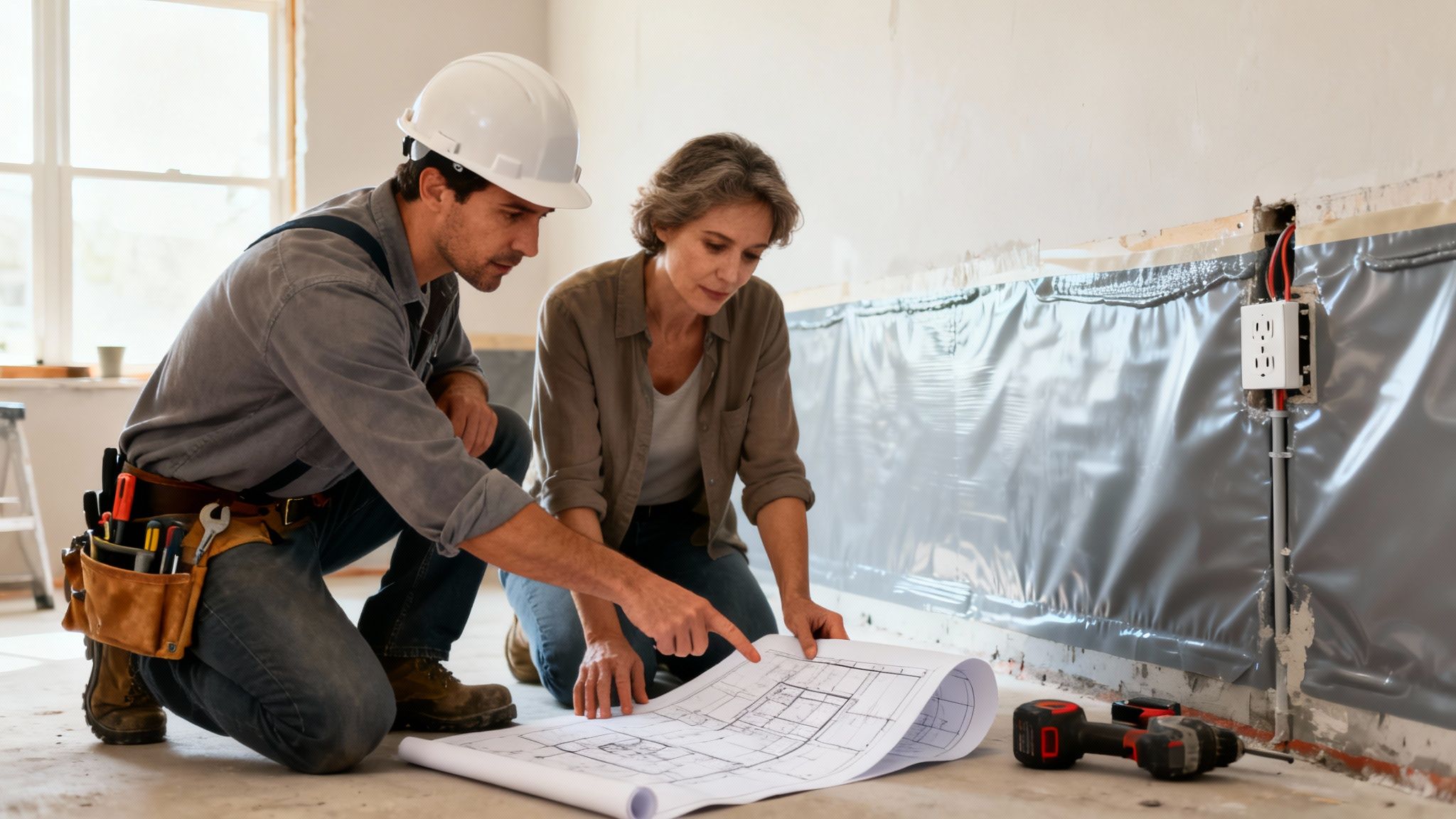
Navigating Codes and Preventing Hazards
The risks go way beyond just leaks. Messing up the venting, for example, isn't just a minor goof. It can allow dangerous sewer gases to silently seep into your home, creating a serious health hazard for your family. That's not something you want to gamble on.
On top of that, every part of a new bathroom—from the wiring to the plumbing layout—has to meet strict local building codes here in the Orem and Provo area. A good contractor manages all of that for you, from pulling the right permits at the city office to making sure everything is ready for the inspectors.
Failing a code inspection isn't just an annoying delay. It can create a permanent record tied to your property, making it a major headache when you eventually sell your home. You'll either have to pay for expensive fixes then or disclose the unpermitted work, which can tank your home's value.
The True Value of Expert Project Management
Bringing in an experienced general contractor is about more than just avoiding catastrophe. It's about making sure the entire project runs smoothly from start to finish. They act as the quarterback, coordinating a team of trusted plumbers, electricians, and tilers they've worked with for years. This prevents costly delays and ensures a high standard of quality every step of the way.
That kind of oversight is what separates a stressful, problem-filled project from a seamless renovation that gets done right the first time. To make sure your investment is in good hands, learning how to choose the right renovation contractor is key. And for anyone here in Utah, our local guide on how to choose a general contractor has some great pointers.
At the end of the day, a professional’s fee is the best insurance policy for your project. They protect you from hidden dangers, handle the red tape, and deliver a finished bathroom that is safe, beautiful, and adds real value to your home. That makes it a worthwhile part of the total cost of a basement bathroom.
Common Questions About Basement Bathroom Costs
Even with a solid plan in hand, a few practical questions almost always come up once you start digging into the details. Getting these sorted out ahead of time is the key to setting a realistic budget and moving forward with confidence.
So, how long does this all take? For a pretty standard basement bathroom, you should plan on a timeline of 4 to 8 weeks from the first swing of the hammer to the final coat of paint. That window can shift based on things like complex plumbing rerouting, waiting on city inspections, or delays in getting custom-ordered tile or a specific vanity.
Can I DIY Parts of the Project to Save Money?
You absolutely can, but you have to be smart about what you tackle yourself. While saving a chunk of change on labor sounds great, some jobs are non-negotiable for the pros. Getting them wrong can lead to dangerous situations and repairs that cost way more than hiring an expert in the first place.
Here are a few tasks that are generally safe to DIY:
- Painting: This is a classic way to save a few hundred dollars and put your own stamp on the space.
- Installing a vanity or mirror: As long as you’re not touching the plumbing or electrical connections, this is usually a straightforward job.
- Trim work: Putting up baseboards and door casings is a great weekend project if you're comfortable with a saw and nail gun.
And here’s what you should always leave to a licensed professional:
- Plumbing: This is the big one. Botched drain lines or vents don't just cause leaks—they can let hazardous sewer gas into your home. It has to be perfect.
- Electrical work: There's no room for error here. Faulty wiring is a serious fire risk and must be done by a licensed electrician who knows the code inside and out.
- Waterproofing: Properly sealing a below-ground space from moisture is a specialized skill. A pro will know how to protect your investment for the long haul.
The biggest surprise cost we see homeowners run into? Having to break up the concrete floor. If your new bathroom isn't right next to existing plumbing stacks, trenching new drain lines involves heavy equipment and a lot of labor, which can easily add thousands to the final bill.
What Type of Toilet Is Best for a Basement?
This is a critical decision, and it really comes down to how your home's plumbing is set up. You've got three main choices, and each one affects the cost of a basement bathroom differently.
Standard Toilet: This is the dream scenario. If your house was built with "gravity fall" plumbing—meaning the basement drain is already lower than the main sewer line—you can use a regular toilet. It's by far the simplest and most affordable option.
Sewage Ejector System: This is the most common workhorse for basement bathrooms. It involves a sealed basin set into the floor with a pump inside that actively pushes waste up to the sewer line. It's incredibly reliable but does require breaking up concrete to install.
Up-Flush Toilet: Think of this as a self-contained unit. The toilet sits on top of the floor and has a macerating (grinding) pump at its base that sends waste up and out through a small-diameter pipe. The big win here is avoiding concrete work, but the toilet unit itself is more expensive.
Thinking through these details is what separates a smooth project from a stressful one. If you're in the Orem or Provo area and would rather have an expert partner manage all these moving parts, the team at Northpoint Construction is here to bring your vision to life. Learn more about our basement finishing services and get started today.