
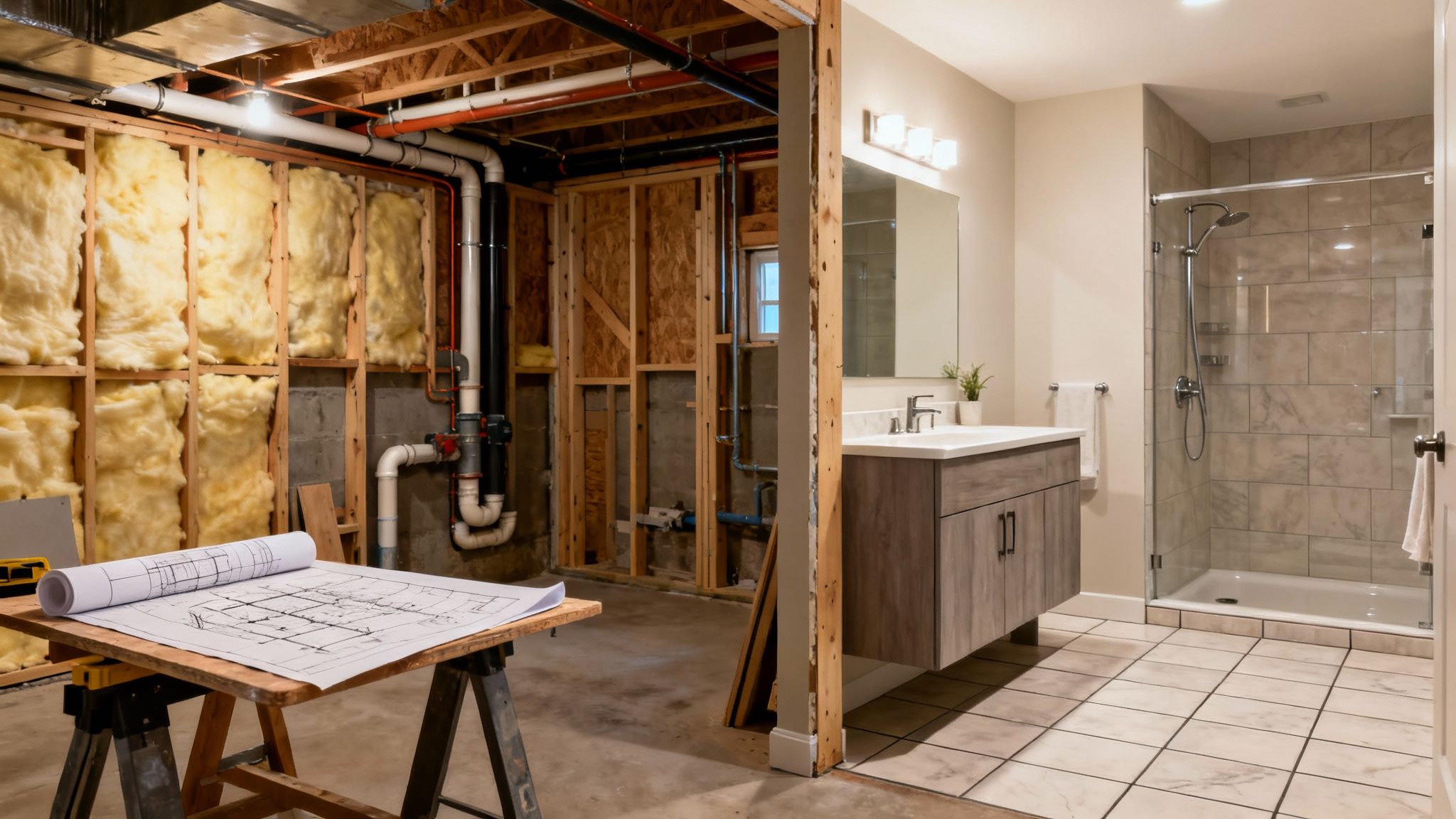
Your Guide to the Cost to Finish a Basement with a Bathroom
If you're thinking about finishing your basement and adding a bathroom here in Utah, you're probably wondering what it's going to cost. Let's get straight to the numbers. Most homeowners can expect to invest somewhere between $35,000 and $75,000, with a common sweet spot falling in the $45,000 to $60,000 range.
That's a pretty wide spread, right? That’s because the final price really comes down to a few key things: the overall size of your basement, the kind of bathroom you decide to add, and the quality of the finishes you pick out.
Your Quick Guide to Basement Finishing Costs
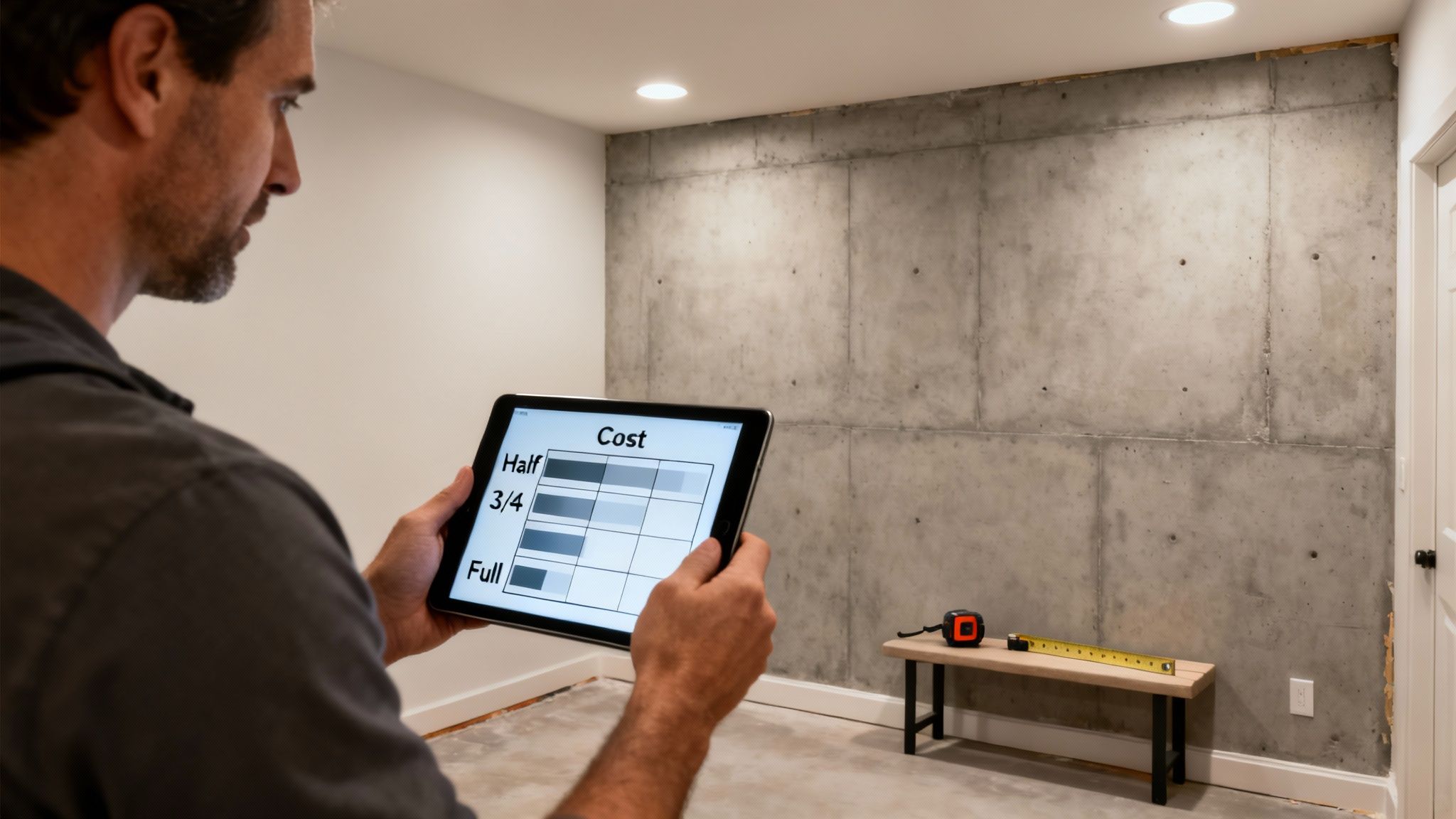
Trying to pin down the cost to finish a basement with a bathroom can feel a bit overwhelming at first. Are you picturing a simple, functional space or a high-end retreat? The answer to that question is what really drives the budget. This section is designed to give you that quick, big-picture overview before we start digging into every little detail.
Think of these numbers as a starting point to set some realistic expectations. Factors like square footage, the materials you choose, and even local labor rates around Utah County can swing the final cost quite a bit.
Understanding the Price Range
Those numbers aren't just pulled out of thin air; they reflect the real choices you'll make. For example, finishing a small 500-square-foot area with a basic half-bath will keep you on the lower end of that budget.
On the flip side, if you're transforming a sprawling 1,500-square-foot basement with a spa-like full bathroom, custom cabinetry, and premium flooring, you'll naturally be looking at the higher end of the spectrum.
The Impact of Adding a Bathroom
The bathroom itself is one of the biggest line items in the budget. The type you choose—whether it's a simple half-bath, a more functional three-quarter, or a full bathroom with a tub—has a massive impact on the plumbing work, the cost of fixtures, and the amount of labor needed to get it done right.
To give you a clearer idea, here’s a quick-glance table breaking down the typical costs.
Estimated Cost Overview for Basement Finishing with a Bathroom
This table provides a snapshot of what you can expect to budget for different types of basement finishing projects that include a bathroom. Keep in mind these are averages, and your specific project will vary based on your choices.
| Basement with a Half Bathroom (Powder Room) | $35,000 – $50,000 | Size of basement, basic finishes, minimal plumbing complexity (toilet, sink only). |
| Basement with a Three-Quarter Bathroom (Shower) | $45,000 – $65,000 | Added cost for shower installation, waterproofing, tile work, and upgraded fixtures. |
| Basement with a Full Bathroom (Tub/Shower Combo) | $50,000 – $75,000+ | More complex plumbing, cost of bathtub, extensive tile, potential for luxury upgrades. |
Ultimately, this table helps illustrate how the bathroom decision alone can shift your budget by tens of thousands of dollars.
Recent Cost Trends and Local Factors
It’s also smart to keep an eye on what’s happening in the market. Over the past few years, construction costs have been on the rise due to inflation and supply chain headaches. The good news for us here in Utah is that our labor rates often run 10-15% lower than in other parts of the country.
Still, you can expect the baseline cost for a quality finish to be between $30 and $75 per square foot. For a more precise estimate tailored to your home and vision, a great next step is to use a basement finishing cost calculator. It helps you plug in your own numbers and see where you might land.
Breaking Down Your Basement Remodel Budget
That big, all-in number for a basement finish can be a real shock to the system. But don’t let it intimidate you. Finishing a basement is just like any other construction project—the final price is simply all the little pieces added together.
When you break down the cost to finish a basement with a bathroom into individual line items, that scary number turns into a manageable checklist. Think of it like a recipe. Each ingredient—the lumber for framing, the pipes for the bathroom, the wires for the lights—has its own cost. Seeing it laid out this way helps you understand exactly where your money is going, making it easier to decide where to splurge and where you might be able to save a few bucks.
Let's walk through the whole process, from the studs to the paint, so you can see how a professional budget really comes together.
The Foundational Costs: Framing and Insulation
Before you can even think about paint colors, you need to build the rooms. Framing is the skeleton of your new living space, outlining the future bedrooms, family room, and, of course, the new bathroom. Here in Utah, you can generally expect framing costs to run between $7 and $16 per linear foot.
Once the frame is up, we move on to insulation. This is absolutely critical for a comfortable basement. Good insulation doesn't just keep the space warm in the winter; it also acts as a vital moisture barrier and dampens sound. It's a non-negotiable investment if you want to create a space that actually feels like part of your home.
The Big Three: Plumbing, Electrical, and HVAC
This is where a good chunk of the budget gets spent, especially when you're adding a bathroom from scratch.
- Plumbing: Putting a bathroom in a basement isn't as simple as it is upstairs. It often means cutting into the concrete foundation to run new drain and supply lines, not to mention figuring out the proper venting. This is skilled, heavy-duty work, which is why the plumbing rough-in alone can add $3,000 to $8,000 (or more) to the project total.
- Electrical: Your new living area needs power. An electrician will run all the wiring for outlets, light switches, and light fixtures. The cost here really depends on the scope—a simple family room is one thing, but adding lots of recessed can lights, dedicated circuits for a home theater, or fancy sconces will increase the price.
- HVAC: To make your basement truly livable, you have to connect it to your home's main heating and cooling system. This usually involves adding new ductwork and vents to ensure the air circulates properly and the temperature stays comfortable year-round.
Bringing the Space to Life: Drywall and Finishes
With the "bones" and guts of the project in place, it's time for the fun part—making it look like a real room. Hanging, taping, and texturing the drywall is what turns that wooden skeleton into solid walls. This step typically costs $1.50 to $3.00 per square foot.
After the drywall is up, the finishing touches are what really define the space. This is also the category with the biggest price swings because it’s all about your personal taste. Paint, trim, doors, cabinets, countertops—it all happens here.
Budgeting Tip: The finishes are where you have the most control over the final cost. Splurging on high-end custom cabinetry will send the price soaring, but choosing quality, mid-range flooring and standard light fixtures can keep your project on track without looking cheap.
Getting a handle on your numbers from the very beginning is key. It’s always worth learning more about estimating renovation costs accurately before you get too far down the road.
To give you a clearer picture, here is a sample budget that shows how the costs typically get distributed for a standard, mid-range project.
Sample Budget Breakdown for a Mid-Range Basement Finish with Bathroom
| Framing & Insulation | 10% - 15% | $3,500 - $6,000 |
| Plumbing | 15% - 20% | $5,250 - $8,000 |
| Electrical & HVAC | 10% - 15% | $3,500 - $6,000 |
| Drywall & Painting | 10% - 12% | $3,500 - $4,800 |
| Bathroom Fixtures & Tile | 8% - 12% | $2,800 - $4,800 |
| Flooring | 7% - 10% | $2,450 - $4,000 |
| Doors, Trim & Finishes | 5% - 8% | $1,750 - $3,200 |
| Labor & Project Mgmt | 20% - 25% | $7,000 - $10,000 |
| Permits & Fees | 2% - 3% | $700 - $1,200 |
| Contingency Fund (10%) | 10% | $3,500 - $4,000 |
| TOTAL ESTIMATED COST | 100% | $35,000 - $48,000 |
Keep in mind these are just estimates. Your final numbers will depend on the size of your basement, the materials you choose, and the contractor you hire.
Flooring and Final Touches
The last major piece of the puzzle is the flooring. What you choose will have a huge impact on both the look and durability of your basement. Luxury Vinyl Plank (LVP) is incredibly popular because it's waterproof and tough, typically running $3 to $12 per square foot installed. Other options like tile or plush carpet can easily climb up to $30 per square foot for high-end materials.
Recent numbers show how quickly these costs add up. In 2026, the average cost to finish a 500-square-foot basement with a half bath in a market like Utah is hovering around $28,000 to $35,000. That's a 5.6% jump from the year before, pushed up by inflation and material shortages—concrete prices alone spiked by 13.9%. For most Utah homeowners, the budget starts with the basics like framing and drywall, but it’s the addition of that bathroom plumbing that really moves the needle on the final price tag.
How Bathroom Choices Impact Your Total Cost
When you're mapping out the budget for a basement finish, it’s easy to think "a bathroom is a bathroom." But in reality, the type of bathroom you choose is one of the single biggest drivers of your final cost. This decision ripples through everything—the complexity of the plumbing, the price of fixtures, the need for proper ventilation, and even the final square footage of the project.
Think of it like adding a new stop on a road trip. A half bath is like a quick, convenient pit stop. It’s simple, efficient, and doesn’t add much time or expense. A full bathroom, on the other hand, is a full-service rest area with all the amenities. It's a fantastic addition, but it requires a lot more infrastructure and a much bigger investment to build.
The Half Bath: A Smart and Budget-Friendly Option
A half bath, sometimes called a powder room, keeps it simple with just two fixtures: a toilet and a sink. From a cost perspective, that simplicity is its greatest strength. The plumbing is far less complicated because you only need a cold water line for the toilet, hot and cold lines for the sink, and a single drain system.
With its small footprint and minimal fixture count, a half bath is easily the most affordable way to add real convenience to your new basement space. It gives you all the essential functionality without the major expenses that come with installing a shower or tub. It's the perfect choice if you're planning a family room, home office, or entertainment hub and need to keep a close eye on the budget.
The image below shows how foundational construction costs are the base of your budget, and a bathroom is an additional layer built on top of that.
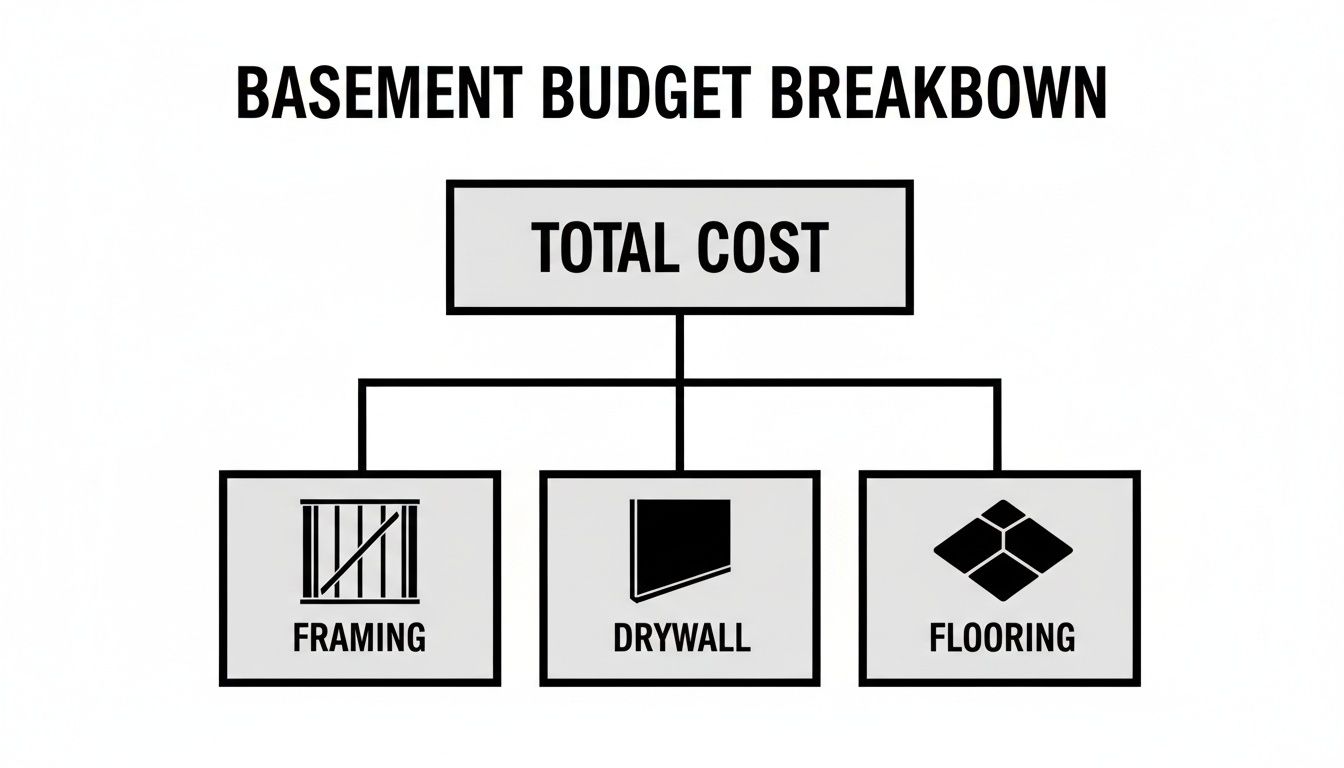
This helps visualize that while the core buildout has its own price tag, the specific choices you make for specialized areas like a bathroom will add another significant layer to the final number.
The Three-Quarter Bath: The Perfect Middle Ground
Taking a step up, the three-quarter bath includes a toilet, a sink, and a standalone shower. This option adds a ton more functionality, making it a great fit for a guest space or a basement with a home gym. Of course, that extra function comes with a noticeable price jump.
Here's a quick look at why it costs more:
- Complex Plumbing: A shower demands much more from your plumbing system. You'll need a larger drain line, dedicated hot and cold supply lines, and a shower valve system that gets installed deep within the walls.
- Waterproofing: You can't cut corners here. The entire shower stall has to be meticulously waterproofed to stop moisture from getting into the walls and causing serious damage down the line. It's a detailed, labor-intensive process.
- Tile and Finishes: Most showers involve a good amount of tile work for the walls and floor, not to mention a glass door or curtain rod. All of these materials and the skilled labor to install them add up.
A three-quarter bath really strikes a nice balance between utility and cost, giving you a huge upgrade in convenience without committing to the full expense of a bathtub.
The Full Bath: A Major Investment in Luxury
A full bath is the top-tier option, and it comes with the highest price tag. It features a toilet, a sink, and either a combination tub-shower or a separate tub and shower. Choosing a full bath essentially turns your basement into a completely independent living area—perfect for creating a true guest suite or an in-law apartment.
For a typical 600-800 sq ft project in 2026 U.S. markets, adding a full bathroom can dramatically elevate the total cost to $38,000-$55,000. The bathroom alone can contribute $6,000-$18,000 or more, depending on features like a separate shower or a soaking tub.
Here in Utah County, where Northpoint Construction specializes in these kinds of custom remodels, plumbing labor can run from $45-$200 per hour, with the total plumbing package for a new basement bath landing anywhere from $2,500-$15,000. That's before accounting for the unique venting and drainage work needed for below-grade installations. National data shows that high-end finishes can push the per-square-foot cost into the $90-$130 range, as larger bathrooms often require extended HVAC runs and other structural modifications.
This level of investment also forces you to think about your home's other systems. For instance, a full bath that will see frequent use might overwhelm your current water heater. It's wise to consider all your options by looking at a Tankless Water Heater vs. Traditional comparison to see what makes sense for your home. For an even deeper dive into where every dollar goes, take a look at our complete bathroom renovation cost breakdown.
Navigating Utah-Specific Costs and Hidden Expenses
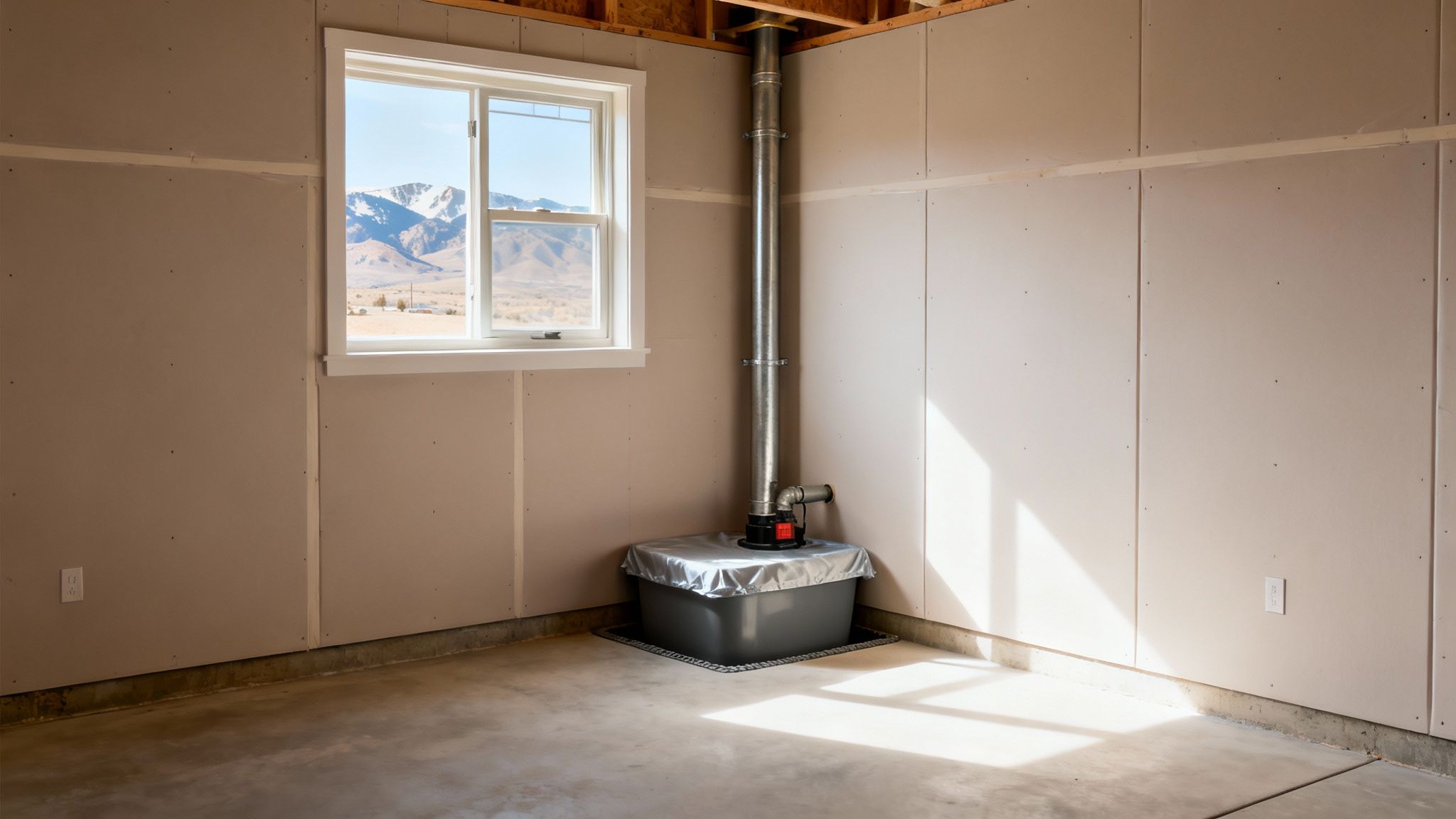
While national averages can give you a ballpark idea, the true cost to finish a basement with a bathroom really comes down to what's happening locally. Here in Utah, our unique climate and soil conditions bring their own set of rules to the game—things homeowners in other states might never think about. Getting a handle on these local quirks is the secret to building a budget that doesn't fall apart halfway through the project.
From Orem to Lehi, we're not just making a basement look nice; we're building it to last against our specific environmental challenges. This is about making your new space safe, healthy, and durable for years to come. Thinking about these Utah-specific needs right from the start is the best way to avoid sticker shock and protect your investment.
Dealing with Utah's Unique Environment
One of the very first things a good contractor will look at is your foundation and the ground it’s sitting on. Utah is known for its expansive clay soils, which can exert a ton of pressure on foundation walls. This makes high-quality moisture control an absolute must-have for any basement project around here. It’s not just a "nice-to-have"—it's a critical defense against future water damage, mold, and bigger structural problems.
On top of that, radon gas is a real concern across much of our state. This invisible, naturally occurring gas can find its way into your home through tiny cracks in the foundation. That's why radon mitigation systems are often a necessary, and very wise, part of the plan. It’s all about making sure the air your family breathes down there is safe.
Think of moisture and radon control as foundational, not optional. Here in Utah, they are essential for a safe, code-compliant basement. Investing in a quality sump pump and a mitigation system now can save you a world of headaches and thousands of dollars down the road.
Uncovering Common Hidden Costs
Beyond our local environment, a few other expenses have a knack for surprising homeowners. These aren't the costs you'll see in a simple online calculator, but they are very real and need a spot in your budget.
- Egress Windows: This is a big one. If you're adding a bedroom, Utah building code demands an egress window—one large enough for a person to escape in an emergency. This isn't a simple window swap. It involves cutting through your concrete foundation, digging a window well, and ensuring everything is properly waterproofed. This job alone can add $3,000 to $6,000, sometimes more, to the project.
- Sump Pump Upgrades: Does your home have an older sump pump? It might not have the power to protect a fully finished living space. Upgrading to a more robust model, especially one with a battery backup, is a smart move. It’s your best insurance policy against a flooded basement when the power goes out during a storm.
- Electrical Panel Enhancements: A new living area with a bathroom, dedicated lighting, and plenty of outlets puts a much bigger strain on your home's electrical system. If your current breaker panel is already full, you'll need to upgrade it to handle the new load safely.
- Debris Removal: Let's face it, construction is messy. You have to account for the cost of a dumpster rental and the labor to haul away all the old drywall, wood scraps, and other demolition waste. It's a real expense that needs to be in the budget.
By planning for these Utah-specific needs and often-overlooked costs from the get-go, you can turn a vague estimate into a solid financial plan. That kind of foresight is what separates a stressful, budget-busting project from a smooth and successful one.
Understanding Your Return on Investment
It’s easy to get laser-focused on the upfront cost of finishing a basement with a bathroom. But that’s only half the story. A well-designed basement remodel isn't just an expense—it's one of the smartest investments you can make in your property.
Think about it: you're not building a whole new addition from scratch. You're transforming square footage you already own from a concrete box into a valuable, functional part of your home. This makes it a uniquely powerful and cost-effective upgrade.
Calculating the Financial Payback
On a national level, finishing a basement consistently delivers a strong return. Homeowners can typically expect to see a return on investment (ROI) of around 70-75% when it comes time to sell.
What does that mean in real dollars? For every dollar you put into the project, you can realistically expect your home’s sale price to increase by about 70 to 75 cents. That's a solid financial move, especially when you stack it up against other popular renovations. While a major kitchen overhaul might offer a similar return, it usually costs a lot more and completely disrupts the heart of your home for weeks on end.
A finished basement with a bathroom doesn't just add value; it adds serious marketability. It's a standout feature that tells buyers your home is move-in ready with a guest suite, an entertainment hub, or even a potential rental space already built in.
Maximizing Your ROI with Smart Choices
Getting that high return isn't a given, though. It all comes down to making smart, forward-thinking decisions before the first wall ever goes up. The key is to create a space that feels timeless and is built to last, appealing to the widest possible range of future buyers. You can dive deeper into which upgrades add the most value in our guide to home remodel return on investment.
Here are a few practical ways we guide our clients to protect their investment:
- Choose Durable Flooring: We almost always recommend Luxury Vinyl Plank (LVP). It's completely waterproof—a must for basements—and tough enough to handle anything you throw at it. Plus, it gives you a high-end wood look without the high-end price tag.
- Stick with Classic Fixtures: When you're picking out faucets, lights, and bathroom hardware, go for timeless finishes like brushed nickel or chrome. They have broad appeal and won't look dated in five years like some of the trendier options might.
- Focus on a Flexible Layout: Design an open, adaptable floor plan. A large family room and a simple guest bedroom will appeal to far more buyers than a niche space like a custom home theater or a dedicated wine cellar.
By focusing on quality and function, your finished basement stops being just "extra space" and starts being a true asset that pays you back—both in daily enjoyment and in long-term equity.
Choosing the Right Contractor for Your Project
Let's be blunt: choosing the person who will bring your basement vision to life is the single most important decision you'll make. A great contractor is a true partner, guiding you through the maze of below-grade construction to make sure the final space is beautiful, safe, and built to last. The wrong one? They can turn your dream project into a stressful, budget-busting nightmare.
The cost to finish a basement with a bathroom is directly tied to the quality of the team you hire. It's so tempting to just grab the cheapest bid and run, but that's a classic rookie mistake that almost always leads to costly fixes down the road. Real value comes from a pro with proven experience, especially one who knows the ins and outs of basement-specific challenges, from tricky plumbing to complex electrical runs.
Vetting Potential Contractors
Before you even think about signing a contract, you have to do your homework. A reputable contractor will be an open book, ready and willing to answer all your questions. Treat it like an interview—because that’s exactly what it is. You’re hiring them for a major job, and you need to feel 100% confident they can deliver.
Start with the non-negotiables. Any legitimate contractor should be able to instantly show you proof of their license and insurance. This isn't just a formality; it's your safety net. If an accident happens on your property and they aren't insured, you could be the one on the hook for injuries or damages.
Next, you need to see their work. A photo gallery is a good start, but getting to see a local project in person or—even better—speaking with previous clients is where the real insight comes from. This gives you a firsthand look at their craftsmanship and a chance to ask former customers about how the contractor handled timelines, communication, and sticking to the budget.
Critical Questions to Ask Every Contractor
To make sure you're making a smart choice, walk into every meeting with a list of specific questions. This little checklist will help you cut through the sales pitch and compare companies on what really matters.
- Are you licensed and fully insured here in Utah? Don't just take their word for it. Ask to see the actual documents for their general liability and worker's compensation policies.
- Can I see a portfolio and speak to references from recent basement projects? You want to see projects that are similar to yours, especially ones that involved adding a new bathroom from scratch.
- How will you manage my project and keep me in the loop? Find out if you'll have a dedicated project manager and how often you can expect to get updates. Good communication is key.
- What's your process for permits and inspections? An experienced contractor takes care of all the paperwork and schedules every municipal inspection. This is crucial for making sure your project is fully code-compliant.
- Can you give me a detailed, itemized quote? A vague, one-page estimate is a huge red flag. You need a clear breakdown of costs for materials, labor, permits, and any allowances for fixtures.
- How do you handle changes or unexpected problems? Surprises happen. Ask about their process for change orders. A professional will have a clear system for documenting and getting your approval on any adjustments to the plan.
Your goal isn't just to hire a crew; it's to find a partner. A contractor who communicates clearly, respects your budget, and has a proven track record of quality work is worth every penny. This partnership is what ensures your project gets done right the first time, saving you from a world of expensive repairs and headaches later on.
Answering Your Top Basement Finishing Questions
Once you start seriously thinking about a basement remodel, the questions start popping up. It's totally normal. You're moving from a big-picture idea to the nitty-gritty details of timelines, permits, and budgets. Let's tackle some of the most common questions we get from homeowners right here in Utah.
Think of this as our expert FAQ session. Getting these key questions answered will help you build a solid plan and move forward with confidence, knowing you've covered all the important bases.
How Long Does It Take to Finish a Basement with a Bathroom?
This is usually the first thing people ask, and for good reason! From the day we start construction to the final walkthrough, a full basement finish that includes a new bathroom typically takes between 8 and 12 weeks.
That timeframe gives us the space to do things right. It accounts for initial steps like framing and getting the plumbing and electrical roughed in, all the way through to the final finishes like paint, flooring, and installing the fixtures. We also build in a little wiggle room, because sometimes things like a back-ordered tile or a city inspector's schedule can cause minor, unpredictable delays.
Do I Really Need a Permit to Finish My Basement in Utah?
Yes, absolutely. For a project like this in Utah, a building permit is non-negotiable. Anytime you're changing your home's structure, running new electrical wiring, or adding new plumbing lines, the local authorities need to sign off on it. A basement finish with a bathroom involves all three.
Think of a permit less as red tape and more as your project's insurance policy. It's the official system that ensures all the work is done safely and up to current building codes. This protects your family, preserves your home's value, and prevents major headaches when you eventually decide to sell.
Where Can I Save Money with a Little DIY?
It's smart to look for places where you can save on the total cost to finish a basement with a bathroom. A little sweat equity can go a long way, but you have to be strategic about what you tackle yourself.
Here are a few DIY tasks that can genuinely save you some money without compromising the project:
- Painting: This is the classic DIY win. Priming and painting the walls and ceiling is a straightforward job that can cut a decent chunk from your labor costs.
- Installing Trim: If you're patient and have a miter saw, installing baseboards and door casings is a manageable weekend project.
- Assembling Cabinetry: Putting together flat-pack or pre-fab vanities and cabinets can definitely save you a few bucks.
Now for the important part: leave the critical systems to the pros. Electrical wiring, plumbing, and anything structural are not areas for DIY experiments. A single mistake here can be dangerous, lead to a failed inspection, and cost far more to fix than you would have saved in the first place.
What Is the Best Flooring for a Basement Bathroom?
Down in the basement, moisture is the enemy. So when you're choosing flooring for a bathroom down there, water resistance has to be your top priority. Your two best bets are going to be Luxury Vinyl Plank (LVP) and classic ceramic or porcelain tile.
LVP is a fantastic all-around choice. It’s 100% waterproof, incredibly durable against scratches and dents, and feels a lot warmer on your feet than tile does on a cold morning. Tile, of course, is the undefeated champion of water resistance and will last forever, but it can be pretty chilly unless you install radiant heating underneath. You really can't go wrong with either one.
Ready to turn your basement vision into a reality? The team at Northpoint Construction has the expertise to guide you through every step, ensuring your project is completed on time, on budget, and to the highest standards. Contact us today to start planning your perfect basement space.