
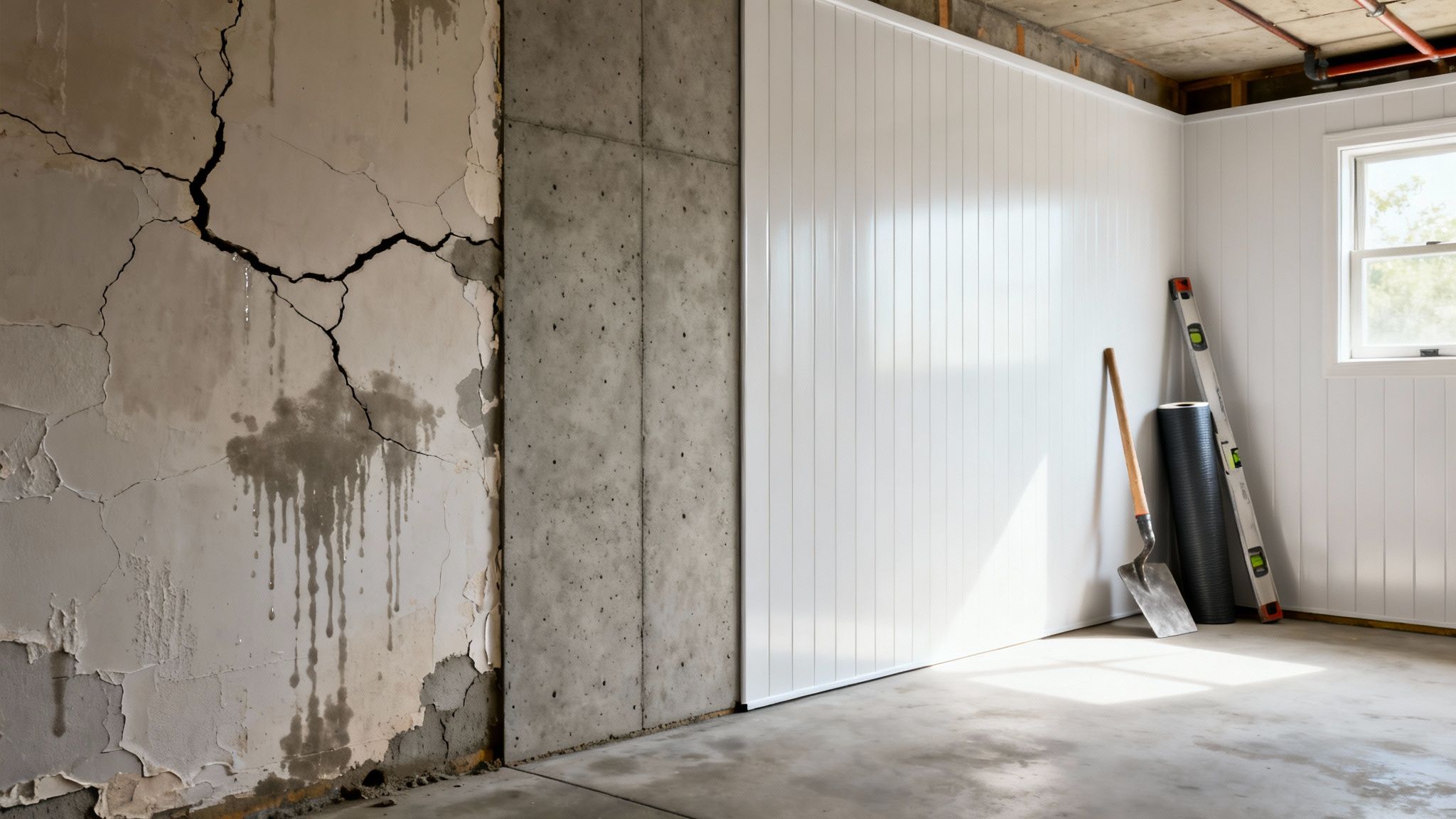
Durable Drywall Alternatives Basement Walls You Should Consider
If you're looking down at your basement and getting that sinking feeling about hanging drywall, listen to your gut. You’re right to be wary. Traditional drywall is arguably one of the worst materials you can use in a below-grade space. Its paper facing and gypsum core act like a giant sponge, inviting moisture, mold, and rot.
Why Your Basement Hates Traditional Drywall
Think of standard drywall like a paper towel you’ve set next to a leaky faucet. Sooner or later, it’s going to wick up every drop of moisture. That's exactly what happens in a basement, where ambient humidity and the occasional leak are part of life. This damp environment becomes a five-star resort for mold, leading to that musty smell, health concerns, and ruined walls.
If you're already dealing with this problem, a good guide to removing mold from drywall can help you tackle the immediate issue before you plan your next steps.
The real problem is that the paper on drywall is an organic food source for mold. Once it gets damp, the gypsum core starts to soften, warp, and crumble. Choosing a better wall material for your basement isn't just a cosmetic upgrade—it's a critical investment in a healthy, long-lasting living space.
The Science of Below-Grade Moisture
Let's face it, basements are different. They're basically big concrete boxes sitting in damp soil. That moisture is always trying to get in, either by pushing its way through the foundation walls (hydrostatic pressure) or just hanging in the air as high humidity. This constant moisture threat makes materials that can't handle dampness a huge liability.
The secret to a successful basement finish is simple: use inorganic materials that are impervious to water. This strategy completely cuts off mold's food supply and stops the expensive cycle of tearing out and replacing damaged walls.
Homeowners and builders are catching on. We're seeing a clear trend away from old-school materials. In fact, mold-resistant drywall now makes up about 13% of total sales, a significant jump from just 9% back in 2020. This shift shows people are finally demanding smarter, moisture-proof solutions for their basements.
Of course, the best wall covering in the world won't fix a leaky foundation. Your first line of defense is always solid waterproofing. Before you cover a single wall, check out our guide on how to waterproof basement walls—it's the most important first step you can take.
So, What Are the Best Alternatives to Drywall in a Basement?
When you're finishing a basement, the walls you choose are a huge deal. This decision goes way beyond just aesthetics; it affects the health, durability, and long-term value of your home. Stepping away from standard drywall opens up a whole new world of materials that are tougher, more moisture-resistant, and frankly, better suited for a space that lives below ground. The right choice for your Orem or Provo basement really depends on your goals, your budget, and the unique conditions of your space.
Before we dive into the materials, let's get one thing straight: moisture is the number one enemy of any basement project. This isn't just an opinion; it's a fact of construction.
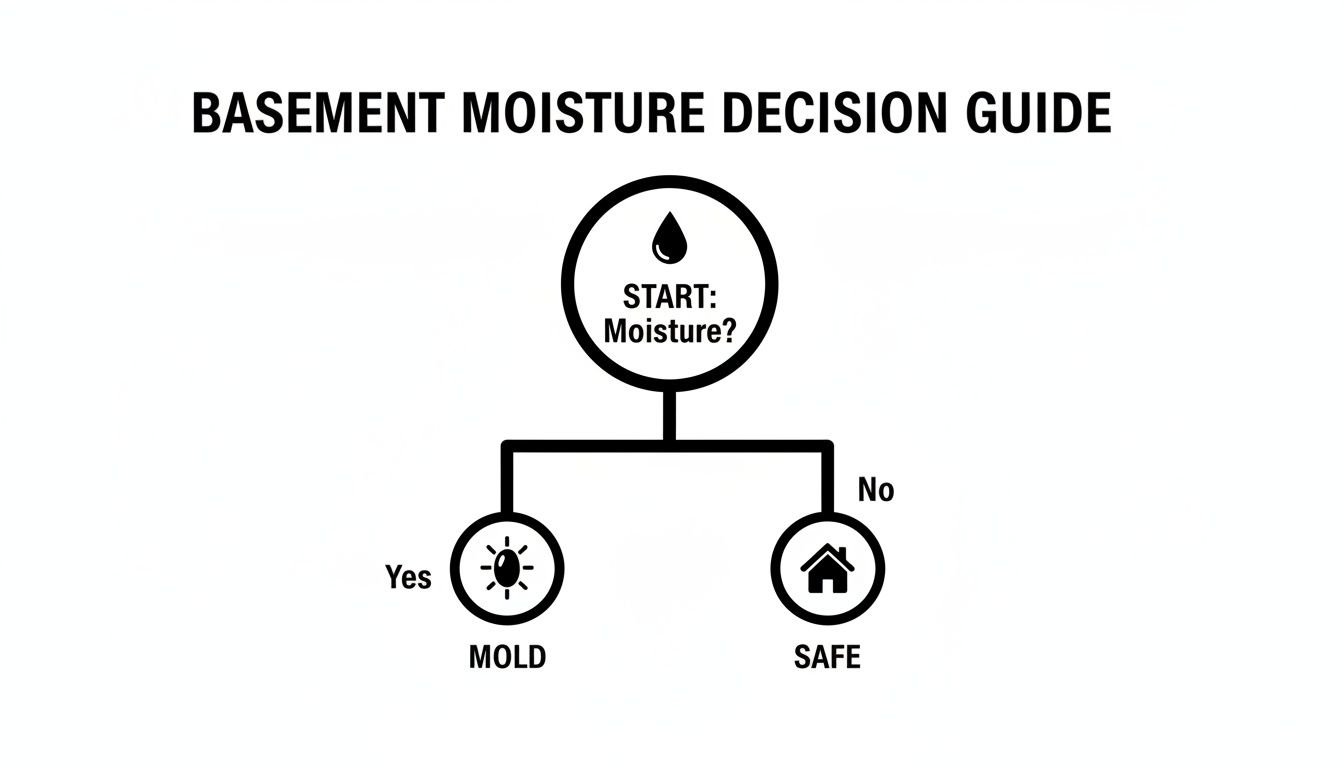
The path is simple and unforgiving: moisture feeds mold. Period. A healthy, safe basement starts with controlling water, and the best drywall alternatives are all designed to win this battle. Let's look at the top contenders.
Cement Board: The Waterproof Foundation
Think of cement board as your basement's ultimate insurance policy against water damage. It’s made from a simple mix of cement and reinforcing fibers, which means it is 100% waterproof and inorganic. Mold needs organic material to grow, and cement board offers none. It simply won't swell, rot, or degrade, even if it gets wet. This makes it a no-brainer for basements that have ever felt even a little damp.
Now, you wouldn't typically leave cement board exposed—its raw, industrial look isn't for everyone. But that's its hidden strength. It provides a rock-solid, completely stable base for almost any finish you can imagine. You can cover it with:
- Tile: Creates a truly bulletproof and easy-to-clean wall, perfect for a basement bathroom, mudroom, or laundry area.
- Stone Veneer: Gives you that gorgeous, rustic accent wall look without the incredible weight and cost of full-bed stone.
- Plaster: For a smooth, seamless finish that looks just like traditional drywall but has a completely waterproof core. You can paint it any color you like.
Key Takeaway: Cement board isn't just another wall panel. It's the core of a modern, waterproof wall system. It gives you total peace of mind, knowing that the beautiful finish you see on the outside is backed by something completely impervious to moisture.
Fiberglass Reinforced Panels (FRP): The Practical Powerhouse
If you’re looking for a finish that is tough, scrubbable, and incredibly water-resistant, you need to look at Fiberglass Reinforced Panels (FRP). You’ve probably seen these tough, thin sheets in commercial kitchens, hospitals, or public restrooms, and for good reason—they are built to take a beating and clean up easily.
FRP is completely non-porous, so water just beads up and rolls off. It's also a breeze to wipe down, making it an amazing choice for high-traffic or messy areas. Think home gyms, workshops, craft rooms, or a kids' playroom. When a pro installs it, they seal the seams to create a continuous waterproof surface. While classic white is most common, FRP actually comes in a variety of colors and even some textured finishes to match your style.
Plywood and OSB: The Rugged, Utilitarian Choice
Need your basement to be more workhorse than show pony? Plywood or Oriented Strand Board (OSB) are fantastic, hard-as-nails alternatives to flimsy drywall. These wood panels can handle bumps, dings, and scrapes from tools, bikes, and active kids without crumbling.
One of their biggest advantages is how easy they make it to mount things. You can hang heavy shelves, tool racks, or cabinets anywhere you want without fussing with stud finders and special anchors.
The trick to using wood in a basement is to do it right. You'll want to use a high-quality or moisture-resistant grade (like marine-grade plywood) installed over a proper vapor barrier and insulation. When sealed and painted or stained, it creates a warm, clean, and incredibly durable finish with an industrial or rustic vibe.
At-a-Glance Comparison of Basement Wall Alternatives
To help you weigh your options, here’s a quick breakdown of how these materials stack up against each other.
| Cement Board | Excellent | Excellent | $2.00 - $3.50 | Moderate |
| FRP Panels | Excellent | Very Good | $2.50 - $4.00 | Moderate |
| Plywood/OSB | Good (when sealed) | Excellent | $1.50 - $3.00 | High |
This table gives you a starting point, but remember that total project cost will also include framing, insulation, fasteners, and finishing materials.
Making the Right Choice for Your Space
So, how do you pick the perfect material? It really boils down to answering a few key questions about your specific project.
- What will you use the space for? The needs of a cozy home theater are completely different from a functional home workshop.
- What’s your budget? Costs can range from the more affordable OSB panels to a premium finish like tile over cement board.
- How much moisture are you dealing with? If your basement is prone to dampness or has had water issues, waterproof options like cement board or FRP should be at the top of your list.
Figuring out these details is the first step toward a successful basement remodel. To see how it all fits into the bigger picture, check out our basement finishing step-by-step guide, which walks you through the entire process. Each of these drywall alternatives offers a serious upgrade in durability and moisture control, ensuring your new living space is beautiful, healthy, and built to last.
When it comes to areas where durability and moisture are the top concerns, two powerhouse drywall alternatives really start to shine for basement walls: cement board and Fiberglass Reinforced Panels (FRP). While both are fantastic at stopping water in its tracks, they play slightly different roles and are best suited for different situations. Let's break down the practical side of each to help you figure out which one makes sense for your project.
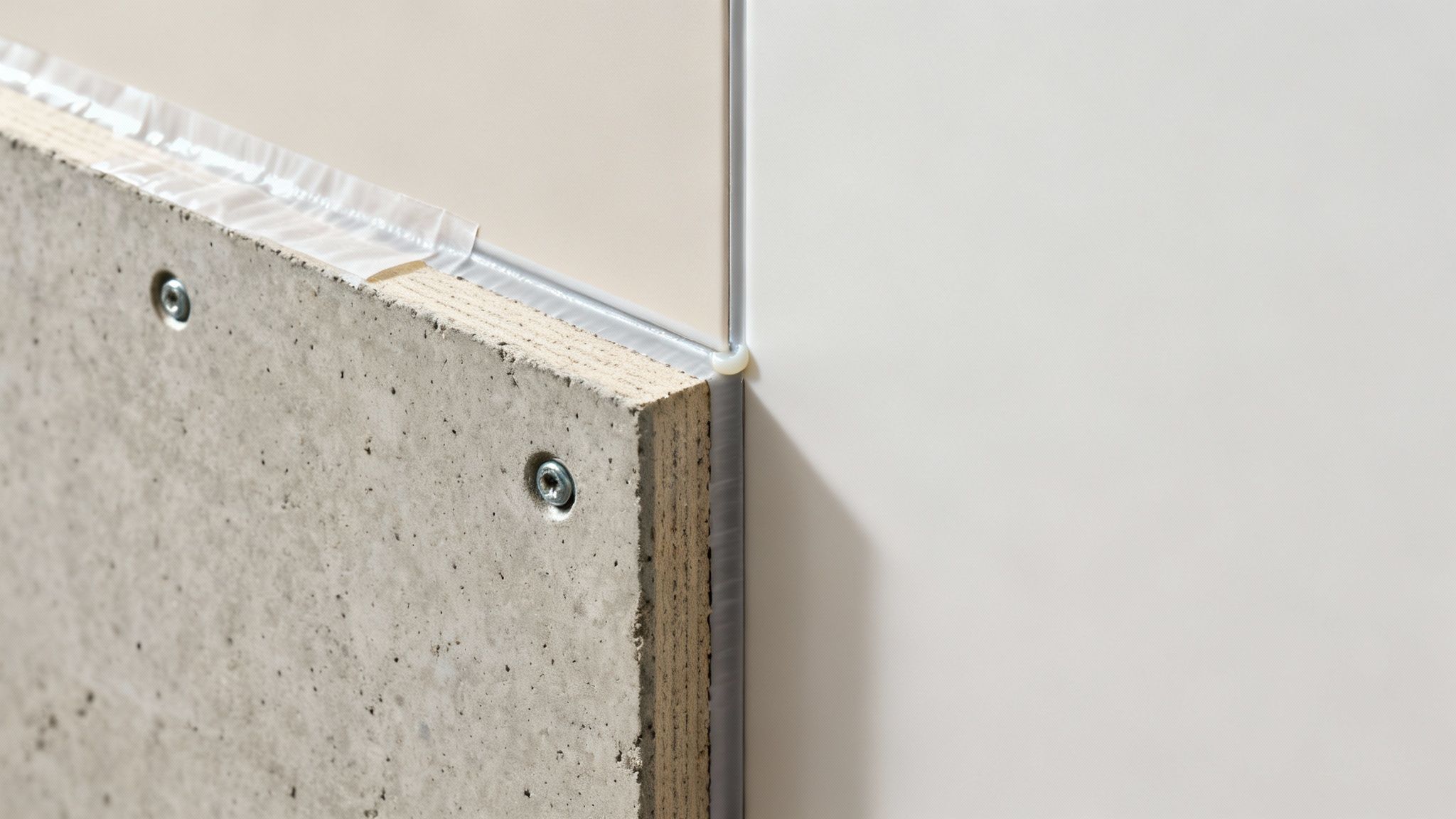
These materials aren't just trendy; they're gaining ground because they solve real-world basement problems. We're seeing a clear shift in the market toward materials that can handle moisture, especially in regions like ours where damp basements are common. This isn't just a fad—it's a direct response to homeowners getting tired of seeing traditional materials fail.
The Power of a Cement Board System
First things first: cement board is not a finished wall. Think of it as the ultimate waterproof foundation for whatever look you're actually going for. It's made from a mix of cement and reinforcing fibers, so it's completely inorganic. That means mold has nothing to feed on. If it gets wet, it doesn't swell, fall apart, or lose its strength. It just dries out.
But the real magic of cement board is how it works as part of a system. By itself it's tough, but when you combine it with the right layers, you create a fortress against moisture.
- Waterproofing Membrane: Before you do anything else, a professional will apply a liquid or sheet membrane over the cement board, paying special attention to the seams. This creates a single, unbroken barrier.
- Tile or Stone Veneer: With that waterproof backer in place, you can install tile or stone. The result is a finish that’s not just gorgeous but also scrubbable and incredibly tough.
- Veneer Plaster: If you want a smooth, paintable wall that looks like traditional drywall, a skilled finisher can apply a veneer plaster system right over the cement board.
By itself, cement board is strong. As part of a system, it's nearly indestructible. This approach is the gold standard for basement bathrooms, laundry rooms, or any area where you want zero compromises on water protection.
FRP Panels for a Utilitarian Finish
Fiberglass Reinforced Panels (FRP) solve a different problem. These thin, tough sheets are the finished surface. They are 100% waterproof, non-porous, and ridiculously easy to clean. If you've ever been in a commercial kitchen, public restroom, or car wash, you've seen FRP in action.
For a basement, FRP is a perfect fit for hard-working spaces like:
- Home gyms
- Workshop areas
- Utility or storage rooms
- Even a high-traffic kids' playroom
The trick to making FRP effective is proper installation. You have to use the special trim pieces for corners and edges, along with the right adhesive and sealant to make every joint watertight. The material cost might be a bit higher upfront than some other options, but its sheer durability makes it a smart long-term investment. To get a better feel for how the numbers stack up, check out our guide on the cost of drywalling a basement to give you a solid baseline for comparison.
Achieving a High-End Look Without Drywall
Let's be honest, when most people hear "drywall alternatives," they picture a cold, industrial, or unfinished basement. It's a common worry, but the idea that you have to choose between a durable, waterproof space and a beautifully finished one is completely outdated.
The secret isn't in the raw material itself, but in how you finish it. You can absolutely have both durability and high-end design.
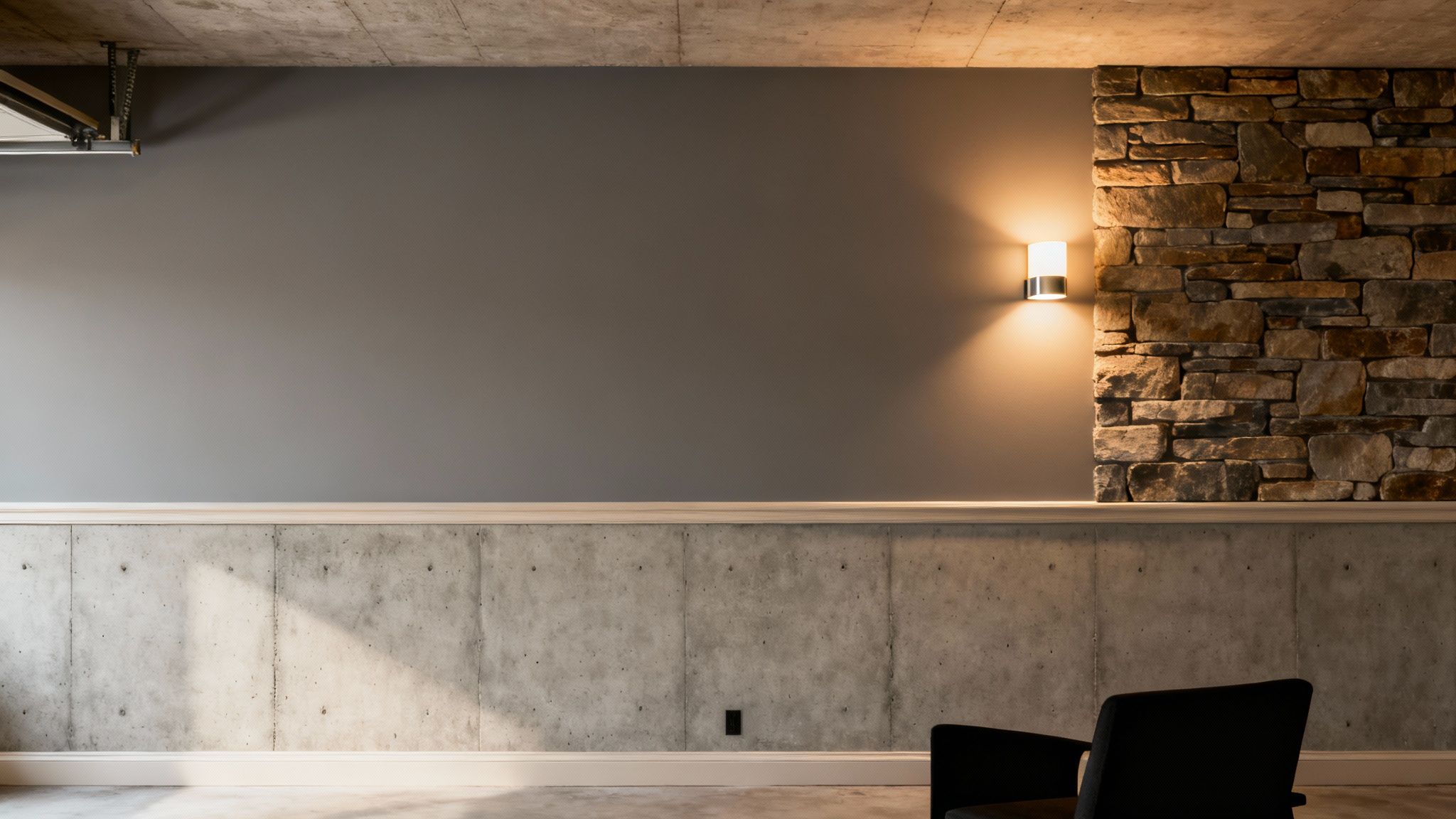
With the right materials and a little design savvy, you can create a stunning basement that’s also built like a fortress against moisture.
From Concrete to Chic
Sometimes the best solution is the most direct one: work with the concrete walls you already have. For a sleek, modern, and incredibly durable finish, exploring residential polished concrete options can be a game-changer. The process involves grinding and honing the concrete until it has a smooth, almost glossy finish that bounces light around the room, making the whole space feel brighter and more open.
But polishing isn't the only option. You can also use specialized concrete stains and paints designed to soak into the surface. This gives you rich, permanent color that won’t peel or chip away over time. The final look is minimalist and clean, almost like an art gallery—and it's as tough as it gets.
Elevating Functional Panels
What about more practical materials like cement board or FRP? On their own, they can feel a bit utilitarian, but think of them as the perfect blank canvas. With the right design choices, you can completely transform them.
- Cement Board Finishes: This is where you can get really creative. Since cement board is a waterproof, rock-solid base, you can finish it with almost anything. Imagine covering it with beautiful tile, a thin stone veneer for an accent wall, or even a smooth troweled plaster that perfectly mimics the look of a traditional wall.
- FRP Panel Trim: While you often see FRP in commercial kitchens, it can be dressed up for a living space. By framing out the panels with decorative molding and trim, you can hide the seams and create a clean, intentional look, much like classic wainscoting.
Your basement walls don't have to choose between being beautiful and being waterproof. By layering decorative finishes over a durable, moisture-proof core, you get the best of both worlds—a space that’s designed to impress and built to last.
For homeowners here in Orem and Provo, this two-step approach makes a ton of sense. You're investing in a resilient foundation—like finished concrete or cement board—that protects your home's value, and then layering on the style.
When you’re ready to bring that vision to life, the experts at Northpoint Construction specialize in crafting high-end basement finishes that are designed to stand the test of time.
Getting it Done Right: Codes, Inspections, and When to Call a Pro
You’ve picked out the perfect material for your basement walls, something tough enough to handle anything a Utah basement can throw at it. That's a huge decision, but it’s really just the first step. Now comes the part that ensures your project is safe, lasts for decades, and actually adds value to your home: making sure the installation meets local building codes.
This isn't just about paperwork or avoiding a slap on the wrist from the city inspector. Think of building codes as a proven recipe for a safe, healthy home. Down here in the basement, the rules are extra strict for good reason, focusing on a few key areas:
- Insulation (R-Value): The code tells you the bare minimum insulation required to keep your basement from being an icebox in the winter. A pro knows exactly how much rigid foam board is needed to create a proper thermal break, stopping that deep-ground chill from seeping into your home.
- Vapor Barriers: This is a big one, and it's where a lot of DIY projects go wrong. A vapor barrier has to be installed in the right place in the wall assembly to stop moisture from the concrete from getting to your framing and finishes. Put it on the wrong side, and you've just built a perfect wall-sized terrarium for mold.
- Fire Safety: Every material reacts to fire differently. Building codes demand specific fire-blocking measures within the walls to slow down a fire's spread, giving your family precious extra time to get out safely. It’s a critical detail that’s easy to miss if you don’t do this every day.
The Difference a Professional Makes
Sure, some of these drywall alternatives look pretty straightforward to install. But the difference between a project that looks good and one that performs well is in the details—the kind of details a seasoned pro has mastered through years of experience.
A DIYer might get a panel perfectly level, but a professional from a team like Northpoint Construction knows the exact sealant and technique to make the joints completely waterproof. They know how to avoid thermal bridging, a sneaky problem where the cold shoots right through the wood or metal studs, creating cold spots and condensation that completely undermines your expensive insulation. It's these tiny, expert steps that turn a simple wall into a high-performance system.
A professional installation isn't about making the walls look pretty—that's just the bonus. It's about building a complete wall system that works together: managing moisture, saving energy, and meeting every single safety code.
For anyone finishing a basement here in the Orem or Provo area, getting this right from the start is non-negotiable. An expert approach means you'll fly through inspections and, more importantly, you'll have peace of mind knowing the investment you made in drywall alternatives for basement walls will actually pay off.
When you're ready to make sure the job is done right—no shortcuts, no guesswork—the team at Northpoint Construction is here to handle everything from the first stud to the final coat of paint.
So, What's the Right Call for Your Basement?
Picking the right material for your basement walls is a bigger deal than you might think. It directly affects your home's long-term health, how well it holds up over time, and even its resale value. Let's be blunt: standard drywall just wasn't made for the damp, below-ground environment of a basement. Choosing a moisture-resistant alternative isn't just a nice-to-have upgrade; it's a crucial investment to keep your basement dry, healthy, and free of mold for the long haul.
Your best bet really hinges on what you plan to do with the space. If you're putting in a basement bathroom or a laundry area where water is a constant, you can't beat a system built with cement board. It's practically bulletproof against water. On the other hand, for a hard-working space like a home gym or a workshop, you might lean towards something tough and easy to wipe down, like FRP or even properly sealed plywood.
If you remember only one thing from this guide, make it this: start with a moisture-proof foundation. When you build with inorganic materials that simply don't care about water, you're protecting your investment and creating a genuinely healthy living space from the very start.
At the end of the day, the smartest drywall alternatives for basement walls tackle the moisture issue head-on before you even think about paint colors. For those of us here in the Orem and Provo areas, making this choice means your finished basement will be a comfortable, worry-free part of your home for years to come. When you’re ready to get it done right, the team at Northpoint Construction is here to help.
Answering Your Top Questions About Basement Walls
Choosing the right material for your basement walls is a big decision, so it's natural to have a few questions. Let's dig into some of the most common things homeowners in Orem and Provo ask when they're looking for drywall alternatives.
Are These Drywall Alternatives Going to Cost More Than Just Using Drywall?
Sometimes, yes—at least upfront. Materials like FRP or a professionally installed cement board system will likely have a higher initial price tag than standard drywall. But it's crucial to look at the bigger picture.
Think of it as an investment in a permanent solution. By choosing a material that can't be damaged by water, you're buying peace of mind. You won't have to worry about the massive expense of mold remediation or the headache of tearing out and replacing soggy walls down the road. That long-term durability is where the real value lies.
Can I Still Put Insulation Behind These Materials?
Not only can you, but you absolutely should. Insulation is a must for any finished basement. It’s what keeps the space comfortable year-round, helps lower your energy bills, and is required by local building codes.
Your best bet is rigid foam board insulation, like XPS or EPS. It's the ideal partner for these wall systems because it doesn't absorb moisture and acts as a vapor barrier. We typically install it directly against the concrete foundation before the framing goes up, creating an unbroken layer of protection against the cold ground.
What’s the Best Choice for a Basement That Already Has Water Issues?
If your basement has a history of leaks or even just persistent dampness, there’s no room for compromise. You need materials that are 100% inorganic and waterproof.
Your most bulletproof options are:
- Cement board treated with a liquid waterproofing membrane, which is a fantastic base for tile.
- Vinyl or HDPE panels, which are totally non-porous and lock together to form a seamless shield against moisture.
But here’s the most important part: before you cover the walls with anything, you have to solve the water problem at its source. That means bringing in a professional to handle waterproofing and drainage first. Covering up a problem will only lead to bigger, more expensive issues later.
Ready to build a beautiful, moisture-proof basement that will stand the test of time? The team at Northpoint Construction has the expertise to guide you through selecting and installing the perfect drywall alternatives for your home. Get in touch with us today!