
Finish: finish basement utah - A Complete Homeowner's Guide
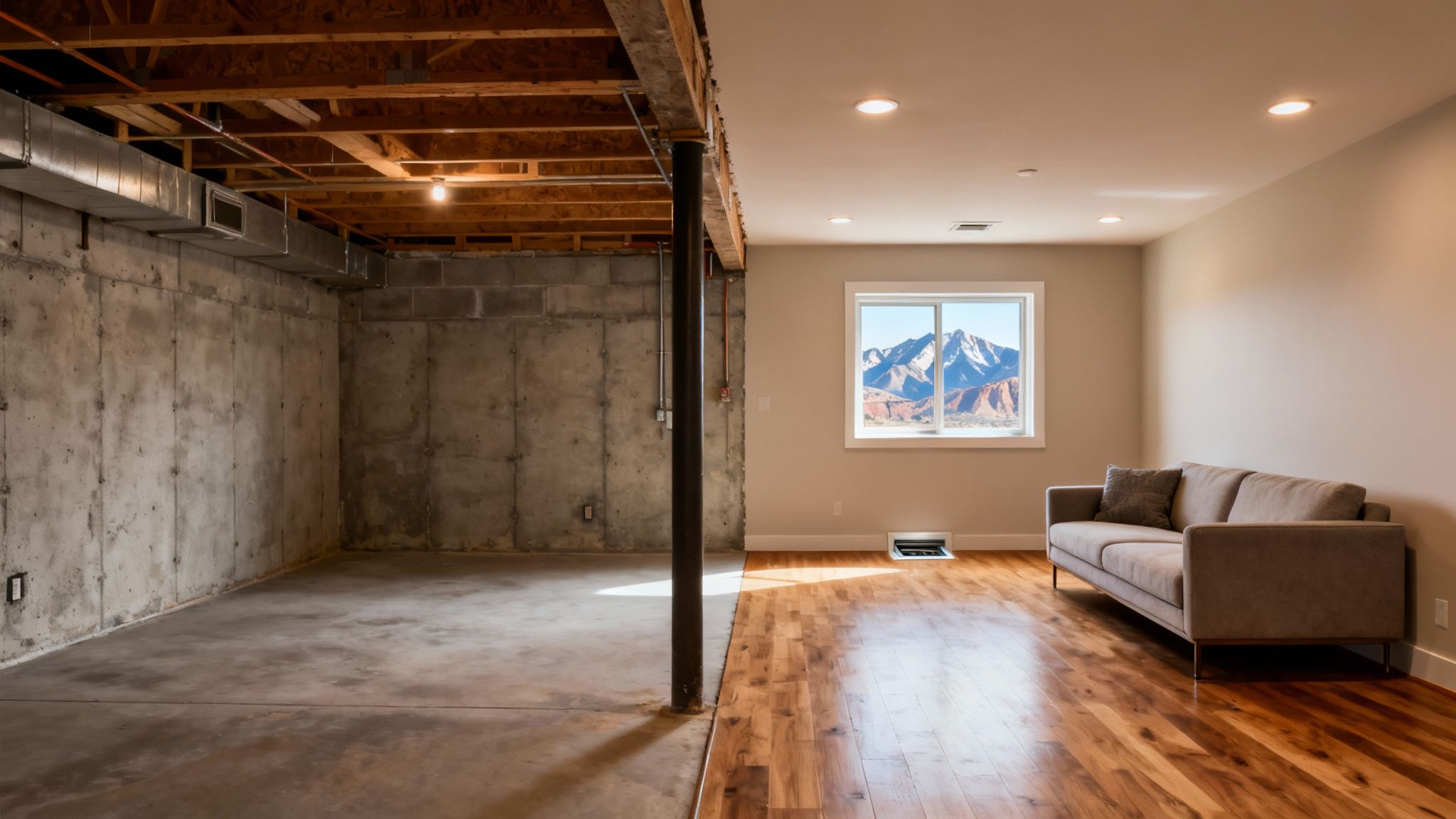
Think about that cold, concrete space sitting right under your feet. What if you could turn it into the most lived-in, loved-on part of your house? Finishing your basement in Utah isn't just another home renovation project; it's one of the smartest investments you can make, unlocking a ton of value and new possibilities for your family.
Why Finishing Your Utah Basement Is A Smart Move
For so many homeowners across Utah County, from Orem all the way to Saratoga Springs, an unfinished basement is just a big question mark. It’s a blank canvas waiting to solve that age-old problem: the need for more usable space.
Whether your family is growing, you desperately need a quiet home office, or you dream of a dedicated entertainment zone, this project is like adding a brand-new floor to your home, designed exactly how you want it.
Finishing a basement is one of the best ways for homeowners in places like Provo and Lehi to significantly boost their property's value without the headache and expense of moving. In fact, the National Association of Realtors has found that homes with finished basements, especially in family-focused markets, can fetch 10-15% higher resale prices. That’s a serious return on investment in Utah's competitive housing market.
Key Benefits of a Basement Renovation
Beyond the bump in your home's equity, a well-planned basement finish brings a whole host of day-to-day advantages. You're not just investing in your property; you're investing in your lifestyle.
- Expanded Living Space: You can instantly add bedrooms, a sprawling family room, or even a home gym without having to build an addition onto your house.
- Increased Home Value: A finished basement consistently ranks as one of the home improvement projects with the best return on investment. To really grasp this, it helps to understand how to accurately determine your home's value, which a project like this directly impacts.
- Enhanced Functionality: This is your chance to create those specialized spaces you've always wanted—a sound-proof home theater, a private guest suite, or a quiet, productive workspace away from the chaos upstairs.
- Potential for Rental Income: If you design it right and follow local building codes, your basement can become a legal accessory dwelling unit (ADU), creating a steady source of rental income to help with the mortgage.
A finished basement transforms dead storage space into living, breathing square footage. It's not just about adding a room; it's about adding a new dimension to your home life.
Getting the basics down is the first step. For a much deeper dive, check out our guide on what a finished basement truly entails.
Your Step-By-Step Basement Finishing Process
Finishing a basement isn't just a weekend project; it's more like building a new floor of your house from the inside out. Understanding the sequence of events is crucial. It helps you know what to expect, prevents costly mistakes, and ensures that everything from the wiring to the paint is done in the right order.
Think of it this way: the whole process starts not with a hammer, but with a good plan. You map out your vision first, and only then does the physical transformation begin, moving methodically from the bare bones of the structure to the final details that make it feel like home.
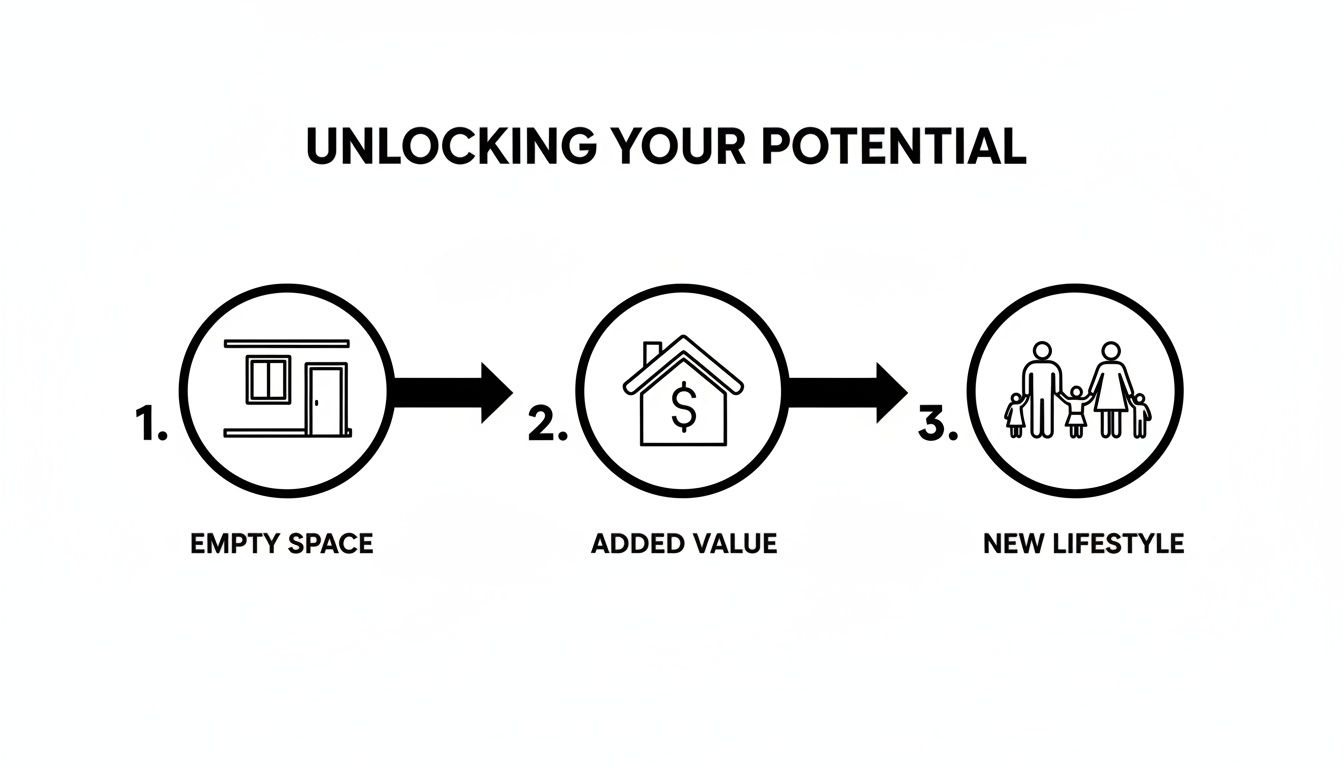
This is the real magic of finishing a basement. You're taking an overlooked, underused area and turning it into a vibrant part of your home—one that boosts its value and improves your family's day-to-day life.
Phase 1: The Design and Planning Stage
Everything good starts with a solid plan. Before anyone picks up a tool, this is where you figure out exactly what you want the space to be. A cozy family room with a home theater? A guest suite with its own bathroom? Maybe a home gym or a dedicated office?
A well-thought-out design ensures the final layout actually works for your family. This is also when you work with your contractor to secure the necessary building permits from your city or county in Utah. It's a non-negotiable step that makes sure your project is safe, legal, and meets all local building codes. You'll finalize blueprints and lock in decisions on everything from where rooms go to how many outlets you need.
Phase 2: Framing and Rough-Ins
Once the plan is approved, the real construction kicks off. The first thing you'll see is the framing. This is when the skeleton of your basement—the wood studs that form the walls for new rooms, closets, and hallways—is built. It’s an exciting moment when the lines on the blueprint start to take shape in three dimensions.
Right after framing comes the "rough-in" stage. This is when all the essential systems are installed inside the open walls, before any drywall goes up.
- Electrical Rough-In: An electrician runs all the wiring for outlets, light switches, ceiling fixtures, and any special hookups for a wet bar or entertainment center.
- Plumbing Rough-In: If you’re adding a bathroom, kitchenette, or laundry room, a plumber will install the water supply lines and drain pipes.
- HVAC Rough-In: To make sure your new space is comfortable, new ductwork and vents are connected to your home’s main heating and cooling system.
The rough-in stage is like installing the basement's circulatory and nervous systems. It’s absolutely critical to get this right, because once the walls are closed up, making changes becomes a huge, expensive headache.
Phase 3: Insulation and Drywall
With all the wiring, plumbing, and ductwork in place (and inspected!), it's time to insulate. In Utah's climate, good insulation is a must. It keeps the space warm during our cold winters and cool in the summer, which not only makes it more comfortable but also helps lower your energy bills.
Next up: drywall. Sheets are hung over the wood framing, then taped and mudded to create smooth, seamless walls. This is a huge visual milestone. The raw, skeletal look of the construction zone vanishes, and you finally have solid, defined rooms that feel like a real part of your home.
Phase 4: The Finishing Touches
This is the final stretch, where all the details come together and the personality of the space shines through. It’s a flurry of activity that turns a blank canvas into a finished, move-in-ready area.
Painting: First comes a coat of primer, followed by the wall colors you've chosen. This is where the space really starts to feel warm and inviting.
Trim and Doors: Baseboards, door casings, and interior doors are installed, giving the rooms crisp, clean lines and a polished look.
Flooring Installation: Whether you picked durable luxury vinyl plank (LVP), plush carpet, or classic tile, this is when the floor goes in.
Final Fixtures: The project wraps up with the installation of light fixtures, outlet covers, faucets, toilets, and any cabinets or built-in shelving.
After a final walkthrough with your contractor and one last sign-off from the city inspector, your new basement is officially yours to furnish, decorate, and enjoy for years to come.
Navigating Utah Building Codes And Permits
Let's talk about building codes. It’s easy to see them as just a mountain of paperwork and red tape, but they’re really more like a blueprint for safety. Think of it as the official rulebook that guarantees your new basement is a secure, functional living space—not a liability waiting to happen.
When you decide to finish a basement in Utah, whether you're in Provo or American Fork, following these rules is absolutely essential. We're talking about everything from the size of your windows to the placement of your electrical outlets. Skipping this step isn't just a bad idea; it can lead to failed inspections, expensive do-overs, and a massive headache when you try to sell your home.
Why Pulling A Permit Is Non-Negotiable
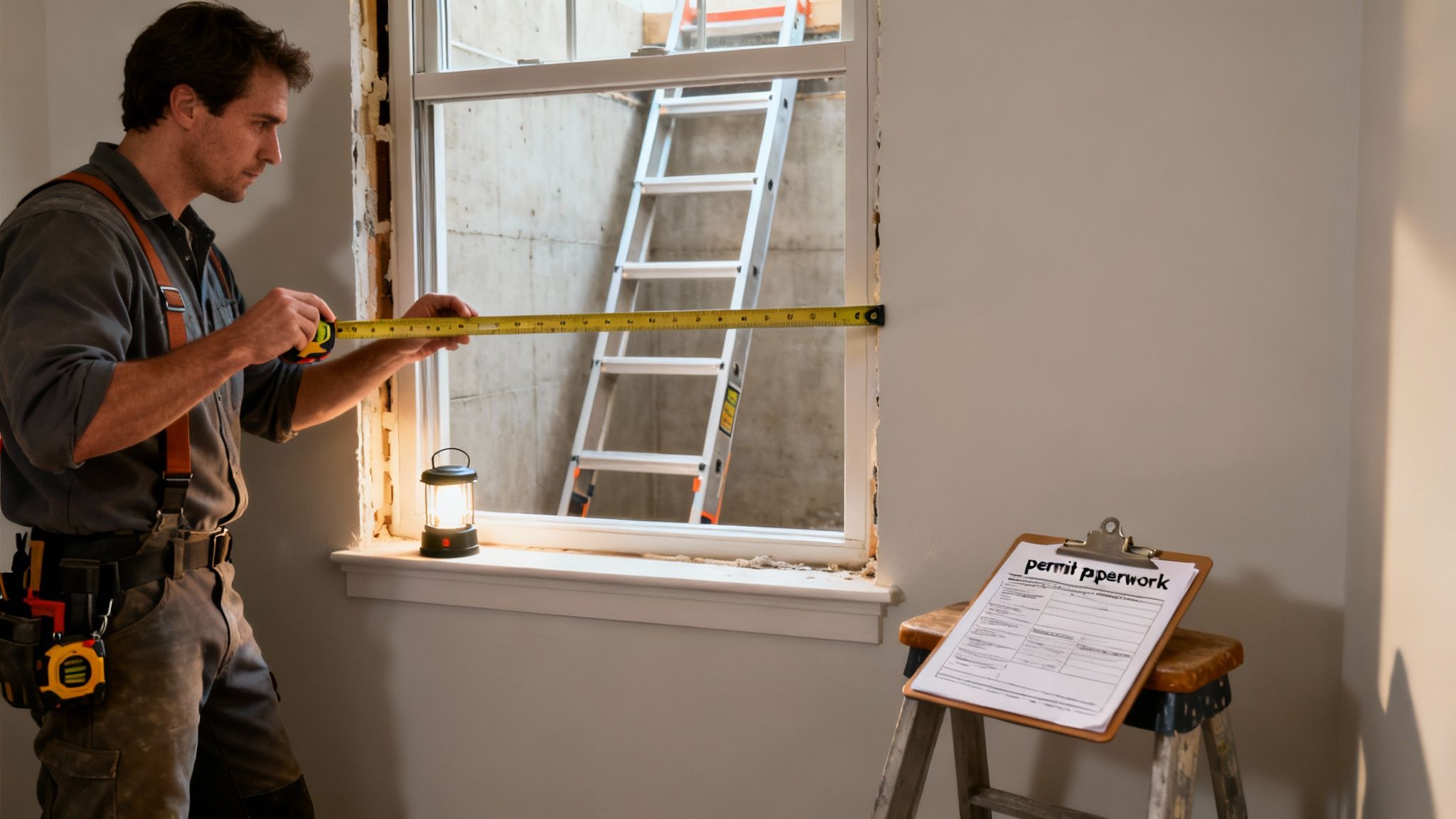
A building permit is simply the official green light from your local city or county to start construction. It’s the system that kicks off the inspection process, ensuring every single stage of your project—from the initial framing to the final light switch—is done correctly and safely. A permitted project is a safe project, period.
On top of that, unpermitted work can be a financial nightmare. Your homeowner's insurance could refuse to cover damage—like a fire from shoddy wiring—if it originated in an unpermitted space. It also becomes a huge problem when you sell, as that extra square footage often can't be legally counted as livable space, tanking your home’s value.
Key Utah Basement Code Requirements
While the rules can differ slightly from one city to the next, Utah generally follows the International Residential Code (IRC). This sets the standard for basement finishing projects, and there are a few big ones you absolutely have to get right.
- Egress Windows: This is a big one. Any bedroom you add to your basement must have at least one egress window. It's not just for sunlight; it’s a critical escape route in an emergency. The window needs a minimum clear opening of 5.7 square feet, must be at least 20 inches wide and 24 inches high, and the bottom of the window can't be more than 44 inches off the floor.
- Minimum Ceiling Height: For a basement to be considered true "habitable space," the finished ceiling needs to be at least 7 feet high. If you have beams, ducts, or other obstructions, the clearance underneath them can be a bit lower, but no less than 6 feet 4 inches. We dive deeper into this in our guide on basement ceiling height requirements.
- Stairway Dimensions: The stairs down to your new basement need to be safe and easy to use. The code spells it out clearly: a minimum width of 36 inches, a maximum step height (riser) of 7.75 inches, and a minimum tread depth (where you step) of 10 inches.
“Think of building codes as a professional safety checklist for your home. Each requirement, from egress window size to the spacing of electrical outlets, is designed to prevent a specific hazard and ensure your family's well-being.”
Electrical, Ventilation, And Safety Codes
Beyond the main structural elements, a handful of other codes are just as important for making your basement a truly functional and safe part of your home.
Smoke and Carbon Monoxide Detectors: You'll need to install hardwired, interconnected smoke detectors in every bedroom and in the main living areas. A carbon monoxide detector is also mandatory on each level of your home.
Bathroom Ventilation: If you're adding a bathroom, it must have a ventilation fan that vents air directly outside. This is your number one defense against moisture buildup and mold.
Electrical Code: All wiring has to follow the National Electrical Code (NEC). This covers things like requiring AFCI protection on circuits, proper outlet spacing (so no point along a wall is more than 6 feet from an outlet), and running dedicated circuits for major appliances.
Getting these codes right from the start is the foundation of a great basement finishing project. It’s what transforms that concrete box from just a "finished" space into a beautiful, safe, and valuable part of your home.
How To Budget For Your Utah Basement Project
Let's talk numbers. Figuring out the cost is often the very first—and most intimidating—step in any basement project. It’s easy to get lost in national averages that don’t really apply here. We're going to cut through the noise and give you a realistic, Utah-focused look at what it actually costs to finish your basement.
Think of it this way: your final price tag is a direct reflection of your vision. It’s a lot like buying a car. You’ve got the reliable base model, the popular mid-range version with a few upgrades, and the fully-loaded luxury option. Each has a different price, and the same principle applies to your basement.
Breaking Down The Cost Tiers
The scope of your project is, without a doubt, the biggest factor driving the budget. A simple, open family room with a bedroom will naturally cost a lot less than a detailed layout with a full bathroom, a wet bar, and custom built-ins.
To make sense of it all, we can group most projects into three general categories.
- Basic Finish: This is your straightforward, function-first approach. It usually involves framing for a large living area and one or two bedrooms, standard electrical and insulation, drywall, paint, and practical flooring like builder-grade carpet. It’s a fantastic way to add livable space without all the bells and whistles.
- Mid-Range Finish: This is the sweet spot for most Utah families. You get everything in the basic finish, but with some key upgrades. This often means adding a full bathroom, swapping carpet for more durable Luxury Vinyl Plank (LVP) flooring, and including better light fixtures or maybe a simple dry bar.
- High-End Finish: Here’s where you create a truly custom retreat. This could mean a full kitchenette, a home theater with built-in surround sound, custom cabinetry, a steam shower in the bathroom, or even adding a separate walkout entrance.
The real key to a successful budget is matching your dream features with the right cost tier. Deciding early on whether you’re aiming for a "basic," "mid-range," or "high-end" finish keeps everyone—you and your contractor—on the same page from day one.
Key Drivers Of Your Basement Budget
Beyond the overall scope, a few specific choices can really make your budget flex up or down. Knowing what these are ahead of time helps you decide where to invest and where you might be able to save.
Layout Complexity: Fewer walls mean lower costs. An open-concept design requires less framing, drywall, and electrical work than a floor plan with multiple, smaller rooms.
Plumbing and Electrical: Adding a bathroom or kitchenette is a major cost. The plumbing and electrical work involved are significant. The same goes for specialized wiring for a home theater or installing dozens of recessed lights.
Material Choices: Your finish selections have a huge impact. LVP flooring, for instance, typically costs more upfront than carpet. Custom tile in a shower will be more expensive than a standard pre-fabricated insert.
Custom Features: Anything built from scratch adds to both material and labor costs. Think custom-built bookcases, entertainment centers, or wet bars.
Realistic Cost Ranges In Utah
So, what does all this look like in dollars and cents here in Utah? Based on recent projects, we can give you a pretty solid baseline. For a basic layout with a large living room and a couple of bedrooms, you can expect a range from $42,000 to $82,000. If you add a bathroom, the plumbing work alone will likely push that budget to between $56,000 and $96,000.
Most mid-range projects around 1,000 square feet, which might include a dry bar and standard finishes, often land somewhere between $62 and $86 per square foot. That puts the total project cost in the $62,000 to $86,000 range. If you're going for a full luxury finish with a kitchen, bathroom, laundry room, and a walkout, the investment can range from $123,000 to over $184,000. Another great local resource for cost insights is this guide from Dansie Design Build.
To help you get a handle on what different components might cost, here’s a sample breakdown for a 1,200 sq ft basement in Utah.
Estimated Cost Ranges For A 1,200 Sq Ft Utah Basement
| Framing & Drywall | $10,000 - $14,000 | $12,000 - $18,000 | $15,000 - $25,000+ |
| Electrical & Lighting | $4,000 - $7,000 | $6,000 - $10,000 | $9,000 - $15,000+ |
| Plumbing (Full Bath) | $8,000 - $12,000 | $10,000 - $15,000 | $14,000 - $22,000+ |
| HVAC | $2,000 - $4,000 | $3,000 - $5,000 | $4,000 - $7,000+ |
| Insulation | $2,500 - $4,000 | $3,500 - $5,500 | $5,000 - $8,000 |
| Flooring | $4,000 - $6,000 | $7,000 - $11,000 | $10,000 - $18,000+ |
| Paint & Trim | $5,000 - $8,000 | $7,000 - $10,000 | $9,000 - $14,000+ |
| Doors & Windows | $1,500 - $3,000 | $2,500 - $5,000 | $4,000 - $10,000+ |
Keep in mind these are estimates to give you a starting point. The final numbers depend entirely on your specific home, the materials you choose, and the contractor you work with.
For a more personalized estimate tailored to your ideas, play around with the numbers in our detailed basement finishing cost calculator to see how different options affect the bottom line.
Modern Design Ideas For Your Utah Basement
Your new basement doesn't have to be a dark, forgotten space. Think of it as a blank canvas—an opportunity to create a part of your home that truly fits the modern Utah lifestyle: active, family-oriented, and ready for anything. Let's look past the standard four-walls-and-a-door layout and dive into the design ideas that are making Utah basements the most popular spot in the house.
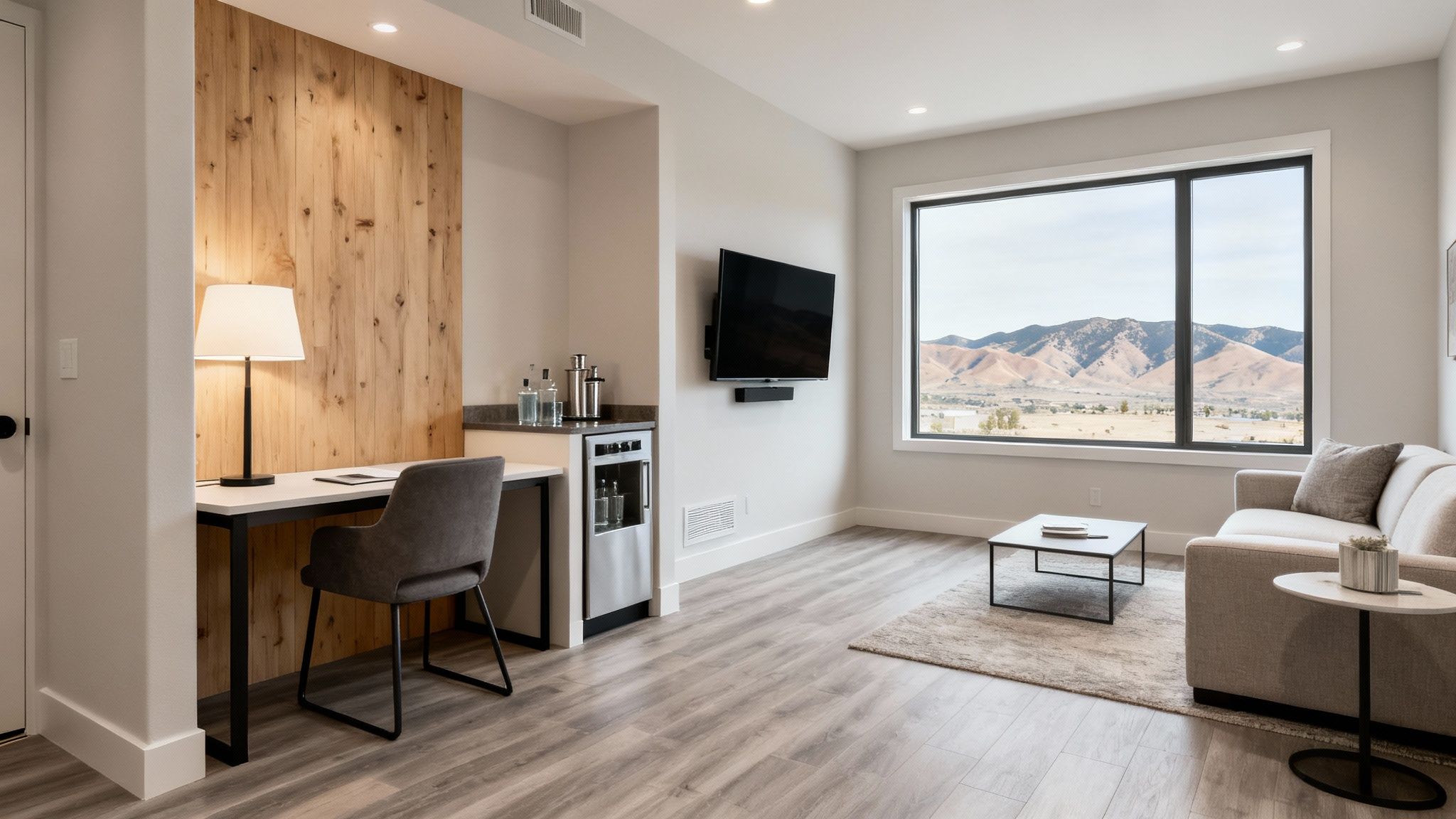
The single biggest trend I'm seeing right now is the shift toward multifunctional spaces. We're moving away from single-purpose rooms. Instead, one large, open area can adapt to whatever your family needs at that moment, which is a fantastic way to maximize every last square foot.
The Rise Of The Flex Room
Picture this: a space that serves as your quiet home office during the day, complete with a built-in desk and smart storage solutions. But when you clock out, it effortlessly transforms into a cozy media room for family movie nights or a play area where the kids can spread out.
That's the magic of a "flex room." It’s all about clever design.
- Murphy Beds: These are game-changers. A wall bed can instantly convert a home gym or office into a welcoming guest suite without sacrificing floor space.
- Sliding Partitions: Modern barn doors or sleek pocket doors let you easily divide a large room or open it up for bigger gatherings.
- Modular Furniture: Think sectionals and shelving you can rearrange on a whim. This kind of furniture gives you incredible freedom to adapt the room's function.
This kind of adaptability is huge right now. With median home prices frequently hitting $500,000, a lot of Utah families are wisely investing in their current homes instead of moving. This has made flexible, hybrid-use basements a massive priority, especially when they can add a 10-15% premium to a home's resale value. If you're curious, you can discover the latest insights on what Provo homeowners want to see where things are headed.
Creating Dedicated Lifestyle Zones
While flex rooms offer incredible versatility, many homeowners are also carving out dedicated spaces for their passions. These aren't just corners of a room; they're thoughtfully designed zones that make your basement a true destination.
A dedicated home gym is probably the number one request we get. And I’m not talking about a sad treadmill shoved in a corner. We're building out proper workout spaces with rubber flooring, mirrored walls, and great ventilation—the kind of place you actually want to spend time in.
Another favorite is the sophisticated entertainment zone. This is more than just a big-screen TV. Imagine a custom wet bar with a beverage fridge, a beautifully crafted built-in entertainment center, and integrated surround sound that gives you that full movie theater experience.
Smart Material and Style Choices
Of course, the right materials and finishes are what pull the entire design together. You need a space that's not only beautiful but can also handle being below ground.
Today's basement design is about creating a space that feels just as warm, bright, and intentional as the main floor. The days of dark, uninspired basements are over.
Here are some of the most popular and practical material choices we recommend:
- Flooring: Luxury Vinyl Plank (LVP) is the undisputed champion for Utah basements. It's 100% waterproof, tough as nails against kids and pets, and the new styles look remarkably like real wood or stone.
- Lighting: Good lighting is everything in a basement. Energy-efficient LED recessed lighting is the standard for a reason—it makes the whole space feel bright and airy. Putting everything on dimmers is a must, as it lets you set the mood for any activity.
- Accents: To keep the space from feeling sterile, bring in natural textures. A stacked stone accent wall behind the TV, a rustic reclaimed wood mantel, or a few exposed-style wood beams can add so much warmth and character.
Choosing The Right Basement Finishing Contractor
Let's be honest, your entire project comes down to one big decision: picking the right contractor. You’re not just hiring someone to slap up some drywall. You're bringing a partner into your home to manage a complex construction project from start to finish. A great contractor is your project manager, your quality control hawk, and your guide through the whole maze.
Making the right choice here is the best insurance policy you can have for a smooth renovation. The right team keeps things on schedule, knows Utah building codes like the back of their hand, and delivers the quality you're paying for. The wrong one? That's a fast track to budget nightmares, endless delays, and shoddy work that you'll have to pay someone else to fix later.
Vetting Your Potential Partners
Before you even think about signing a contract, you have to do your homework. Treat it like a job interview, because that's exactly what it is—and you're the boss. You need to check their credentials, see their past work, and just get a feel for their communication style. A little due diligence now saves a world of headaches later.
First, cover the non-negotiables. Any contractor worth their salt will have this information ready and won't hesitate to share it.
- License and Insurance: First things first, ask for their Utah contractor's license number and proof of insurance. They need both general liability and worker's compensation. This isn't just red tape; it protects you from being on the hook if an accident happens on your property.
- Local Experience: Ask to see a portfolio of recent basement projects they've completed right here in Utah. A contractor who knows the specific codes in places like Orem or Lehi is worth their weight in gold.
- Client References: Get the names and numbers of at least three recent clients. And actually call them! Ask how it went. Was communication clear? Did they love the final result?
The goal isn't just to find a skilled builder, but a transparent and reliable one. A long list of successful projects and happy clients is the best sign you've found a pro you can trust.
Asking The Right Questions
Once you have a short list of qualified candidates, it's time to dig a little deeper. The way they answer your questions tells you everything you need to know about their process and professionalism. To make sure you get the best fit, it's a good idea to learn about asking the right questions when choosing a contractor.
Here are a few questions I always recommend asking:
Who will be my main point of contact? Good communication can make or break a project. You need one person you can call with any questions or concerns.
How do you handle changes or problems that pop up? Surprises happen. A true professional will have a clear "change order" process to document any adjustments to the plan or budget, so everyone stays on the same page.
Can you give me a detailed, itemized bid? Steer clear of vague, one-page estimates. A proper bid breaks down all the costs—labor, materials, permits—so you know exactly where your money is going.
Choosing the right contractor to finish your basement in Utah is the single most important decision you'll make. A true professional partner, like the team at Northpoint Construction, handles everything from the initial design sketches to the final city inspection, making the whole process feel seamless.
Frequently Asked Questions About Finishing a Basement in Utah
When you're thinking about finishing your basement, a lot of questions pop up. It’s a big project, and it's smart to get all the facts first. We've heard just about every question from homeowners across Utah, so we’ve put together the most common ones to give you the clear answers you need.
How Long Does It Typically Take To Finish A Basement In Utah?
This is usually the first thing people want to know. The timeline really depends on the size of your basement, what you want to build, and how backed up your local city’s permit office is.
For a pretty standard 1,000 to 1,500 square foot basement, you can expect the actual construction to take somewhere between 8 and 12 weeks. That clock starts after we’ve nailed down the design and have the permits in hand, which itself can take another four to six weeks. If you're adding custom features like a wet bar, a fancy bathroom with a steam shower, or complex electrical work, that will add more time. A good contractor will give you a detailed schedule right from the start so you know exactly what to expect.
Do I Need To Worry About Moisture Or Radon In My Utah Basement?
Absolutely. In Utah, dealing with potential moisture and radon isn't just a good idea—it's essential for a safe, healthy basement. Our climate and soil can be tricky, making basements a prime target for moisture. Before a single 2x4 goes up, we need to make sure the waterproofing and exterior drainage are solid.
Then there's radon. Many parts of Utah have higher-than-average levels of this naturally occurring gas.
Radon is a colorless, odorless gas that comes up from the ground and can get trapped in your home. The only way to know if you have it is to test for it. We always recommend getting a radon test done before construction starts.
If levels are high, don't panic. A radon mitigation system is simple and relatively inexpensive to install while the basement is unfinished. It's a small step that ensures the air your family breathes is safe for years to come.
Can I Add A Separate Walkout Entrance For A Rental Unit?
Yes, and it's a very popular option these days, especially for homeowners wanting to create a legal accessory dwelling unit (ADU) for rental income or for family. A walkout entrance can be a game-changer for a basement apartment.
Just know that this is a significant structural change. It adds a good bit of complexity and cost to the project. You're talking about excavation, cutting into your foundation, pouring new concrete, and making sure everything is compliant with local ADU zoning laws. While the return on investment can be fantastic, this is definitely a job for an experienced contractor who knows how to navigate the structural and legal requirements.
Ready to turn that empty concrete box into the best part of your home? The team at Northpoint Construction has the local expertise to guide you through every step of your basement finishing project in Orem, Provo, Lehi, and beyond. Let’s start building your dream basement today.