
Choosing Floor Finishes for Basements A Complete Guide
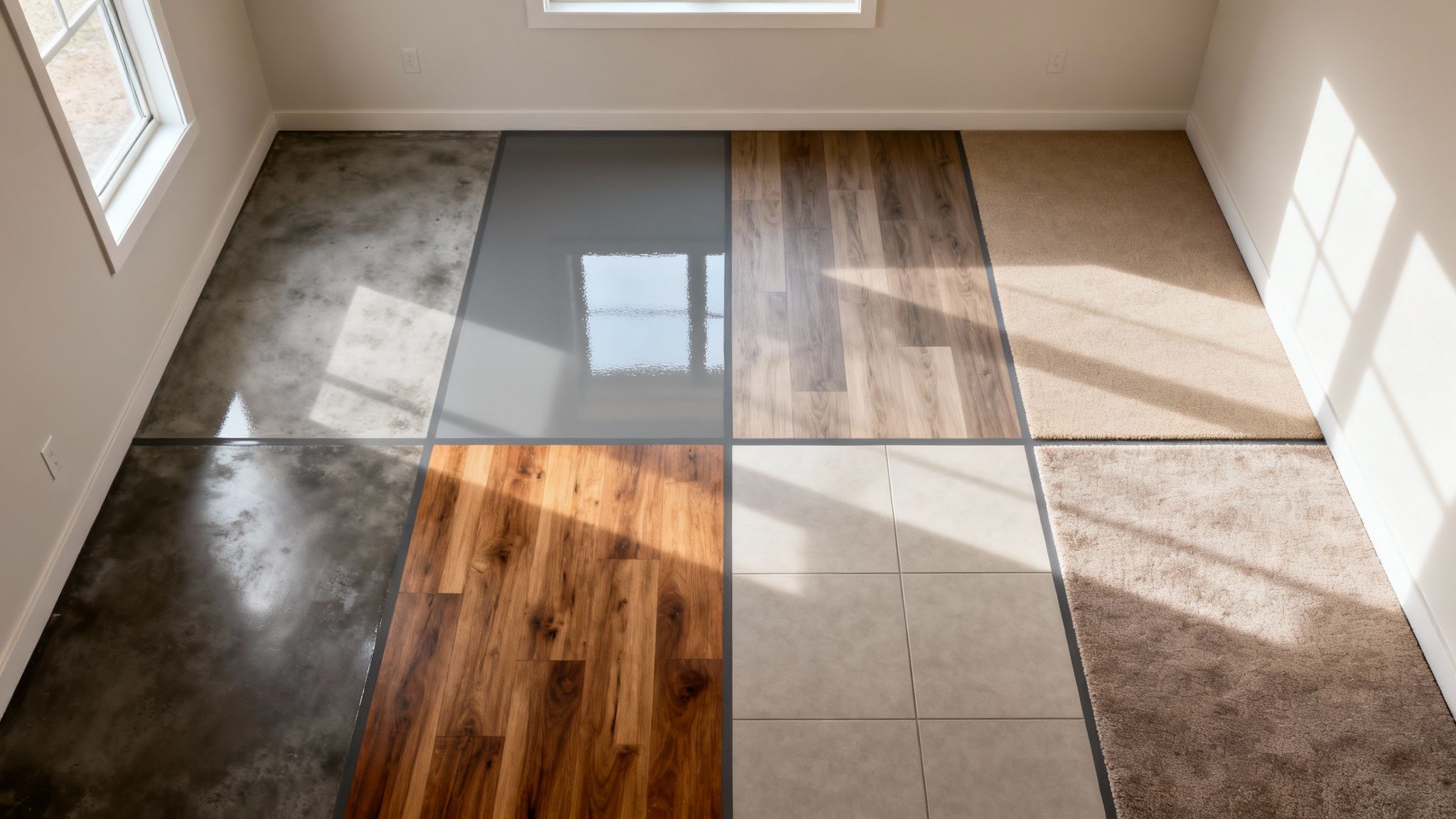
The best floor for your basement is one that can stand up to moisture while fitting the way you live. In my experience, the top contenders are almost always the same: tough-as-nails epoxy coatings, incredibly versatile luxury vinyl plank (LVP), and sleek, modern polished concrete. These are the go-to choices for a reason—they're celebrated for their durability and ability to handle the damp, unique conditions of a below-grade space.
The key is finding that sweet spot where practical function meets the look and feel you're going for in your newly transformed room.
Your Basement Flooring Transformation Starts Here
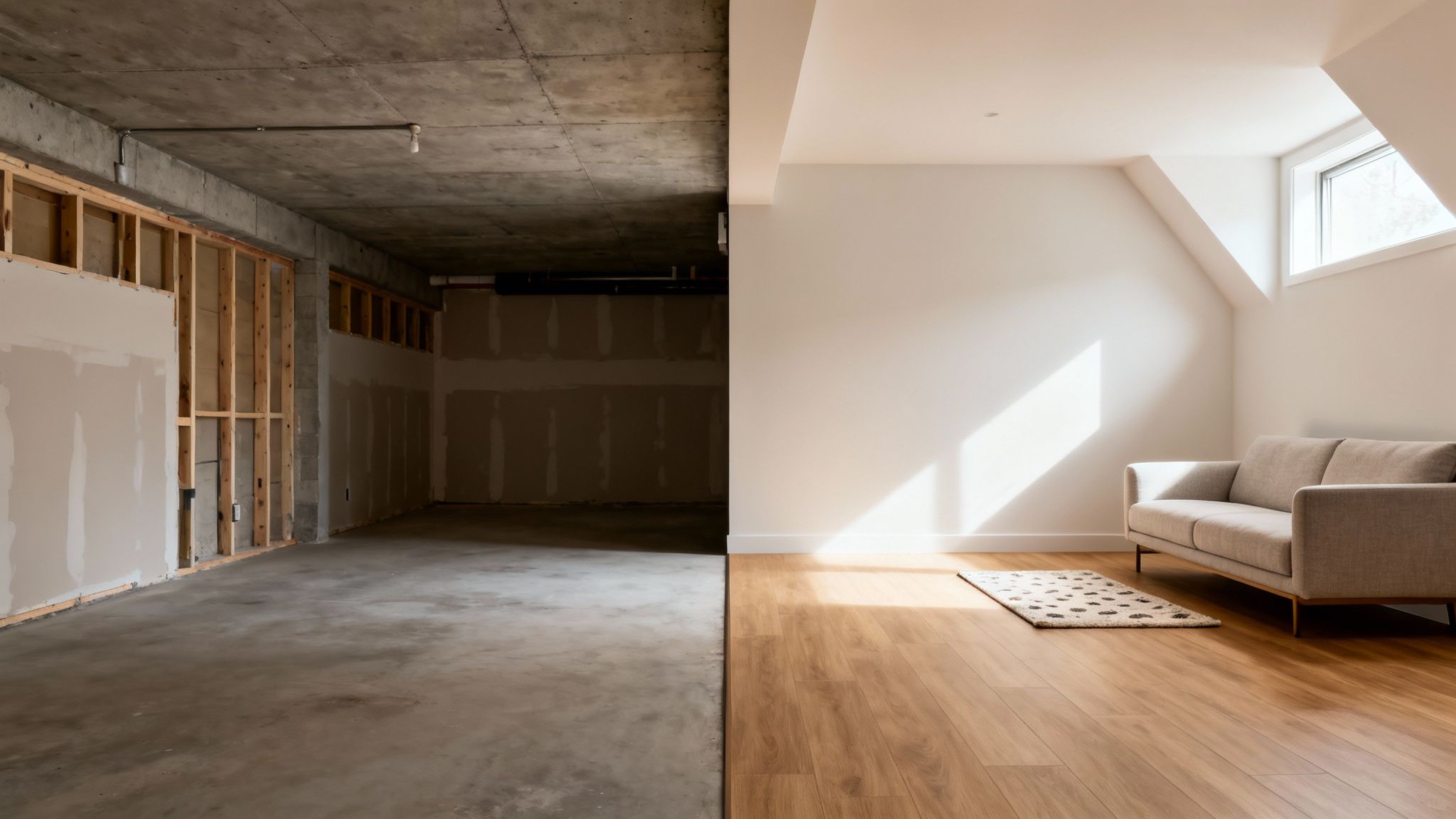
Let’s be honest—most basements start out as damp, underused spaces. But what if you could change that, starting from the ground up? This isn't just a simple renovation; it's about unlocking a huge chunk of your home's hidden potential. The single biggest challenge, without a doubt, is picking a floor that can handle the unique environment down there, especially moisture.
It helps to think of your basement as having its own climate. Unlike the rooms upstairs, it’s sitting right against the earth. That means it’s naturally cooler and far more prone to humidity and water vapor wicking up through the concrete. This guide is here to walk you through the most durable and stylish floor finishes that can handle those conditions, helping you turn a cold concrete slab into a comfortable, inviting room.
Navigating Your Options
We're going to look at everything from seamless epoxy coatings to timeless luxury vinyl, giving you the information you need to make a decision you feel good about. Whether you're a homeowner in Orem, a landlord in Provo, or managing properties nearby, we'll sort through the noise.
But first, let's get a quick overview. Before we dive deep into the pros and cons of each material, the table below gives you an at-a-glance comparison to quickly see which options might be the best fit. For a look at the bigger picture, our guide on the basement finishing step-by-step process can give you some great context.
Your basement floor isn't just a surface; it's the foundation for a new home office, a cozy family den, or a high-energy home gym. Selecting the right finish is the critical first step in realizing that vision and adding significant value to your property.
Here's a quick summary of the top basement flooring options to help you compare the most important factors, like moisture resistance, durability, and cost.
Basement Floor Finishes At-a-Glance
| Epoxy Coating | Excellent | Very High | $4 - $12 | Gyms, workshops, modern living spaces |
| Polished Concrete | Excellent | Extreme | $3 - $10 | Minimalist designs, high-traffic areas |
| Luxury Vinyl Plank | Excellent | High | $3 - $7 | Family rooms, home theaters, apartments |
| Engineered Wood | Fair | Moderate | $5 - $15 | Temperature-controlled living spaces |
| Carpet Tiles | Poor to Fair | Moderate | $2 - $6 | Bedrooms, playrooms (with subfloor) |
This table should give you a solid starting point for weighing your choices. Now, let’s get into the details of each of these popular basement flooring solutions.
Why Moisture Is Your Basement's Number One Enemy
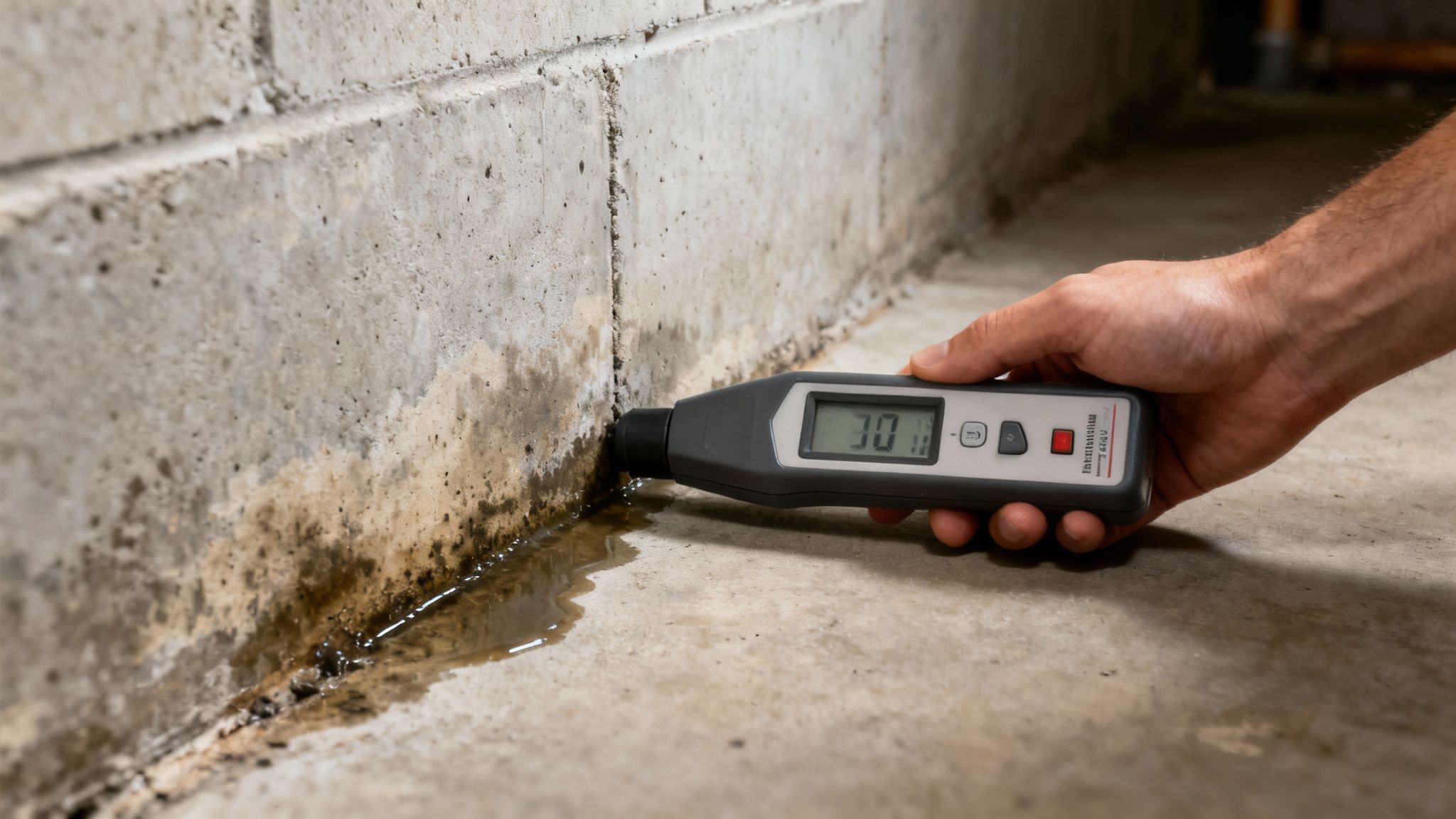
Before you even start thinking about colors or materials, we have to talk about the biggest threat to any basement flooring project: moisture. It's easy to think of your concrete foundation as a solid, impenetrable barrier. The reality is, it acts more like a giant, dense sponge.
Buried in the ground, that concrete slab is constantly wicking moisture from the surrounding soil. This happens through something called hydrostatic pressure, a relentless, invisible force that pushes water vapor right up through the pores in the concrete. Picking out a beautiful floor without dealing with this first is like renovating a ship's cabins before checking the hull for leaks. Sooner or later, you're going to have a big problem.
Even a basement that seems perfectly dry to the touch can be secretly pumping out a lot of moisture vapor. A quick look around just won't cut it. This is why professional moisture testing is an absolute must before you do anything else. It’s the single biggest mistake people make, and it's an expensive one to fix later.
Understanding How Moisture Gets In
Water is sneaky. It has a few common ways of getting into your basement, and figuring out the source is the key to stopping it for good.
- Vapor Transmission: This is that slow, steady seeping of moisture I mentioned, coming directly through the concrete from the damp earth below.
- Condensation: Think of a cold glass of water on a hot day. The same thing happens when warm, humid basement air hits your cool concrete floors and walls, creating puddles and dampness.
- Leaks: This is the most obvious culprit—water coming in through cracks in the foundation, leaky basement windows, or a plumbing issue.
Knowing these entry points is half the battle. Before getting too deep into flooring options, it helps to understand what water intrusion is and why it's a serious problem for any below-ground space. It'll give you the foundation you need to make smart choices.
The Critical Role of Prep and Vapor Barriers
When it comes to basement flooring, proper preparation is 90% of the battle. I’m not just talking about sweeping the floor. I mean creating a bulletproof barrier between the damp concrete and your beautiful new flooring.
A high-quality floor finish installed over a damp slab is destined to fail. The moisture underneath will eventually cause adhesives to break down, materials to warp or bubble, and mold to grow, compromising both your investment and your home's air quality.
Think of it like putting a raincoat on your concrete slab before you put on the nice sweater. This is where modern vapor barriers and specialized subflooring systems are worth their weight in gold. A simple plastic sheet from the hardware store won't do the trick.
For example, a liquid-applied moisture barrier bonds directly with the concrete, creating a seamless, waterproof seal. For floors like luxury vinyl plank or engineered wood, we often recommend a dimpled subfloor panel system. These create a small air gap, allowing any moisture vapor to circulate and dry out instead of getting trapped and ruining your floor from below. You can find more details in our complete guide to the best waterproofing for your basement and why it's a crucial investment.
The goal is always the same: completely isolate your finished floor from the concrete. Taking this step ensures that whichever flooring you choose, it's protected from its number one enemy and will look great for years to come.
The Power of Concrete Coatings: Epoxy and Polyurethane
When you're looking for the toughest, most resilient floor for a basement, two options always come up: epoxy and polyurethane. But let's be clear—this isn't just a can of floor paint from the hardware store. Real concrete coatings are high-tech chemical systems that do something amazing: they create a permanent, chemical bond with the concrete itself.
Think of it like pouring a liquid plastic shield over your entire basement floor. As it cures, it doesn't just sit on top. It sinks into the pores of the concrete and fuses with it, creating a single, seamless, and completely waterproof surface. This is the exact same technology used in demanding industrial workshops and gleaming car showrooms, and you can get that same level of performance right in your home.
This isn't just about looks, either. The coating creates a hermetic seal against moisture that can slowly seep up from the ground. For anyone living in the Orem and Provo area, you know how common damp basements can be. That feature alone makes these coatings a powerful tool in your fight against water issues.
Understanding the Key Differences: Epoxy vs. Polyurethane
While people often use the terms interchangeably, epoxy and polyurethane play different, but complementary, roles. The best systems use them together, like a one-two punch for total concrete protection.
- Epoxy: The Foundation: Epoxy is the workhorse. It’s thick, builds a strong base, and has incredible adhesive power. It fills in small cracks and imperfections while grabbing onto the concrete with a death grip. Its main job is to provide thickness, strength, and that critical waterproof barrier.
- Polyurethane: The Topcoat: Polyurethane is a thinner protective layer applied over the epoxy. It's more flexible, has much better resistance to UV light (which prevents ugly yellowing over time), and is even tougher against scratches and chemical spills. It’s like the clear coat on a car—it protects the color and integrity of the epoxy base layer underneath.
Professional installers almost always use an epoxy base coat for strength and then seal it with a polyurethane topcoat for scuff and UV protection. This layered system gives you the best of both worlds, creating a floor that is exceptionally tough and looks great for years.
Why Coatings are a Smart Basement Investment
The boom in concrete coatings isn't just a fleeting trend; it's a direct result of how well they work. Demand is surging for residential basements precisely because moisture resistance is the number one priority. In fact, the global market for these coatings is expected to hit $2.5 billion by 2033, which tells you just how effective they are. That growth is no surprise when you consider that up to 60% of homes in major U.S. markets deal with basement water problems, making a solid coating system your first line of defense. You can learn more about the expanding concrete coatings market on Fact.MR.
This move toward coatings shows homeowners want finishes that actually solve problems, not just cover them up. Here’s a quick rundown of the real-world advantages.
Pros of Epoxy and Polyurethane Coatings:
- Exceptional Durability: Once cured, this stuff is incredibly hard. It resists impacts from dropped tools, abrasion from furniture, and heavy foot traffic, making it perfect for a home gym, workshop, or busy playroom.
- Seamless and Waterproof: There are no grout lines or seams where water, dirt, or bacteria can hide. This single, monolithic barrier is one of the best ways to stop moisture from getting into your basement.
- A Breeze to Clean: The smooth, non-porous surface makes cleanup ridiculously easy. Spills just wipe right off without staining—a huge relief for anyone with kids, pets, or a hobby space.
- Highly Customizable: You’re not stuck with boring gray. Coatings come in a huge range of colors, and you can add decorative elements like vinyl flakes or metallic pigments to create stunning, high-end looks, from a simple solid color to a floor that mimics polished granite.
Cons to Consider:
- Professional Installation is Key: I can't stress this enough: this is not a DIY weekend project. The success of the coating depends entirely on meticulous prep work, which means mechanically grinding the concrete to give the epoxy something to grab onto. Skipping this step is a recipe for peeling and failure.
- Can Be Slippery When Wet: The high-gloss finish can be slick, but that’s an easy fix. A professional installer will mix an anti-slip aggregate into the final topcoat to give it some grip.
- Can Be Cold Underfoot: Just like tile or bare concrete, the surface doesn't hold heat. This is usually less of a big deal in a basement, but it's something to keep in mind.
Ultimately, epoxy and polyurethane coatings deliver an industrial-grade solution that transforms a vulnerable concrete slab into a beautiful, functional, and fully protected foundation for whatever you want to do with your basement.
Achieving the Modern Look with Polished Concrete
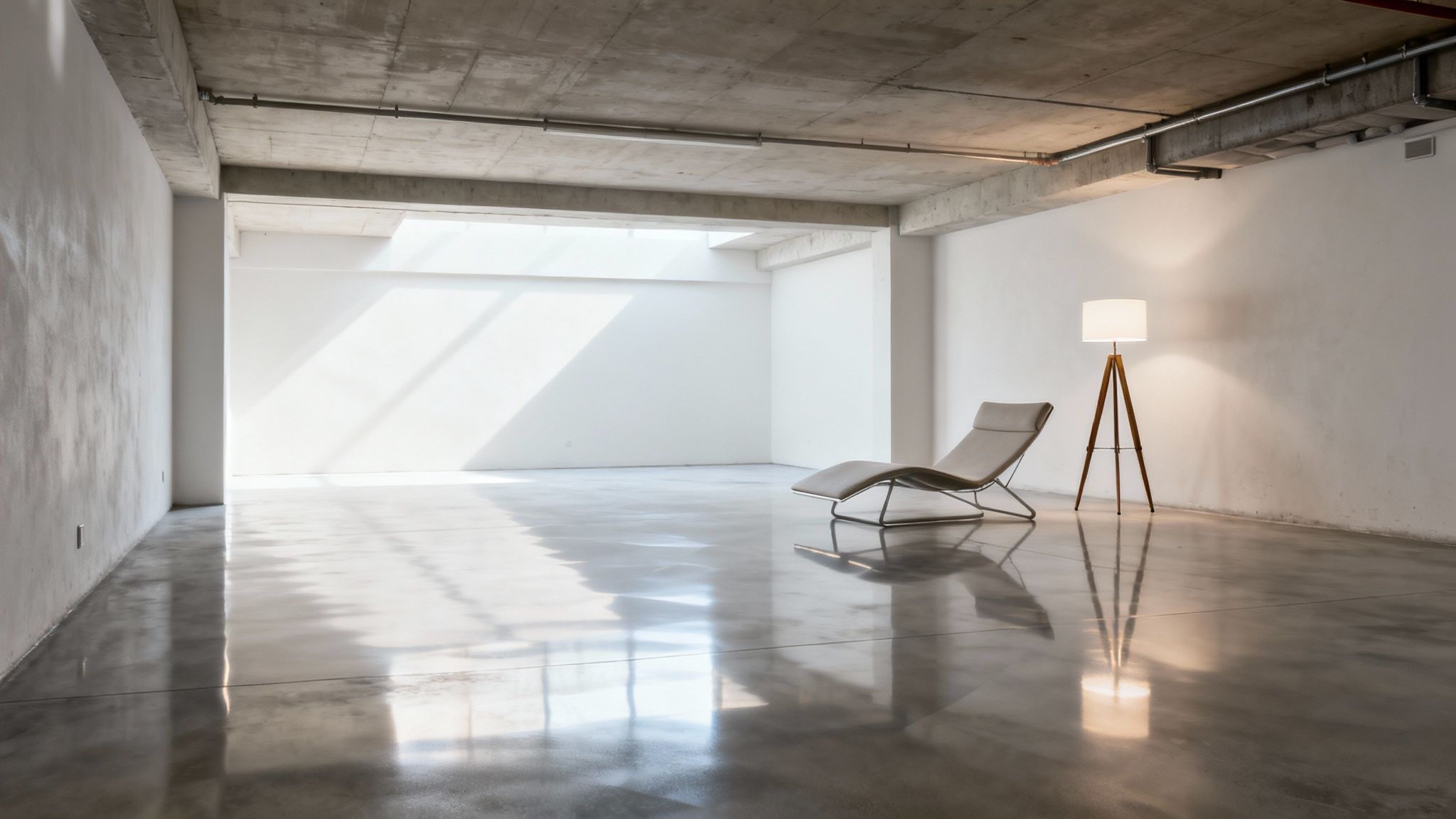
If you're after that minimalist, industrial-chic vibe for your basement, polished concrete is one of the most practical and visually stunning options out there. This isn't just about giving your existing slab a good scrub; it's a sophisticated mechanical process that refines raw concrete into a smooth, dense, and reflective surface.
Think of it like sanding a piece of wood, but on a much bigger scale. We use heavy-duty polishing machines armed with progressively finer diamond-impregnated pads. Each pass grinds the surface smoother and smoother, eventually creating a natural, high-gloss sheen without ever needing wax or a topical coating.
It’s a world away from just applying a sealer. A sealer just sits on top of the concrete, but a true mechanical polish refines the concrete itself, hardening the surface from within.
The Unmatched Durability of Polished Concrete
One of the biggest draws for polished concrete is its incredible resilience. Because the finish is the concrete—just densified and smoothed—there's no coating to chip, no laminate to peel, and zero grout lines to stain.
This makes it a fantastic choice for any high-traffic area or a room that needs to handle some serious wear and tear.
- Home Gyms: It can take dropped weights and heavy equipment without denting or scratching.
- Workshops: Spills like oil or paint can be wiped right up before they have a chance to penetrate the surface.
- Playrooms: The seamless floor is perfect for rolling toys and is unbelievably easy to clean up after the kids.
This durability means maintenance is a breeze. A quick sweep and an occasional mop with a pH-neutral cleaner are all you need to keep the floor looking fantastic for decades.
Polished concrete is not just a floor covering; it’s a permanent upgrade to your foundation. It leverages the inherent strength of the concrete slab, turning a structural element into a beautiful, finished surface that is virtually indestructible and lasts the lifetime of the home.
Brightening Your Basement Space
Basements are notoriously short on natural light, which can make them feel dark and cramped. Polished concrete offers a pretty slick solution to this common problem. Its naturally reflective surface acts like a subtle mirror for light.
Even a satin-finish polish will bounce light—both natural and artificial—around the room. The effect is immediate: the entire basement feels brighter, larger, and more open. This can even cut down on the need for extra light fixtures, saving a bit on energy bills while seriously upgrading the ambiance.
This industrial-chic aesthetic has really taken off. In fact, the global floor finish market is projected to expand to USD 3.8 billion by 2036, with polished concrete becoming a go-to for residential projects. Experts estimate that its reflective quality can make a basement feel up to 30% larger visually—a game-changer for any below-grade living area. You can find more details on this trend in the growing floor finish market report from Future Market Insights.
This all points to a bigger shift: homeowners want finishes that aren't just stylish, but also incredibly functional.
Pros and Cons of a Polished Concrete Floor
While the benefits are compelling, it's smart to look at both sides before deciding if it's the right fit for your Orem or Provo home.
Key Advantages:
- Extreme Durability: It resists scratches, chips, stains, and heavy impacts like a champ.
- Low Maintenance: Super easy to clean and doesn't demand special treatments.
- Hypoallergenic: The non-porous surface won't harbor dust, allergens, or mold.
- Long Lifespan: With minimal care, this floor can easily last for decades.
- Aesthetic Appeal: It delivers a clean, modern look that works with all kinds of design styles.
Potential Drawbacks:
- Hardness: The surface is unyielding underfoot, which some people find uncomfortable. Area rugs are a great way to soften up seating or play areas.
- Cold Temperature: Like tile, concrete can feel chilly. This is often less of an issue in a basement, which is naturally cooler anyway.
- Professional Installation Required: This is not a DIY job. Achieving a true mechanical polish demands specialized, expensive equipment and real expertise.
- Existing Slab Condition: The final result is only as good as the concrete you start with. If your slab has significant cracks or damage, you'll need to budget for repairs before the polishing can even begin.
At the end of the day, polished concrete remains one of the most robust and stylish floor finishes for basements, offering a perfect blend of modern design and unmatched practicality.
A Closer Look at Traditional Basement Flooring: Vinyl, Carpet, and Wood
Sometimes, even with all the modern concrete options, you just want the classic look and feel of traditional flooring. There's nothing wrong with that. Things like luxury vinyl, cozy carpet, or elegant engineered wood can absolutely work in a basement, but it's a different game down there. Success isn't just about picking a style you like; it’s about understanding how these materials handle the unique pressures of a below-grade space.
Let's get real about how these popular choices hold up when the concrete slab beneath them starts misbehaving.
Luxury Vinyl Plank: The Waterproof Workhorse
There’s a reason Luxury Vinyl Plank (LVP) has taken over the basement flooring world: the planks themselves are 100% waterproof. That’s not just a sales pitch. The material—a tough composite of PVC—literally cannot absorb water. A spilled drink, a pet accident, or a leaky pipe is a simple cleanup job, not a catastrophe.
Think of LVP as a beautiful, resilient shield for your concrete subfloor. The planks are engineered to click together tightly, forming a surface that water just beads up on. Plus, today's LVP looks shockingly realistic, convincingly mimicking everything from aged barn wood to high-end Italian marble. It gives you that premium aesthetic without the anxiety that comes with natural materials.
But here’s the critical fine print: while the planks are waterproof, the seams are not. In a serious flood, water can and will find its way through the cracks and get trapped underneath. If that happens, the floor has to come up so the concrete slab can dry out completely before you can put it back down.
Carpet: How to Get Cozy Without the Risk
Who doesn't love the soft, warm feeling of carpet? For a basement bedroom or a family movie room, it's the ultimate comfort choice. But let me be blunt: traditional wall-to-wall carpet with a standard squishy pad is one of the worst things you can put in a basement. The organic fibers and sponge-like padding are a five-star resort for mold and mildew.
So, how do you get the warmth without the worry? You have to choose the right system.
- Go with Carpet Tiles: These modular squares are the secret weapon for basement carpeting. A leak from the water heater stains a spot? No problem. Just pull up the few affected tiles, clean or replace them, and pop them back in. It turns a potential disaster into a minor inconvenience.
- Insist on Moisture-Resistant Padding: Your standard rebond pad is out. You need a synthetic cushion—made of rubber or dense urethane—specifically designed to block moisture instead of soaking it up. This is your most important line of defense.
- Pick Low-Pile, Synthetic Fibers: Stick with carpets made from inorganic materials like nylon, olefin, or polyester. These fibers don't feed mold and are far easier to clean and dry out than natural wool.
Making these three strategic choices means you can enjoy that plush carpet feel without constantly worrying that you’re creating a science experiment under your feet.
Engineered Hardwood: The Only Way to Get Real Wood Downstairs
The timeless appeal of hardwood is undeniable, but putting solid hardwood planks in a basement is a recipe for disaster. They will warp, cup, and buckle as they absorb and release moisture from the concrete. It’s a guaranteed failure.
That’s where engineered hardwood comes into play. It’s a clever compromise, giving you a top layer of genuine, beautiful hardwood bonded to a core of dimensionally stable plywood.
Think of it like a laminated beam. Multiple layers of wood are crisscrossed and fused together, creating a plank that’s far stronger and much less reactive to humidity swings than one solid piece of wood.
This layered construction makes it a viable—though still cautious—choice for a well-controlled basement. It's not bulletproof. The real wood veneer is still vulnerable to standing water, so it should only be considered for basements with proven moisture control and a proper vapor barrier. It’s best for consistently heated and cooled spaces like a home office or den, not a laundry room. While it’s a riskier and pricier option than LVP, it delivers an authentic wood look and feel that vinyl just can’t quite match.
Comparing Traditional Basement Flooring Options
When you're weighing these common choices, it helps to see them side-by-side. Each has distinct advantages and disadvantages in a below-grade environment.
| Luxury Vinyl (LVP/LVT) | 100% waterproof material, highly durable, easy to clean, huge variety of styles. | Seams are not watertight; major floods can trap water underneath, requiring removal. | All-purpose use: playrooms, home gyms, entertainment areas, laundry rooms. The safest bet for most basements. |
| Carpet (Tiles/Synthetic) | Very warm and comfortable underfoot, excellent sound absorption for home theaters or bedrooms. | Requires specific moisture-resistant padding and synthetic fibers; can still trap allergens and dust. | Climate-controlled living spaces where comfort is key, like family rooms, bedrooms, and home theaters. |
| Engineered Hardwood | Authentic look and feel of real wood, adds significant resale value. | Most expensive and least moisture-resistant option; vulnerable to scratches and water damage. | Dry, well-ventilated basements used as home offices, formal living areas, or wine cellars. |
Ultimately, the right choice depends on how you plan to use your basement and how well you can control the environment. LVP offers the most peace of mind, while carpet provides unmatched comfort and engineered wood delivers timeless beauty, each with its own set of rules for success.
Making the Right Choice for Your Basement
Alright, we've walked through all the options. Now it's time to land the plane and pick the perfect floor for your basement. The best choice isn't just about what catches your eye at the store; it's about finding the material that truly fits your lifestyle. A floor that’s perfect for a home gym will probably be a terrible choice for a cozy family movie room.
Think of this as your final gut check. The right decision boils down to asking a few practical questions that connect how you actually live to how a floor will perform. Answering these honestly will point you straight to the ideal solution for your Orem or Provo home.
Key Questions to Guide Your Decision
Before you pull the trigger on a purchase, pause and run through these essential factors. Your answers will build a clear path forward, helping you avoid a costly mistake and ensuring you're happy with your choice for years to come.
- What's the Room's Main Gig? Is this going to be a high-traffic playroom for the kids, a home gym where moisture is a given, or a quiet home office? The need for durability and water resistance swings wildly depending on the room's job.
- Comfort or Durability? Are you after a soft, warm surface for a basement bedroom, or do you need a bomb-proof floor for a workshop? This is often the classic showdown between something like carpet and a tough-as-nails epoxy coating.
- How Much Upkeep Can You Handle? Honestly, how much time do you want to spend cleaning and maintaining this floor? Polished concrete is practically maintenance-free, while other materials might need more specific care. It's also smart to think about practical things like protecting your floors from furniture from day one.
- What’s the Real Budget? What can you truly afford, all-in? Remember to factor in professional installation and non-negotiable prep work like a good moisture barrier. Being realistic about the total cost prevents nasty surprises down the road.
This simple decision tree can help you see how your priorities for moisture and comfort might steer you toward a specific traditional flooring choice.
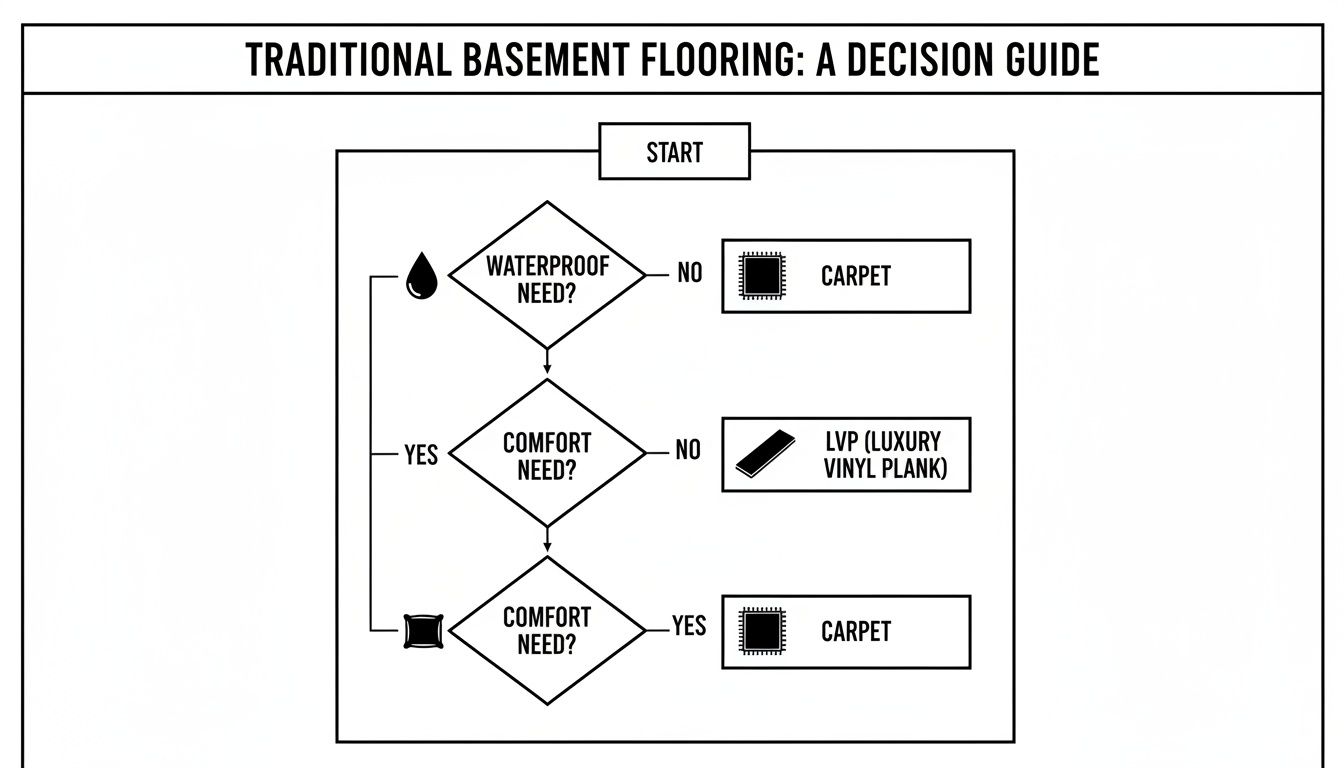
As the flowchart shows, homeowners often find themselves at a crossroads: do you go for the total waterproof peace of mind of LVP, or the unmatched warmth of a properly installed carpet system?
Tailored Recommendations for Your Space
To make this even easier, let's look at a few common basement scenarios. When you weigh the pros and cons, a clear winner usually emerges for each use case.
Your basement floor is the foundation of its new identity. Choosing a finish that aligns with its intended purpose is the single most important step in creating a space that is not only beautiful but also performs flawlessly for years.
- For the Ultimate Home Gym or Workshop: Epoxy or polyurethane coatings win, hands down. They offer extreme durability, can handle dropped weights and chemical spills, and give you a seamless, easy-to-clean surface. For tough-use spaces, nothing else comes close.
- For the Busy Family Playroom: Luxury Vinyl Plank (LVP) is the undisputed champion here. It’s waterproof, stands up to scratches from toys, and is comfortable enough for kids to roughhouse on. It’s the perfect blend of looking good and being incredibly resilient.
- For a Cozy Home Theater or Bedroom: Go with carpet tiles over a moisture-resistant pad. This setup gives you the best warmth, comfort, and sound-dampening qualities, which is exactly what you want for a quiet, inviting retreat. Plus, if there’s a spill, you can just replace one tile.
- For a Modern, Bright Living Area: Polished and sealed concrete delivers that industrial-chic look that is both stunning and unbelievably low-maintenance. Its ability to reflect light can make the entire basement feel bigger and brighter.
A Few Common Questions About Basement Flooring
When it comes to finishing a basement, homeowners always have great questions. Getting straight answers is the best way to feel good about your decision, so let's tackle some of the most common things people ask.
What's a Truly Waterproof Floor for a Basement?
If you're looking for a genuinely waterproof solution, nothing beats epoxy or polyurethane concrete coatings. Think of it as a seamless, non-porous shield bonded directly to the concrete. It stops water from getting through from the top and from seeping up from below.
Polished and sealed concrete is also incredibly water-resistant. Now, you’ll hear Luxury Vinyl Plank (LVP) called "waterproof," and while the planks themselves won't get damaged by water, the seams between them aren't sealed. In a flood, water can easily get trapped underneath, forcing you to pull up the whole floor to prevent mold. The real key is always fixing the moisture source first, which we cover in our guide on preventing mold in basements.
Can I Just Install the Floor Myself to Save Some Cash?
You absolutely can, especially with products like click-lock vinyl planks or carpet squares. But basements are tricky. If you don't prep the concrete surface just right or miss a hidden moisture problem, you could be looking at a failed floor and a much bigger bill down the road.
When it comes to specialty floor finishes for basements like professional epoxy coatings or polished concrete, this is not a DIY job. These finishes demand heavy-duty equipment and a deep understanding of the process to get a result that will actually last.
My advice? At the very least, get a professional opinion first. It's the best way to know exactly what your basement needs.
How Much Should I Expect to Pay to Finish My Basement Floor?
The cost can swing pretty widely depending on the size of your space, the shape your concrete is in, and which finish you choose.
- Budget-Friendly: Sealed concrete is almost always your most affordable starting point.
- Mid-Range: This is where you'll find options like Luxury Vinyl Plank (LVP) and good-quality carpet tiles.
- High-End: A professionally installed epoxy floor or a custom polished concrete design is more of a premium investment.
A good contractor will give you a clear, detailed quote that covers all the prep work, so you aren’t hit with any surprises later on.
Is a Subfloor a Good Idea in a Basement?
For most basements, yes, it’s a fantastic idea. A modern subfloor system—especially one with insulated, interlocking panels—does a few crucial things. It creates a thermal break, which is just a fancy way of saying it stops the cold from the concrete slab from coming through. The floor will feel noticeably warmer.
A subfloor also gives you a perfectly flat, stable base for installing materials like engineered hardwood or LVP, and it keeps your beautiful new floor from sitting directly on potentially damp concrete. The only real downsides are the extra cost and losing a little bit of ceiling height. A pro can help you figure out if a subfloor makes sense for your project.
Ready to turn your basement into a space that’s as beautiful as it is durable? The team at Northpoint Construction has the hands-on experience to walk you through every step, from solving moisture issues to a perfect installation. Contact us today to book your consultation here in the Orem or Provo area.