
Utah Home Addition Cost Estimator
When you start dreaming about a home addition, the first question that pops into your head is always, "How much is this going to cost?" While an online estimator can give you a ballpark figure, the reality on the ground here in Utah depends entirely on what you're planning.
You're likely looking at a range of anywhere from $120 to over $300 per square foot. For a simple room addition, that could mean a starting point around $50,000. If you're talking about a more involved second-story addition, that number can easily climb past $200,000. The final tally all comes down to the materials you choose, local labor costs, and the overall complexity of the job.
Establishing Your Financial Starting Point
Before you get lost in the blueprints, it's crucial to get a handle on the typical cost ranges for home additions in our area. The price per square foot is a helpful metric, but it only tells part of the story.
The type of space you're adding is what really moves the needle. For example, a new kitchen with all its plumbing, electrical work, and high-end appliances will always have a much higher cost per square foot than a simple bedroom or family room.
Looking at national averages can give you a useful baseline. Across the U.S., additions generally run between $80 and $210 per square foot for labor and materials. If you’re building up instead of out, second-story additions often command a premium, typically falling between $100 and $300 per square foot. From my experience in Utah, especially along the Wasatch Front, our local labor rates and material supply chains tend to push these figures toward the higher end of the national spectrum.
Key Factors Influencing Your Estimate
A few core components will have the biggest impact on your initial budget. Getting a good grasp of these variables is the first real step toward building an accurate estimate.
- Type of Addition: Are you building out with a single-story addition, or are you building up by adding a second story? Building up is a great way to avoid the cost of a new foundation, but it requires serious structural reinforcement of your existing home, which comes with its own price tag.
- Room Functionality: Think in terms of "wet" versus "dry" rooms. A "wet" room like a bathroom or kitchen requires expensive plumbing and electrical work. A "dry" room, like a family room or office, is far less complex and therefore more affordable.
- Finishes and Materials: This is where your personal taste can create huge swings in the budget. The difference between standard-grade carpet and luxury hardwood, or builder-grade windows versus custom, high-efficiency models, can be tens of thousands of dollars.
To get a feel for how different inputs affect a total price, it's helpful to see how other industries break down expenses. For instance, exploring how a long distance moving cost calculator works can provide valuable insights into how variables combine to create a final estimate.
To give you a clearer picture before we dig into the detailed cost estimator process, here’s a quick look at what we typically see for common addition projects right here in Utah.
Quick Look at Utah Home Addition Cost Ranges
Use this table as a general guide to see where your vision might fall. It's a great starting point for managing expectations.
| Family Room Addition | $150 - $250 | 400 - 600 sq. ft. | $60,000 - $150,000 |
| Primary Suite Addition | $200 - $325 | 500 - 700 sq. ft. | $100,000 - $227,500 |
| Second-Story Addition | $225 - $350+ | 800 - 1,200 sq. ft. | $180,000 - $420,000+ |
| Basic Room (Bump-Out) | $120 - $200 | 150 - 250 sq. ft. | $18,000 - $50,000 |
Keep in mind, these are averages. A high-end primary suite with luxury finishes could easily exceed these numbers, while a very basic family room might come in on the lower end.
Defining Your Project for an Accurate Estimate
Any good estimate starts with getting specific. If you want a real number you can actually budget around, you have to move past a simple square-footage guess and dig into the details of what you actually want to build. The specifics of your vision—from the type of addition to the faucets you pick out—are what truly drive the final cost.
Think of it like planning a road trip. You can't budget for gas just by knowing your destination. You have to decide if you're taking the most direct highway or the long, scenic route through the mountains. It's the same idea here. A simple "bump-out" to make your home office a little bigger is a completely different project than adding a full second story, which means reinforcing your home's entire existing structure.
Addition Type and Purpose
The biggest piece of the budget puzzle is deciding what you’re actually building. Are you just pushing a wall out, or are you adding a whole new wing with multiple rooms? Each one comes with a vastly different price tag.
- Bump-Out Addition: This is usually the most straightforward option. You're typically just extending an existing room by a few feet without a full foundation. It’s a great way to add a small breakfast nook or expand a living room, and it generally carries the lowest cost per square foot.
- Conventional Room Addition: This is what most people picture—a full, single-story structure built on its own foundation, with a roof and walls, all tied seamlessly into your home. This is the go-to for adding a new bedroom, a primary suite, or a family room.
- Second-Story Addition: This is where you build up instead of out, adding an entire new level to your home. While it's a fantastic way to add space without sacrificing your yard, it's easily the most complex and expensive route. It requires significant structural engineering and beefing up the floor below to handle the new load.
Just as important is the purpose of the new space. A bedroom needs some basic electrical and an HVAC run, but a new kitchen or bathroom is a whole different ballgame. You're suddenly dealing with expensive plumbing, heavy-duty electrical circuits for appliances, complex venting, and pricey fixtures. This is exactly why a 200-square-foot kitchen can easily cost more than a 400-square-foot family room.
Finishes: From Standard to Luxury
Once you’ve nailed down the structure, the next layer of your estimate comes from the materials and finishes. This is where your personal style directly translates into dollars and cents. The gap between standard, builder-grade materials and high-end selections can easily tack on tens of thousands to your budget.
A great way to manage this is by creating two lists: a 'must-have' list and a 'nice-to-have' list. Your must-haves form the baseline of your budget. The nice-to-haves can be added in if the numbers work out, or you can even plan to tackle them later on.
Just think about the range of options for a few key items:
- Flooring: Are you going with practical laminate flooring, or are you dreaming of high-end, wide-plank hardwood?
- Windows: Will standard vinyl windows do the trick, or are you set on premium wood-clad, triple-pane windows for that top-tier look and efficiency?
- Fixtures: This covers everything from light fixtures and faucets to doorknobs. The cost spectrum here is massive, running from a few bucks for a basic piece to thousands for a designer one.
Planning for the Unseen Details
Finally, a solid project definition means doing a little homework on your local requirements. Before you get too attached to a design, it's incredibly smart to look into your local Utah municipality’s zoning laws and building codes.
For instance, are there setback requirements that dictate how close you can build to your property line? Are there height restrictions that might kill your second-story plans? Figuring these rules out early can save you from the headache and expense of a major redesign down the road.
Gathering all these details gives you a clear, comprehensive scope for your project. This is the foundation for any reliable cost estimate and the first real step in a successful build. The more detailed your plan is from the get-go, the smoother the entire project will be. To see how this planning fits into the bigger picture, our guide on the custom home building process has some great insights that apply just as well to additions.
Building Your Budget Line by Line
Alright, let's move past the broad, per-square-foot numbers and get into the real details. If you want to create a home addition cost estimator that’s actually useful, you have to build a line-by-line budget. This is hands-down the best way to see exactly where your money is going and gives you real control over the final price tag.
Think of it as trading a blurry, big-picture guess for a sharp, detailed financial plan. Instead of staring at one giant, intimidating number, you’ll have a list of smaller, more understandable cost categories. This approach not only makes it easier to track your spending but also shows you where you can make smart choices to save money without sacrificing what’s most important to you.
Honestly, this detailed breakdown is what turns a fuzzy dream into a project you can actually build. It arms you with the knowledge to have meaningful conversations with contractors, because you'll understand the "why" behind the costs for each stage of construction.
Deconstructing the Build Process into Costs
A home addition is built in a series of logical steps, and your budget should follow that same path. Each phase uses different materials, requires specialized trades, and comes with its own set of cost variables. Let’s walk through the major categories you need to plan for.
- Excavation and Foundation: This is where it all starts—the literal groundwork. Your costs here will cover clearing the site, digging for the foundation, and pouring the concrete. Here in Utah, if your property has rocky soil or sits on a steep slope, be prepared for excavation costs to climb. A simple concrete slab is your most affordable route, while a full basement foundation costs the most but also adds a ton of valuable living space. For a deeper dive into those costs, our guide on a basement finishing cost calculator offers some great parallels.
- Framing and Structure: This is the skeleton of your addition. We're talking about the walls, floor joists, and roof trusses that give the space its shape. It’s a labor-heavy part of the job, and the price of lumber will have a big impact here.
- Roofing: You’ll need to budget for everything from shingles or metal panels to the underlayment and flashing required to tie the new roof into your existing one. Getting a perfect match with your current roofing is crucial for making the addition look like it was always there.
The biggest things driving your budget will always be the project's scope, the type of room you're adding, and the quality of finishes you choose. A complex kitchen addition with high-end appliances and custom cabinets will always cost more than a simple bedroom with standard-grade materials.
The infographic below really drives this point home, showing how these core factors stack up.
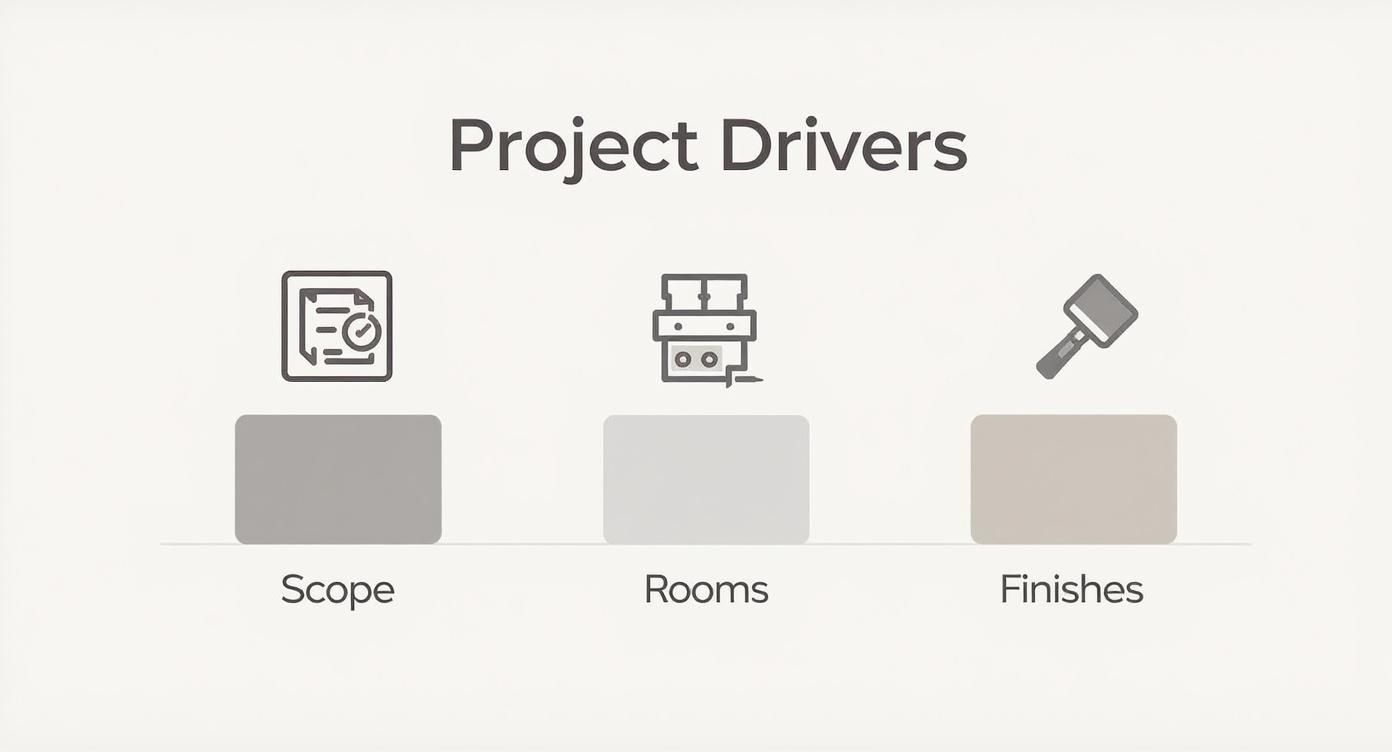
It’s a great visual reminder that while your finish choices matter, the fundamental scope and purpose of the rooms you're adding truly set the financial stage for everything else.
Exterior and Interior Systems
Once the structure is up, it's time to protect it from the weather and bring it to life with all the essential utilities. These "behind-the-walls" costs are absolutely critical, and they aren't the places you want to be cutting corners.
Your exterior finishes—siding, windows, and doors—affect both curb appeal and energy efficiency. Vinyl siding is a solid, budget-friendly choice, while brick or stone will push you toward the higher end of the cost spectrum. It's the same story with windows: standard vinyl is economical, but high-performance wood or fiberglass windows might cost more now but will save you money on utility bills down the road.
Inside the walls, you’ve got three big systems to account for:
Plumbing: This becomes a major cost factor if you’re adding a bathroom, kitchen, or laundry room. The budget needs to cover running new water and drain lines and tying them into your home’s main system.
Electrical: You'll need to budget for all the wiring, outlets, switches, and light fixtures. A large addition might even require a new subpanel to handle the extra electrical load.
HVAC: Extending your heating and cooling is a must for making the new space comfortable. This could mean running new ductwork from your existing furnace or installing a separate, dedicated mini-split system.
As you build out these line items, your material choices will make a huge difference. It’s worth your time to research things like comparing different insulation types, as the R-value and installation costs for spray foam versus traditional fiberglass can vary significantly.
A Real-World Example: Line-Item Budget for a Utah Addition
To pull all this together, let’s map out a sample budget for a popular project: a 500-square-foot family room addition in Utah. The table below breaks down the potential costs, giving you a low-end and high-end range. This variation accounts for everything from simpler material choices to more complex site conditions.
Sample Line-Item Budget for a 500 Sq. Ft. Family Room Addition in Utah
| Excavation & Foundation | $8,000 | $15,000 | Soil conditions, foundation type (slab vs. crawl space) |
| Framing (Labor & Materials) | $12,000 | $22,000 | Lumber prices, roof complexity, wall height |
| Roofing | $4,000 | $8,000 | Material (asphalt vs. metal), roof pitch |
| Exterior (Siding & Trim) | $7,000 | $14,000 | Siding material (vinyl vs. fiber cement), detail work |
| Windows & Doors | $5,000 | $12,000 | Number of windows, material (vinyl vs. wood/fiberglass) |
| Plumbing | $1,500 | $4,000 | Adding hose bibs or a wet bar sink |
| HVAC Extension | $2,500 | $6,000 | Ductwork length, existing system capacity |
| Electrical | $4,000 | $8,000 | Number of outlets, lighting fixtures, subpanel needs |
| Insulation | $2,000 | $4,500 | Type (fiberglass vs. spray foam), R-value |
| Drywall & Paint | $6,000 | $11,000 | Wall texture, paint quality, ceiling height |
| Flooring | $3,000 | $9,000 | Material (carpet, LVP, hardwood) |
| Finish Carpentry (Base & Case) | $2,000 | $5,000 | Trim style and material (MDF vs. wood) |
| Estimated Subtotal | $57,000 | $118,500 | Reflects standard to mid-grade finishes |
Having this kind of detailed view is incredibly empowering. You can immediately see that your flooring choice alone could swing your budget by $6,000, or that opting for premium windows could add $7,000 or more to the bottom line. This is exactly how you build a budget that truly works for you—one informed decision at a time.
Don't Forget These "Hidden" Project Costs
When a contractor hands you a bid, it’s tempting to lock onto that one big number as your total project cost. But that figure, which covers labor and materials (often called hard costs), is just one piece of the puzzle. A realistic budget for your home addition has to account for the less obvious expenses that can really sneak up on you.
These are the “soft costs”—the essential services and fees needed to get your project off the ground legally and turn your vision into a buildable reality. Skipping over them is the quickest way to blow your budget before a single nail is hammered.
Planning, Permits, and Paperwork
Long before the construction crew shows up, a critical planning phase has to happen, and it comes with its own price tag. Think of these as the non-negotiable costs that ensure your addition is well-designed, structurally sound, and officially approved by your city.
- Architectural Plans: Unless you’re building a simple, small bump-out, you'll need professional blueprints. A good rule of thumb is to set aside 5% to 15% of your total construction cost for an architect or designer to draft the detailed plans.
- Land Surveys: Your city will likely require a recent survey of your property to verify lot lines and setback requirements. This can run anywhere from $500 to $2,000, depending on your property's size and complexity.
- Building Permits: Every city in Utah has its own permit fee structure. Here in Utah County, cities like Orem or Provo often base these fees on the project's total value. For a $100,000 addition, you could easily be looking at $1,500 to $3,000 (or more) just for the permits.
The All-Important Contingency Fund
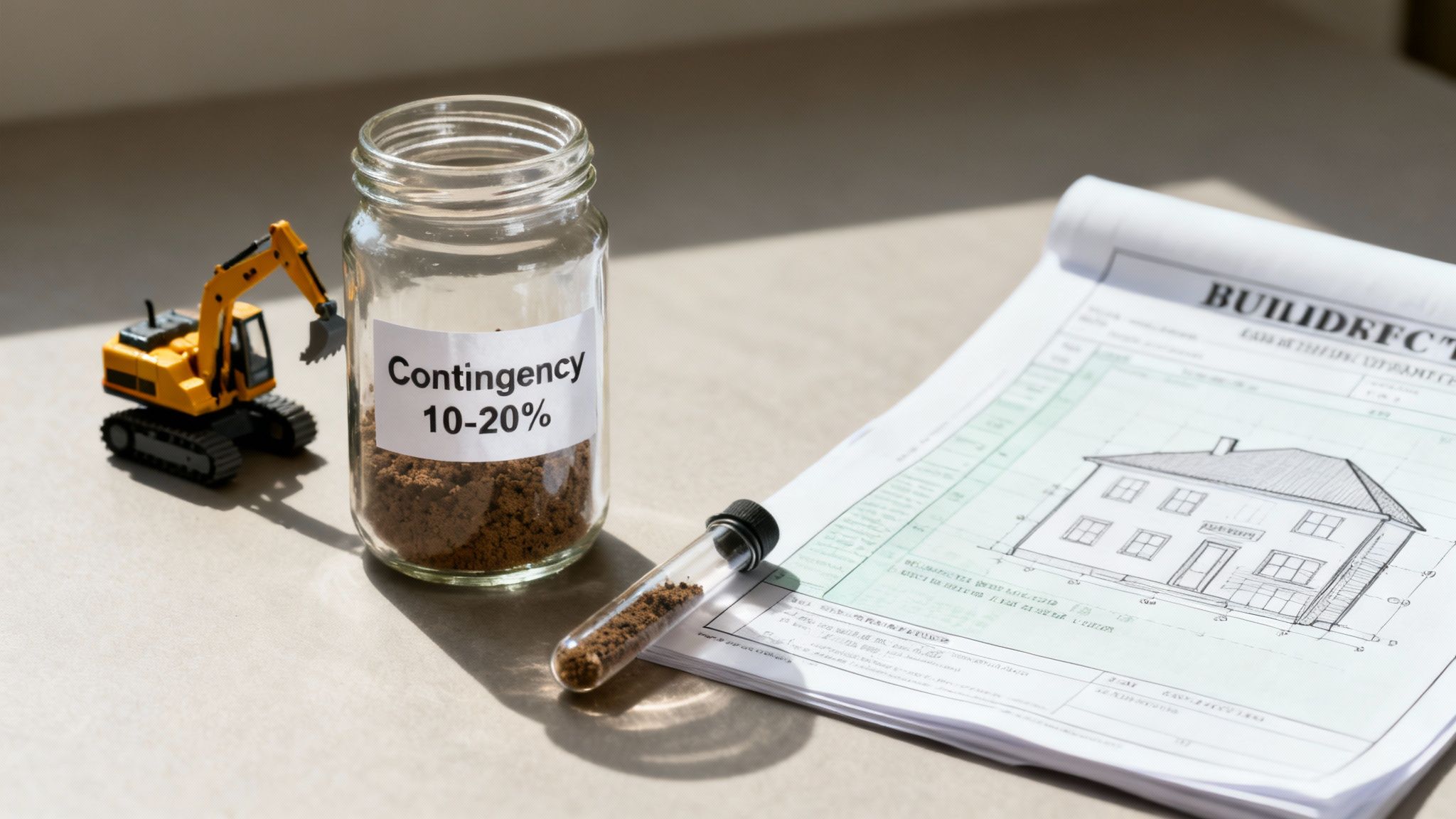
If you take one piece of financial advice from this guide, let it be this: you must have a contingency fund. This isn't a "nice-to-have"; it's a separate pool of money set aside specifically for the inevitable surprises that pop up during any major renovation. The industry standard is to budget an extra 10% to 20% of your total construction cost for this fund.
Think of your contingency fund as the project's insurance policy. You hope you never need it, but you’ll be incredibly grateful it’s there when something goes wrong. It's the buffer that keeps a small hiccup from spiraling into a full-blown financial crisis.
What could go wrong? We've seen it all right here in Utah. Here are a few real-world scenarios where a contingency fund saved the day:
- Unexpected Soil Problems: The excavator starts digging for the new foundation only to find unstable soil that needs costly engineering and special fill dirt to fix.
- Hidden Structural Damage: We open up a wall for the tie-in and discover that a supposedly load-bearing wall has hidden rot from an old leak and needs to be completely rebuilt.
- Sudden Material Shortages: That specific siding or roofing you had your heart set on is suddenly back-ordered for months, forcing a switch to a more expensive, in-stock alternative to keep the project on schedule.
Without that contingency cash, any of these issues could force you to make painful cuts elsewhere or even halt the project altogether. A smart budget plans for the unexpected.
The Ever-Evolving Building and Energy Codes
Another cost that often catches homeowners by surprise is bringing the project up to modern building standards. Energy codes and green building requirements are much stricter than they were even a few years ago.
This affects everything from the R-value of your insulation to the efficiency ratings of your windows and the type of HVAC system you install. These necessary upgrades can add $10,000 to $30,000 or more to the bottom line. You can discover more insights about these rising construction costs and see how they ripple through the final budget.
Building an addition today means meeting a higher standard of performance. While it adds to the upfront investment, the payoff comes later in the form of lower utility bills and a more comfortable home.
Why Your Next Step Is a Professional Quote
Using an online home addition cost estimator is a fantastic starting point. It gives you a solid ballpark figure and helps you wrap your head around the major cost drivers, turning a vague idea into something you can actually plan for. But once you've done that initial homework, it’s time to move from a well-informed estimate to a firm, actionable quote.
An online calculator, no matter how sophisticated, can't see your home. It doesn't know about the unique challenges or hidden opportunities your property holds. This is where a professional builder's eye becomes not just helpful, but absolutely essential for getting an accurate number.
The Limits of an Online Estimator
Think of a digital estimator as a map—it’s an incredible tool for charting your general course, but it can’t tell you what it’s like to actually walk the trail. It works with averages and standard inputs, which means it has blind spots that only an on-site evaluation can uncover.
What can’t an online tool see?
- Your existing structure's condition: Is your foundation ready to carry the weight of an addition, or will it need to be beefed up?
- Your property's unique landscape: A sloped lot in the Utah foothills is a completely different excavation project than a flat property in the valley.
- Local city quirks: Navigating the specific permit processes and building codes in places like Lehi or American Fork requires real-world, local experience.
- Real-time material and labor costs: A professional quote uses the exact current pricing from local suppliers and subcontractors, not broad regional averages that might be weeks out of date.
These variables are exactly where a DIY estimate can start to drift from reality. A professional quote from a seasoned general contractor closes that gap, replacing assumptions with hard facts.
The Value a Professional Quote Delivers
Getting a professional quote is about so much more than just getting a better number. It's about bringing a strategic partner onto your team. A detailed quote from an experienced builder like Northpoint isn't just a price list; it's a comprehensive project plan. That distinction is critical when you’re serious about building.
The home improvement market is still buzzing, even with rising costs. In the first quarter, home renovation spending hit $513 billion, showing a steady climb as people continue to invest in their homes—especially since nearly half of U.S. homes were built before 1980. You can read the full research on renovation spending to see the data. This sustained demand makes it even more important to work with a pro who can navigate a busy and complex market.
A professional quote transforms your budget from a personal worksheet into a project roadmap. It provides a guaranteed price, a realistic timeline, and a clear scope of work—the three pillars of a successful construction project.
Making the Jump from Planning to Building
Once you have that detailed quote in hand, you're officially ready to move from planning to building. This document becomes the foundation of your contract, ensuring everyone is on the same page before a single hammer swings. It gets rid of ambiguity and protects you from surprise costs down the road.
This is also the moment where finding the right partner makes all the difference. The process of getting quotes and vetting builders is a huge step. For some practical advice on what to look for and the right questions to ask, check out our guide on how to choose a general contractor.
At the end of the day, an online estimator gets you to the starting line. A professional quote from a trusted partner like Northpoint gets you to the finish line—on time and on budget.
Still Have Questions About Home Addition Costs?
Even with a solid cost estimate in hand, it’s completely normal to have a few questions rattling around. Big projects like this come with big decisions, and you need clear, honest answers before you can feel confident moving forward. Here in Utah, we get asked the same things all the time by homeowners just like you.
Let's walk through some of the most common ones. Getting these details ironed out is what transforms a budget on paper into a real, actionable plan for your home.
How Long Will This Actually Take to Build?
This is usually the very next question after "how much will it cost?" and the honest answer is: it depends. For a pretty standard, single-room addition—think a new family room or a primary bedroom suite—you’re likely looking at a timeline of three to six months from the day we start designing to the final walkthrough.
But if you're planning something more complex, like adding a whole second story, that timeline can easily stretch to six to twelve months.
A few things can really impact that schedule:
- The Permit Game: Depending on which Utah city you’re in, just getting the building permits approved can take anywhere from a few weeks to a couple of months.
- Utah Weather: Our seasons don't always play nice. A heavy snow dump in winter or a super soggy spring can put a hard stop to excavation and foundation work, bumping everything back.
- Materials and People: Sometimes, supply chain hiccups or a local boom in construction can make it tough to get specific materials or skilled tradespeople on-site right when we need them.
What’s the Real Return on Investment (ROI)?
While a new addition is a massive lifestyle upgrade, it's smart to think about the financial return, too. An addition is both an investment in your daily life and in your property's long-term value. Nationally, you can expect a mid-range bathroom addition to recoup around 50% to 60% of what you spent when you sell.
A brand-new primary suite addition might see a return closer to 40% to 50%. Of course, the actual ROI really hinges on our local housing market and the quality of the work. But honestly, the biggest return is often the day-to-day enjoyment and function it brings your family, not just the number it adds to an appraisal.
Is It Cheaper to Build Out or Build Up?
Ah, the classic dilemma, especially when your yard isn't huge. In most cases, building out with a single-story extension is less expensive per square foot than building up with a second story. Going out means new foundation work, but the construction itself is generally more straightforward.
Going up avoids pouring a new foundation, but it brings a whole new world of complexity into the picture.
When we add a second story, we have to structurally reinforce the entire existing first floor to carry all that new weight. That involves serious engineering and can be an incredibly detailed and expensive process, which is why building "up" often ends up being the pricier route.
Ultimately, the right answer depends on your lot, your budget, and what your local zoning laws will even allow.
What Are the Best Ways to Save Some Money?
Everyone wants to be smart with their budget without sacrificing quality. The single best way to control costs happens way back in the planning phase. Keeping the design simple—a basic rectangular footprint with an uncomplicated roofline—is always going to be more affordable than a complex shape with tons of corners and angles.
Here are a few other practical ways to save:
- Stick with standard-sized windows and doors. Custom sizes will blow up your budget fast.
- Choose high-quality, mid-range finishes instead of splurging on top-tier luxury materials across the board.
- Handle some of the final, non-structural jobs yourself, like painting the interior or tackling the landscaping.
The one area you never, ever want to skimp on is the structure, waterproofing, or the licensed professionals doing the work. Cutting corners there is a guaranteed recipe for much more expensive headaches down the road.
Ready to move from a ballpark estimate to a firm, professional quote? The team at Northpoint Construction has the local Utah expertise to turn your ideas into a buildable plan that respects your budget. We’re here to answer every last question and give you a detailed, transparent quote for your project. Get in touch with us today and let's start the conversation.