

Home maintenance cost per year: Easy budgeting tips
Let's get right to it. How much money should you actually be putting aside for home maintenance every year?
A good rule of thumb is to budget anywhere from 1% to 4% of your home's value annually. Think of it like preventative care for your most significant investment—the same way regular oil changes keep your car’s engine from seizing up down the road.
How to Budget for Your Home Maintenance Costs
Spending a little now can save you from a catastrophic—and incredibly expensive—repair later. But where do you even start? Trying to create a maintenance budget can feel like a guessing game, but thankfully, there are some trusted formulas that can give you a reliable baseline.
Getting a handle on these methods is the first real step toward taking financial control of your property. We'll look at a couple of popular approaches:
- The 1% Rule: A straightforward method based on your home's value.
- The Square Foot Rule: An alternative that scales with the size of your house.
- Key Variables: We'll also cover how things like age and condition can completely change the math.
Foundational Budgeting Rules of Thumb
Two of the most common guidelines homeowners use are the 1% Rule and the Square Foot Rule. They're simple, effective, and give you a solid number to work with.
To help you see how these rules work in the real world, here’s a quick breakdown.
Quick Guide to Estimating Annual Home Maintenance Costs
| The 1% Rule | Set aside 1% of your home's purchase price or current market value each year for maintenance and repairs. | $400,000 Home Value x 1% = $4,000 / year |
| The Square Foot Rule | Budget $1 per square foot of your home's total living space annually. | 2,000 Square Feet x $1 = $2,000 / year |
These formulas are excellent starting points, but remember, they don't tell the whole story. The age and overall condition of your home are massive factors. An older home, particularly one built before the 1960s, will almost certainly demand a larger investment. We've seen cases where upkeep on historic homes can climb closer to 4% of their value each year simply because of aging plumbing, electrical systems, and original materials.
The flowchart below gives you a nice visual of how to approach your budget using these two main methods.
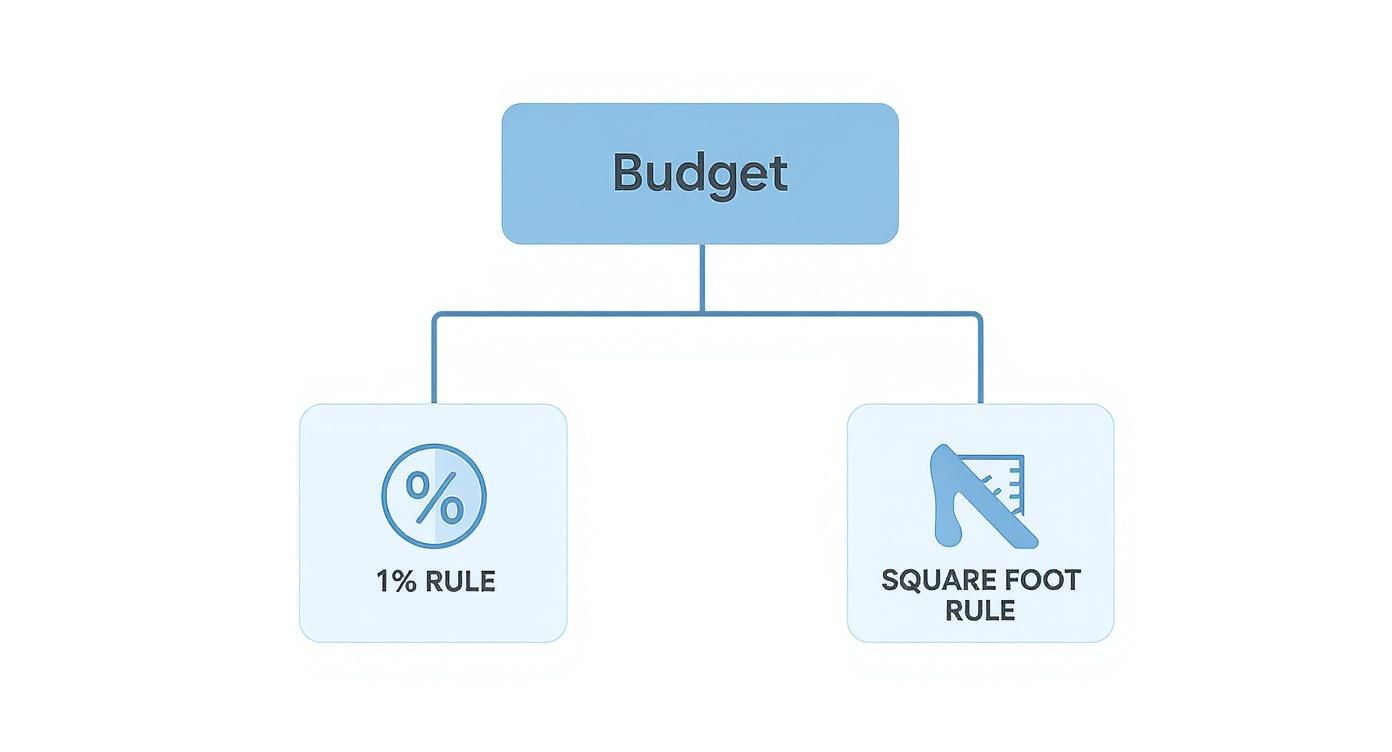
As you can see, you can start with either your home's value or its size to get a reliable estimate.
Planning for the Unexpected
A well-planned budget gives you peace of mind, but it also has to be flexible. Life happens. No rule of thumb can predict a water heater giving out or a hailstorm damaging your roof.
A proactive maintenance budget isn't just about saving money—it's about preserving your home's value and ensuring it remains a safe, comfortable space for years to come.
This is exactly why your annual maintenance fund needs to cover both the planned projects and a cushion for emergencies. When you're hit with a huge, unforeseen expense, it's also smart to know about financing options for major repairs like roof replacement.
By combining a solid budgeting rule with a healthy emergency fund, you create a powerful financial safety net that truly protects your investment.
What Really Drives Your Maintenance Bills
Ever look at your neighbor's pristine yard and wonder if their maintenance budget is secretly triple yours? It might be. While general rules of thumb are a decent starting point, what you actually spend on home maintenance each year comes down to a handful of key factors unique to your property.
Think about it like this: two cars can look similar, but one might be a brand-new sedan needing little more than oil changes, while the other is a classic that requires constant tinkering and a specialist mechanic. Your house is no different. Its age, size, location, and even the local economy all play a huge role in what it costs to keep it running smoothly.
Let’s dig into the big things that really move the needle on your maintenance budget.
Your Home’s Age and Condition
This is the big one. An older home is a bit like a seasoned veteran—it has more character, sure, but it also needs more check-ups and specialized care to stay in top form.
- Older Homes (Built before the 1980s): These gems often come with aging plumbing, original wiring, and drafty old windows. Materials that were standard back then, like galvanized steel pipes or early asphalt shingles, are likely reaching the end of their functional life. That means you’re on the hook for more frequent—and often more expensive—repairs.
- Mid-Life Homes (15-30 years old): If your home is in this age bracket, it’s probably approaching some major milestones. This is the prime time for big-ticket systems like the HVAC, water heater, and roof to need their first complete replacement. A single one of these projects can blow up an annual budget if you aren't prepared.
- Newer Homes (Under 10 years old): With a newer home, you're mostly in the clear. Your expenses will be focused on preventive tasks—servicing the HVAC, cleaning the gutters, and touching up paint. Plus, many of your major systems are likely still covered by warranties.
The Impact of Size and Special Features
It’s simple math: the bigger the house, the more there is to maintain. A larger roof has more shingles to repair, more square footage means more paint, and a huge yard requires a lot more landscaping attention. It’s not just about the space itself, but the sheer volume of materials and labor needed to take care of it all.
Beyond just square footage, any custom or luxury features will add another layer of cost. A swimming pool isn't a one-and-done expense; it demands constant chemical treatments, pump maintenance, and eventually, costly resurfacing.
Other common budget-busters include:
- Elaborate Landscaping: Think irrigation systems, retaining walls, and large, mature trees that need professional arborists.
- High-End Appliances: That beautiful Sub-Zero fridge or Wolf range? They require technicians with specialized training for any repairs.
- Finished Basements: These are fantastic spaces, but they also introduce the risk of sump pump failures and the potential for expensive water damage remediation.
Location and Climate Challenges
Where you live has a huge say in your maintenance to-do list. A house in a temperate, dry climate faces completely different issues than one here in Utah, where we have to prep for everything from heavy snow to intense summer sun.
Our harsh winter freezes, for example, can lead to ice dams on the roof, put immense pressure on your foundation, and cause pipes to burst. These regional challenges are a constant factor in your annual maintenance plan.
Depending on your home's condition and local economic factors, the annual cost of maintenance can swing wildly, often landing somewhere between $4,000 to $22,000 per year.
Lately, rising costs for both materials and labor have made this even more challenging. With some building material costs expected to jump another 5% in 2025, being proactive isn't just smart—it's essential for avoiding shockingly high bills for emergency repairs. You can learn more about these trends by reading up on the rising cost of home maintenance and repairs.
See How Annual Budgets Differ by Home Type
The rules of thumb we've talked about are great for getting you in the ballpark, but the real planning begins when you look at your specific home. It’s pretty obvious that the annual upkeep for a shiny new condo is going to be worlds apart from what it takes to maintain a sprawling, century-old farmhouse.
To bring these numbers to life, let's walk through three different homeowner scenarios. Find the one that feels closest to your situation—it’ll help you craft a budget that’s actually realistic.

Scenario 1: The New Construction Townhome
First up is Alex, who just bought a 2-year-old townhome. It’s 1,500 square feet and valued at $450,000. Since everything is practically brand new, big-ticket items like the HVAC, roof, and appliances are still covered by warranties. Plus, the HOA takes care of all the outdoor stuff like mowing and snow removal.
For Alex, the name of the game is prevention. His budget is lean and laser-focused on keeping the interior systems in top shape.
Budget Breakdown for Alex:
- Annual Budget Goal (0.5% Rule): $2,250
- Monthly Savings: $188
- Primary Focus: Preventive tasks and building a small emergency fund.
Here’s a glimpse into Alex's year:
- HVAC Servicing: Two professional tune-ups to keep the system running efficiently ($250).
- Appliance Upkeep: DIY cleaning of the dishwasher filter, washing machine, and dryer vents ($20 for supplies).
- Plumbing Checks: An annual water heater flush and a quick look for any minor leaks ($150 if he hires a pro).
- Miscellaneous: Fresh batteries for smoke detectors, new air filters, and a few light bulbs ($100).
All in, Alex's planned spending is only about $520. The extra $1,700 goes straight into a repair fund for the day those warranties run out. This forward-thinking approach is exactly how you manage future costs without stress.
Scenario 2: The 15-Year-Old Suburban House
Now let’s check in with the Miller family. They live in a 2,400-square-foot single-family home that’s 15 years old, valued at $600,000. Their house is officially in its "teenage" years, meaning some of its most important systems are getting close to retirement.
The Millers have to juggle routine upkeep while also saving aggressively for the big replacements they know are coming.
Budget Breakdown for the Millers:
- Annual Budget Goal (1.5% Rule): $9,000
- Monthly Savings: $750
- Primary Focus: Balancing routine care with saving for major system replacements.
Their yearly budget is a mix of immediate needs and long-term goals:
- Routine Tasks: Things like gutter cleaning, basic landscaping, pest control, and HVAC tune-ups add up to about $2,000 a year.
- Minor Repairs: This year, a drippy faucet and a faulty outlet required professional help, setting them back $600.
- Savings for Big-Ticket Items: The remaining $6,400 is funneled directly into their capital expenses fund. On their radar? A new water heater (estimated at $2,000) and a full roof replacement (a whopping $15,000).
By budgeting a higher percentage, the Millers are preparing for the inevitable. No one wants to be caught by surprise when a major system finally gives out.
Scenario 3: The Historic Home in a Harsh Climate
Finally, meet Sarah. She’s the proud owner of a gorgeous 90-year-old historic home in a part of the country that gets heavy snow and brutal winters. Her 3,000-square-foot house is valued at $750,000, but its age and the local climate throw some serious maintenance curveballs her way.
Sarah's budget has to account for specialized craftspeople, pricey materials that match the home's character, and the constant battle against weather-related damage.
Budget Breakdown for Sarah:
- Annual Budget Goal (3% Rule): $22,500
- Monthly Savings: $1,875
- Primary Focus: Addressing age-related issues, weatherproofing, and preserving historic integrity.
Her budget is a perfect reflection of her unique property:
Specialized Labor: She needs to hire tradespeople who know how to work on older homes—like repairing original wood windows or patching plaster walls. This isn't cheap, running about $5,000 a year.
Weather-Related Upkeep: Annual roof inspections, fixing damage from ice dams, and tuckpointing the old brick facade are non-negotiable costs, totaling around $4,500.
System Modernization: This year’s big project was updating a section of old knob-and-tube wiring for safety reasons, which cost $8,000.
Routine Maintenance: All the standard stuff—from plumbing to pest control—adds another $5,000.
Sarah’s high maintenance costs are a direct result of her home’s age, size, and location. Her situation is the ultimate proof that a one-size-fits-all budget just doesn't cut it.
Your Year-Round Home Maintenance Playbook
Staring at a massive to-do list for your home can be paralyzing. But what if you could break it all down into a simple, manageable plan? The best way to tackle home maintenance is to organize it by season, creating a proactive strategy instead of just reacting to problems. Think of it as a playbook for your home—each season has its own set of plays designed to keep everything running smoothly and avoid costly surprises down the road.
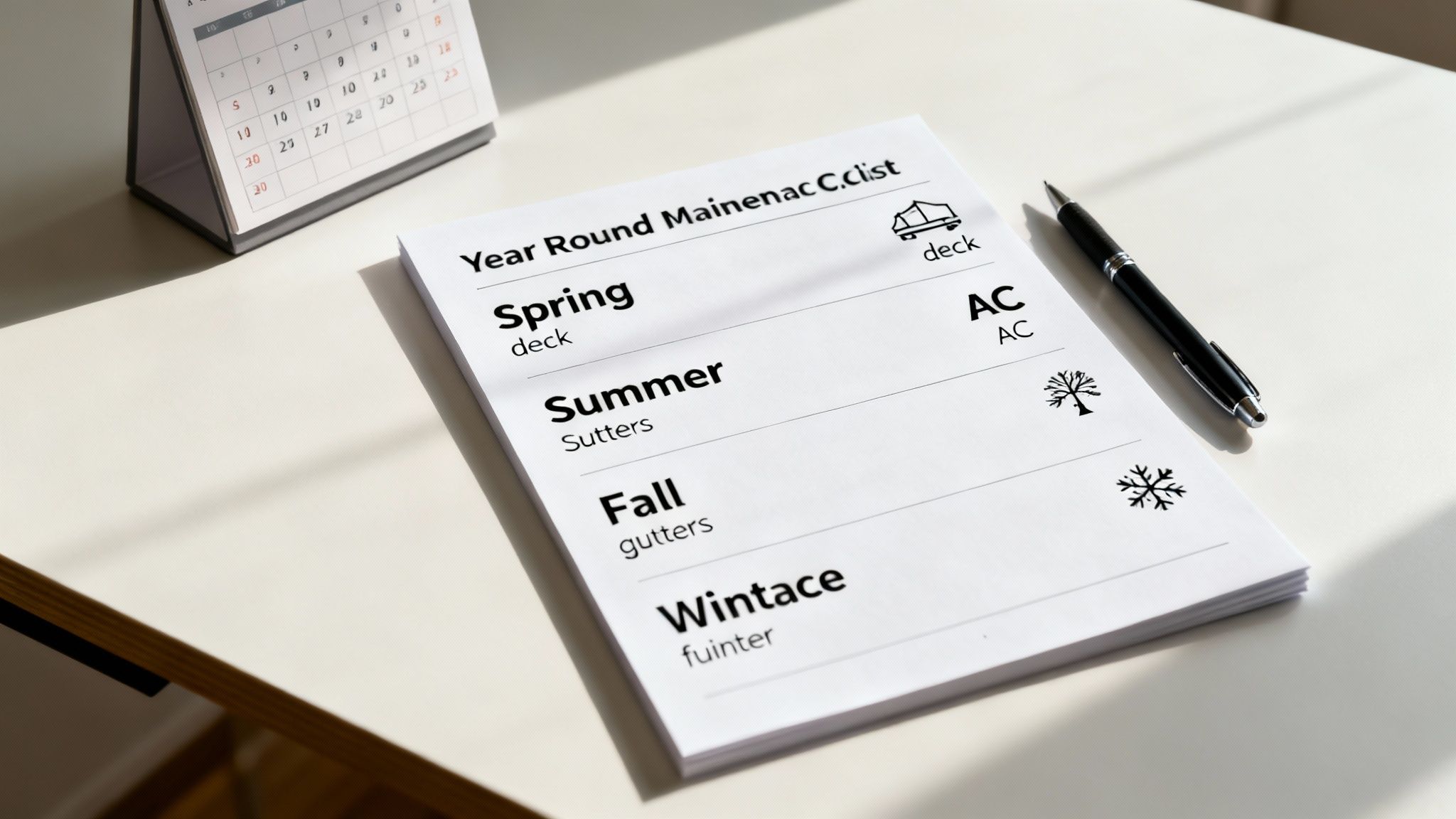
This approach is all about working with the seasons, not against them. You prep your AC before the summer heat hits, not in the middle of a miserable heatwave. To truly get ahead, it's vital to understand why regular property maintenance is key to protecting your investment.
To make this even easier, we’ve put together a straightforward schedule. This table breaks down the essentials by season, helping you focus on what matters most, right when it matters.
Seasonal Home Maintenance Schedule
| Spring | Inspect roof, clean gutters, service the A/C, check sprinklers. | Winter can be harsh. This is your chance to catch storm damage, prevent water issues, and get your cooling system ready for summer. | DIY (gutters), Pro (roof, A/C). |
| Summer | Power wash siding/deck, seal deck, inspect for pests, exterior paint touch-ups. | Warm, dry weather is perfect for these jobs. Sealing wood prevents rot, and a clean exterior boosts curb appeal and longevity. | Mostly DIY, but consider a pro for large paint jobs. |
| Fall | Service furnace, seal drafts around windows/doors, clean gutters again, winterize sprinklers. | Prepares your home for the cold. A well-sealed home and an efficient furnace will save you a ton on heating bills and prevent frozen pipes. | DIY (sealing drafts), Pro (furnace, sprinklers). |
| Winter | Test smoke/CO detectors, check for plumbing leaks, clean appliance filters/vents. | With more time spent indoors, focusing on interior safety and efficiency is crucial. These small tasks prevent big problems like fires or water damage. | All are great DIY tasks. |
This schedule is your roadmap. Following it not only keeps your home in great shape but also turns daunting maintenance into a predictable, low-stress routine.
Regular, proactive maintenance isn't just about fixing what's broken; it's a strategic investment in your home's longevity. By following a seasonal plan, homeowners can reduce emergency repair costs by as much as 32%.
This proactive stance is your best defense against those budget-busting emergency calls. Let’s look a little closer at what each season entails.
Spring: Cleanup and Preparation
As the snow melts, it’s time for recovery and prep. Your home just weathered a tough Utah winter, so this is the perfect time to inspect for damage and get everything ready for the warmer months.
Your spring checklist should zero in on your home's exterior and cooling systems.
- Service Your Air Conditioner: This is non-negotiable. A professional tune-up ($135–$250) ensures your AC runs efficiently before summer demand puts it under serious stress.
- Inspect the Roof: Get a good look at your roof. Check for shingles that are missing, cracked, or curled from winter storms. A minor repair now ($250–$1,000) can prevent a catastrophic leak later.
- Clean Gutters and Downspouts: Winter leaves and debris can create serious blockages, leading to water overflowing and damaging your foundation. This is often a DIY job, but pros typically charge $100–$250.
Summer: Exterior Projects
Summer gives us longer days and better weather, making it the ideal time to tackle those bigger outdoor projects. This is your chance to boost your home’s curb appeal while also protecting it from sun, rain, and pests. Focus on tasks that need warm, dry conditions to come out right.
Fall: Winterization and Safety Checks
With cooler weather on the horizon, fall is all about battening down the hatches. The goal is simple: seal your home against cold drafts, make sure your heating system is ready for action, and handle any final outdoor tasks before the first frost hits.
These autumn jobs are critical for your comfort and safety all winter long.
- Furnace Inspection: Just like your AC, your furnace needs an annual check-up ($135–$250). A pro will ensure it’s operating safely and efficiently before you really need it.
- Seal Air Leaks: Feel around windows and doors for drafts. A few dollars spent on caulk and weatherstripping can make a huge difference in your heating bills.
- Yard and Gutter Cleanup: Get those leaves raked and give your gutters one last good cleaning after the trees are bare. This is your best defense against ice dams forming.
For a much deeper dive, check out our complete seasonal home maintenance checklist. It’s a comprehensive guide to keep you on track all year.
Winter: Interior Maintenance
Winter is the perfect time to shift your focus indoors. Since most outdoor projects are on hold, you can give some much-needed attention to the systems and appliances working hard inside your home.
These tasks are usually simple but play a huge role in your home’s overall health.
Test Smoke and Carbon Monoxide Detectors: This is a quick, easy, and life-saving task. Change out the batteries while you're at it.
Check for Plumbing Leaks: Take a flashlight and look under every sink and around the base of your toilets for any sign of moisture. A tiny drip can lead to mold and serious water damage if you ignore it.
Inspect and Clean Appliances: Pull out your fridge and vacuum the coils, clean your dishwasher filter, and make sure your dryer vent is completely clear of lint. This improves efficiency and prevents a serious fire hazard.
Smart Ways to Lower Your Annual Maintenance Costs
Knowing what you might spend on home maintenance is one thing. Actually finding ways to shrink that number is where the real work—and the real savings—begins. The single most powerful shift you can make is moving from a reactive mindset to a proactive one.
It’s the difference between paying for a simple roof inspection now or a catastrophic ceiling replacement later. This isn't just about saving cash; it's about protecting your home's value and giving yourself some much-needed peace of mind. By making smart, strategic choices, you can stop small issues from spiraling into expensive emergencies. Your maintenance budget becomes an investment tool, not just a disaster fund.
Embrace Proactive DIY Inspections
You don't have to be a seasoned contractor to spot trouble brewing. Honestly, some of the most effective ways to head off costly repairs are just simple, regular visual checks that anyone can perform. Think of yourself as a detective on the lookout for clues that something isn't quite right.
Getting hands-on like this helps you understand the rhythm of your home and notice subtle changes before they become big problems.
- Monthly Leak Patrol: Once a month, grab a flashlight and peek under every sink, behind your toilets, and around the base of your water heater. A tiny, slow drip is a quick, cheap fix today but can lead to thousands in water damage and mold remediation if left unchecked.
- Seasonal Gutter Check: Before the heavy spring rains hit and after the last autumn leaves have fallen, take a look at your gutters. When they get clogged, water can back up under your roof shingles or spill over and pool against your foundation, causing major structural headaches.
- Appliance Audits: Just listen. Is your dishwasher suddenly making a strange grinding noise? Does the fridge seem to be running all the time? These are often the first whispers that a component is failing and needs a look.
Catching these things early is what separates a prepared homeowner from a stressed-out one. To get started, check out our list of essential home maintenance tips for new homeowners to help build these simple habits.
Invest in Long-Term Efficiency
Sometimes, the best way to lower your annual maintenance bills requires an upfront investment that pays you back for years. These upgrades don't just cut your monthly utility costs; they also reduce the day-to-day strain on your home’s most expensive systems.
Think about your HVAC system, for example. In a poorly insulated house, it has to work incredibly hard to keep the temperature stable. That constant strain leads to more frequent breakdowns and a much shorter lifespan. By improving your home's overall efficiency, you're essentially giving your expensive systems a break.
A strategic investment in energy efficiency is a two-for-one deal. You save on utilities today while extending the life of your critical home systems, pushing major replacement costs further into the future.
This approach is catching on. Even with economic pressures, homeowners are spending more on improvements, with forecasts predicting a massive $526 billion market for home services within a year. A huge part of that is the move toward energy efficiency—smart home tech alone can cut heating bills by 10-12% and cooling bills by around 15%. You can explore more on home service industry trends to see just how big this shift is.
Prioritize Quality Materials and Professional Care
I get it—it’s tempting to grab the cheapest materials or go with the contractor who gives you the rock-bottom quote. But in my experience, that approach almost always backfires. Low-quality paint starts to peel and fade within a couple of years, meaning you're back on a ladder sooner than you'd like. Those bargain-bin plumbing fixtures? They're notorious for developing leaks.
Spending a little more on durable materials and expert installation is one of the smartest investments you can make. At Northpoint Construction, we built our preventive maintenance services around this very idea. A professional inspection can uncover hidden issues a homeowner might easily miss, and using quality products ensures our repairs actually last.
It’s all about paying to get the job done right the first time, so you can avoid the stress and repeated expense of fixing the same problem over and over again.
Knowing When to DIY and When to Call a Pro
Every homeowner loves the satisfaction of a successful DIY project. But making the wrong call on a repair can do more than just dent your budget—it can turn a small, fixable issue into an expensive catastrophe.
Learning to draw the line between a weekend warrior task and a job that demands a professional is one of the most critical skills you can develop. This single decision has a huge impact on your home maintenance cost per year, not to mention your safety and sanity. The right choice protects your home’s value, while the wrong one can lead to spiraling costs and bigger headaches.
So, how do you decide? Before you even think about picking up a tool, it helps to ask yourself three simple questions.
Three Questions to Ask Before Starting a Project
Take a moment to be brutally honest with yourself. Your answers will give you a clear verdict on whether to roll up your sleeves or pick up the phone.
Is It Safe? This is non-negotiable. Any job that touches your home’s core systems—we’re talking electrical panels, gas lines, or major plumbing—comes with serious risks. A mistake here isn’t just expensive; it can be downright dangerous for your family.
Do You Have the Right Skills and Tools? A five-minute YouTube video can make anything look easy. But do you really have the experience and specialized equipment for the job? Trying to make do without the right tool often leads to damaged materials, an improper repair, or just a whole lot of frustration.
What’s the Risk If You Get It Wrong? Play out the worst-case scenario. If you botch a small drywall patch, the fix is mostly cosmetic. No big deal. But if you incorrectly repair a single leaking roof shingle, you could be staring down thousands of dollars in water damage, mold remediation, and structural repairs.
A botched DIY repair can quickly erase any initial savings. The goal isn't just to fix the problem but to fix it correctly and permanently, protecting your larger investment.
DIY vs. Pro: A Clear Comparison
Let's apply this framework to a few common household tasks to see where they land.
- Changing HVAC Filters: This is a classic DIY task. It’s safe, requires no special tools, and the risk of error is practically zero. Doing this yourself saves a few bucks and keeps your home's air quality high.
- Fixing a Leaky Faucet: This is usually DIY-friendly. With a basic wrench and a quick trip to the hardware store, most homeowners can safely replace a worn-out washer. The risk is low—at worst, you might have to call a plumber if you can't stop the drip.
- Roofing Repairs: This is firmly in the Call a Pro category. Working on a roof is inherently dangerous. Professionals have the safety equipment, specialized tools, and expertise to spot underlying issues a homeowner might miss. They get it done right and, more importantly, safely.
- Electrical Work: Unless you’re just swapping a faceplate, this is a job for a licensed electrician. The risk of fire or electric shock is simply too high to justify a DIY attempt.
Bringing in an expert for complex jobs isn’t admitting defeat; it’s a smart financial move. When the stakes are high, you want someone you can trust. To make sure you're hiring the right person, it helps to understand how to choose a general contractor who can manage these critical projects for you.
Your Top Questions, Answered
Let's face it, navigating the world of homeownership can feel like you're constantly learning on the job. When it comes to budgeting for upkeep, a lot of questions pop up. Here are some quick, no-nonsense answers to the things homeowners ask us most about annual maintenance costs.
What’s the Most Accurate Way to Budget?
The 1% Rule is a classic for a reason, but it's not always the perfect fit. I find a hybrid approach usually gets you closer to the real number.
For a newer, well-kept home, using the $1 per square foot rule is a pretty solid benchmark. If your house is a bit older or has more complex systems (think pools, extensive landscaping, or a slate roof), it's smarter to blend the two. A good strategy is to calculate both 1% of your home's value and $1 per square foot, then budget for whichever number is higher. That way, you're building a much safer financial cushion.
How Can I Actually Lower My Maintenance Costs?
This one's simple: get ahead of problems. The single most effective way to keep your annual costs down is to shift from reactive repairs to proactive care. Think of it as your home's defense strategy.
- Become your home’s first inspector: Once a month, take a quick walk around. Peek under sinks for tiny drips, make sure your gutters are clear, and swap out those HVAC filters.
- Book professional check-ups: Your HVAC system is the lungs of your home. Getting it serviced once a year is non-negotiable for preventing costly breakdowns.
- Listen to your house: That small drip or weird rattling noise is your home telling you something's wrong. Addressing it now is always cheaper than dealing with the major failure it could become.
It really pays to be proactive. We see it all the time. In fact, homeowners who invest in regular, preventive services can slash their emergency repair bills by as much as 32%.
Are My Preventive Maintenance Services Tax Deductible?
Good question! For many homeowners, especially those with rental properties, the answer is often yes. Everyday upkeep—things like seasonal HVAC tune-ups, professional gutter cleaning, or fixing a leaky faucet—can often be deducted as necessary repairs to maintain the property's value.
Just remember, there's a big difference between a repair and an improvement. A major upgrade that boosts your home's value, like installing a brand-new roof, is a capital improvement and gets treated differently by the IRS. It's always best to chat with a tax professional to get advice tailored to your specific situation.
Ready to stop guessing and start planning? The team at Northpoint Construction offers professional preventive services designed to protect your biggest investment and keep your home running smoothly. Contact us today to see how we can help you build a solid maintenance plan.