
how often to service hvac: Essential Maintenance Tips for Efficiency
So, how often should you really be servicing your HVAC system? For most homeowners, the magic number is twice a year. Think of it as a seasonal check-up for your home's hardest-working equipment—once in the spring for your air conditioner and once in the fall for your furnace.
Understanding Your Ideal HVAC Service Schedule
Just like a car needs more than an occasional oil change to keep running smoothly, your HVAC system requires consistent, proactive care. Sticking to that biannual schedule is the single best thing you can do to boost efficiency, catch problems before they become catastrophes, and get the most life out of your equipment.
This approach gets your AC ready to handle the sweltering Orem summers and ensures your furnace is primed to fight off Provo's chilly winters. It’s not just a recommendation; it’s a strategy borrowed from commercial settings where system failure simply isn't an option. For a more detailed look at what these check-ups involve, this complete guide to air conditioning maintenance is a fantastic resource.
HVAC Service Frequency At-a-Glance
To make it even simpler, here's a quick reference table. This is a great starting point, but keep in mind that things like the age of your system or how heavily you use it might mean you need a slightly different schedule. We'll dive into those details later in the guide.
| Residential Home | Recommended | Recommended | Twice a Year |
| Rental Property | Essential | Essential | Twice a Year (Minimum) |
| Commercial Building | Crucial | Crucial | Quarterly (Minimum) |
Following this simple calendar is your best defense against a system breakdown on the hottest or coldest day of the year. It's a small investment that pays huge dividends in reliability and peace of mind.
When to Adjust Your HVAC Maintenance Schedule
That twice-a-year rule for HVAC service is a great starting point, but let's be honest—it’s not a perfect fit for everyone. I like to think of it like car maintenance. You wouldn't treat a brand-new sedan that you only drive on weekends the same as a high-mileage work truck that's hauling heavy loads every single day, right? Well, certain things can turn your HVAC unit into that hardworking truck, meaning it's going to need a bit more attention.
First, let's talk about age. An HVAC unit that's over 10 years old is a seasoned veteran. It's seen its share of hot summers and cold winters, and that means more wear and tear on its internal parts. Just like an older car needs more frequent oil changes and check-ups to stay on the road, an aging HVAC system really benefits from extra service calls to catch failing components before they lead to a complete breakdown. A little proactive care here can make a huge difference in how much longer it lasts.
The type of system you have also plays a big role. A heat pump is a perfect example. Here in Utah, it’s the ultimate workhorse, pulling double duty to cool your home in the summer and heat it in the winter. Because it runs year-round, it accumulates wear and tear twice as fast as separate furnace and air conditioning units. For a heat pump, those two annual service calls aren't just recommended—they're essential.
Factors That Increase Service Frequency
Beyond the hardware itself, your daily habits and the environment inside your home have a massive impact. Heavy use, airborne dust, and other stressors can clog up filters and strain motors way faster than you might think, taking a real toll on your system's efficiency.
You should definitely think about a more frequent service schedule if your home has:
- Pets: We love them, but all that dander and fur gets sucked right into your HVAC system. It clogs filters and coats sensitive internal parts, which restricts airflow and forces the whole system to work much harder.
- Allergies or Respiratory Issues: If anyone in your family struggles with sensitivities, more frequent tune-ups are a game-changer. Clean coils and fresh filters mean better indoor air quality, which can bring a lot of relief.
- Constant Operation: If you're running your system almost non-stop to keep up with our intense Orem summers or Provo winters, that extra runtime adds up. It puts a lot of stress on every single mechanical part.
This visual gives you a simple way to think about where to start with your seasonal maintenance.
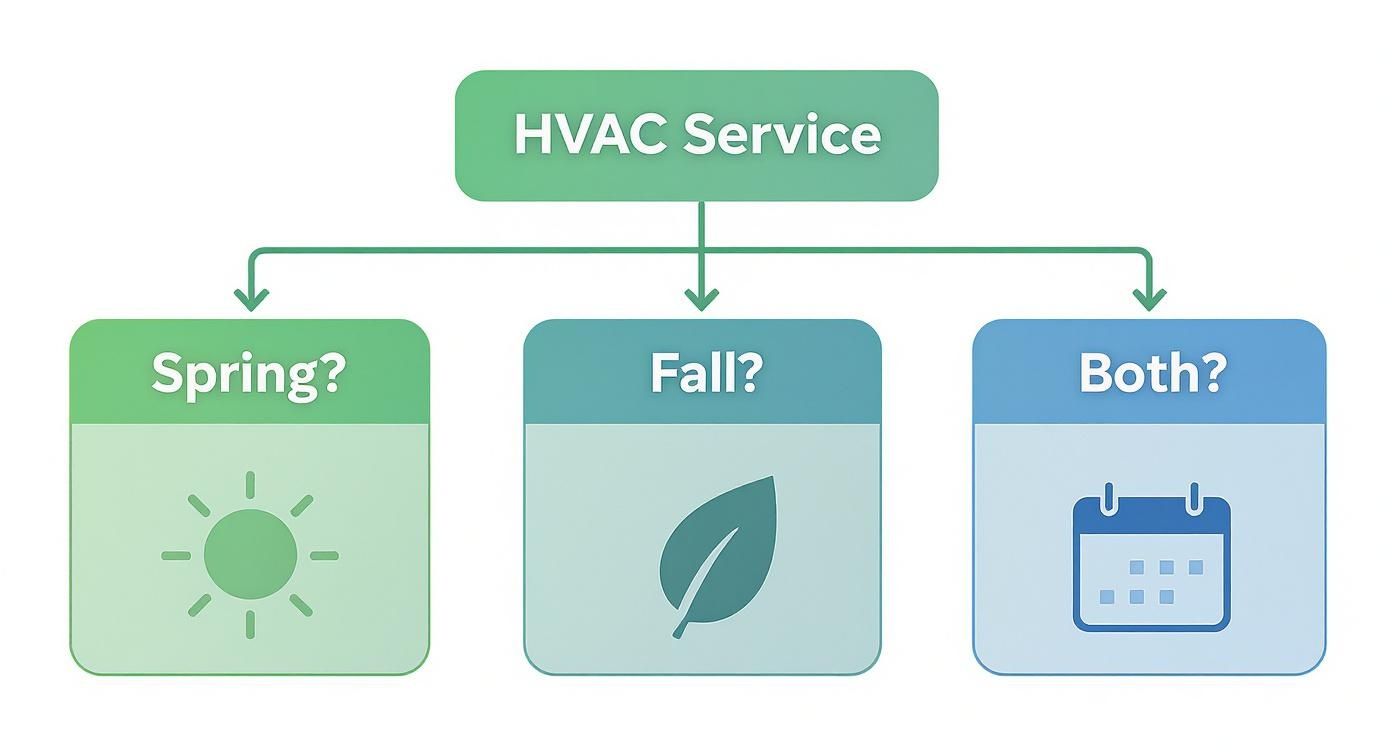
The real takeaway here is that you want to stay ahead of the seasons. Getting your cooling system ready in the spring and your heating system ready in the fall is the absolute minimum for reliable, worry-free performance.
The bottom line is simple: the harder your HVAC system works, the more care it needs. Ignoring these signs of increased strain is like skipping maintenance on a delivery truck—it might seem fine for a while, but a breakdown is inevitable and will likely happen at the worst possible time.
Why Regular HVAC Service Is a Smart Investment
It’s easy to look at HVAC maintenance as just another bill to pay, but that’s a common and costly mistake. The truth is, it’s one of the smartest financial decisions you can make for your property. Think of it less as an expense and more as an investment—one with a surprisingly high return. Proactive care does more than just keep the system running; it actively puts money back in your pocket.
A well-maintained HVAC system is an efficient one. When all the parts are clean, lubricated, and properly calibrated, the unit doesn't have to strain to heat or cool your space. That efficiency translates directly into lower energy bills, month after month.
The Financial Benefits of Proactive Care
The numbers don't lie. Trying to save a little cash by skipping a service appointment almost always leads to much bigger bills down the road. A scheduled tune-up is your best defense against a catastrophic failure. During a routine check, a technician can spot a failing capacitor or a fraying belt—small, cheap parts that are simple to replace.
Let those minor issues go, however, and they have a nasty habit of snowballing into a complete system breakdown. And, of course, this usually happens during a blistering heatwave or a frigid cold snap, right when you need it most. Suddenly, that small, preventable repair has morphed into an emergency replacement that can cost thousands.
It's been shown that preventive HVAC care can deliver a return on investment of a staggering 545%. That's a powerful demonstration of how a small, consistent investment can protect you from massive, unexpected costs.
Data from the U.S. Department of Energy backs this up, showing that properties with planned maintenance programs save between 5% and 20% on their annual energy bills. Even better, this proactive approach can slash total maintenance costs by up to 50% compared to a "fix it when it breaks" strategy.
Extending Lifespan and Improving Air Quality
Beyond the immediate savings, regular service dramatically extends the life of your equipment. An HVAC system is a major home appliance, and consistent tune-ups can add years to its useful life, pushing back the need for a full, costly replacement. Our guide on proactive maintenance solutions dives deeper into how this strategy protects your biggest investments.
And let's not forget about air quality. Regular service keeps filters clean and internal components free of dust, mold, and other gunk, ensuring your system contributes to a healthier home. If you're really focused on breathing easier, here is a guide to cleaner indoor air with HEPA filters.
When you add it all up, scheduling routine HVAC service is a powerful move for both your wallet and your well-being.
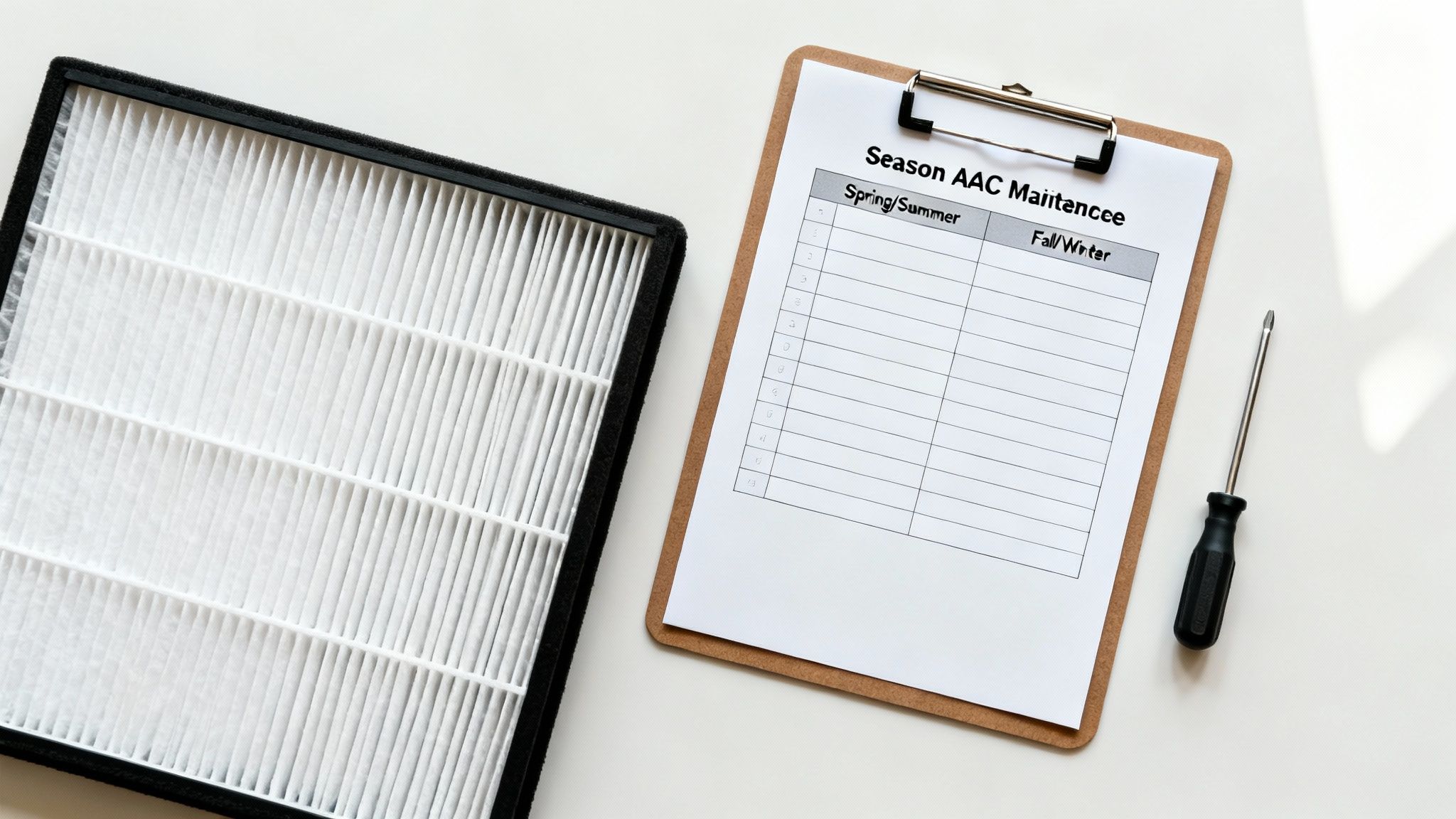
Your Essential Seasonal Maintenance Checklist
Alright, so you know when to service your HVAC. That's half the battle. Now, let's talk about what actually needs to be done. The best approach is a team effort—some tasks are perfect for a homeowner's weekend to-do list, while others really need the trained eye and specialized tools of a pro.
By breaking down the checklist by season, you can make sure your system is primed for whatever Utah’s weather decides to throw at it. This isn't just about dodging a catastrophic breakdown on the hottest day of the year; it's about keeping the system running efficiently and your home comfortable all the time. Handling the simple stuff yourself is a great way to keep things humming between professional tune-ups.
Spring and Summer Cooling Prep
When the snow melts and things start to warm up, all eyes turn to the air conditioner. The goal here is simple: get your AC ready to face the summer heat without breaking a sweat (or breaking down).
DIY Tasks You Can Handle:
- Change the Air Filter: If you do nothing else, do this. A clogged filter is like trying to breathe through a straw—it suffocates your system, forcing it to work harder and spiking your energy bills. Check it monthly and swap it out as soon as it looks dirty.
- Clear the Outdoor Unit: Your condenser unit needs room to breathe. Head outside and clear away any leaves, grass clippings, or encroaching shrubs. A good rule of thumb is to maintain at least two feet of clear space all the way around it.
- Clean Vents and Registers: Grab your vacuum's brush attachment and give your indoor vents a quick cleaning. Removing that layer of dust and pet hair helps air flow freely into every room.
Professional Service Checklist:
When a technician comes out, they're digging much deeper to spot problems before they start. Their checklist will include:
- Inspecting and deep-cleaning the evaporator and condenser coils.
- Checking refrigerant levels to make sure they're just right and searching for any potential leaks.
- Testing all electrical connections and tightening anything that’s come loose.
- Lubricating moving parts like fan motors and bearings to reduce friction and wear.
- Verifying your thermostat is accurate and communicating properly with the system.
Fall and Winter Heating Prep
Before that first cold snap rolls into Provo, it’s time to shift focus to your furnace or heat pump. A heating system failure isn't just uncomfortable; it can be a serious safety risk.
A professional heating tune-up is so critical because it includes safety checks that a homeowner simply can't do. The most important of these is inspecting the heat exchanger for tiny cracks that could leak dangerous carbon monoxide into your home.
DIY Tasks You Can Handle:
- Replace the Air Filter (Again): That's right, it’s just as vital for heating as it is for cooling. Give your furnace a fresh start to the season with a clean filter.
- Test Your Carbon Monoxide Detectors: This is a non-negotiable. Put fresh batteries in your CO detectors and test them before you turn on the heat for the first time.
Professional Service Checklist:
A technician's fall visit is all about safety and performance. They will:
- Clean and inspect the furnace burners to ensure a clean, efficient burn.
- Check the gas pressure and inspect the pilot light assembly.
- Test all the safety controls and electrical components.
- Carefully examine the heat exchanger for any signs of stress, corrosion, or cracks.
Sticking to this seasonal rhythm of homeowner checks and professional service is the cornerstone of a smart HVAC maintenance plan. For more tips on keeping your entire property in great shape, take a look at our complete seasonal home maintenance checklist.
Maintenance Needs for Different Property Types
Your HVAC system doesn't operate in a vacuum—its maintenance needs are shaped by the building it serves. A system in a quiet family home faces very different challenges than one in a bustling commercial space, so a one-size-fits-all maintenance plan just won't cut it.
The real question isn't just "how often," but "what's at stake?" For a homeowner, it's about comfort and protecting a major investment. For a landlord or business owner, it's about legal obligations, tenant satisfaction, and even business revenue.
Residential and Rental Properties
For a typical homeowner, the goal is pretty straightforward: keep the family comfortable, the energy bills low, and avoid a catastrophic breakdown on the hottest day of summer. Sticking to a biannual service schedule is your best bet for peace of mind and long-term savings.
But if you’re a landlord, the stakes get a lot higher. HVAC maintenance isn't just a good idea; it's a critical part of your business. A broken-down furnace in winter can lead to unhappy tenants, legitimate habitability complaints, and emergency repair bills that demolish your cash flow.
Regular, scheduled service is your first line of defense. Think of it as insurance—not just against expensive repairs, but against damaged tenant relationships and potential legal headaches.
It's clear people are taking this seriously. The HVAC services market is huge, with U.S. consumers spending over $10 billion each year on repairs and maintenance alone. This shows that routine servicing is becoming standard practice for anyone looking to avoid costly downtime and efficiency losses. You can dig into more of the numbers by checking out these HVAC service market trends on stellarmr.com.
Commercial Buildings in Orem and Provo
When it comes to commercial properties, HVAC systems are true workhorses, and the demands are immense. For a local business here in Orem or Provo, a system failure is far more than an inconvenience—it’s lost revenue. A stuffy retail store can send customers walking, an overheated office kills employee productivity, and a failed AC unit can fry critical equipment like servers.
For this reason, quarterly service is the gold standard for most commercial buildings. This frequent schedule is non-negotiable for high-traffic places like restaurants, shops, and offices where system reliability is directly tied to the bottom line.
A commercial HVAC system is a complex, mission-critical asset that runs longer and harder than any residential unit. Quarterly check-ups ensure every part is ready for the season ahead, preventing the kind of operational chaos a business can't afford. It’s a proactive strategy that keeps the air quality high, the customers happy, and the business humming along without interruption.
How to Choose the Right HVAC Service Provider
Knowing your HVAC system needs regular service is one thing, but finding the right person for the job is a whole different ballgame. It's a lot like finding a good family doctor—you want someone with the right qualifications, a solid reputation, and a professional you can actually trust with one of the most expensive and vital systems in your home.
Before you let a technician even look at your furnace or AC, there are a few non-negotiables. First and foremost, they must be fully licensed and insured. This is your safety net; it protects you from any liability if an accident happens on your property and confirms they meet the state's professional standards. Beyond that, look for a company with a strong history of positive customer reviews right here in your community. That's your proof they deliver quality work time and time again.

Vetting Potential HVAC Companies
Once you start researching and making calls, don't hesitate to ask a lot of questions. A great company will be completely transparent and happy to give you the answers you need. The process isn't so different from hiring any other professional for your home—in fact, our guide on how to choose a general contractor has some excellent advice that applies here, too.
Here are a few key things to confirm before you hire anyone:
- Licensing and Insurance: This is your first question. Always ask for proof.
- Local Experience: A team that understands the specific challenges of the Orem and Provo climate knows exactly what your system endures season after season.
- Written Estimates: Never, ever move forward without a detailed, itemized estimate in writing. This is how you avoid surprise bills down the road.
- Warranties and Guarantees: A confident, reputable company will always stand behind their work with warranties on both parts and labor.
A great HVAC provider won't just fix what's broken; they'll become a long-term partner in your home's health. They should offer clear explanations, respect your property, and provide solutions that fit your budget.
You'll also find that many of the best local companies offer annual maintenance plans. These programs are a fantastic way to stay on top of your two yearly tune-ups, often at a discounted price. They also usually come with perks like priority service if something breaks and discounts on repairs, saving you both money and stress in the long run.
Your HVAC Service Questions, Answered
Even after mapping out a maintenance plan, a few questions usually pop up. Let's tackle some of the most common ones so you can feel completely confident about keeping your system in top shape.
What Does a Typical HVAC Service Call Cost?
Here in the Orem and Provo area, you can generally expect a standard tune-up to cost somewhere between $100 and $250. Of course, that price can wiggle a bit depending on how complex your system is, its age, and which company you call.
Frankly, the smartest move for most homeowners is an annual maintenance plan. These agreements often knock down the cost of each visit and usually come with some nice perks, like getting bumped to the front of the line for emergency calls and discounts on repairs. It’s a simple way to save money over the long haul.
Can I Skip a Year If My System Seems Fine?
I know it’s tempting, especially when everything seems to be humming along perfectly. But skipping a year of maintenance is a gamble. Think of it like your annual physical—you go even when you feel great to catch potential issues before they turn into major health problems. It's the same idea with your HVAC.
Many of the most serious problems, like a tiny refrigerant leak or a capacitor that's about to give out, don't have any obvious symptoms at first.
A preventative tune-up gives a trained technician the chance to spot these hidden issues. Catching something small today can prevent a catastrophic failure tomorrow—which, Murphy's Law dictates, will happen on the hottest or coldest day of the year.
What Are Signs I Need Service More Often?
Your system is pretty good at telling you when it needs a little extra help. If you notice any of these red flags, it’s probably time to bump up your service schedule:
- Strange Noises: Grinding, squealing, or rattling are clear cries for help. Those aren't normal operating sounds.
- Weak Airflow: Does the air coming from your vents feel a bit sluggish? That could mean anything from a simple clog to a failing fan motor.
- Higher Energy Bills: If your utility costs suddenly jump for no reason, your system is likely working way too hard to keep up.
- Frequent Cycling: A unit that constantly turns on and off is struggling with inefficiency. It's a classic sign that something needs to be looked at.
And a quick side note: if you have pets shedding dander everywhere or family members with allergies, more frequent check-ups are a fantastic idea. It keeps your air cleaner and your system breathing easier.
Is your HVAC system due for a professional tune-up? The expert team at Northpoint Construction is here to ensure your system runs safely and efficiently all year long. Visit us at https://buildnp.com to schedule your service today.