
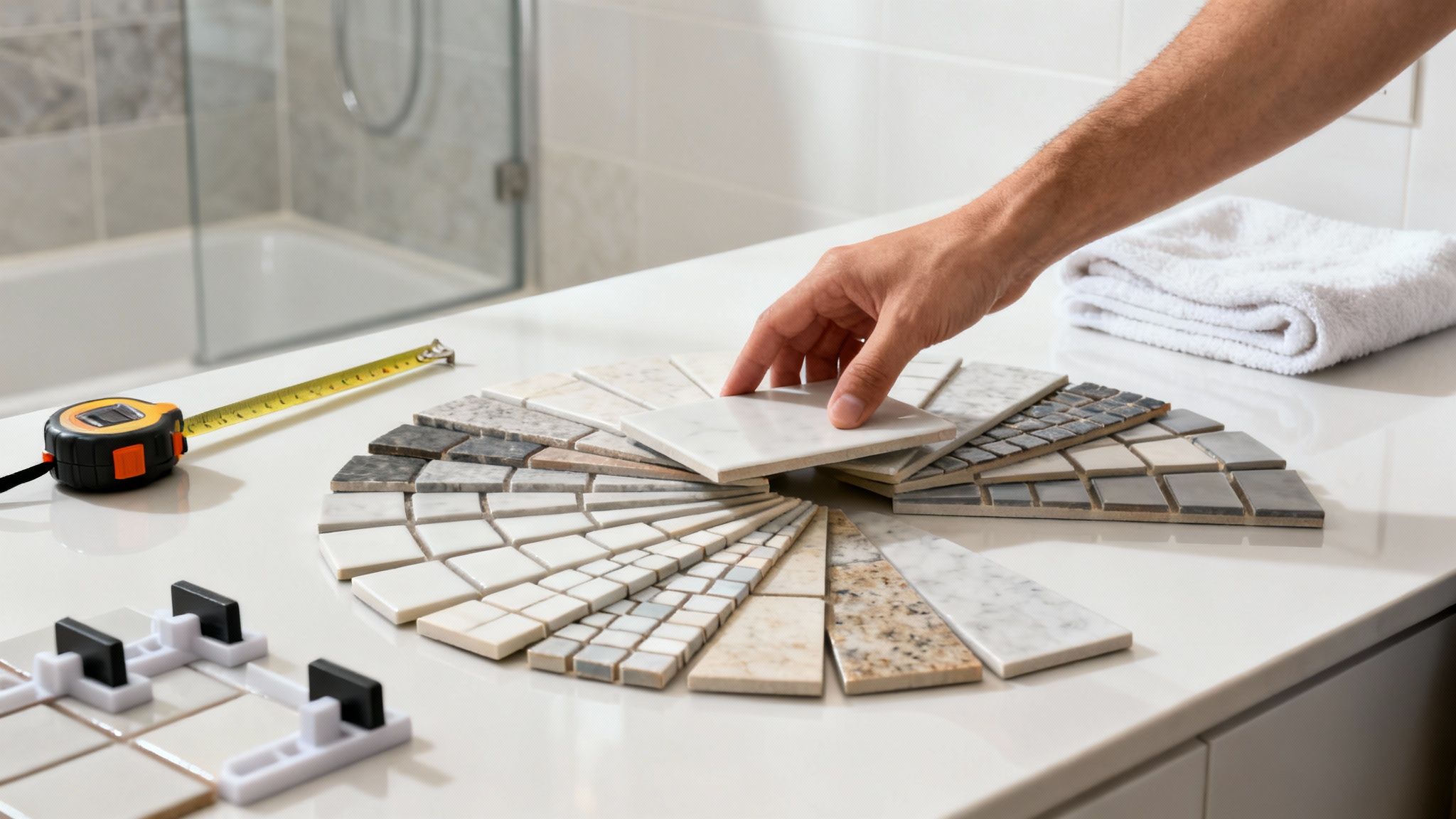
How to Choose Bathroom Tiles A Practical Guide
When you're staring down the tile aisle, the sheer number of options can feel overwhelming. But really, a great bathroom tile choice boils down to a smart balance of three things: the material's durability, its practical safety (nobody wants a slippery floor), and a style that just feels right for your home.
My advice? Start with the floor. Pick a tough, water-resistant material like porcelain first, and let that decision guide your other choices on size, finish, and color.
Choosing Your Foundation: Bathroom Tile Materials
The first, and arguably most important, decision you'll make is the tile material. This isn't just about what looks good in the showroom. This choice dictates how your bathroom will hold up over years of steam, splashes, and foot traffic. It’s the difference between a floor that looks brand new in a decade and one that shows its age after just a few years.
Think of it this way: some tiles are the reliable workhorses of the design world, while others are the high-maintenance supermodels. Knowing which is which is key to a renovation you won't regret.
The Workhorses: Porcelain and Ceramic
There's a reason porcelain is the go-to for so many bathroom projects. It's made from denser clay and fired at scorching temperatures, which gives it an incredibly low water absorption rate of less than 0.5%. For you, that means it’s practically waterproof, standing up to moisture, stains, and heavy use without a problem. It's the perfect candidate for a busy family bathroom floor or a shower surround.
Ceramic is a close cousin and a fantastic, budget-friendly choice, especially for walls or low-traffic powder rooms. While it's a bit more porous than porcelain, a quality glaze gives it all the water resistance it needs. Plus, the design possibilities are nearly endless.
The Timeless Appeal of Natural Stone
If you want a bathroom with a truly unique, high-end feel, natural stone is hard to beat. Materials like marble, travertine, and slate bring an organic elegance that manufactured tiles just can't replicate. Every single piece is one-of-a-kind.
But that luxury comes with a catch: maintenance.
Natural stone is porous by nature. You absolutely must seal it regularly to prevent water from seeping in and causing stains or damage. If you’re not prepared for that upkeep, you might be better off with a different material. Honesty about your own habits is crucial here.
Creating Accents with Glass and Mosaics
Want to add a "wow" factor? Look no further than glass and mosaic tiles. Glass is brilliant for making a small bathroom feel bigger and brighter because of the way it bounces light around the room.
Mosaics, which can be made from anything from stone to recycled glass, are perfect for creating custom patterns. I typically recommend using these as a focal point—think an accent wall behind the vanity, a decorative band in the shower, or a backsplash. Using them for an entire floor can be a headache, as all those grout lines are a pain to keep clean.
This flowchart can help you visualize the decision-making process based on what matters most to you—whether that’s pure durability, easy maintenance, or a specific aesthetic.

To help you compare these options at a glance, here’s a quick breakdown of the most common materials we work with.
Comparing Popular Bathroom Tile Materials
| Porcelain | Floors, showers, high-traffic areas | Extremely durable, waterproof (<0.5% absorption), low-maintenance, vast style selection. | Harder to cut (can increase labor cost), can be heavier than ceramic. | $4 - $12 |
| Ceramic | Walls, backsplashes, low-traffic floors | Affordable, easy to install, huge variety of colors and patterns. | More porous than porcelain, less durable, can chip more easily. | $2 - $8 |
| Natural Stone | Luxury floors and walls, countertops | Unmatched unique beauty, high-end look, increases home value. | Porous (requires sealing), can stain/scratch, higher cost. | $5 - $30+ |
| Glass/Mosaic | Accent walls, shower niches, backsplashes | Reflects light, creates a sense of space, highly customizable designs. | Can be expensive, difficult installation, grout-intensive, can scratch. | $10 - $40+ |
As the table shows, the "best" material really depends on where it's going and how much maintenance you're willing to do.
If you're looking to dive even deeper, this guide on the top 10 bathroom tile types is a great resource. Getting this first step right ensures your new bathroom isn't just beautiful on day one, but is built to handle real life for years to come.
Mastering Scale and Space: Tile Size and Layout

Let’s bust one of the biggest myths I hear all the time: that small bathrooms need small tiles. It sounds logical, but in my experience, the opposite is almost always true. The size and layout of your tiles are incredibly powerful tools. They can completely reshape how a room feels, making a tiny powder room seem open or adding a ton of character to a sprawling primary bath.
So, what's the real issue in a small bathroom? It’s not the tile itself—it’s the grout lines. Too many grout lines create a busy, grid-like pattern that visually chops up the floor and makes the brain register the space as smaller than it is.
When you switch to large-format tiles—I’m talking 12x24 inch or even 24x24 inch slabs—you immediately slash the number of grout lines. This simple change creates a more seamless, unified surface that tricks the eye, making the entire room feel more expansive.
The Power of Pattern and Layout
Beyond sheer size, the way you lay your tiles gives your bathroom its personality. This is where you can get creative, inject style, and direct how people see the room. It’s a crucial part of learning how to choose bathroom tiles that feel like you while still being practical.
Here are a few classic layouts to consider:
- Classic Stacked: This is where tiles are aligned in a simple, clean grid. It’s a modern look that minimizes distraction and works beautifully with those large-format tiles for a calm, spa-like feel.
- Running Bond (Brick Pattern): Just like a classic brick wall, each row is offset. It’s a timeless choice that adds a bit of subtle interest without getting too busy.
- Herringbone or Chevron: These V-shaped patterns are fantastic for creating energy and a touch of sophistication. I love using them for a feature wall in a shower or as a backsplash behind a vanity to create an instant focal point.
Your tile layout should never be an afterthought. It's a core piece of your design plan. A well-thought-out pattern can make even simple, affordable tiles look like a high-end feature. It’s proof that great design is more about smart strategy than just splurging on materials.
Applying Layouts in the Real World
Let's make this practical. Say you have a long, narrow powder room. If you lay rectangular tiles horizontally across the short side of the floor, you'll instantly make the room feel wider. Or, you could run a herringbone pattern down the length of the floor to create a sense of movement, making it feel more dynamic and less like a hallway.
For homeowners here in the Provo area, especially those working with older homes that have smaller bathrooms, a smart layout is a total game-changer. Thoughtful tile selection is one of the most effective bathroom remodel ideas for a small space because of how directly it messes with our perception of scale. Try pairing a large-format floor tile with a vertical stacked pattern on the shower walls—it draws the eye upward, adds a feeling of height, and makes the whole room feel more intentional and spacious.
Balancing Style and Safety with Tile Finishes
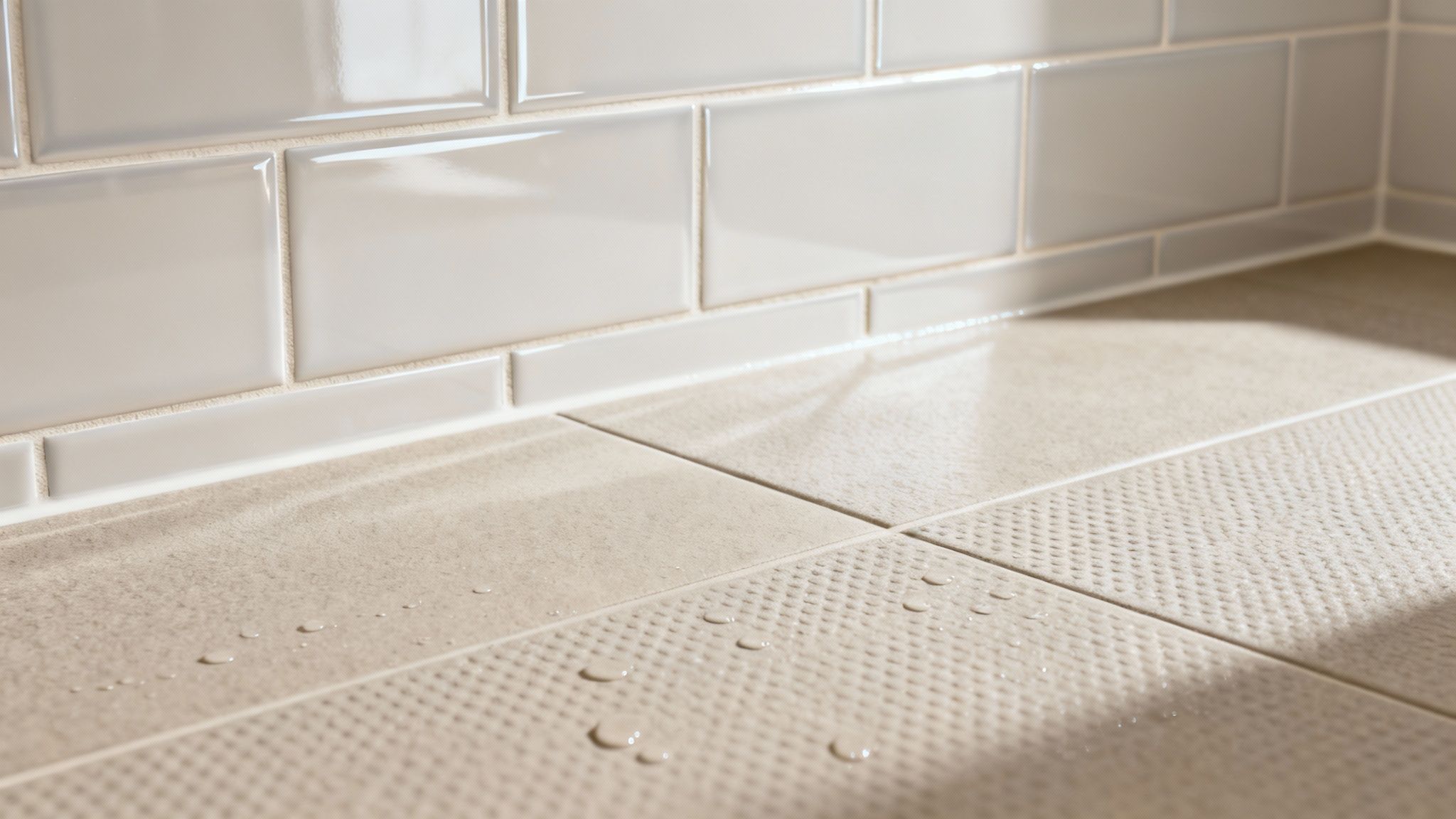
A tile's finish is about so much more than its visual appeal. It’s one of the most critical safety decisions you'll make for your bathroom. That stunning, high-gloss polished tile you fell in love with at the showroom can become an ice rink the second it gets wet.
Think of it this way: you wouldn't put racing slicks on the family minivan, especially not for driving through a Utah winter storm. The same logic applies to your bathroom floor. The finish of the tile directly dictates its grip, which is something we measure with its coefficient of friction.
What to Know About DCOF and Slip Resistance
When you're comparing tiles, keep an eye out for a spec called the DCOF (Dynamic Coefficient of Friction) rating. This is the number that tells you exactly how much grip a tile surface has when it's wet.
The American National Standards Institute (ANSI) has a clear standard here: they require a DCOF rating of 0.42 or higher for any tile installed on a level interior floor that's expected to get wet. This isn't just a suggestion—it's the industry benchmark for safety. For your main bathroom floor and especially the shower floor, a tile that meets or beats this number is non-negotiable. It's your best defense against slips and falls.
Pairing the Right Finish with the Right Surface
Once you understand DCOF, you can start making smart choices about where each type of finish belongs. It all comes down to how much water a surface is going to see.
- Walls and Backsplashes: This is where you can go wild. Glossy, polished, and glazed finishes are perfect here. They’re a breeze to wipe down, they bounce light around the room, and there’s zero slip risk.
- Main Bathroom Floors: A matte or honed finish is usually your best bet. These surfaces have a beautiful, soft look that doesn't create glare and, more importantly, offers significantly better traction underfoot.
- Shower Floors: Safety first. Always. Look for tiles with an obviously textured finish or opt for small mosaics. The texture itself adds grip, and the extra grout lines in a mosaic act like tire treads, channeling water away and increasing slip resistance.
Your dream of a polished, marble-look bathroom is still totally achievable. The trick is to use those sleek, high-gloss tiles as a feature wall behind the vanity and then select a coordinating tile in a safer honed or matte finish for the floor. You get the luxe aesthetic you’re after without compromising on the practical safety you absolutely need.
In the end, it’s all about smart placement. By paying close attention to the DCOF rating and choosing the right finish for each part of your bathroom, you can build a space that’s as safe and functional as it is beautiful.
Don't Forget Grout: The Detail That Defines Your Design
People spend weeks agonizing over tile, but grout is often a complete afterthought. I’ve seen it time and time again: a gorgeous tile installation completely undermined by the wrong grout choice. It's not just filler; it's the frame for every single tile, and it has a massive impact on the final look and how much time you'll spend scrubbing later.
Think of it this way: choosing the right grout is just as crucial as picking the tile. The wrong stuff can lead to stained, cracked lines that make even the most luxurious tile look cheap. But a smart grout selection? That protects your investment and ties the entire room together beautifully.
Grout Types: What You Need to Know
Your first big decision is the type of grout. This really depends on your tile and where it's going. For most standard tile jobs with grout lines wider than 1/8 of an inch, you'll be looking at traditional sanded grout. The fine sand mixed in gives it strength and helps it hold up over time.
But if you're working with delicate materials like glass or a highly polished marble, or if you want super-thin grout lines (less than 1/8 of an inch), you'll need unsanded grout. Using sanded grout here would scratch the heck out of your beautiful tile.
Here's a pro tip: For showers and other wet areas, I always steer my clients toward epoxy grout. It's more expensive and definitely trickier to work with, so your installer needs to know what they're doing. But because it's non-porous, it’s virtually stain-proof and resists mold and mildew like nothing else. It's a total game-changer for long-term maintenance.
Using Color to Create an Effect
Grout color is one of the most powerful—and underrated—design tools at your disposal. You can create two totally different vibes just by changing the color of what goes between the tiles.
- Go for Contrast: Using a dark grout with a light tile (or the other way around) makes every single tile pop. It turns the grid itself into a design element. This is the perfect move when you want to show off a unique tile shape or an interesting layout, like a herringbone or chevron pattern.
- Blend It In: Choosing a grout color that closely matches your tile creates a smooth, unified surface. The individual tile lines seem to disappear, which can make a small bathroom feel much bigger and more peaceful. It’s all about creating a seamless look.
The Non-Negotiable Step: Sealing
Whatever you do, don't skip the sealer. Most cement-based grouts—both sanded and unsanded—are porous. That means they'll soak up water, soap scum, and stains like a sponge if you leave them unprotected. Applying a good quality grout sealer after everything has cured is an absolute must to keep your grout looking fresh.
The only exception here is epoxy grout, which doesn't need sealing. But keep in mind, if you've chosen a porous natural stone tile, you'll need to seal both the tile and the grout. Staying on top of that maintenance will prevent water damage and keep your stunning new bathroom looking that way for years.
Creating a Realistic Tile Budget
When you start figuring out how to choose bathroom tiles, it’s all too easy to focus on that price-per-square-foot sticker. But trust me, that number is just the tip of the iceberg. A successful project—and a budget that doesn't spiral out of control—depends on seeing the whole financial picture.
I’ve seen it time and again: homeowners are shocked to discover that the tiles themselves are often less than half the total cost. The real money is in the meticulous prep work and skilled labor required to get the job done right.
Factoring in Labor and Preparation
Before your beautiful new tile ever sees the light of day, your installer needs a flawless canvas to work on. This prep work is absolutely critical and adds to the bottom line, but it’s an investment you can’t afford to skip. Cutting corners here is a surefire way to end up with cracked tiles and water damage.
Here's a glimpse of what that foundational work often involves:
- Demolition and Removal: The old stuff has to go. That means tearing out the existing flooring, shower surround, and any rotted or damaged subfloor.
- Subfloor Repair or Replacement: The surface underneath has to be perfectly level, solid, and dry. If it's not, it needs to be fixed or replaced.
- Waterproofing: This is non-negotiable, especially in showers and wet areas. Applying a waterproofing membrane is the only thing standing between a small splash and a major leak.
The total cost of a bathroom tile project is not just the sticker price of the tile. It's a lifecycle sum where installation, substrate preparation, and maintenance often exceed the material cost. Understanding this from the start prevents budget overruns and ensures a high-quality, long-lasting result.
Understanding the Full Cost Spectrum
The price of tile itself can swing wildly. You can find basic ceramic options that are very wallet-friendly, but if your heart is set on premium porcelain or natural stone, the cost will be significantly higher.
To put some numbers on it, commodity ceramic tiles can run under $10–$20 per square meter, while high-end large-format porcelain that mimics natural stone can easily cost $50–$150+ per square meter. Here’s the key takeaway: installation and prep work will almost always add another 50–150% on top of whatever you spend on the tiles themselves.
And that’s just the tile portion. For a deeper dive into what a full remodel entails, from permits to plumbing, this expert guide on bathroom renovation costs is a great resource.
Long-Term Value Over Upfront Cost
Finally, think beyond the initial price tag. A cheaper tile might seem like a win today, but if it chips, cracks, or wears out in a few years, you'll be facing the cost of a full replacement all over again.
Investing in a high-quality, durable material like porcelain often ends up being the more economical choice over the life of your bathroom. It’s about getting the best value, not just the lowest price.
For a detailed look at how these costs come together for a local project, check out our complete bathroom renovation cost breakdown specifically for homes in the Orem and Provo areas. It will help you build a realistic budget that covers everything from materials to labor and sets you up for lasting success.
Making Smart Choices in a Global Market
When you walk into a tile showroom here in Orem or Provo, you’re seeing the final stop on a long journey. The tile industry is massive and global, and knowing a little about how it works can give you a real edge when choosing the perfect tile for your bathroom. It’s the secret to finding incredible, high-quality products without breaking the bank.
Major tile producers in Europe and Asia are always trying to one-up each other, which is fantastic for us as homeowners. This competition sparks innovation and keeps prices in check. The global ceramic tile market is booming—it’s expected to hit around USD 400–410 billion by the early 2030s. That means materials once considered luxury splurges are now surprisingly accessible. You can dig into these ceramic tile market trends to see just how much is changing.
How Global Trends Affect Your Local Options
So what does all this industry growth mean for your bathroom remodel? Simply put, it means more and better choices. Fierce competition has pushed down the cost of advanced products, like massive porcelain slabs and tiles with special textured surfaces for better grip.
You’re no longer stuck with just standard sizes or basic finishes. Now, you can find specialty tiles that solve real-world problems right in our local showrooms.
- Large-Format Tiles: These used to be a custom, high-end item. Now, they're widely available and can make a small bathroom feel way bigger by minimizing grout lines.
- High DCOF Tiles: We're seeing more tiles with excellent slip-resistance ratings. These aren't just for commercial spaces anymore; they're a smart, safe choice for family bathrooms.
- Hyper-Realistic Finishes: Thanks to incredible printing technology, porcelain can mimic the look of natural stone or wood with stunning accuracy. You get the high-end aesthetic without the high-maintenance headaches.
It's a lot like the evolution of smartphones. The premium features from a few years ago are now standard. The same thing is happening in the tile world, and if you know what to look for, you can get a truly high-end look and performance on a mid-range budget.
Making an Informed Decision
So, how do you put this knowledge to use? Next time you're browsing, don't just look at what's on the main display. Ask the staff where different tile lines are made. Get curious and compare the technical specs—things like water absorption rates and DCOF ratings—between different brands, even at different price points.
You might be surprised to find that a lesser-known brand from a quality manufacturer offers the same (or even better) performance as a big-name designer tile, but for a fraction of the cost. This global perspective helps you cut through the marketing noise and focus on what really counts: getting the best possible tile for your home. It’s a powerful first step as you plan your bathroom remodel from start to finish.
Answering Your Top Bathroom Tile Questions
Even when you feel like you've got a solid plan, a few specific questions almost always surface during a bathroom remodel. Let's dig into some of the most frequent ones we hear from homeowners trying to navigate the world of tile.
Can I Use the Same Tile on the Floor and Walls?
You absolutely can, and it's a fantastic design choice. Running the same tile from the floor up the walls creates a sleek, cohesive look that can make a small bathroom feel surprisingly spacious and unified.
The one crucial detail to remember is safety. If you're going this route, make sure the tile you pick is rated for wet floors. You're looking for a DCOF rating of 0.42 or higher. A large-format porcelain tile with a matte finish is often the perfect candidate for pulling off this seamless style.
What Is the Most Timeless Bathroom Tile?
If you're aiming for a look that will still feel fresh and stylish in five or ten years, sticking with the classics is your best bet. You really can't go wrong with these tried-and-true options:
- White Subway Tiles: A simple 3x6 or 4x8 inch subway tile is the definition of timeless. It works with nearly any style.
- Marble-Look Porcelain: This gives you that elegant, high-end look of real marble but without the constant worry and maintenance.
- Simple Mosaics: Classic hexagon or square mosaics bring in texture and a vintage-inspired feel that never goes out of style.
The secret to a design that lasts is keeping your permanent fixtures—like tile—neutral and simple. You can always bring in trendy colors and patterns with paint, towels, and accessories. Those are the things that are easy and cheap to swap out when you're ready for a change.
Frequently Asked Questions
Here are a few more quick answers to some common questions that come up during the tile selection process.
| How much extra tile should I buy? | Always plan for 10-15% overage. This covers cuts, mistakes, and potential future repairs. For complex layouts like herringbone, aim for 20%. |
| What's the best tile for a small bathroom? | Large-format tiles (12x24 or larger) can trick the eye and make a small space feel bigger because there are fewer grout lines. A light color palette also helps. |
| Is porcelain or ceramic better for a bathroom? | Porcelain is the winner for bathrooms. It's denser and less porous than ceramic, making it more resistant to water absorption and ideal for wet environments like shower walls and floors. |
| What's the easiest tile to keep clean? | Large-format, non-porous tiles like porcelain are the easiest. Fewer grout lines mean less scrubbing. A smooth, non-textured surface will also be simpler to wipe down. |
Hopefully, these answers clear up some of the questions you have. The right tile choice really comes down to balancing your style with the practical needs of your space.
Ready to transform your bathroom with the perfect tile? The expert team at Northpoint Construction is here to guide you through every step, from selection to flawless installation. Contact us today to start your Orem or Provo area remodel