
A Homeowner's Guide to Preventing Mold in Basements
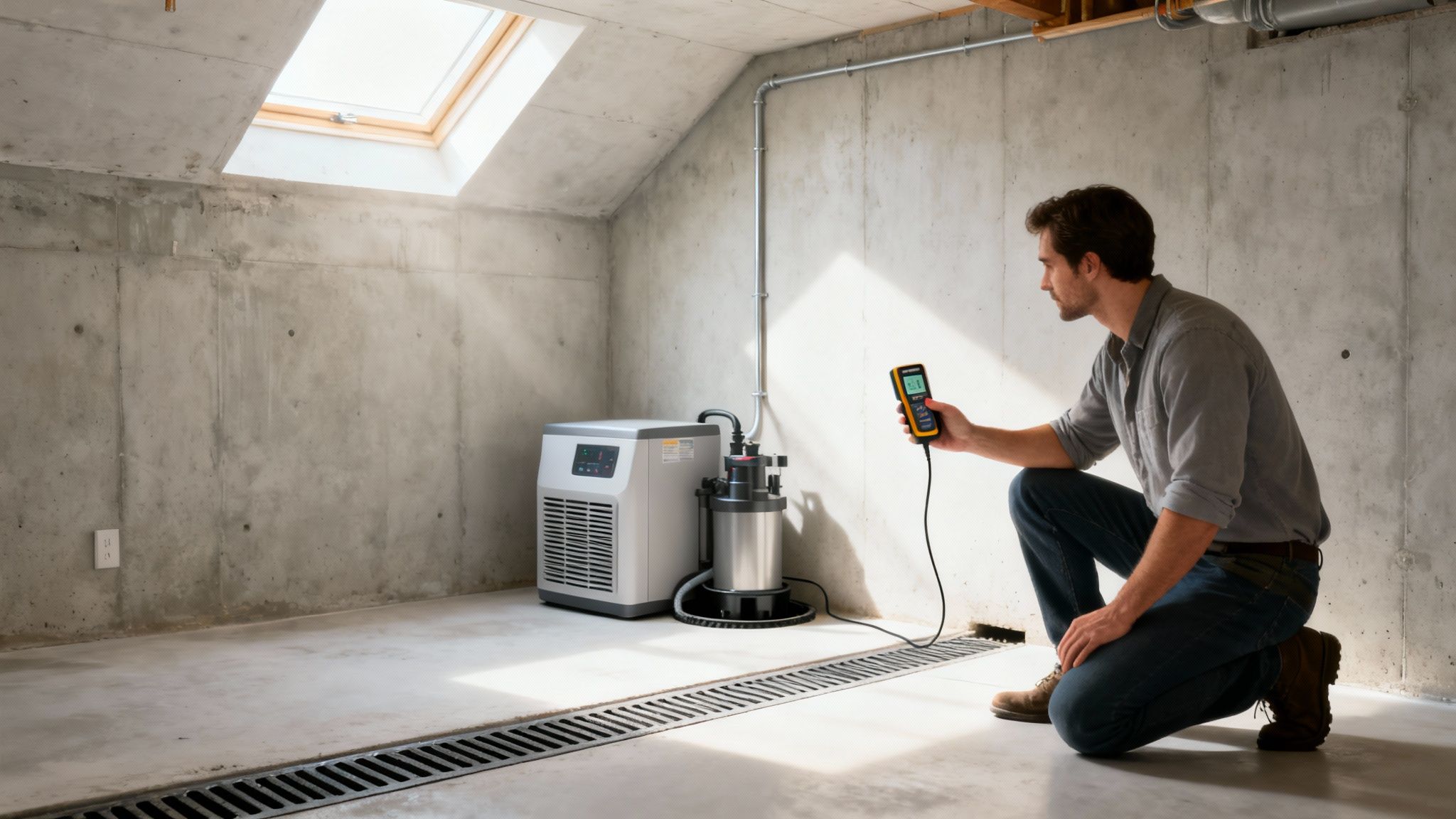
That musty smell you get hit with the second you open the basement door? It’s more than just an old-house quirk—it’s the first red flag. Preventing mold in basements isn't just a good idea; it's a critical part of homeownership. You're not just protecting your house's structure, you're safeguarding your family's health from the damage that hidden moisture can cause.
Why Your Basement is Mold's Favorite Place to Live

Think of your basement as the perfect vacation spot for mold. It has everything on its checklist: dampness, food, and dark, still air. Grasping this simple recipe is the key to stopping it before it starts. Because basements are below ground and surrounded by moist soil, they present a unique set of challenges you just don't see anywhere else in the house.
And if you're dealing with this, you're not alone. Far from it. A major 2008 study of over 800 homes across the country revealed that around 24% had visible moisture or mold problems. That's nearly one in four homes battling the very conditions that turn a basement into a mold factory. You can dig into the full statistics on home moisture and mold yourself.
The Recipe for a Mold Outbreak
Mold spores are everywhere, all the time. They only become a problem when they find the right spot to land and grow, and your basement usually has it all.
- Moisture: This is the big one. Water sneaks in through tiny foundation cracks, drips from leaky pipes, or simply hangs in the air as humidity, condensing on cool concrete walls.
- Food: Mold isn't a picky eater. It will feast on the paper backing of drywall, wooden framing, forgotten cardboard boxes, and even layers of dust.
- Darkness: With few, if any, windows, basements provide the dark hideout mold loves. Without UV light from the sun, there's nothing to slow it down.
- Stagnant Air: Poor airflow lets humid, spore-heavy air just sit there. This gives spores plenty of time to settle and start a colony.
Here’s the bottom line: Your basement’s fundamental nature—cool, dark, and below ground—makes it a natural incubator for mold. You can't get rid of every mold spore in the world. The real fight is about controlling your basement’s environment so those spores never get the moisture they need to come to life.
From a Faint Smell to a Full-Blown Problem
That tell-tale musty odor? That’s the smell of active mold growth. It’s releasing microbial volatile organic compounds (MVOCs) into your air. If you ignore it, what starts as a small, hidden patch can quickly become a massive infestation, ruining building materials and tanking your home's indoor air quality.
By understanding why your basement is so vulnerable, you can get ahead of the problem. The rest of this guide is about taking action—turning your basement from a mold magnet into a dry, healthy space you can actually use. Let's get to it.
Mastering Moisture Control From The Outside In
To really win the battle against basement mold, you have to learn to think like water. Where does it come from? Where does it want to go? Your absolute first priority is to stop moisture before it ever gets a chance to even touch your foundation. Truly preventing mold in basements is an outside-in job, and it all starts with managing the water on your property and making sure it has a safe path away from your home.
It’s about creating a layered defense system. You'd be surprised how a few small, consistent efforts on the exterior of your house can prevent massive, wallet-draining problems on the inside. Many of the most effective solutions are also the simplest.
This image lays out the simple recipe mold needs to thrive, starting with the one ingredient we're focusing on here: moisture.
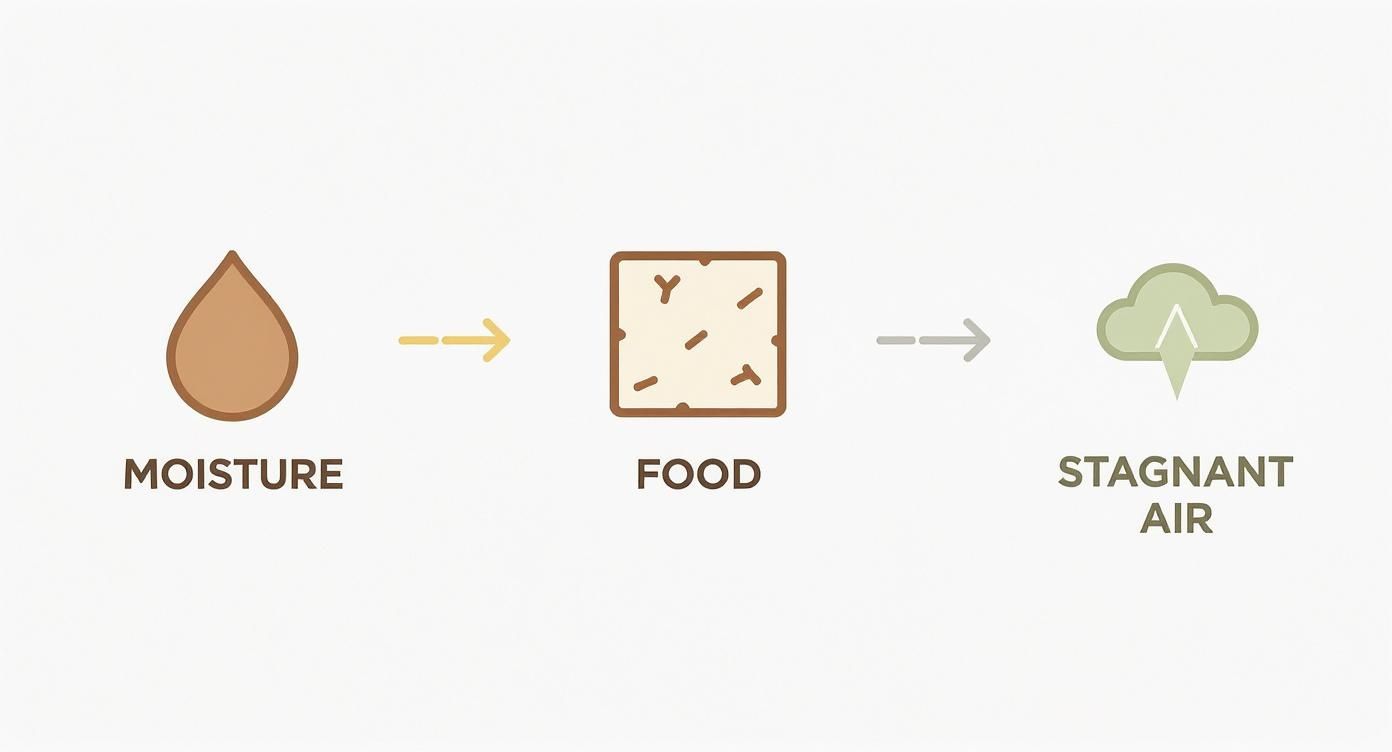
As you can see, if you take away the water, the other two conditions don't really matter. By cutting off the moisture supply at its source—outside your home—you dismantle the entire mold-growing operation.
Assess Your Yard's Grading and Slope
The patch of land right up against your foundation is your first and most critical line of defense. It needs to act like a shield, not a sponge. For this to happen, the ground must have a positive grade, which is just a technical way of saying it slopes downward and away from your house on all sides.
This doesn't have to be a dramatic hill. A gentle drop of about six inches over the first ten feet from your foundation is usually all it takes to channel thousands of gallons of rainwater safely away during a storm. If you ever see water pooling near your walls or notice the soil is constantly soggy, you almost certainly have a negative or flat grade that’s actively funneling water right where you don't want it.
Regrading sounds intimidating, but sometimes the fix is as straightforward as bringing in a few cubic yards of clean fill dirt and compacting it to create that gentle, protective slope.
Harness the Power of Gutters and Downspouts
Your roof is a massive water collector. Just to put it in perspective, a single 1-inch rainfall on a 1,000-square-foot roof produces over 600 gallons of runoff. Your gutter system is designed to handle that deluge, but only if it's working properly.
I can’t tell you how many basement water issues I’ve traced back to clogged gutters. It’s one of the most common culprits. When they overflow, all that water cascades right down your walls, completely saturating the soil next to your foundation.
Here’s a simple but incredibly effective maintenance routine:
- Clean Gutters Twice a Year: Make it a habit. At a minimum, clean them out in the late spring and again in late fall after the trees have dropped their leaves.
- Check the Pitch: Gutters aren't meant to be perfectly level. They should have a slight slope toward the downspouts so water flows freely instead of sitting there.
- Install Downspout Extenders: This is non-negotiable. Standard downspouts often dump hundreds of gallons of water right at the corner of your foundation. Your extenders need to carry that water at least five to ten feet away from the house, ideally onto a sloped surface.
These small chores have a monumental impact on keeping your basement dry and stopping mold before it even has a chance to start.
Understanding Sump Pumps and Foundation Drains
For a lot of homes, especially here in Utah where we can have expansive clay soil or in areas with high water tables, exterior defenses need a reliable interior backup. This is where a sump pump and a perimeter drain system become your best friends. These systems work hand-in-hand to manage hydrostatic pressure—the force of groundwater pushing against your foundation walls and floor from the outside.
A perimeter drain (often called a French drain or drain tile) is basically a perforated pipe installed around the footing of your foundation. It’s designed to collect any groundwater that gets close and channel it to a basin, known as a sump pit, set into the lowest part of your basement floor.
Inside that pit sits the sump pump. When water in the pit reaches a certain level, a float switch activates the pump, which then pushes the water up and out of your home through a discharge pipe.
A well-maintained sump pump is your basement's silent guardian. You should test it a few times a year by pouring a bucket of water into the pit. You want to see that float switch rise and hear the pump kick on. A battery backup system is also a very smart investment, ensuring it keeps working even if the power goes out during a heavy storm.
The Plastic Sheeting Test: A Simple Moisture Diagnostic
Not sure if your basement moisture is coming through the concrete or just condensing out of the air? There's a ridiculously simple trick to figure it out. This little test helps you pinpoint whether you have a groundwater problem or a humidity problem.
Here’s what you do:
Cut a two-foot by two-foot square of plastic sheeting.
Use heavy-duty tape (duct tape works great) to securely seal all four edges of the plastic to a dry spot on a concrete wall or the floor.
Just leave it alone for 24-48 hours.
After a day or two, go check it. If you see water droplets on the underside of the plastic (the side that was touching the concrete), it means moisture is seeping through the foundation from the outside. If the droplets are on the top surface of the plastic, your problem is high indoor humidity.
This quick test gives you a clear diagnosis and tells you exactly where to focus your efforts. For a deeper dive into the health implications, a 2022 NIOSH evaluation specifically recommends reducing basement humidity to prevent mold; you can read the full CDC report on moisture control for more technical details.
To help you troubleshoot, I've put together a quick-reference table. It connects common symptoms you might find in your basement to their likely causes and the most direct solutions.
Basement Moisture Source and Solution Checklist
| Water pooling near the foundation after rain | Negative or flat yard grading | Regrade the soil to slope away from the house. |
| Water stains or dampness high on basement walls | Clogged or overflowing gutters | Clean gutters and install downspout extenders. |
| Damp floors, especially after heavy rain | Hydrostatic pressure from groundwater | Install or service a sump pump and perimeter drain system. |
| Musty smell and condensation on pipes/walls | High indoor humidity | Improve ventilation and run a dehumidifier. |
| Peeling paint or white, chalky residue on walls | Moisture wicking through porous concrete | Apply a waterproof sealant to interior walls. |
Use this checklist as a starting point. By correctly identifying the symptom, you can zero in on the root cause and apply the right fix the first time, saving yourself a lot of headaches down the road.
Winning the War on Humidity and Stagnant Air
Even with a bone-dry foundation and perfect outdoor drainage, your basement can still become a petri dish for mold. The invisible culprits? High humidity and stagnant air. This combination gives airborne mold spores the perfect opportunity to land and set up shop on just about any surface. If you're serious about mold prevention, you have to get serious about managing the air inside your basement.
Water doesn't have to be a puddle on the floor to cause a major headache. Once the relative humidity in your basement climbs above 60%, the air itself becomes moist enough to feed mold. This is where active air management becomes a non-negotiable part of preventing mold in basements for good.
The Simple Power of Air Circulation
One of the most effective strategies is also the most overlooked: just keep the air moving. Think of mold spores as tiny seeds floating around. When the air is still, they can easily settle in a damp, dark corner and start to grow. Keeping the air circulating makes it incredibly difficult for them to ever get that chance.
You don't need a fancy, expensive system for this. A couple of well-placed box fans can make a huge difference, especially in those classic dead-air zones like the space behind a staircase or a cluttered storage closet. The goal isn't to create a wind tunnel, but a gentle, continuous flow that keeps moisture from settling anywhere.
Of course, this is just one piece of the puzzle. The broader topic of improving indoor air quality is crucial for a healthy home, and these basement-specific tactics fit right into that larger picture.
Taming Humidity with a Dehumidifier
While fans move the air, a dehumidifier is your workhorse for actively pulling moisture out of it. It's your single most powerful weapon in controlling the basement climate. But simply plugging one in and walking away isn't enough—you have to use it correctly.
First off, size matters. A unit that’s too small for your basement will run nonstop without ever hitting the target humidity, just wasting electricity. On the flip side, an oversized one might cycle on and off too quickly, never really getting the job done effectively.
The sweet spot for basement humidity is between 30% and 50%. This is the ideal range—dry enough to shut down mold growth but not so dry that you start seeing issues like cracked wood. Thankfully, most modern dehumidifiers have a built-in humidistat, so you can just set your target and let the machine handle the rest.
Keeping Your Climate Control Systems in Shape
Your dehumidifier and HVAC system are the lungs of your basement, and just like any hard-working equipment, they need a little TLC to perform their best. A clogged filter or dirty coil won't just hurt efficiency; it can actually pump dust and contaminants back into the air you’re trying to clean.
A few basic maintenance tasks will go a long way:
- Clean Dehumidifier Filters: Most units have a washable filter that needs a quick cleaning every few weeks. Set a reminder on your phone.
- Set Up Continuous Drainage: Constantly emptying a collection bucket is a pain. Most models let you attach a simple hose to drain directly into a floor drain or sump pit. Set it up and forget it.
- Check Your Vents: Make sure the HVAC vents in your basement are open and aren't blocked by boxes or furniture. Good airflow from your central system is a huge help.
Speaking of your central system, don't forget its role in managing your home's overall humidity. Staying on top of routine service is key. If you're not sure about the right schedule, this is a great resource explaining https://buildnp.com/blogs/how-often-to-service-hvac/ to keep your entire home's air healthy. A well-maintained system can often prevent humidity issues in the basement before they even start.
Building a Mold-Proof Basement From the Studs Up
If you're in the middle of a basement renovation or finishing a new one, you've got a golden opportunity. This is your one chance to design a space that actively fights mold before it even starts. The secret? It's all in the materials you choose.
Think about it. Standard building materials like wood studs and paper-faced drywall are basically a gourmet meal for mold. The moment a little moisture shows up—and in a basement, it always does—those organic materials become the perfect fuel for a mold explosion. A truly resilient basement is one that essentially starves mold out of existence from day one.
Choosing Your Core Building Blocks
The framing and walls are the backbone of your basement, and this is where you can make the biggest impact. Wood framing might be the standard for the rest of the house, but it's a huge liability below ground.
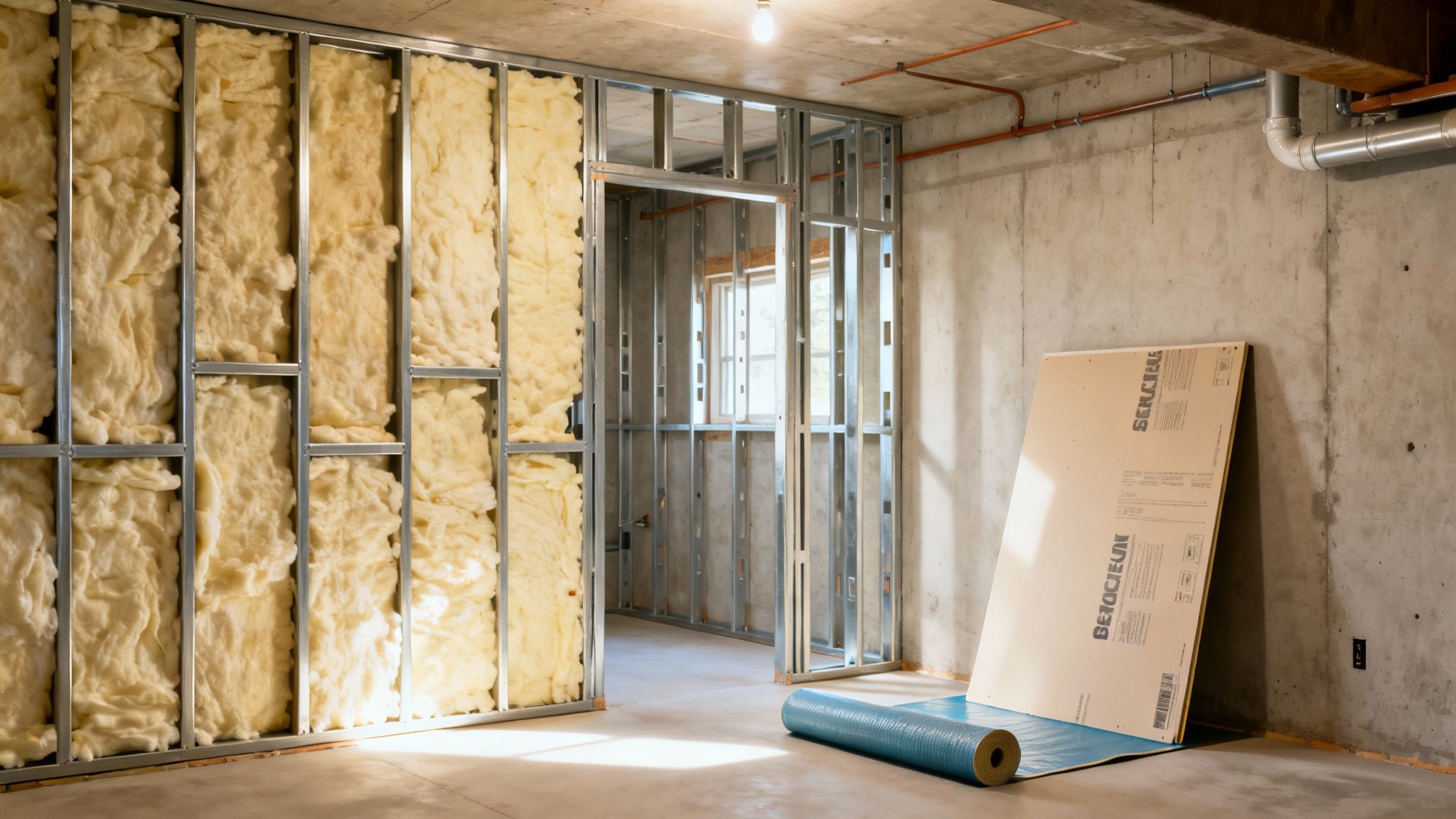
Instead of wood, I always recommend using metal studs. They’re inorganic, so there's absolutely nothing for mold to eat. As a bonus, metal studs are perfectly straight, they never warp with humidity swings, and they’re immune to rot and termites. It’s a smart, long-term investment for any basement.
Next, let's talk about the walls. It’s time to ditch standard paper-faced drywall. That paper is the first thing mold latches onto.
- Moisture-Resistant Drywall: You’ve probably seen this stuff—it's often called "green board." It has a special coating that helps it resist moisture, which is a good step up.
- Fiberglass-Faced Drywall: This is the best-in-class option. With zero paper, it offers no food source for mold and gives you the highest level of protection.
- Cement Board: Typically reserved for shower stalls, this is a totally waterproof and inorganic material that’s perfect for basement walls, especially in areas you know might get damp.
Smart Insulation and Flooring Choices
Insulation is a must for a comfortable, energy-efficient basement, but picking the wrong type can create a disaster zone. Those fluffy fiberglass batts can easily trap moisture against cold concrete, turning into a hidden, mold-filled sponge.
The hands-down best solution for basement walls is closed-cell spray foam insulation. When a professional applies it, the foam creates a solid, seamless vapor barrier right against the foundation. It insulates beautifully while blocking any path for moisture or air leaks, which means no condensation and nowhere for mold to get a foothold.
One of the most common mistakes I see is homeowners putting down the wrong flooring. Carpet is a classic culprit; it traps moisture, dust, and mold spores deep in its fibers, leading to that permanent musty smell. Real wood is also a gamble, as it will inevitably warp and cup with the basement's humidity changes.
For a truly mold-proof floor, stick with inorganic, waterproof materials. Luxury Vinyl Plank (LVP) is a fantastic choice because it’s 100% waterproof, tough as nails, and can look just like real hardwood. Other solid options are ceramic tile, polished concrete, or even rubber flooring. If you’re planning a project and want more ideas, our in-depth guide to DIY basement remodeling has tons of practical tips.
The Finishing Touches That Matter
Even with the right walls, your job isn't quite finished. The final layer of defense comes from your primer and paint. After hanging your mold-resistant drywall, the next step is crucial: use a high-quality, mold-resistant primer. These primers are formulated with antimicrobial agents, often called mildewcides, that actively stop mold and mildew from growing on the surface.
Top that off with a high-quality paint made for high-humidity spaces like bathrooms and basements. These paints create a durable, washable surface that mold can't easily cling to. It’s a simple last step that locks in all your hard work and ensures your beautiful new basement stays healthy and clean for years to come.
Navigating Mold Prevention in Utah's Unique Climate
Preventing mold in your basement isn't a generic, one-size-fits-all job, especially not here in Utah. Our unique climate and geology put pressures on foundations that you just don't see everywhere else. If you want a prevention plan that actually works long-term, you have to understand these local quirks.
One of the biggest culprits is right under your feet: our soil. Large swaths of the Wasatch Front are packed with expansive clay soil. Think of it like a giant sponge wrapped around your foundation. It swells up dramatically with spring snowmelt or a summer cloudburst, then shrinks and cracks as it dries. This constant push-and-pull puts incredible stress on your foundation, opening up tiny cracks that become superhighways for moisture.
Spring Snowmelt and Summer Complacency
Every year, Utah basements face a major test: the spring runoff. All that mountain snow melts in a matter of weeks, saturating the ground and easily overwhelming drainage systems. This is prime time for sump pumps to work overtime and for hydrostatic pressure to build against your foundation walls. Getting your gutters, grading, and sump pump ready for this deluge is non-negotiable.
Then, summer hits. It's hot, it's dry, and it's easy to forget about basement moisture. But even on a 95-degree day, your cool basement is still collecting humidity from everyday life—laundry, showers, you name it. Without good airflow, that humid air condenses on the cool concrete walls, creating a perfect breeding ground for mold, even without a single drop of rain.
Local Insight: A basement in Lehi deals with totally different soil pressures than one in Provo. The big takeaway? Don't let Utah's arid reputation fool you. Your basement is its own underground ecosystem that demands year-round attention.
A Utah Homeowner's Action Plan
To really get ahead of mold, you need a strategy built for our local conditions. Here’s where to focus your efforts as a Utah homeowner.
- Foundation Inspections: Make it a habit to inspect your foundation at least twice a year—once after the spring thaw and again before winter sets in. Walk the perimeter inside and out, looking for new cracks or that tell-tale white, powdery residue called efflorescence, which is a dead giveaway for moisture getting through.
- Grading is King: Our weather pattern often involves long dry spells followed by sudden, intense downpours. That makes proper grading absolutely critical. The soil around your house must slope away from the foundation, forcing that sudden rush of water to flow away before it can soak into the expansive clay.
- Sump Pump Readiness: Don't wait for the melt to find out your sump pump is dead. Test it beforehand by pouring a bucket of water into the pit to make sure it kicks on. Given how hard it works during runoff season, a battery backup isn't a luxury; it's a smart investment.
Knowing how to protect your foundation is half the battle. For a deeper dive into the specific methods and materials, our guide on the best waterproofing for basements can help you build a truly solid defense.
Knowing When to Call in a Mold Remediation Pro
Scrubbing a little mildew off a damp pipe is a straightforward weekend task. But pulling back a piece of drywall and discovering a sprawling, fuzzy black colony? That's a whole different ballgame.
Knowing your own limits is a critical part of any mold prevention plan. Sometimes, a DIY approach isn’t just a bad idea—it can be downright dangerous for your family and your home. Trying to clean up a serious mold problem yourself can backfire spectacularly, spreading spores throughout your house and turning a contained issue into a full-blown nightmare.
Making the right call protects your health and makes sure the problem is actually solved for good, not just painted over.
The DIY vs. Pro Decision: A Simple Checklist
So, when is it time to put down the bleach bottle and pick up the phone? If you find yourself saying "yes" to any of these questions, it's a clear sign you need to call a certified mold remediation specialist.
- Is the mold patch bigger than 10 square feet? The EPA uses this as a rough benchmark. An area that large (think the size of a 3-foot by 3-foot square) almost always points to a serious, ongoing moisture problem that a pro needs to diagnose.
- Can you smell a strong, musty odor? That pungent, earthy smell is a dead giveaway. It means the mold is actively growing and releasing compounds into the air, signaling a mature and widespread colony you can't see.
- Do you think mold is in your HVAC system? This is a red-flag situation. Once mold gets into your ductwork, it can blast spores into every room of your house whenever the heat or AC kicks on. Cleaning this requires specialized equipment and expertise.
- Does anyone in your family have health issues? For people with asthma, severe allergies, or compromised immune systems, even a small amount of mold exposure can trigger significant health problems. Professionals use containment barriers and air scrubbers to keep the air safe during removal.
Key Takeaway: Calling a professional isn't giving up. It's a smart, strategic move to protect your biggest investment and your family’s health. They have the training and gear for jobs that are too big, too hidden, or too hazardous for a homeowner to handle safely.
What Does a Remediation Expert Actually Do?
Hiring a true professional is about much more than just scrubbing and spraying. It’s a systematic process designed to get to the root of the problem without making things worse.
First, they’ll contain the entire area, usually with thick plastic sheeting and negative air pressure machines. This creates a sealed work zone and ensures that all the disturbed spores and dust are vented directly outside, not into the rest of your home.
They use specialized equipment to find every last bit of hidden moisture, tear out contaminated materials like insulation and drywall, and then treat the remaining structures with EPA-approved antimicrobial agents to kill any lingering spores and prevent regrowth.
This level of thoroughness is exactly why the demand for professional help is skyrocketing. The global mold remediation market was valued at USD 1.23 billion in 2023, largely fueled by water damage from burst pipes and flooding—situations that almost always demand an expert. You can learn more about the mold remediation market trends if you're curious.
Knowing what a pro brings to the table helps you make a confident, informed decision when you're staring down a serious mold problem.
Your Top Questions About Keeping a Basement Mold-Free
Even with the best plan in place, you're bound to have questions as you start tackling your basement's moisture issues. Let's clear up a few of the most common ones I hear from homeowners.
What Is the Ideal Humidity for a Basement?
You want to aim for a humidity level between 30% and 50%. This is the sweet spot.
Anything higher, and you're rolling out the welcome mat for mold. Anything lower, and you risk drying out wooden structures and furniture. A quality dehumidifier with a built-in humidistat is non-negotiable here—it automatically keeps you in that perfect range without you having to think about it.
Can I Just Use Bleach and Paint Over Mold?
Please, don't do this. It’s a classic mistake, and a dangerous one. Bleach might kill surface mold on something like tile, but it can't penetrate porous materials like drywall or wood.
The mold's roots—its hyphae—are still alive and well inside the material. Slapping a coat of paint over it just hides the problem and traps moisture, which is like giving the mold a personal greenhouse. The mold will continue to feast on the material behind the paint. You must always remove the contaminated material completely.
Will an Air Purifier Prevent Basement Mold?
An air purifier can certainly help, but it's not a silver bullet. Think of it as a supporting actor, not the lead. It does a great job of snagging airborne mold spores, which definitely improves your air quality.
But here’s the catch: it does nothing to fix the moisture problem that allowed mold to grow in the first place.
Use an air purifier to complement your other efforts, but never rely on it as your primary defense. Your main focus has to be on stopping leaks, running that dehumidifier, and improving ventilation.
For example, carpet is a common basement feature that's notorious for trapping moisture. Understanding the finer points of preventing mold in carpet is a perfect example of a targeted approach, but it only works if the basement is dry overall. The foundation of any mold prevention strategy is, and always will be, moisture control.
At Northpoint Construction, we specialize in transforming basements into dry, healthy, and beautiful living spaces. From expert basement finishing to comprehensive home remodels, we build solutions that last. If you're ready to solve your basement challenges for good, visit us at https://buildnp.com to see how we can help.