Discover property management maintenance checklist for flawless property care
In Utah’s dynamic real estate market, maintaining a property’s value, safety, and appeal is a critical function, not an afterthought. Whether you manage a portfolio of residential homes in Provo, a bustling commercial space in Lehi, or a sought-after vacation rental in Saratoga Springs, a proactive approach to maintenance is your best defense against costly emergencies, unexpected capital expenditures, and high tenant turnover. This comprehensive property management maintenance checklist is engineered to move beyond generic advice, offering a detailed, sortable guide that transforms reactive problem-solving into a strategic asset management plan.
This is more than just a list; it is your definitive roadmap to maximizing ROI and ensuring every property under your care remains a top-tier asset. We provide a blueprint organized by frequency (monthly, seasonal, annual), system (HVAC, plumbing, roofing), and priority. You'll find actionable insights for everything from foundation inspections to fire safety compliance, with specific notes on tackling Utah's unique environmental challenges like intense freeze/thaw cycles and the demands of heavy snowmelt.
We will detail which tasks are suitable for a DIY approach and clarify when to bring in professional expertise from specialists like Northpoint Construction for complex projects. This guide empowers property owners and managers to protect their investments, enhance tenant satisfaction, and streamline operations. By implementing this structured maintenance schedule, you can anticipate needs, budget effectively, and preserve the long-term health and profitability of your properties.
1. HVAC System Inspection and Maintenance
Regular HVAC (heating, ventilation, and air conditioning) maintenance is a non-negotiable cornerstone of any effective property management maintenance checklist, especially in Utah where weather extremes are the norm. This proactive task involves inspecting filters, cleaning coils and ducts, checking refrigerant levels, and servicing both furnaces and air conditioners. Its primary purpose is to ensure tenant comfort, prevent catastrophic system failures during peak seasons, and optimize energy consumption.
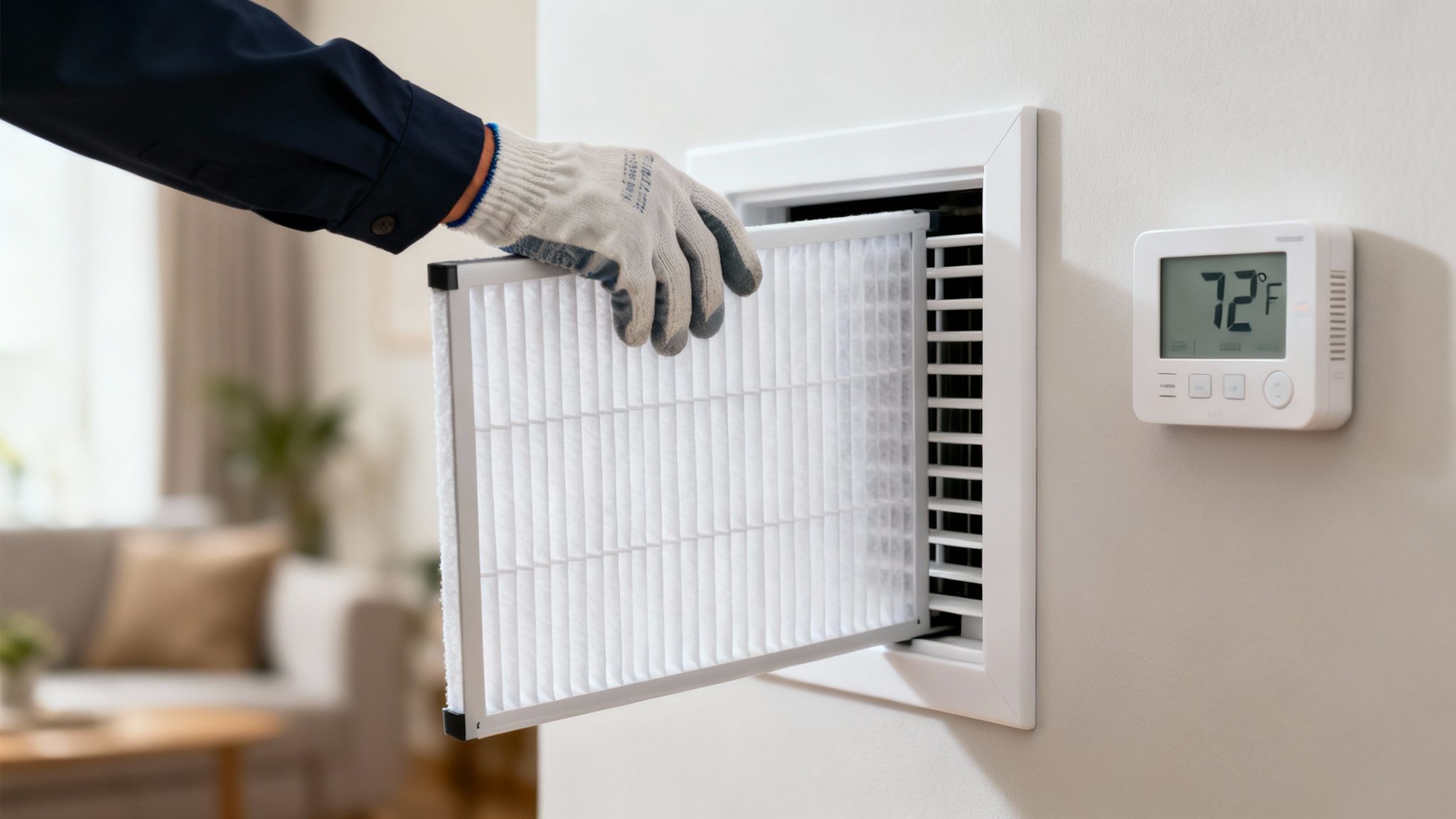
Proper maintenance directly translates to lower utility bills for tenants and reduced operational costs for property owners by extending the equipment's lifespan. For property managers, a well-documented HVAC service history prevents a flood of tenant complaints during a July heatwave or a January cold snap and averts costly emergency repair calls.
When and Why to Prioritize HVAC Maintenance
This task is essential for all property types, from single-family rentals to large commercial buildings. The key is scheduling service biannually: once in the spring to prepare the AC for summer and again in the fall to ready the furnace for winter. Consistent service is a preventative measure that saves significant money and preserves property value over time.
Key Insight: A single emergency HVAC replacement can cost thousands, while a routine service call is a minor operational expense. Prioritizing preventive care is one of the highest-ROI activities a property manager can undertake.
Actionable Maintenance Tips
To implement a robust HVAC maintenance schedule, follow these steps:
- Schedule Biannual Service: Contract a professional like Northpoint Construction for comprehensive inspections in spring and fall. For detailed guidance on service frequency, you can learn more about how often to service your HVAC system here.
- Stock Up on Filters: Keep a supply of the correct filter sizes for all your properties. This allows for quick, easy replacement between professional service visits, which is crucial for maintaining air quality and system efficiency.
- Train On-Site Staff: Teach property managers or maintenance personnel to recognize early warning signs of failure, such as strange noises, weak airflow, or constant cycling.
- Document Everything: Maintain a detailed log of all inspections, repairs, and filter changes for each unit. This documentation is invaluable for warranty claims, asset management, and potential property resale.
2. Roof Inspection and Repair
The roof is a property's primary defense against the elements and represents a massive investment in its structural integrity. A key part of any property management maintenance checklist involves regular inspections to identify missing or damaged shingles, flashing issues, potential leaks, and general deterioration before they lead to catastrophic interior water damage. This is especially true in Utah, where heavy snow loads, spring storms, and intense sun exposure accelerate wear and tear.

Proactive inspections and timely repairs prevent expensive interior damage, safeguard tenant satisfaction, and can extend a roof's lifespan by 5-10 years. For commercial properties in Orem or vacation rentals in Saratoga Springs, a well-maintained roof directly impacts property valuation and prevents liability issues that can arise from leaks or structural failures. A documented maintenance history is an invaluable asset.
When and Why to Prioritize Roof Maintenance
Roof maintenance is critical for all property types, but the frequency is key. Inspections should occur at least annually, typically in the spring to assess any winter damage, and after any major weather event like a severe hailstorm. Addressing a small issue like a loose shingle immediately prevents it from escalating into a major leak that damages insulation, drywall, and electrical systems.
Key Insight: The cost of replacing a small section of damaged drywall and insulation due to a minor leak is a fraction of the expense of a full-scale mold remediation and structural repair project. Proactive roof care is risk management.
Actionable Maintenance Tips
To implement a thorough roof inspection and repair program, follow these steps:
- Schedule Professional Inspections: At a minimum, hire a professional like Northpoint Construction for an annual inspection. Many common home inspection problems are first identified on the roof.
- Perform Visual Checks: After major storms, conduct a visual check from the ground with binoculars to spot obvious damage. For more detailed guidance, you can reference Your Essential Pacific Northwest Roof Maintenance Checklist for additional tips.
- Maintain Clear Gutters: Ensure gutters and downspouts are cleared in the spring and fall. Clogged gutters can cause water to back up under shingles, leading to rot and leaks.
- Document Everything: Take photos during every inspection and keep a detailed log of all repairs. This documentation is crucial for insurance claims and maintaining the property's value.
- Trim Overhanging Branches: Cut back tree limbs that are close to or touching the roof to prevent damage from friction and falling debris.
3. Plumbing System Checks and Leak Detection
Proactive plumbing maintenance is a critical component of any property management maintenance checklist, designed to prevent catastrophic water damage, conserve water, and avoid tenant disruptions. This involves regular inspections for slow leaks, checking water pressure, clearing drains, and assessing fixtures before they fail. In Utah, where mineral-rich water accelerates pipe and fixture degradation, these checks are even more vital to prevent costly buildups and premature system failures.
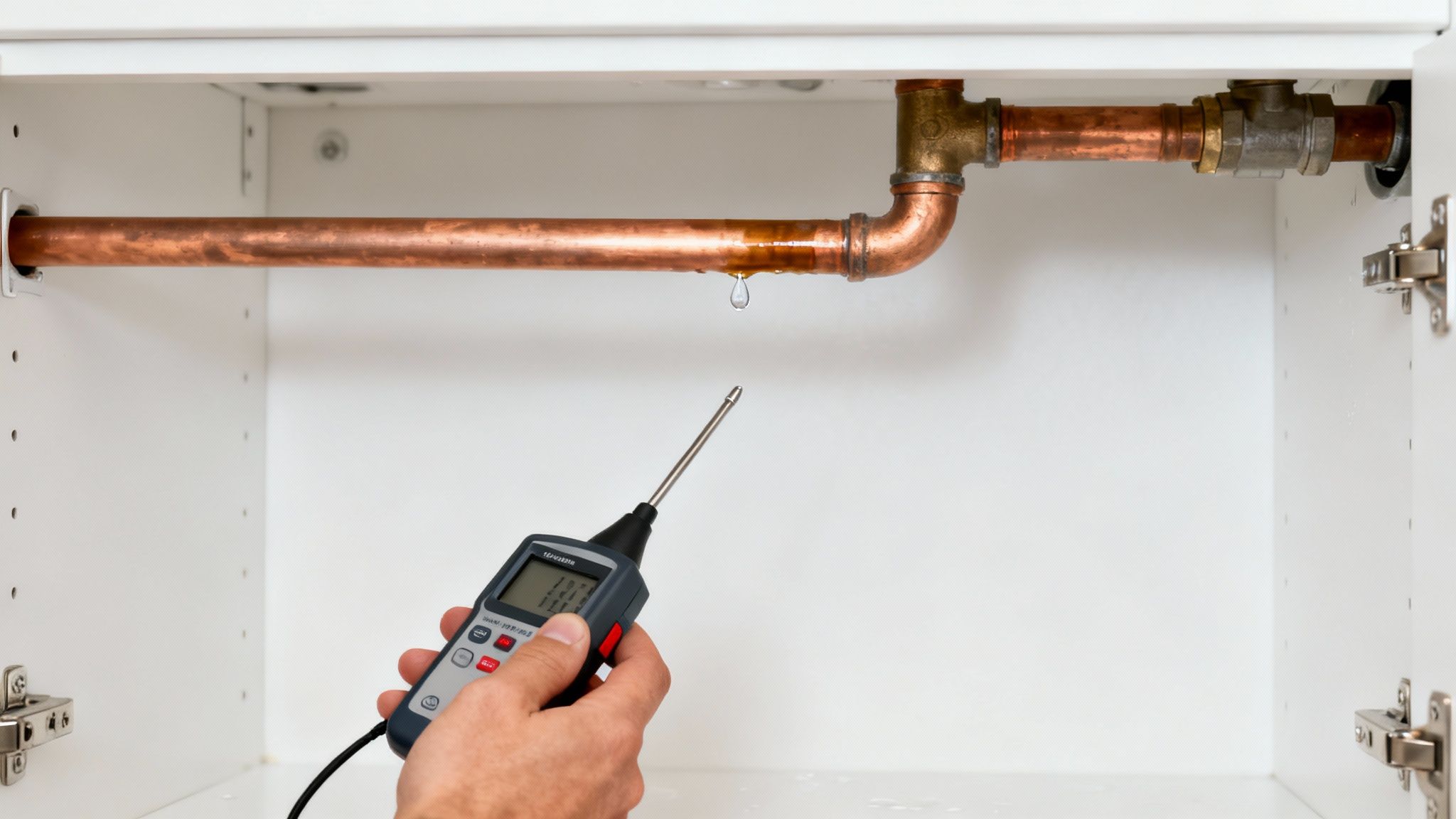
A single undetected leak can lead to thousands in remediation costs, from structural repairs to mold removal. For property managers, consistent plumbing oversight preserves the building's integrity, keeps utility costs under control, and minimizes potential liability. This preventative approach is far more cost-effective than reacting to a burst pipe or a flooded unit.
When and Why to Prioritize Plumbing Maintenance
Plumbing checks are essential for all property types, from multi-family apartment complexes to commercial office buildings and vacation rentals. Routine inspections should occur biannually, ideally in the spring and fall, to prepare for seasonal shifts in water usage and temperature. This is a foundational task for preserving property value and ensuring operational continuity.
Key Insight: Monitoring a property's water bill is one of the simplest yet most effective ways to detect hidden leaks. A sudden, unexplained spike is a clear signal that immediate investigation by a professional is required.
Actionable Maintenance Tips
To implement a robust plumbing maintenance program, follow these steps:
- Schedule Biannual Inspections: Hire a licensed professional to conduct thorough checks of all visible pipes, fixtures, water heaters, and shut-off valves in the spring and fall.
- Educate Tenants and Staff: Create a clear process for tenants to report leaks or low water pressure immediately. Train on-site staff to identify common issues like running toilets or dripping faucets.
- Monitor Water Usage: Regularly review water bills for anomalies. For multi-family properties, consider sub-metering or smart leak detectors to isolate issues to specific units.
- Document All Work: Keep a detailed log of all inspections, repairs, and fixture replacements for each property. This record is crucial for insurance claims, warranty tracking, and long-term asset management.
4. Electrical System Inspection and Safety Compliance
A rigorous electrical system inspection is a critical safety component of any property management maintenance checklist, designed to prevent fire hazards, ensure code compliance, and protect tenants. This process involves a professional evaluation of wiring, panels, outlets, and fixtures to identify potential dangers like overloaded circuits, outdated components, or faulty grounding. Its primary goal is to mitigate liability risks for property owners and guarantee the safety and operational continuity for occupants.
Proactive electrical maintenance protects the property’s integrity and demonstrates due diligence, which is crucial in liability claims. For property managers, a well-documented inspection history prevents service disruptions that affect tenant comfort and business operations, such as in a commercial office building. It also addresses issues like failing circuit breakers or insufficient power before they escalate into costly emergencies.
When and Why to Prioritize Electrical Inspections
This task is essential for all property types, particularly older residential homes in Utah communities like American Fork that may require updates to meet the current National Electrical Code (NEC). A professional inspection should be scheduled every 3-5 years, or immediately following a property purchase or major renovation. Prioritizing electrical safety is a fundamental responsibility that protects lives and preserves the asset's value.
Key Insight: Many insurance claims are denied due to electrical negligence or outdated systems. A certified inspection provides a clear record of compliance and proactive care, strengthening your position with insurers and protecting your investment.
Actionable Maintenance Tips
To implement a robust electrical safety protocol, follow these steps:
- Schedule Regular Professional Inspections: Contract a licensed electrician, like the experts at Northpoint Construction, to conduct a comprehensive system review every 3-5 years to identify and rectify potential hazards.
- Upgrade Safety Features: In multi-unit rentals and vacation properties, install modern GFCI (Ground Fault Circuit Interrupter) and AFCI (Arc Fault Circuit Interrupter) outlets in required areas like kitchens, bathrooms, and bedrooms for enhanced protection.
- Train Staff on Warning Signs: Educate on-site personnel to recognize red flags such as flickering lights, a burning smell from outlets, or frequently tripping breakers, and establish a clear reporting procedure.
- Document All Electrical Work: Keep meticulous records of all inspections, repairs, and upgrades. This documentation is vital for warranty claims, insurance purposes, and demonstrating a history of responsible management. For tips on modernizing lighting to reduce energy use, you can learn more about how to improve home energy efficiency here.
5. Foundation and Structural Inspection
Inspecting the foundation and structural integrity is a critical, high-stakes component of any property management maintenance checklist. This preventative task involves carefully examining the foundation for cracks, signs of settling, water intrusion, and other forms of structural damage. Its purpose is to safeguard the long-term safety and value of the property by catching potentially catastrophic issues before they escalate into major, expensive repairs.
In Utah, diverse geology and dramatic freeze-thaw cycles exert significant stress on foundations, leading to movement and cracking. For property managers and investors, even minor foundation problems can negatively impact property value, insurance eligibility, and tenant safety. Early detection through regular inspections allows for corrective measures that are far less disruptive and costly than foundation reconstruction.
When and Why to Prioritize Foundation Inspections
This task is crucial for all property types but is especially vital for older buildings (25+ years) or those located in areas with known soil instability, such as parts of Orem or Salt Lake County. An annual visual inspection is a recommended baseline, with more detailed assessments scheduled if any changes are noted. Prioritizing this preserves the core asset value and prevents small issues from becoming liabilities.
Key Insight: The cost of a professional structural assessment is minimal compared to the tens of thousands of dollars required for major foundation repair. Addressing drainage issues or sealing a crack early is one of the most effective ways to protect a real estate investment.
Actionable Maintenance Tips
To effectively integrate foundation checks into your maintenance plan, follow these steps:
- Schedule Annual Walk-Arounds: At least once a year, conduct a thorough visual inspection of the foundation's exterior and interior (basements, crawl spaces), looking for new cracks, water stains, or bowing walls.
- Manage Water Runoff: Ensure gutters and downspouts are clean and direct water at least 5-10 feet away from the foundation. Proper grading around the property perimeter is equally important to prevent water pooling.
- Monitor Existing Cracks: Place crack monitors over existing small cracks to track any movement or growth over time. This data is invaluable when consulting with a structural engineer.
- Document and Consult: Keep a detailed log with photos of all inspections and findings. If you notice significant changes or are unsure about a potential issue, it's time to call in a professional like Northpoint Construction for a structural assessment.
6. Exterior Painting and Weatherproofing
Exterior painting and weatherproofing are critical components of a comprehensive property management maintenance checklist, acting as the first line of defense against the elements. This task involves more than just aesthetics; it is the primary barrier protecting siding, trim, and structural components from moisture intrusion, UV damage, and general deterioration. Regular painting, caulking, and sealant application are essential for preserving the building's integrity and maintaining its curb appeal.
A well-maintained exterior directly impacts property value and, for commercial and vacation rentals, tenant satisfaction and guest reviews. In Utah, where intense sun and freeze-thaw cycles accelerate wear, proactive weatherproofing prevents costly structural repairs down the line. For property managers, a scheduled exterior refresh is a capital improvement that pays dividends in both longevity and perceived value.
When and Why to Prioritize Exterior Maintenance
This task is vital for all property types, with frequency depending on the material and climate. Residential homes often require repainting every 5-7 years, while high-traffic commercial strip malls in Orem or vacation rentals in Park City might need more frequent touch-ups to maintain a pristine appearance. Scheduling this work during mild weather ensures optimal paint application and curing.
Key Insight: The cost of professional exterior painting is an investment in preventing far more expensive repairs, such as wood rot, siding replacement, and water damage remediation. A fresh coat of paint is one of the most visible and impactful improvements you can make.
Actionable Maintenance Tips
To implement an effective exterior maintenance strategy, follow these steps:
- Schedule Strategically: Plan painting projects during mild weather seasons like late spring or early fall for the best results and durability.
- Choose Quality Materials: Select high-quality paint and sealants specifically rated for Utah's intense UV exposure and dramatic temperature swings to maximize longevity.
- Combine and Conquer: Bundle painting with other exterior repairs, such as fixing damaged trim, siding, or fascia, to streamline the process and reduce overall costs.
- Prep for Success: Ensure the property is power washed annually to remove dirt and grime. A clean surface is essential for proper paint adhesion and a long-lasting finish.
- Document Everything: Keep a detailed record, including before-and-after photos, paint colors, and contractor information. This documentation is crucial for asset management and future planning.
7. Gutter and Downspout Maintenance
Often overlooked, gutter and downspout maintenance is a critical component of any property management maintenance checklist, serving as the first line of defense against water intrusion. This task involves clearing debris, inspecting for damage, and ensuring proper water flow away from the structure. Its purpose is to protect the foundation, siding, and landscaping from water damage that can lead to rot, mold, and costly structural repairs.
Neglecting gutters can lead to overflowing water that saturates the ground near the foundation, potentially causing cracks and basement flooding. In Utah's climate, clogged gutters can also lead to ice dams in winter, causing severe roof and attic damage. For property managers, proactive gutter maintenance prevents expensive water-related repairs and preserves the property's structural integrity and curb appeal.
When and Why to Prioritize Gutter Maintenance
This task is crucial for all property types, especially those with mature trees nearby. Gutter systems should be cleaned and inspected at least twice a year: once in the late spring after trees have shed seeds and pollen, and again in the late fall after leaves have fallen. Following significant storms is also a best practice. Consistent maintenance is a preventative measure that safeguards the entire building envelope from top to bottom.
Key Insight: A few hundred dollars for professional gutter cleaning can prevent tens of thousands of dollars in foundation repair, siding replacement, or mold remediation. It's an essential, high-return investment in property preservation.
Actionable Maintenance Tips
To implement a thorough gutter and downspout maintenance program, follow these steps:
- Schedule Biannual Cleanings: Set a recurring schedule for spring and fall cleanings. For multi-story or complex rooflines, hiring a professional service like Northpoint Construction is the safest and most effective option.
- Install Gutter Guards: Consider installing gutter guards or fine-mesh screens on properties prone to heavy debris. This can significantly reduce the frequency of cleanings and prevent major blockages.
- Inspect for Damage and Slope: During cleaning, check for sagging sections, loose fasteners, leaks at the seams, and proper slope. Ensure downspouts are securely attached and extend at least 4-6 feet from the foundation.
- Trim Overhanging Branches: Proactively trim tree limbs that hang over the roofline to minimize the amount of leaves, twigs, and other debris that falls into the gutters.
- Document All Services: Keep a detailed log of all cleaning, inspection, and repair activities for each property. This record is vital for budgeting, demonstrating due diligence, and managing long-term asset health.
8. Appliance Inspection and Maintenance
Systematic appliance inspection and maintenance are crucial components of a comprehensive property management maintenance checklist. This preventative task involves checking the function and safety of all major appliances, including refrigerators, ovens, dishwashers, washing machines, dryers, and water heaters. The primary goal is to extend equipment lifespan, ensure tenant safety, prevent costly emergency repairs, and avoid issues like water damage or fire hazards.
For property managers, well-maintained appliances directly correlate with higher tenant satisfaction and retention. Reliable appliances reduce complaint calls and demonstrate a commitment to property quality, which is especially vital in competitive rental markets. Furthermore, efficient operation, particularly for Energy Star certified models, can lower utility bills, a benefit for both tenants and owners.
When and Why to Prioritize Appliance Maintenance
This task is essential for all residential properties, from single-family homes to large multi-family complexes, and is non-negotiable for vacation rentals where a single appliance failure can ruin a guest's stay. Inspections should be scheduled at least annually and during tenant turnovers. Proactive maintenance catches small problems, like a frayed dishwasher hose or sediment buildup in a water heater, before they lead to catastrophic and expensive failures.
Key Insight: A failed washing machine hose can cause thousands of dollars in water damage in minutes. Replacing it with a $20 braided steel hose is one of the most cost-effective preventative measures a property manager can take.
Actionable Maintenance Tips
To implement a thorough appliance maintenance program, follow these steps:
- Create a Detailed Schedule: Develop a checklist based on manufacturer recommendations for each appliance. Schedule annual flushing for water heaters, biannual refrigerator coil cleaning, and regular dryer vent cleaning.
- Upgrade Vulnerable Components: Proactively replace standard rubber washing machine hoses with more durable braided stainless steel versions to significantly reduce the risk of bursting.
- Educate Tenants: Provide tenants with simple guides on proper appliance use, basic cleaning, and how to report potential issues promptly. This creates a partnership in property care.
- Maintain a Service Log: Document all inspections, cleanings, repairs, and replacements for each appliance. This log is vital for tracking asset lifespan, managing warranty claims, and planning for future capital expenditures.
9. Landscaping and Exterior Ground Maintenance
A well-maintained exterior is the first thing tenants and visitors see, making landscaping a critical component of any property management maintenance checklist. This task involves routine lawn care, tree and shrub trimming, weed control, and seasonal planting or mulching. Its purpose is to enhance curb appeal, ensure safety by managing potential hazards like overgrown branches, and protect the property's value by preventing issues like pest infestations or foundational damage from invasive roots.
Attractive, well-kept grounds directly impact tenant satisfaction and can justify higher rental rates. For commercial properties, a professional appearance can attract more customers, while for vacation rentals, pristine landscaping is a key marketing feature. Neglecting the exterior can lead to costly remediation and a decline in the property's overall perception and appeal.
When and Why to Prioritize Landscaping Maintenance
Landscaping is a year-round priority for all property types, from single-family homes to large apartment complexes and commercial centers. The intensity of care shifts with the seasons, from active growth management in spring and summer to crucial prep work in fall and winter. In Utah, prioritizing drought-resistant xeriscaping and smart watering is essential for both sustainability and cost management. Consistent upkeep prevents small issues from becoming major, expensive problems.
Key Insight: Curb appeal is a powerful asset. An inviting exterior can significantly shorten vacancy periods and attract higher-quality tenants, providing a direct return on investment for professional landscaping services.
Actionable Maintenance Tips
To implement an effective landscaping and grounds maintenance plan, follow these steps:
- Establish a Year-Round Schedule: Contract with a professional service like Northpoint Construction for a comprehensive maintenance plan that addresses mowing, pruning, fertilization, and seasonal cleanups.
- Embrace Water-Wise Landscaping: Select native, drought-resistant plants suited to Utah's climate to minimize water usage and maintenance. Implement smart irrigation systems to optimize watering schedules.
- Prune for Safety and Health: Trim trees and shrubs away from buildings, power lines, and walkways, especially before the storm seasons. Promptly remove dead or hazardous trees.
- Maintain Detailed Records: Keep a log of all landscaping services, including planting, treatments, and major tree work. This documentation is useful for budget planning and demonstrates proactive property care.
10. Fire Safety, Life Safety, and Pest Management
A comprehensive property management maintenance checklist must prioritize the well-being of occupants, making fire safety, life safety, and pest management foundational duties. This involves regular inspections of fire extinguishers, smoke and carbon monoxide detectors, emergency lighting, and sprinkler systems to ensure they are functional and compliant with local codes. Simultaneously, proactive pest control prevents infestations that can cause structural damage, create health hazards, and lead to significant tenant dissatisfaction.
For property managers in Utah, documenting these preventative measures demonstrates due diligence, significantly reduces liability, and protects the property's reputation. A well-maintained safety system and a pest-free environment are critical for retaining high-quality tenants and avoiding costly fines, remediation efforts, or legal complications.
When and Why to Prioritize Safety and Pest Control
These tasks are non-negotiable for all property types, from single-family homes and vacation rentals to large multi-family and commercial complexes. Life safety checks should be scheduled monthly, quarterly, and annually depending on the specific system, while pest management is typically best handled on a quarterly preventative basis. This consistent oversight is not just about compliance; it's about creating a secure and healthy living or working environment.
Key Insight: A single code violation or pest infestation can result in fines and reputational damage far exceeding the cost of a yearly service contract. Proactive management of safety and pests is an investment in asset protection and tenant retention.
Actionable Maintenance Tips
To build a robust safety and pest management program, integrate these steps into your operations:
- Create Tiered Checklists: Develop detailed monthly, quarterly, and annual checklists for all safety systems. Monthly tasks might include testing smoke detectors, while annual tasks would involve professional fire sprinkler and extinguisher certifications.
- Establish a Pest Prevention Schedule: Don't wait for a complaint. A cornerstone of modern pest management is adopting comprehensive strategies like Integrated Pest Management (IPM), which prioritizes long-term prevention.
- Assign Clear Responsibility: Designate a specific staff member or hire a professional service like Northpoint Construction to oversee all inspections and documentation, ensuring accountability.
- Educate Tenants: Provide residents with clear information on fire safety procedures, evacuation routes, and how to prevent common pests. Informed tenants become partners in maintaining a safe and clean property.
- Maintain Meticulous Records: Document every inspection, test, repair, and treatment with dates, findings, and actions taken. This log is crucial for demonstrating compliance and managing liability.
10-Point Property Maintenance Checklist Comparison
| Service | Implementation complexity | Resource requirements | Expected outcomes | Ideal use cases | Key advantages |
| HVAC System Inspection and Maintenance | Moderate — scheduled technical service and diagnostics | HVAC technicians, filters, refrigerant tools, programmable thermostats | Improved energy efficiency, fewer breakdowns, extended equipment life | Multi-unit rentals, commercial spaces, climates with hot summers/cold winters | Energy savings, better indoor air quality, warranty compliance |
| Roof Inspection and Repair | Moderate–High — safe rooftop access and professional assessment | Roofing contractors, safety equipment, shingles/flashings, documentation | Prevents leaks, avoids interior water damage, extends roof lifespan | Post-storm checks, older roofs, snow-load or high-UV areas | Protects structure, cost-effective early repairs, insurance compliance |
| Plumbing System Checks and Leak Detection | Moderate — diagnostic testing and targeted repairs | Licensed plumbers, leak detectors, replacement parts, water heater tools | Early leak detection, lower water bills, reduced water damage risk | Properties with hard water, older plumbing, rental portfolios | Prevents major water damage, utility savings, mold prevention |
| Electrical System Inspection and Safety Compliance | High — code knowledge and licensed electricians required | Electricians, electrical testers, potential panel/rewiring materials | Reduced fire risk, code compliance, reliable power delivery | Older homes, post-renovation properties, multi-unit buildings | Enhances safety, lowers liability, supports insurance requirements |
| Foundation and Structural Inspection | High — engineering assessment and specialized monitoring | Structural engineers, laser levels, moisture testing, drainage solutions | Early detection of settlement/water intrusion, prevents catastrophic failure | Properties on variable soils, older foundations, freeze-thaw regions | Protects property value, prevents large-scale repairs, occupant safety |
| Exterior Painting and Weatherproofing | Moderate — surface prep and weather-dependent scheduling | Skilled painters, quality exterior paint, caulking, scaffolding | Protects siding, improves curb appeal, extends exterior lifespan | UV-exposed properties, cosmetic refreshes, rental/vacation properties | Weather protection, improved marketability, longer siding life |
| Gutter and Downspout Maintenance | Low–Moderate — routine cleaning with safety considerations | Cleaning crews or contractors, ladders, gutter guards, downspout extensions | Prevents foundation/roof water damage, reduces ice dam risk | Tree-lined properties, snowy or storm-prone locations, multi-units | Low-cost prevention, protects foundation, reduces repair needs |
| Appliance Inspection and Maintenance | Low–Moderate — periodic checks per manufacturer guidance | Technicians, replacement hoses/filters, coil cleaning tools, manuals | Fewer failures, energy savings, extended appliance lifespan | Rental units, vacation rentals, multi-family housing | Increases tenant satisfaction, reduces emergency repairs, improves efficiency |
| Landscaping and Exterior Ground Maintenance | Moderate — seasonal and ongoing tasks with seasonal peaks | Landscaping crews, irrigation/smart watering, plant materials, mulch | Enhanced curb appeal, reduced erosion/runoff, safer grounds | Commercial properties, rentals focused on curb appeal, drought-prone areas | Attracts tenants, protects structures (roots/erosion), supports water conservation |
| Fire Safety, Life Safety, and Pest Management | Moderate–High — regulatory inspections and scheduled treatments | Fire/pest contractors, monitoring services, detectors, inspection records | Code compliance, reduced fire/pest risk, occupant health and safety | Commercial/multi-family properties, legally required systems, high-occupancy sites | Legal compliance, liability reduction, protects occupants and reputation |
From Checklist to Action Plan: Partnering for Property Excellence
Navigating the extensive world of property maintenance can feel like a monumental task. We've journeyed through a comprehensive property management maintenance checklist, detailing the critical tasks from monthly HVAC filter changes to annual foundation inspections. This guide has provided the 'what' and 'why' behind proactive care for residential homes, bustling commercial centers, and high-turnover vacation rentals alike. The core takeaway is clear: consistent, scheduled maintenance is not an expense, but an investment in your property’s longevity, safety, and profitability.
The checklists provided, broken down by frequency, system, and priority, are more than just a list of chores. They represent a strategic framework for asset protection. By addressing minor issues like a dripping faucet or a clogged gutter before they escalate, you prevent catastrophic failures such as widespread water damage or a compromised roof structure. This proactive approach directly translates into significant cost savings, enhanced tenant satisfaction, and a demonstrably higher property value over time.
Key Takeaways: From Reactive to Proactive
Mastering this checklist means shifting your mindset from reactive repair to proactive preservation. Instead of waiting for a system to fail, you are actively extending its lifespan and ensuring optimal performance.
- Financial Foresight: Budgeting for scheduled maintenance, like an annual roof inspection or biennial exterior painting, is far more predictable and manageable than facing an unexpected, emergency replacement.
- Safety and Compliance: Diligently checking fire safety systems, electrical panels, and structural integrity isn't just good practice; it's essential for mitigating liability and ensuring the well-being of occupants.
- Operational Efficiency: For commercial and vacation rental managers, a well-maintained property minimizes downtime, reduces negative tenant feedback, and builds a reputation for quality and reliability.
Turning Your Checklist into a Sustainable Strategy
The challenge, however, lies in execution. A detailed property management maintenance checklist is only as effective as the action plan it inspires. For property owners and managers, especially those with multiple assets or complex needs, the time, expertise, and resources required to manage everything in-house can be overwhelming. This is where the 'how' becomes just as critical as the 'what'.
Identifying tasks that are suitable for a DIY approach versus those demanding professional intervention is a crucial step. While tasks like changing smoke detector batteries or cleaning gutters might be manageable, complex jobs involving electrical systems, plumbing, or structural assessments require certified expertise. This is particularly true in Utah, where specialized knowledge of handling freeze-thaw cycles and heavy snow loads is non-negotiable for protecting your investment.
Partnering with a trusted construction and maintenance expert transforms your checklist from a static document into a dynamic, ongoing action plan. An experienced partner can help you customize your schedule, execute complex repairs, manage large-scale projects like tenant improvements or home remodels, and provide the peace of mind that comes from knowing your property is in capable hands. Ultimately, leveraging professional expertise allows you to safeguard your asset’s integrity and focus on maximizing its potential, turning maintenance from a burden into a strategic advantage.
Ready to transform your property management maintenance checklist from a document into a decisive action plan? Let the expert team at Northpoint Construction handle the complexities of property maintenance, remodels, and custom builds. Contact us today to see how our tailored solutions can protect and enhance your Utah property.