
What Are Tenant Improvements A Guide to Commercial Renovations
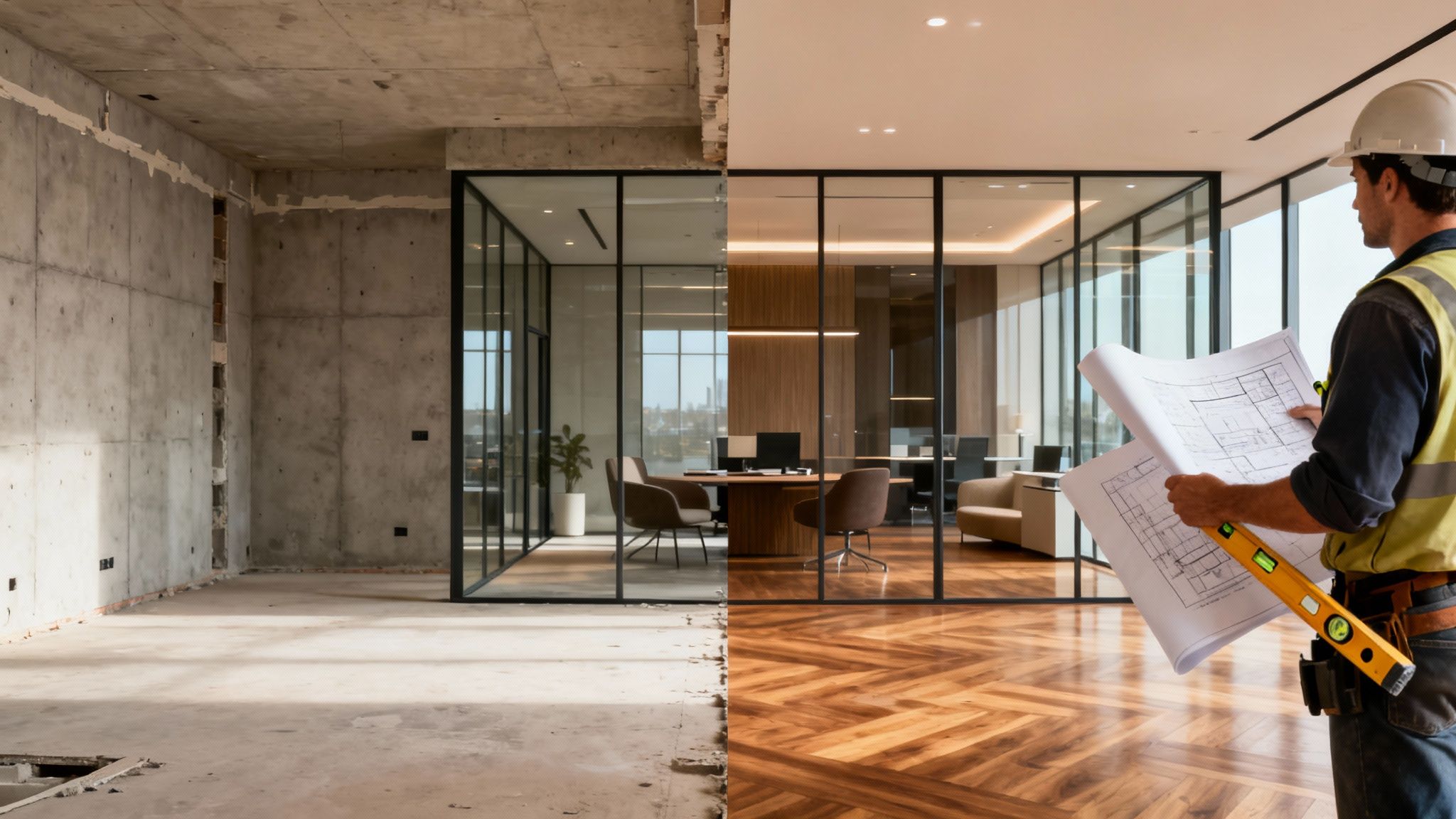
When you sign a lease for a new commercial space, you're rarely getting a turn-key setup. What you're usually getting is a blank canvas. Tenant improvements, often called TIs, are the custom changes and build-outs you make to transform that empty shell into a space that actually works for your business.
Think of it like this: you've leased a great location, but it needs walls to create offices, specific plumbing for a coffee shop, or unique lighting for a retail boutique. Those customizations are the tenant improvements. It's the critical process of fitting out the interior to match your specific operational and brand needs.
What Are Tenant Improvements
Imagine leasing a new, empty apartment. The landlord gives you the basics—walls, a floor, a ceiling. But it's on you to bring in the furniture, paint the walls, and hang art to make it your home. TIs are the commercial real estate equivalent of that. They bridge the gap between the landlord's empty building and your fully functioning business.

Successfully navigating a TI project hinges on a solid partnership between the tenant, the landlord, and a commercial contractor. Each person has a specific job to do, and understanding these roles from the get-go is the key to a smooth process.
The Key Players in a TI Project
A good TI project is like a three-legged stool—it needs all three supports to be strong and stable. Clear communication and well-defined responsibilities among the main parties are absolutely essential.
- The Tenant: This is you, the business owner. Your main job is to communicate a clear vision. What do you need the space to do? How should it reflect your brand? You'll define the layout, finishes, and specific features required for your team or customers.
- The Landlord: As the property owner, the landlord provides the space (often a basic "vanilla shell") and usually offers a Tenant Improvement Allowance to help pay for the construction. Their main goal is to secure a great, long-term tenant.
- The Contractor: This is the construction team, like us at Northpoint Construction, hired to bring the vision to life. The contractor manages the entire build-out, from pulling permits and demolition to construction and the final coat of paint.
A great analogy is getting a suit custom-tailored. The landlord provides the raw fabric (the shell space), the tenant gives the specific measurements and style requests, and the contractor is the master tailor who cuts, sews, and delivers a perfect fit.
This three-way partnership is the foundation of the entire process. The project's direction comes from the tenant's clear vision. The budget and boundaries are set by the landlord's financial contribution and approvals. And the contractor’s real-world expertise ensures everything is built correctly, on schedule, and up to local building codes in places like Orem and Provo.
Here's a quick breakdown of how these roles interact:
Key Roles and Responsibilities in Tenant Improvements
| Tenant | Defines the vision, scope, and specific needs for the space. | Create a functional, branded environment that supports business operations. |
| Landlord | Provides the base property and a financial TI allowance. | Attract and retain a high-quality, long-term tenant to maximize property value. |
| Contractor | Executes the build-out, manages trades, and ensures code compliance. | Deliver a high-quality finished space on time and within budget. |
Ultimately, a blank commercial space can't become a bustling business hub without this teamwork. When everyone understands their part, the project has a much greater chance of finishing on time, on budget, and exactly as you imagined.
Common Types of Tenant Improvement Projects
Tenant improvements aren't a one-size-fits-all package; they’re as unique as the businesses they're built for. The best way to really wrap your head around what are tenant improvements is to see them in action. What a tech startup needs is worlds away from what a bustling restaurant requires, and the right TIs bridge that gap.
These aren't just cosmetic changes. They are strategic customizations that turn a generic commercial space into a finely tuned engine for your business. Let's look at some real-world examples of how TIs take shape across different industries.
Office Space Build-Outs
Gone are the days of endless cubicle farms. Today’s offices are designed to boost collaboration, integrate technology seamlessly, and reflect a company’s unique culture. For a professional services firm or a growing tech company, a thoughtful office build-out is a direct investment in productivity and employee happiness.
Key improvements often include:
- Creating different work zones, from open-plan areas that encourage teamwork to private offices for deep focus and soundproof pods for calls.
- Building out essential support rooms like conference rooms with full AV setups, smaller huddle rooms for quick meetings, and a secure, climate-controlled server room.
- Installing heavy-duty infrastructure to power a modern team. Many TI projects involve running new wiring or installing features like commercial socket floor boxes to keep a space functional and clutter-free. For a deeper dive, check out this excellent guide to UK socket floor boxes.
- Adding employee amenities that make a difference, like a welcoming reception area, a well-stocked breakroom, and clean, modern restrooms.
Retail and Boutique Customizations
In retail, your physical space is your brand. The whole point is to create an experience that draws customers in, keeps them engaged, and makes them want to come back. A generic, empty storefront just won't cut it. Tenant improvements are what breathe life and personality into the space.
Common TIs for retail include:
- Building a magnetic storefront with large display windows, a custom entryway, and signage that pops.
- Installing strategic lighting and fixtures that make products look their best and guide customers on a natural path through the store.
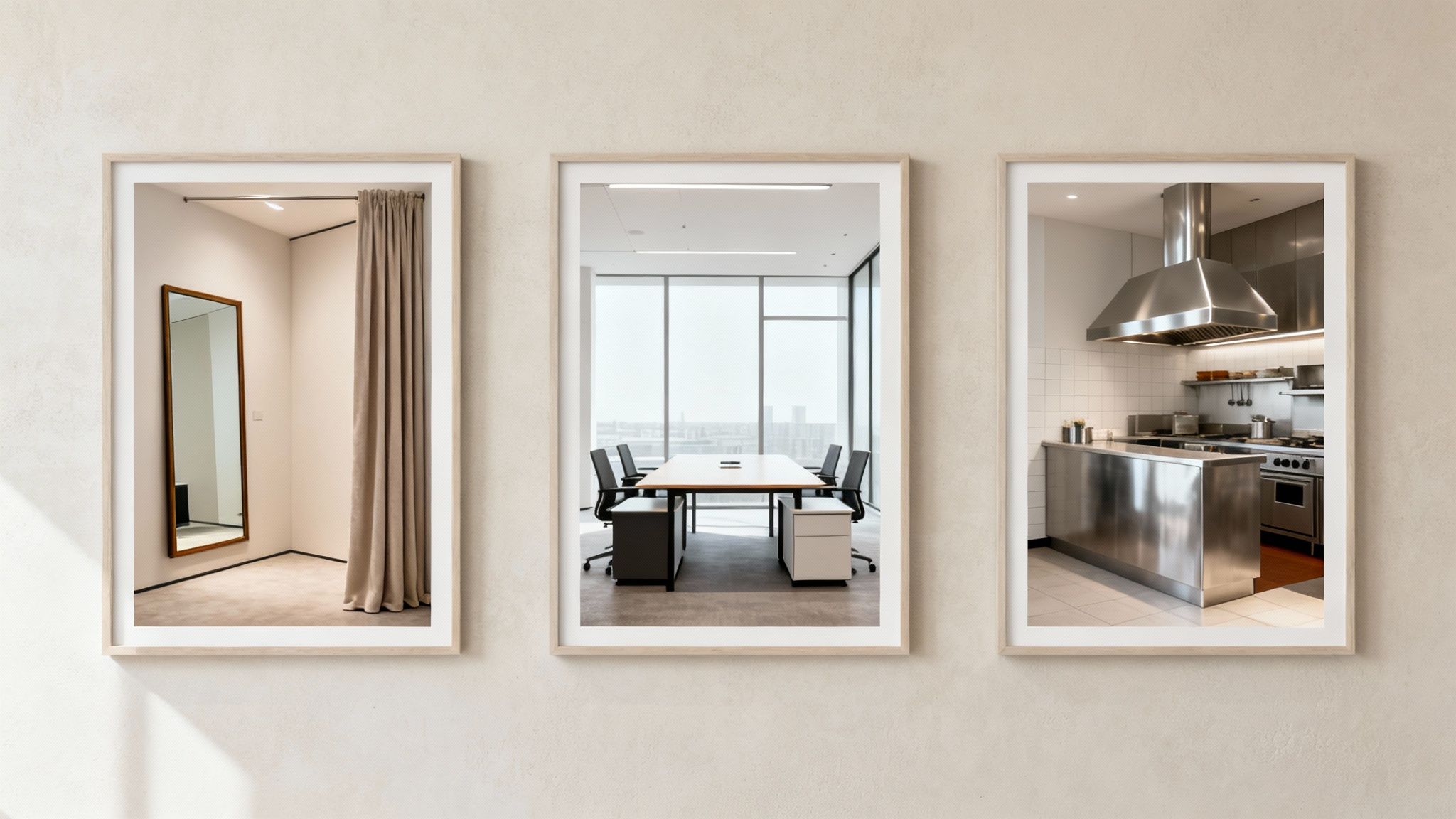
- Creating functional, branded spaces like stylish fitting rooms, a custom point-of-sale counter, and an organized stockroom.
- Upgrading floors and finishes to match the brand’s vibe, whether it's polished concrete for an industrial feel or warm hardwood for a cozy boutique.
The physical environment in retail is paramount. Well-executed tenant improvements can directly influence customer behavior, turning casual shoppers into loyal patrons by making the space itself a memorable part of the brand experience.
Restaurant and Hospitality Fit-Outs
Nowhere are tenant improvements more critical—or more complex—than in the food service industry. A restaurant has to be a master of two worlds: a warm, inviting front-of-house for diners and a high-performance, back-of-house commercial kitchen. These projects require meticulous planning from day one.
A typical restaurant fit-out involves:
- A full commercial kitchen build-out, which means installing everything from grease traps and industrial-grade ventilation hoods to specialized plumbing and dedicated gas lines.
- Designing the entire front-of-house experience, including the seating layout, host stand, bar area, and specific lighting to create the perfect ambiance.
- Meeting rigorous code compliance for health and safety, which covers everything from fire suppression systems to ensuring ADA accessibility in restrooms and entryways.
Each of these examples shows how tenant improvements are what truly activate a commercial property. They transform a cold "vanilla shell" into a purpose-built environment, empowering businesses in Orem, Provo, and beyond to operate at their best from the moment they open their doors.
Who Pays for Tenant Improvements?
So, who actually foots the bill for all this work? This is often the single most important question when you're hammering out a commercial lease. The answer almost always comes down to one key term: the Tenant Improvement Allowance, or TI Allowance.
Think of the TI Allowance as the landlord's contribution to your renovation project. It's a budget they provide to help you customize their property for your business needs. Landlords use this as a powerful negotiating tool to attract and keep great tenants for the long haul. The allowance is almost always calculated per square foot, so the amount you get is directly tied to the size of the space you’re leasing.
Breaking Down the Tenant Improvement Allowance
Let's say a landlord offers you $50 per square foot for a 5,000-square-foot office. That gives you a $250,000 TI Allowance to bring your vision to life. This isn't just an arbitrary number; it's a calculated investment on the landlord's part. By helping you build out the space, they secure a lease and make their property more valuable in the process.
This money is meant for the "hard" and "soft" costs of construction—the expenses directly tied to permanently improving the building itself.
What the TI Allowance typically covers:
- Labor and Materials: Think drywall, framing, electrical, plumbing, and new flooring.
- Professional Fees: This includes the cost of hiring architects, engineers, and designers to draw up the plans.
- Permitting Fees: The money required to get the official green light from local cities like Orem or Provo.
- Mechanical Systems: HVAC upgrades, fire suppression systems, and other essential building infrastructure.
It’s just as critical to know what the allowance doesn’t cover. These are usually your business-specific expenses that you’d take with you if you ever moved.
What the allowance generally excludes:
- Furniture, Fixtures, and Equipment (FF&E): Your desks, chairs, computers, or specialized machinery.
- Moving Costs: The expenses tied to the physical move into your new space.
- Branded Decor: Custom signage, artwork, and other decorative elements that aren't permanently fixed to the building.
- Data and Cabling: The low-voltage wiring needed for your phone and internet systems.
Here's a simple way to think about it: The landlord's TI Allowance pays to build the kitchen (walls, plumbing, electrical), but you're responsible for buying the stove, fridge, and cookware (your furniture and equipment).
How the Money Changes Hands: Common Financial Models
Not all deals are structured the same way. The financial arrangement often depends on who is running the project and how the money is paid out. There are two primary models you’ll see in the commercial world.
The most common approach is the tenant-managed build-out. Here, you take the reins. You hire your own general contractor (like us at Northpoint) and oversee the project from start to finish. The landlord then reimburses you for the approved costs, up to the TI Allowance limit. This model gives you the most control over quality, timelines, and the final result.
The other option is a turnkey build-out. In this scenario, the landlord acts as the project manager, handling the entire renovation for you based on your specifications. When it’s done, you simply "turn the key" and move in. It’s a more hands-off approach, but it means giving up control over contractor selection and the day-to-day details.
What if You Go Over Budget?
It happens all the time. Your dream build-out ends up costing more than the landlord is willing to contribute. When your project costs exceed the TI Allowance, you're on the hook for the difference.
But you don't always have to pay that chunk of cash upfront. This is where amortization comes in. You can often negotiate with the landlord to have them cover the extra costs. They'll then add that amount, plus a little interest, back into your monthly rent payments, spread out over the term of your lease. This is a great strategy for getting the exact space you need without draining your capital, turning a big one-time expense into a predictable operating cost.
Negotiating Tenant Improvements in Your Lease
The blueprint for your new space is exciting, but it’s the lease agreement that really brings those plans to life. This is where the money, responsibilities, and nitty-gritty details of your tenant improvements get locked in. Getting these terms right is probably the single most important step you can take to make sure your project goes smoothly, without any nasty surprises for you or the landlord.
Think of the lease as the official rulebook for your renovation. A well-negotiated agreement doesn't just protect both sides; it creates a clear roadmap for who pays for what, how changes are handled, and what happens when it’s time to move out. If you skim over these clauses, you could be setting yourself up for a world of financial pain and legal headaches down the road.
Secure a Fair Tenant Improvement Allowance
At the very heart of the negotiation is the TI allowance. As the tenant, your goal is simple: get enough money from the landlord to cover the most critical parts of your build-out. Don't just take the first number they throw out. The best way to argue for what you need is to come prepared with real data.
Before you even sit down to talk, bring a contractor in to walk the space and put together a preliminary budget. When you can hand the landlord a detailed cost estimate from a professional, it shows your request is based on reality, not just a wish list. It changes the whole conversation from abstract numbers to a practical discussion about what it will actually take to get the job done.
For landlords, the key is to offer an allowance that's competitive enough to land a great tenant without over-extending yourself. To protect that investment, be crystal clear about what the allowance covers. Specify that the funds are for permanent fixtures and "hard costs" to avoid any confusion about whether you're paying for the tenant's new desks or moving truck.
Handling Costs Beyond the Allowance
So, what happens if your dream space costs more than the TI allowance? It happens all the time. The answer is a handy little clause covering amortization. Instead of you having to pay for the entire overage out of your own pocket upfront, you can negotiate for the landlord to foot the bill initially.
That extra amount is then amortized—or spread out—over the term of your lease and added to your monthly rent, typically with a bit of interest.
For tenants, amortizing overages is a game-changer. It turns a massive, one-time cash hit into a predictable monthly operating expense, freeing up your capital for running the actual business.
This can be a great deal for landlords, too. By helping a tenant create a space they love, you get a happier, more stable business that’s more likely to thrive and renew their lease for years to come.
The Surrender Clause: What Happens When You Leave
One of the most easily overlooked—and potentially costly—parts of the lease is the surrender clause, also known as the restoration clause. This section spells out the exact condition you have to leave the space in when your lease is up. Do you have to tear everything out and return it to a bare "vanilla shell"?
Removing years of custom work can be shockingly expensive, sometimes running into the tens of thousands for demolition and repairs. As a tenant, you should fight hard to get this clause waived for any improvements that genuinely add value to the property—things like upgraded bathrooms, a new HVAC system, or better lighting. This also extends to exterior details; managing things like sign permit requirements is part of the negotiation, including who is responsible for removing signage and repairing the building's facade when you leave.
Landlords, be specific here. If a tenant is putting in something highly specialized that the next person can't use (think a bank vault or a commercial-grade pizza oven), it's fair to require them to remove it. But for standard office or retail improvements, leaving them in place often makes the space far more appealing to the next tenant, saving everyone a lot of time and money. Defining this clearly from the start prevents a huge fight at the end of the term.
The True ROI of Strategic Tenant Improvements
Smart tenant improvements aren't just another line item on a spreadsheet—they're a powerful investment that delivers real, measurable returns for everyone at the table. For a landlord, a strategic TI package is often the best tool for attracting high-quality, long-term tenants, which is the surest way to minimize costly vacancy periods. It also justifies higher rental rates, boosting the property's overall market value and creating a more stable, valuable asset.
For tenants, the return is just as direct, but it shows up in different ways. A well-designed space is about so much more than aesthetics; it directly impacts the bottom line. It can boost employee productivity, elevate the customer experience, and powerfully reinforce your brand identity every single day. These aren't just expenses; they're foundational investments in your business's future.
Boosting Property Value for Landlords
In a competitive market like Utah County, landlords who invest in modern, desirable improvements gain a serious edge. A thoughtfully updated space is far easier to lease, and it often commands a premium. Offering an attractive TI allowance can be the single deciding factor that convinces a top-tier tenant to sign a long-term lease, securing predictable income and plugging the financial drain of an empty unit.
On top of that, these improvements add tangible value to the property itself. Upgraded electrical, modern HVAC systems, and improved accessibility make the building more appealing to all future tenants and can directly increase its appraisal value. It’s a forward-thinking strategy that pays dividends for years.
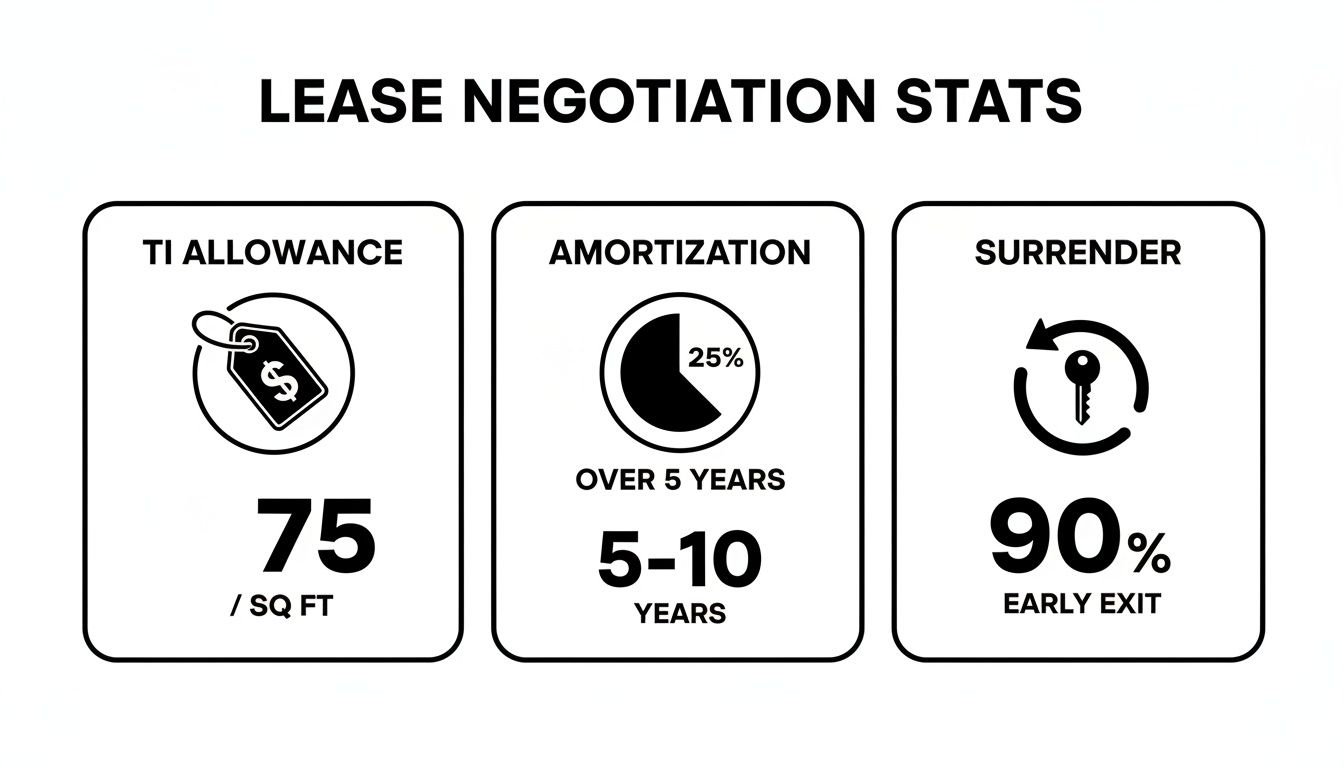
This breakdown shows exactly why understanding the lease negotiation is so critical for maximizing the financial upside of the project for both sides.
Driving Business Success for Tenants
From the tenant's perspective, the ROI of a custom build-out is tied directly to performance. An optimized office layout can improve workflow, reduce wasted time, and foster a more collaborative and productive work environment. For a retail business or restaurant, the right atmosphere can directly increase foot traffic and sales. It's that simple.
The link between a well-maintained, improved space and tenant happiness is undeniable. Research shows a strong 70% correlation between how well a property is managed—which includes being responsive to maintenance and improvement needs—and overall tenant satisfaction. This matters because a staggering 59% of occupiers point to quality upgrades as a primary reason to move into a better space.
To see how these factors play out in real-world numbers, you can explore our detailed guide on tenant improvement costs per square foot.
Strategic tenant improvements transform a physical space into a competitive advantage. For landlords, it's about maximizing asset value and minimizing risk. For tenants, it's about creating a purpose-built environment that fuels growth and success.
Ultimately, investing in your space is about smart business planning. By understanding the measurable outcomes, both landlords and tenants can approach the process not as a cost center, but as a vital investment with a clear and compelling return. This is especially true for property owners in Utah's commercial buildings, where thoughtful upgrades are a proven strategy for securing higher occupancy rates and better rental premiums.
Choosing the Right Contractor for Your TI Project
You’ve signed the lease, nailed down the allowance, and have a crystal-clear vision for your new space. Now comes the moment of truth: picking the right construction partner. This isn’t just about hiring someone to hammer nails and put up drywall; it’s about finding an expert guide who will turn your vision into a physical, functional reality.
This decision is arguably the most critical one you'll make in the entire process.

Your contractor is your expert on the ground. They’re the one who translates architectural drawings into a working business, all while juggling budgets, timelines, and the labyrinth of local building codes. The right partner minimizes headaches and maximizes the value of every single dollar in your TI allowance.
What to Look For in a TI Contractor
Let's be clear: not all construction companies are cut out for the unique challenges of tenant improvements. This kind of work is a specialized craft. It demands precision, constant communication, and the skill to operate effectively within an existing building shell. You don't want a generalist; you need a specialist.
Here’s what separates the pros from the pack:
- Deep Local Knowledge: Your contractor absolutely must know the ins and outs of the local permit office. Whether you're in Provo, Orem, or Lehi, they need firsthand experience with the specific codes and inspectors.
- Transparent Communication: You should never have to wonder what's going on. A great TI contractor provides clear, consistent updates on progress, budget tracking, and any curveballs that come up along the way.
- A Proven Process: Ask them to walk you through their step-by-step approach. A seasoned pro will have a well-defined system for everything, from the first design meeting to the final punch list.
- Strong Vendor Relationships: A well-connected contractor has a trusted network of subcontractors and suppliers. This is huge—it means better quality work, reliable scheduling, and more competitive pricing for you.
Think of your contractor as the conductor of an orchestra. They make sure the electricians, plumbers, painters, and flooring teams all play their parts perfectly and in sync to deliver a flawless result, right on schedule and within budget.
Our Approach to Tenant Improvements in Utah County
At Northpoint Construction, we've built our reputation on being a trusted, transparent partner. We’ve refined our process over many years to give our clients total peace of mind, knowing their project is in good hands. We live and breathe TI projects across Utah County, and our goal is simple: bring your vision to life without the usual construction chaos.
Here’s how we ensure a smooth journey from start to finish:
Initial Collaboration and Budgeting: It all starts with listening. We sit down with you and your designer to fully grasp your goals. From there, we build an accurate, line-by-line budget that makes the most of your TI allowance.
Permitting and Compliance: We take on the headache of securing all the necessary permits from local municipalities. This ensures your project is 100% compliant with all regional building codes from day one.
Meticulous Construction Management: Our team is on-site, overseeing every detail of the build-out. We coordinate all the skilled tradespeople, holding everyone to the highest standards of craftsmanship.
Final Walkthrough and Handover: The job isn't done until you say it’s done. We conduct a detailed final walkthrough with you to address any and all last-minute details before proudly handing over the keys to your new space.
Choosing a local contractor with deep TI expertise isn't just a smart move; it's the surest way to guarantee your project's success. To see what we mean, take a look at our portfolio of commercial construction projects.
Answering Your Top Questions About Tenant Improvements
Once landlords and tenants start talking about renovations, a lot of specific questions tend to surface. Let's tackle some of the most common ones to give you a clear and simple reference point.
What's The Difference Between Tenant Improvements and Building Improvements?
This is a really important distinction, and it all comes down to who benefits.
Tenant improvements (TIs) are changes made specifically for a new tenant to get the space ready for their unique business. Think of things like building out private offices, installing special lighting for a retail display, or adding a commercial-grade kitchen for a restaurant.
On the other hand, building improvements are upgrades the landlord makes to the property as a whole, benefiting every tenant. This could be anything from replacing an old roof to modernizing the lobby's HVAC system or repaving the parking lot.
The easiest way to remember it? If it's just for you, it's a TI. If it's for everyone in the building, it's a building improvement.
Are Tenant Improvements Considered Assets?
Absolutely. From an accounting perspective, tenant improvements are valuable assets for the tenant's company. The money you spend on a build-out is capitalized on your balance sheet as a fixed asset, usually filed under the term "leasehold improvements."
These improvements are then depreciated (written off as an expense over time) for the duration of your lease. This is a key accounting practice because it acknowledges the lasting value these changes bring to how your business runs.
Key Takeaway: That custom-built reception desk or the new conference room you installed? Your business essentially "owns" the value of those upgrades for as long as you lease the space, and your financial reports should reflect that.
How Long Do Tenant Improvements Usually Take?
There’s no single answer here—the timeline for a TI project really depends on the scope of work. A simple cosmetic update with fresh paint and new carpet might be wrapped up in just a few weeks.
But for a major build-out, like creating a new restaurant from a shell space or customizing multiple office floors, you should plan for anywhere from three to six months, and sometimes even longer.
Several factors will dictate your project's schedule:
- Permitting: Waiting for the green light from local city officials can add weeks or even months to the timeline before a single hammer is swung.
- Design Complexity: An open-plan office is much quicker to build than one with intricate, custom-designed millwork and complex electrical needs.
- Material Availability: Supply chain hold-ups for specific flooring, fixtures, or other materials can cause frustrating delays.
A detailed initial walkthrough is the best way to spot potential roadblocks early. Our guide on creating a commercial building inspection checklist can help you understand what to look for. Being proactive from day one is the key to keeping your project on track.
Ready to transform a commercial space into the perfect fit for your business? The team at Northpoint Construction brings the local know-how and a proven process to manage your tenant improvement project seamlessly from start to finish.
Contact us today to schedule a consultation and get a clear, transparent quote for your project.