
What is a general contractor? Essential Guide to Your Construction Project
So, what exactly is a general contractor?
Think of a general contractor (GC) as the director of a movie. They're the one person responsible for taking the script—your architectural plans—and turning it into a finished film. They manage the entire cast and crew, from the star actors (your specialized trades) to the set designers and lighting technicians, making sure everyone works together to bring the vision to life.
In short, a GC is your single point of command for the entire construction or remodeling project.
Your Project's Single Point of Command
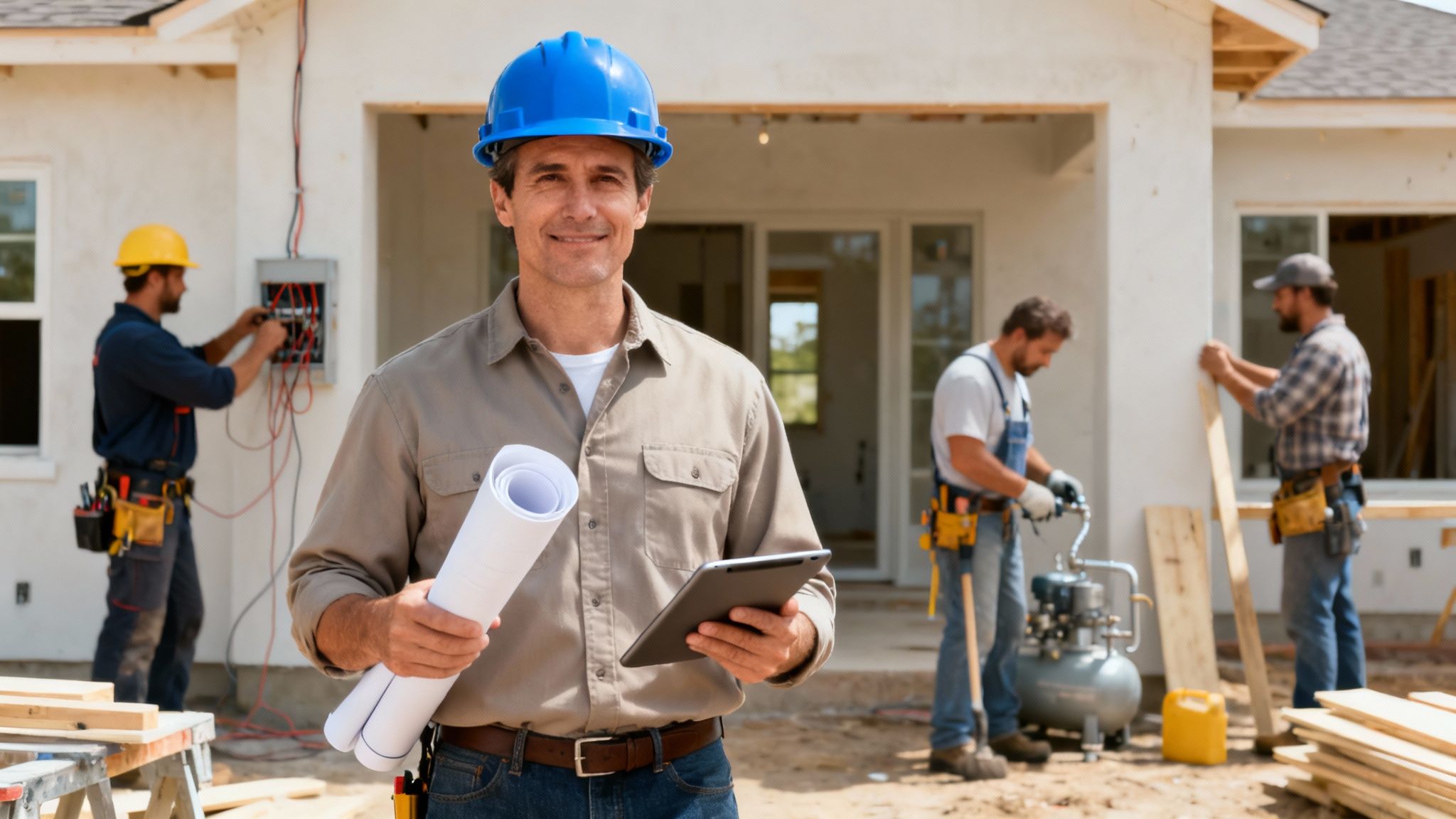
When you decide to finish your basement, remodel the kitchen, or build a custom home from the ground up, you’re not just taking on a single task. You’re actually jumping into a complex web of interconnected jobs, each with its own timeline and dependencies. This is where a general contractor becomes absolutely essential.
Instead of you trying to find, vet, and schedule every single trade professional yourself, the GC handles everything.
For a homeowner, trying to personally manage the 20–30 different subcontractor firms and hundreds of individual tasks on a large project is more than a full-time job—it’s a logistical nightmare. The general contractor is the pro who steps in to manage this complexity, making sure every last detail aligns with the project plan. The construction industry is a massive driver of the economy, and you can see just how big it is by exploring the detailed reports over at IBISWorld.com.
What Does a General Contractor Actually Do?
On the ground, a GC's job is all about execution. They are responsible for the day-to-day oversight of the construction site, managing all the different vendors and trades, and, most importantly, keeping you in the loop with clear communication.
Here's a breakdown of what that looks like in practice:
- Hiring and Managing Subcontractors: They have a network of trusted experts for all the specialized work, like plumbing, electrical, and HVAC. A good GC brings their A-team to your project.
- Securing Permits and Inspections: They’re the ones who navigate the maze of local Orem and Utah County building codes to make sure every part of the project is legal, safe, and up to standard.
- Creating and Managing the Schedule: They develop a realistic project timeline and then orchestrate all the moving parts to prevent costly delays.
- Overseeing Quality and Safety: At the end of the day, the GC is responsible for the quality of the finished product and for maintaining a safe, secure job site for everyone involved.
To make it even clearer, here’s a quick overview of a general contractor's primary duties.
The General Contractor's Core Responsibilities at a Glance
| Project Management | Overseeing all site operations, scheduling trades, and solving the inevitable problems that pop up. |
| Budget & Cost Control | Tracking every dollar, managing material orders, and ensuring the project stays within budget. |
| Subcontractor Coordination | Finding, vetting, hiring, and managing all the specialized trade professionals needed for the job. |
| Permitting & Compliance | Securing all necessary permits and making sure the work passes every required inspection. |
| Client Communication | Providing you with regular updates and serving as your single, reliable point of contact. |
Essentially, the GC takes on all the stress and logistical heavy lifting so you don't have to. They are the professional hub that keeps your project moving forward smoothly, from the first shovel in the ground to the final coat of paint.
Understanding Contractors vs. Subcontractors
To really get what a general contractor does, it helps to see how they’re different from a subcontractor. Think of it like making a movie. The general contractor (GC) is the film’s director—they’re the one person overseeing the big picture, managing the whole production from start to finish to make sure it matches the script.
Subcontractors? They're the specialists on the crew. The director hires the cinematographer for their camera skills, the sound engineer for their audio expertise, and the set designer for their artistic vision. Each one is a master of their craft, brought in to do a specific job at the right time.
The GC Manages The Specialists
That’s exactly how it works on a construction site. The general contractor is the one who finds, hires, and schedules all the subcontractors—the master tradespeople who do the actual hands-on work. This clear chain of command is what makes or breaks a project.
A subcontractor is an independent expert in one specific trade. We’re talking about pros like:
- Plumbers: The folks who install all the pipes, sinks, and toilets.
- Electricians: They run the wiring, install outlets, and set up the breaker box.
- HVAC Techs: They’re in charge of the heating, ventilation, and air conditioning systems.
- Painters: They prep all the surfaces and apply those perfect final coats.
- Framers: The crew that builds the home's skeleton—the walls and roof structure.
The GC’s job is to orchestrate all of them. They make sure the plumber gets their work done before the drywall crew shows up, and that the electrician is finished before it's time for the final inspection. This kind of coordination is what keeps the project from turning into a chaotic, expensive mess.
A general contractor's real value is their ability to juggle dozens of moving parts and make it look seamless. They take on the risk and the headache of coordinating all these separate companies so everyone is working toward the same goal: finishing your project right.
Who Holds The Responsibility?
This structure makes it crystal clear who’s accountable for what. A subcontractor is responsible for their specific part of the job—making sure the faucets don’t leak, for instance. But the general contractor is ultimately responsible for the success of the entire project.
So, if the painter gets held up on another job, it's the GC's problem to solve and adjust the schedule accordingly, not yours. You have one person to talk to for all your questions, concerns, and ideas. This keeps communication simple and ensures nothing gets lost in translation.
For a deeper dive, you can explore the key differences between a general contractor vs subcontractor to understand how this relationship protects you. At the end of the day, it's about having one person who is on the hook for delivering your project on time, on budget, and to the standard you expect.
How to Vet a General Contractor in Utah
Hiring a general contractor in Utah goes a lot deeper than just liking their portfolio or getting a good vibe. You’re not just hiring a builder; you’re entrusting them with your home and your money. That’s why verifying their credentials isn’t just a good idea—it’s the most important step you can take to protect your investment.
The very first thing you need to check is their license. Here in Utah, any contractor worth their salt will be licensed with the Utah Division of Occupational and Professional Licensing (DOPL). Think of this license as their official seal of approval from the state, proving they have the right experience, a stable financial background, and a clean professional record. Hiring an unlicensed contractor is rolling the dice, leaving you with absolutely no protection if things head south.
Confirming Insurance Is Your Financial Shield
Once you've confirmed their license, the next non-negotiable is insurance. A professional contractor will carry two specific types of coverage, and you need to see proof of both before you even think about signing a contract.
- General Liability Insurance: This is what protects your property from accidental damage. If a plumber drops a heavy tool and cracks your brand new tile, or a drywaller accidentally knocks a hole in the wrong wall, this insurance pays for the fix—not you.
- Worker's Compensation: This one is huge. It covers medical bills and lost wages for any crew member who gets injured on your property. Without it, you could be held personally responsible for job site accidents, turning your dream remodel into a legal and financial mess.
Think of a contractor's insurance as a safety net for your project. It’s the barrier that stands between a simple mistake and a catastrophic financial loss, ensuring you’re never left paying for someone else’s accident.
A qualified GC creates a clear chain of command, making sure the entire project runs smoothly and efficiently from start to finish.

As you can see, the GC is the central hub, directing all the subcontractors. This setup is what simplifies communication and keeps everyone accountable.
Understanding Common Contract Types
Finally, let's talk about the contract—it’s the official rulebook for your project. Understanding the different payment structures helps you set clear expectations and avoid surprises down the road. Most projects fall into one of three common types:
Fixed Price Contract: You and the contractor agree on a single, all-in price for the entire project before work begins. This is great for budget certainty, but it offers less flexibility if you decide to make changes along the way.
Cost Plus Contract: This is a more transparent model where you pay for the actual costs of materials and labor, plus an agreed-upon percentage or fee that covers the contractor’s overhead and profit. It’s perfect for projects where the scope might evolve.
Time and Materials (T&M) Contract: You pay a set hourly rate for all labor, plus the direct cost of all materials used. This structure works best for smaller jobs or repairs where it’s tough to estimate the full scope upfront.
Taking the time to do your homework is crucial. These fundamentals are your first and best line of defense when finding the right partner. For an even deeper dive, check out our guide on how to choose a general contractor.
Breaking Down General Contractor Costs
Let's talk about how a general contractor gets paid. It’s not some mysterious fee they tack on at the end; it's a calculated cost for the immense value they bring to your project. Think of it as the price for having a professional project manager, risk mitigator, and logistics expert rolled into one.
Most general contractors charge a fee that's somewhere between 10% to 20% of the total project cost. It's important to know this isn't pure profit. That percentage covers their business overhead—things like liability insurance, project management software, and the countless hours spent coordinating every single detail. From scheduling subcontractors to ordering materials and lining up inspections, it all falls under their umbrella.
What Factors Influence Your Total Cost
Since the contractor's fee is a percentage, the real question is: what drives the total project cost? A good GC is a master at managing these variables to keep your budget in check.
Here are the big three:
- Scope and Complexity: A simple bathroom refresh is a world away from a full home addition that requires structural changes, new plumbing lines, and a stack of permits. The bigger and more complex the job, the higher the cost.
- Material Quality: Your choices here make a huge difference. Opting for standard, builder-grade fixtures will keep costs down, while high-end, custom materials will naturally push the budget upward.
- Labor Rates: Skilled labor isn't cheap, and rates vary by trade and current demand. A GC's network is their superpower, allowing them to bring in reliable, skilled professionals at fair market rates.
The Hidden Value in a Contractor's Fee
The construction world is constantly navigating challenges like labor shortages and unpredictable material costs. One year, we might see construction wages jump unexpectedly; the next, new tariffs can drive up prices on essential goods. This is where a skilled GC truly earns their keep. They act as your project's risk manager, locking in labor and finding smart, cost-effective alternatives for materials when needed.
Hiring a GC is an investment in peace of mind. Their fee often pays for itself by preventing costly mistakes, securing better pricing through their established trade relationships, and ensuring the project doesn’t derail when problems pop up.
For larger projects like building a new structure from the ground up, understanding every line item is absolutely critical. Resources like A Complete Guide to Building Duplexes Cost can provide a deeper look into budgeting for more complex builds.
Ultimately, a GC protects your investment by keeping the project on track and on budget. They transform what could be a chaotic, stressful process into a streamlined success. To get a better feel for how these costs break down for specific projects, take a look at our home addition cost estimator.
When You Absolutely Need a General Contractor
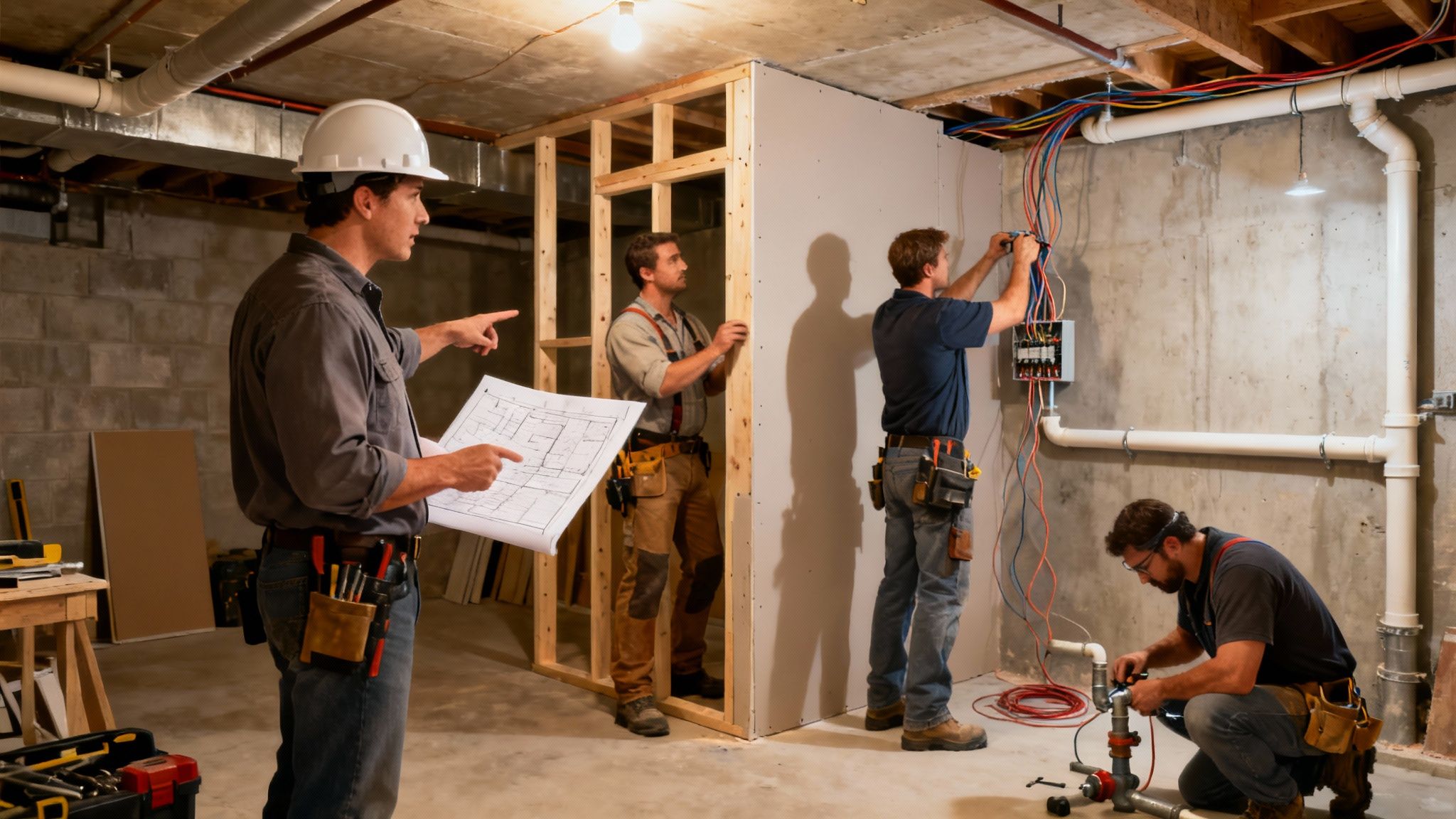
Look, I get it. The DIY spirit is strong, and sometimes you just want to handle things yourself. But some jobs are simply too big and complex to tackle without a pro at the helm. Knowing when to call in a general contractor is crucial.
Think of it this way: hanging a new picture frame is one thing. Building the wall it hangs on, complete with wiring, insulation, and drywall? That's a whole different ballgame. A project that involves multiple specialized trades, requires permits, and has a very specific sequence of events is exactly where a GC becomes essential.
Trying to juggle all those moving parts yourself isn’t just stressful—it’s a recipe for costly mistakes. This is when you bring in a general contractor to orchestrate the entire symphony, making sure every note is hit correctly and in perfect time.
Large-Scale Remodels and Additions
Thinking about a major home overhaul, like completely gutting your kitchen or adding on a whole new master suite? This is classic GC territory. These projects are an intricate dance of demolition, framing, plumbing, electrical, and finishing touches.
A general contractor is the one who makes sure the electrician doesn't show up before the new walls are even framed. They ensure the plumber has the right drains in place before the floor goes in. One small hiccup in that sequence can set you back thousands of dollars and weeks of time. The GC’s job is to prevent that from ever happening.
Finishing a Basement or Building a Custom Home
Finishing a basement sounds simple enough on the surface, but it's another perfect example. To do it right, you need a precise order of operations: framers, electricians, plumbers, HVAC techs, drywallers, and painters. Each trade's work often needs to pass a city inspection before the next one can even start. It’s a web of dependencies that only an experienced hand can navigate smoothly.
And building a custom home from the ground up? That’s the ultimate test of project management. You’re talking about dozens of different trades, hundreds of micro-decisions, and constant communication between architects, engineers, and suppliers. The general contractor is the central hub that keeps it all from spiraling into chaos.
Here's a solid rule of thumb: If your project involves changing your home's structure, moving plumbing or electrical lines, or requires more than two different trades, a general contractor isn't a luxury—it's a necessity to protect your investment.
The sheer scale of the construction industry highlights why this role is so critical. In August 2025, for instance, total construction spending was estimated at an annual rate of about $2.17 trillion. This massive market, especially in nonresidential building, absolutely depends on general contractors to pull together complex plans and multiple teams into a successful final product. You can see the full scope of these numbers in the official U.S. Census data on construction spending.
Finding the Right Contractor for Your Utah Project
Choosing the right general contractor is easily the most critical decision you'll make for the success of your project. This isn't just about finding someone who can swing a hammer; it’s about finding a true partner who will safeguard your investment and turn your vision into a reality. The secret is knowing what to ask before you sign anything.
A truly great contractor does far more than just build. They communicate clearly, manage expectations, and act as the central hub for the entire project. Their knack for juggling complex schedules, navigating the permit process, and putting out the inevitable fires is what separates a smooth, exciting build from a nightmare. To keep all those moving parts organized, many pros rely on a specialized CRM for the construction industry to make sure no detail falls through the cracks.
Critical Questions to Ask Every Candidate
Before you commit, you need to dig into a contractor's background, their process, and how they communicate. Think of it as a job interview, because that's exactly what it is.
Here are the non-negotiable questions you should ask:
- Experience with Similar Projects: Have you actually done projects like mine right here in the Orem area? Can I see your portfolio?
- Communication Plan: Who is my go-to person on a daily basis? How often will I get updates, and what will they look like?
- Problem Resolution: Things go wrong. When there's a material delay or a subcontractor issue, how do you handle it?
- Subcontractor Relationships: Do you have a regular team of subs you trust? Are they all properly licensed and insured?
The way a contractor answers these questions tells you everything. Confidence and transparency are what you're looking for. If you get vague or defensive answers, that's a huge red flag. Trust your gut.
Once the interview is done, the real work begins: checking references. Don't skip this step. Talk to at least two or three of their past clients and get the real story. Ask them about the quality of the final product, if the project stayed on budget, and the million-dollar question: would they hire them again? This homework is your best defense against a bad hire.
Got Questions? We've Got Answers.
Jumping into a construction project can feel like learning a new language. You're bound to have questions, especially when it comes to who does what, how to handle bumps in the road, and what to expect for your timeline. Let's tackle some of the most common things homeowners wonder about before they start their remodel.
Can I Just Be My Own General Contractor?
The short answer is yes, you can. The longer, more realistic answer is that it's a massive undertaking with some serious risks.
While playing GC yourself might seem like a clever way to cut costs, you're essentially signing up for a full-time job. This isn't just a weekend gig; it demands an expert's grasp of Orem and Utah building codes, a deep roster of trusted subcontractors, and the project management skills to keep everything on track.
For any job that brings together different trades—think of a basement finish with its framing, plumbing, and electrical work—you're the one on the hook for:
- Juggling the Schedule: Making sure the framers are done before the electricians show up, and the plumbers have access when they need it. It’s a complex dance.
- Mastering the Paperwork: You'll be the one pulling permits and making sure every phase of the project gets the green light from city inspectors.
- Assuming All the Risk: If someone gets hurt on your property, or if faulty work causes damage, the financial and legal liability falls squarely on your shoulders.
Honestly, a single misstep can spiral into expensive fixes and frustrating delays. For most people, bringing in a pro from the start is the smarter, safer, and, often, more affordable choice in the long run.
What if We Don't See Eye to Eye on Something?
It happens. Even on the smoothest projects, disagreements can pop up. The secret isn't avoiding conflict altogether—it's having a solid plan to work through it.
Your best defense is a rock-solid contract. Before a single hammer is swung, make sure you have a detailed agreement that spells out the scope of work, a clear payment schedule, and a specific process for making changes. This document is your project's constitution.
Beyond that, constant and clear communication is key. Keep a written record of every decision, conversation, and change order. If a dispute still can't be resolved, a good contract will have a clause for that, too—often suggesting mediation to find a solution before things escalate to expensive legal battles. A seasoned contractor will always have these safeguards built right into their process.
So, How Long Is This Actually Going to Take?
This is the million-dollar question, and unfortunately, there's no one-size-fits-all answer. The timeline for any project is completely tied to its size, the complexity of the work, how long it takes to get permits approved, and even the lead time for materials like custom windows or cabinets.
A simple bathroom refresh might be wrapped up in a few weeks. A full-blown custom home or a major addition? You could be looking at several months from start to finish.
This is where a general contractor really earns their keep. A huge part of their job is to build and protect the project schedule. They know from experience where the potential logjams are—like that backordered tile you fell in love with—and they coordinate all the moving parts to keep downtime to an absolute minimum. That expert oversight is what turns a project that could drag on forever into one that gets done right, and on time.
Ready to start your project with a team that puts clear communication and expert management first? Northpoint Construction has the experience to guide your basement finish, home remodel, or custom build from concept to completion. Let's build your vision together.