
What Is Finished Basement: what is finished basement and How It Adds Value
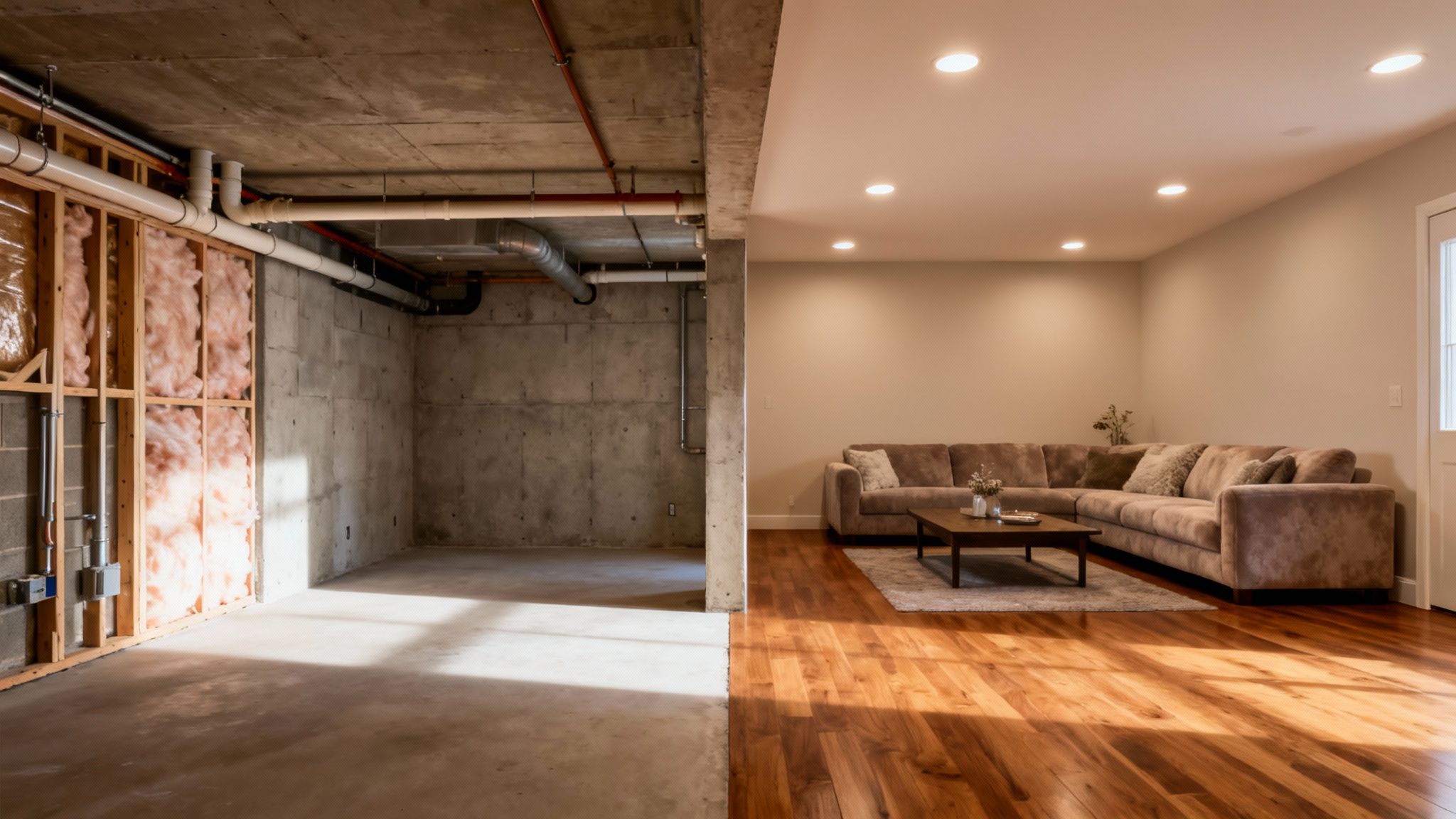
So, what exactly is a finished basement? It's not just a cellar with some carpet thrown down. A finished basement is the complete transformation of that raw, concrete space under your house into a fully livable, functional part of your home.
We’re talking about creating genuine habitable square footage—a place with properly insulated walls, real flooring, integrated lighting, and its own climate control. It's less about covering things up and more about thoughtfully extending your home's living area to a whole new level.
From Concrete Box to Comfortable Living
Think of an unfinished basement as a blank canvas. It has concrete floors, exposed pipes, and bare foundation walls. It’s useful for storing holiday decorations, but it’s not really home.
A finished basement, on the other hand, is the finished work of art. It’s a space that feels just as intentional and comfortable as your upstairs living room, bedroom, or office. It’s an investment that doesn't just add square footage; it dramatically improves your home's usability and overall value. For a deeper dive into the market trends, you can check out reports from sources like HTF Market Intelligence.
A truly finished basement feels intentional. It's not just a covered-up utility area; it's a purposefully designed space that seamlessly connects with the rest of your home's style and function.
The core elements that truly define a finished basement include:
- Insulated and Framed Walls: We frame out the foundation walls and install drywall for a clean, polished look that you can paint and decorate.
- Proper Flooring: Bare concrete is replaced with comfortable and durable options like carpet, luxury vinyl plank (LVP), or tile.
- Finished Ceilings: The maze of ductwork, wiring, and pipes is concealed, often with a drywall or drop ceiling that incorporates recessed lighting for a modern feel.
- Climate Control: Your home's HVAC system is properly extended with new vents to efficiently heat and cool the basement, keeping it comfortable year-round.
To give you a clearer picture, here’s a quick rundown of how the two stack up.
Finished vs Unfinished Basement At a Glance
| Walls | Exposed concrete or foundation blocks | Insulated, framed, and drywalled |
| Floors | Bare concrete, often uneven or damp | Carpet, LVP, tile, or other finished flooring |
| Ceiling | Exposed joists, pipes, and ductwork | Drywalled or drop ceiling with integrated lighting |
| Climate | Unregulated, often cold and damp | Heated and cooled by the home's HVAC system |
| Electrical | Minimal outlets, exposed wiring | Fully wired with outlets, switches, and light fixtures |
| Function | Primarily storage or utility space | Livable space (bedrooms, family rooms, etc.) |
Seeing the differences side-by-side makes it obvious how much a basement remodel can add to your home.
Understanding these distinctions is the first step in planning your project. For a more comprehensive look, check out our guide on the distinctions between finished vs unfinished basements.
The Anatomy of a Finished Basement
Think of a finished basement as more than just a covered-up concrete box. It’s a true extension of your home, built from the ground up (or, in this case, from the foundation out) with specific layers and systems that create a safe, warm, and inviting space. Getting this right is what separates a professional, long-lasting renovation from a quick cosmetic fix.
The first, and maybe most important, step is creating a buffer between your new living space and the cold, hard foundation walls. We frame new walls and add high-quality insulation. This isn't just for hanging drywall; it's crucial for controlling temperature and preventing the damp, chilly feeling that plagues so many basements.
Walls, Floors, and Ceilings: The Visible Transformation
Once the hidden framework is in, the fun really starts. The surfaces you see and interact with every day are what truly turn a basement into a livable room.
- Finished Walls: After framing and insulation, we hang, tape, and paint drywall. This gives you the smooth, clean finish you'd expect in any upstairs room, ready for your personal touch.
- Comfortable Flooring: That cold concrete slab gets covered. We start with a proper underlayment to block moisture and add cushion, then install your chosen flooring—maybe cozy carpet for a family room or durable luxury vinyl plank (LVP), which is a fantastic, water-resistant option for basements.
- Completed Ceilings: Say goodbye to exposed joists and ductwork. A seamless drywall ceiling is a popular choice, but a drop ceiling can be a smart move, too, offering easy access to pipes and wiring for future maintenance. Both perfectly accommodate modern lighting like recessed cans.
This flowchart gives you a quick visual breakdown of how these core components come together to create a true living area.
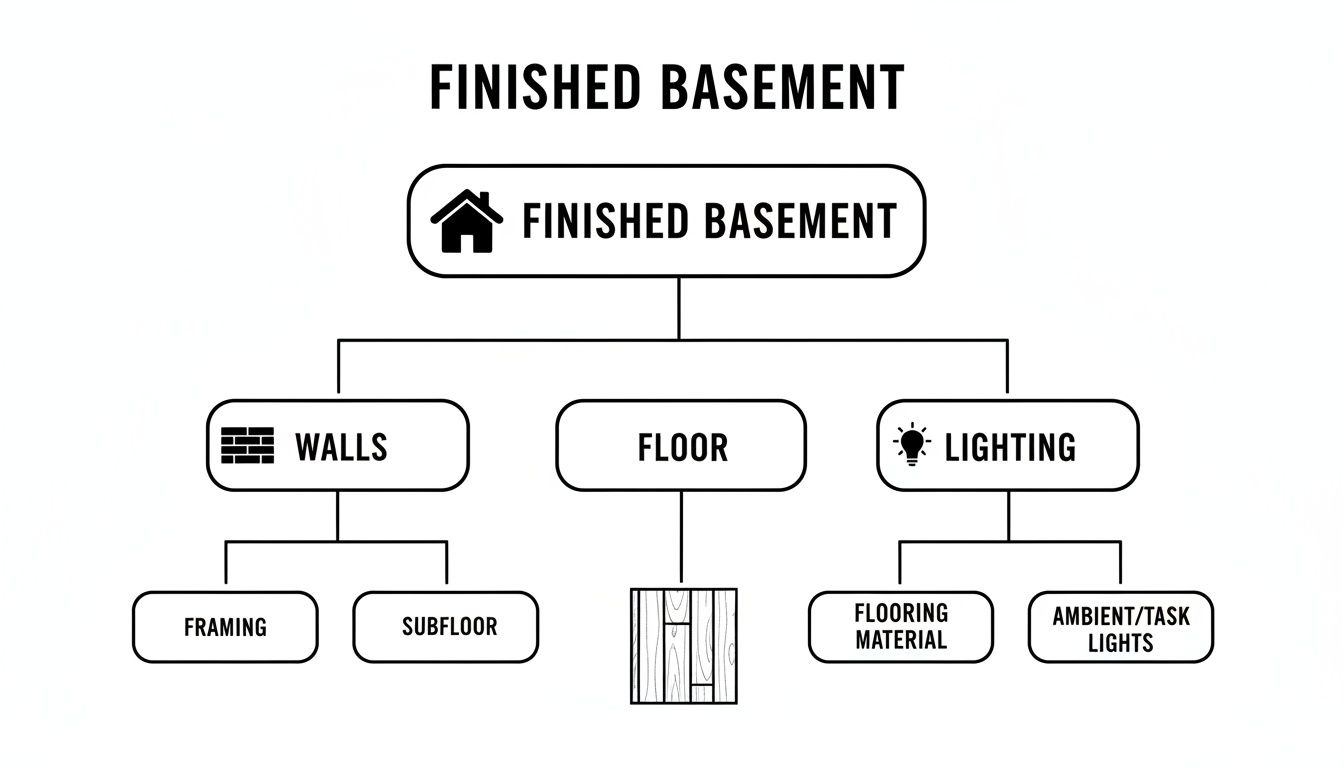
As you can see, it’s a complete system where the walls, floors, and ceiling work together to form the foundation of your new space.
Essential Systems and Safety Measures
What happens behind the drywall is just as important as what you see on the surface. To be a truly finished and code-compliant space, a basement needs its own integrated systems.
This is where electricians run wiring for all your outlets, light switches, and fixtures. If you're adding a bathroom or kitchenette, our plumbers will tap into existing lines to install the necessary water supply and drains.
Most importantly, we address safety. If any part of your basement will be used as a bedroom, an egress window is a non-negotiable requirement. It provides a vital escape route in an emergency while also bringing in a surprising amount of natural light.
What Can You Do With a Finished Basement?
Think of a finished basement as a blank canvas sitting right under your feet. It's not just about adding square footage; it's about creating a space that solves real problems and genuinely improves how you live in your home. This is your chance to turn a dark, forgotten area into what might just become the most-used room in the house.
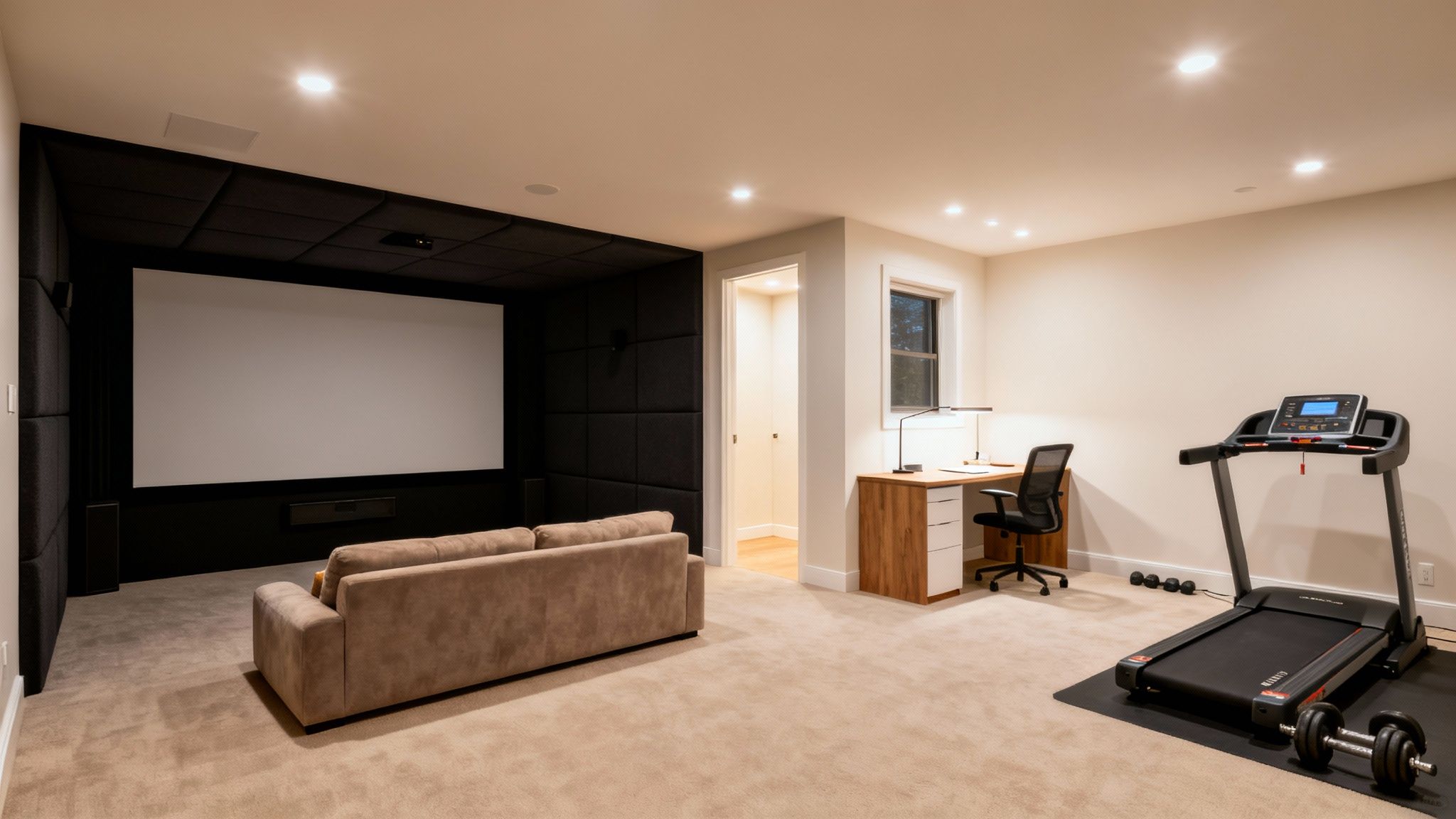
What does your family need? A dedicated home theater for movie nights, complete with real soundproofing and comfy chairs, is a popular choice. If you work from home, imagine having a quiet, dedicated office that lets you truly separate your job from your personal life. The possibilities are wide open.
From Practical Needs to Dream Spaces
The real magic of a finished basement is just how adaptable it can be. You can design it for one specific purpose or create a flexible, multi-use area that grows and changes right along with your family.
Here are a few of the transformations we see most often:
- A Personal Gym: Stop paying for a gym membership and build a convenient workout space with all your favorite equipment, just a few steps away.
- A Private Guest Suite: Give visiting friends and family a comfortable, private space with their own bathroom. It makes their stay so much better.
- A Dedicated Playroom: Finally, a place for all the toys! A basement playroom keeps the clutter contained and out of your main living area.
- The Ultimate Entertainment Zone: Add a wet bar, a pool table, and some great seating, and you've got the perfect spot to host parties and gatherings.
Every one of these ideas directly solves a common homeowner headache. Finishing a basement isn't just a project; it's an investment in your home's day-to-day livability and your family's enjoyment.
At the end of the day, finishing your basement adds serious value by making your home work better for you. Of course, knowing the potential financial benefits helps, too. You can dive deeper into the numbers by reading our guide on the return on investment for home remodeling projects.
Budgeting Your Utah Basement Remodel
Let's talk about the number one question on every homeowner's mind: what’s this going to cost? Getting a handle on the budget is the most critical first step. It helps you ground your dreams in reality and decide which features are "must-haves" versus "nice-to-haves."
The final price tag on a basement finish hinges on a few big variables. The sheer size of your basement is the most obvious driver, but the quality of materials you choose is a close second. A wide-open family room is going to be far more budget-friendly than carving out space for a new bathroom, a wet bar, or a custom home theater—all of which demand extra plumbing, intricate electrical work, and a lot more labor.
Breaking Down the Costs
Thinking in terms of cost per square foot is the easiest way to get a realistic financial picture. It's no secret that remodeling costs have been on the rise. In 2026, we’ve seen U.S. basement finishing costs climb by 5.6%, with the national average hitting $24,050 per project. This is largely due to shifts in material and labor costs. Today, standard finishes typically run between $32 to $80 per square foot. If you want to dig into the national numbers, USA Cabinet Store offers a great breakdown of basement remodeling costs.
So, what does that mean for homeowners right here in Utah, in places like American Fork or Orem? Here are some ballpark figures to get you started:
- Small Basements (400-600 sq. ft.): You're likely looking at a range of $10,000 to $30,000.
- Medium Basements (800 sq. ft.): These projects often land somewhere between $25,600 and $64,000.
Remember, these are just starting points. The final number really comes down to your personal taste. Your choice of flooring, the style of lighting fixtures, and the complexity of the layout will all shape your final investment.
The best way to get a number you can actually plan around is with a detailed quote. For a quick, personalized estimate right now, try playing around with our online basement finishing cost calculator to see how different options affect the bottom line.
Essential Planning Before You Build
A successful basement project starts long before you hammer the first nail. Diving straight into construction without a detailed plan is a recipe for disaster—it's like trying to build a house without a blueprint. You'll end up with expensive mistakes and a whole lot of frustration. The absolute first thing to tackle? Making sure your basement is a fortress against moisture.
Water is the number one enemy of any finished basement, period. Before you even think about drywall or flooring, you need a rock-solid waterproofing and moisture control strategy. Here in Utah, where our soil moisture can change dramatically with the seasons, this isn't just a suggestion—it's essential for preventing mold, mildew, and serious structural headaches down the road.

Navigating Codes and Permits
Once you’re confident the space is dry, it’s time to deal with the paperwork. Every city, from Provo to Orem, has its own set of building codes that define what makes a basement a legal, livable space. These aren't just guidelines; they're rules put in place to keep your family safe.
Here are a few key items that absolutely have to be on your checklist before you build:
- Securing Permits: You’ll need to get a permit from your city or county. This step ensures an official set of eyes reviews your plans for safety and code compliance before any work starts.
- Verifying Ceiling Height: Most building codes require a minimum ceiling height—usually around 7 feet—for a room to officially count as livable square footage.
- Planning for Egress: If a bedroom is part of your plan, you are required by law to have a proper egress window or door. This is a non-negotiable safety feature that provides a clear escape route in an emergency.
Tackling these planning stages upfront is the secret to a smooth construction process and a final result that’s both safe and adds real value to your home. Skipping them can lead to fines, failed inspections, and the absolute nightmare of having to rip out work you’ve already paid for.
As you get your plans in order, remember that getting the right builders risk insurance is a smart move to protect your investment while the project is underway. Proper planning really is the foundation of a great renovation.
Ready to Bring Your Basement to Life?
Now that you have a solid grasp of what a finished basement entails, the next step is finding the right partner to make it happen. A professional basement finish is more than just a construction project; it’s an investment in a beautiful, functional space your family will enjoy for years to come.
Thinking about how to organize your basement effectively beforehand can really help you nail down exactly what you want from the space before the first nail is hammered.
At Northpoint Construction, we specialize in bringing these visions to life for homeowners across Orem, Provo, and Lehi. We combine high-quality craftsmanship with an expert understanding of Utah’s specific building codes to make sure your project goes off without a hitch.
We don't just build basements; we create lasting value and functional living spaces designed for your family's needs.
Ready to unlock your home's hidden potential? Let's talk. Contact us today to schedule a consultation and get a personalized estimate for your project.
A Few Common Questions About Basement Finishing
When homeowners start thinking seriously about finishing their basement, a few questions always seem to pop up first. Getting straightforward answers is key to feeling confident about the project and understanding what you're really getting into. We've gathered some of the most common questions we hear from our clients right here to help you get started.
One of the first things everyone wants to know is, "How long is this going to take?" For a basic, straightforward finish in a smaller basement, we can often wrap things up in about 4-6 weeks. But if you're dreaming bigger—say, with a bathroom, a wet bar, or custom built-in shelving—the timeline will naturally stretch. Those more complex projects usually land in the 8-12 week range, sometimes a bit longer, once you factor in all the planning, permits, construction, and inspections.
Value and Timelines
Another big question we get is about square footage. Does a finished basement officially count? It's a great question. While tax assessors and MLS listings often have to separate "below-grade" (basement) square footage from "above-grade" (main floors), a professionally finished, code-compliant basement adds tremendous value. Appraisers absolutely see it as usable living space, which gives your home's market price a healthy boost.
A finished basement is one of the smartest home improvement projects you can tackle, often bringing a return on investment (ROI) of 60-70%. That means a $30,000 project could add anywhere from $18,000 to $21,000 back to your home's resale value—and that's on top of the immediate benefit of having all that extra living space.
This impressive ROI, paired with the new functionality, is exactly why finishing a basement is such a popular and valuable upgrade. You're investing in your property's future worth and your family's current enjoyment. A typical project breaks down something like this:
Initial Design & Permitting: 1-2 weeks
Framing & Rough-Ins: 1-3 weeks
Drywall & Finishing: 2-4 weeks
Final Touches & Inspections: 1-2 weeks
Knowing what to expect from the start helps make the whole process feel much more manageable.
Ready to turn that unused space into a valuable part of your home? The team at Northpoint Construction has the experience to guide you through every step. Contact us today to schedule a consultation and get a personalized estimate for your Utah basement project.