
What is property preservation? A Must-Know Guide to Safeguard Vacant Homes
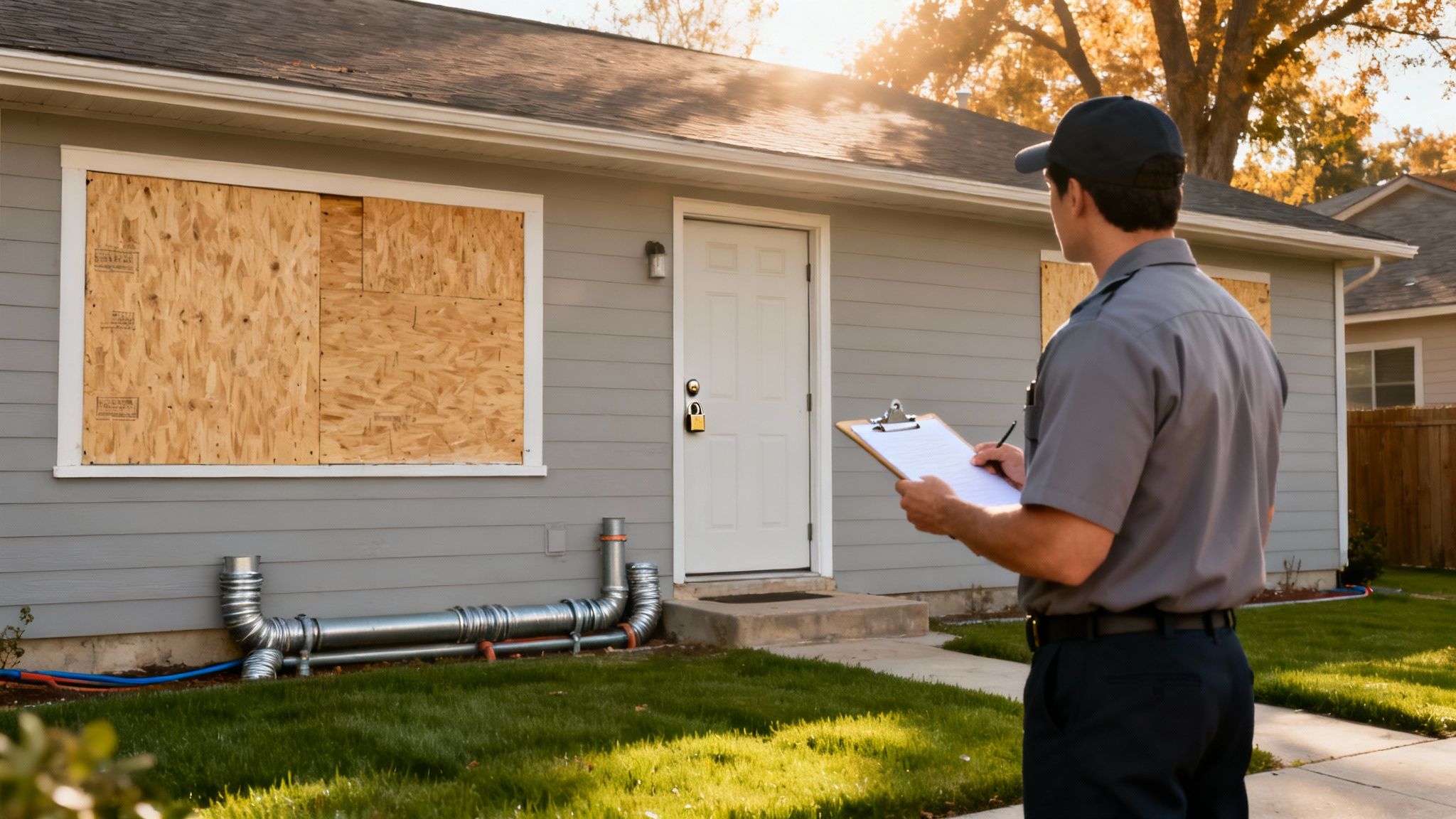
When a property sits empty, it's more than just a vacant building—it's a vulnerable asset. Property preservation is the essential process of securing, maintaining, and protecting these unoccupied homes. Think of it as a comprehensive stewardship program for a property in transition, ensuring it doesn't fall into disrepair or become a neighborhood eyesore while awaiting its next chapter.
The Guardian Role of Property Preservation
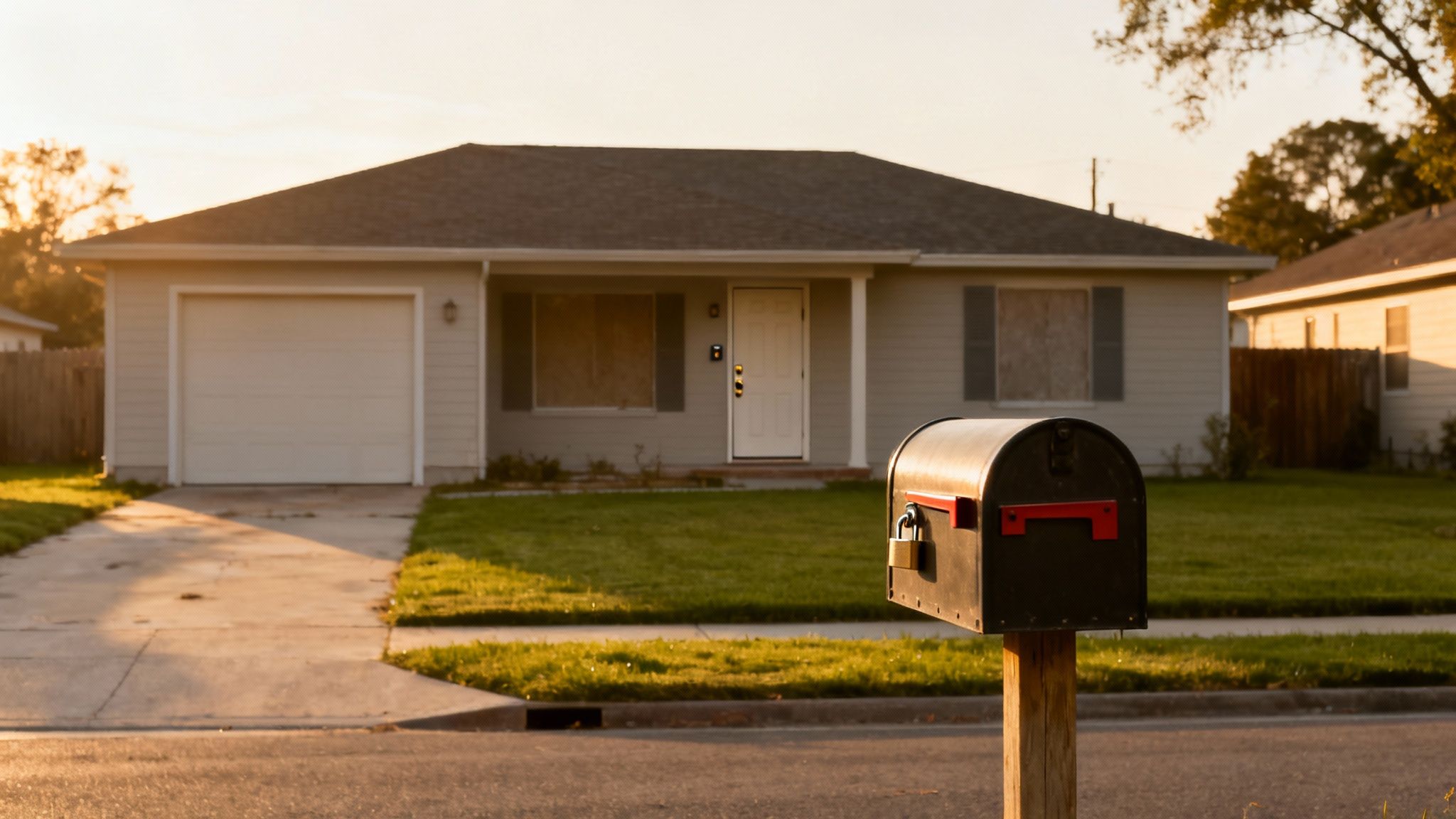
A vacant home, particularly one going through foreclosure, is a magnet for problems. Without anyone living there, small issues like a leaky faucet can escalate into major water damage, and an overgrown lawn can attract code violations and squatters. This is precisely where property preservation comes in, acting as a guardian for the asset on behalf of lenders, investors, or homeowners.
It's a proactive strategy that goes far beyond just cutting the grass. The real goal is to stop a valuable property from becoming a money pit. This involves a whole range of specific tasks designed to keep the home in good shape, comply with local ordinances, and make sure it’s safe and secure.
Protecting Value During Transition
The journey for a foreclosed or bank-owned (REO) property can be a long one. One industry report found that the median foreclosure timeline in the U.S. was a staggering 922 days—that’s nearly 2.5 years. With that kind of timeline, you can see why ongoing preservation is an absolute economic necessity to prevent rapid depreciation and racking up municipal fines.
At its heart, property preservation is a financial safeguard. It’s the difference between selling a market-ready home and offloading a distressed property at a steep discount. Every action taken—from changing the locks to winterizing the pipes—is an investment in protecting the property's bottom line.
This ongoing care is fundamentally different from a one-time assessment. A standard home inspection, for instance, just captures a property's condition on a single day. Preservation is a continuous effort with very clear goals.
At a Glance: Key Goals of Property Preservation
To break it down, property preservation is all about achieving a few critical objectives that protect the asset from every angle.
| Asset Value Protection | Actively preventing the physical decay and neglect that can quickly erode a property's market value. |
| Liability Reduction | Securing the premises against break-ins, accidents, or vandalism that could lead to serious legal and financial trouble. |
| Regulatory Compliance | Staying on top of local codes for things like lawn care and snow removal to avoid fines from the city. |
| Market Readiness | Keeping the property looking its best so it’s ready to show and sell quickly when the time is right. |
Ultimately, a proactive approach is what makes the difference. Understanding the importance of things like emergency water damage prevention for property managers highlights why getting ahead of problems is key. By tackling potential issues before they spiral out of control, property preservation ensures a vacant home remains a viable, valuable asset for all stakeholders.
What Does Property Preservation Actually Involve? A Look at the Core Services
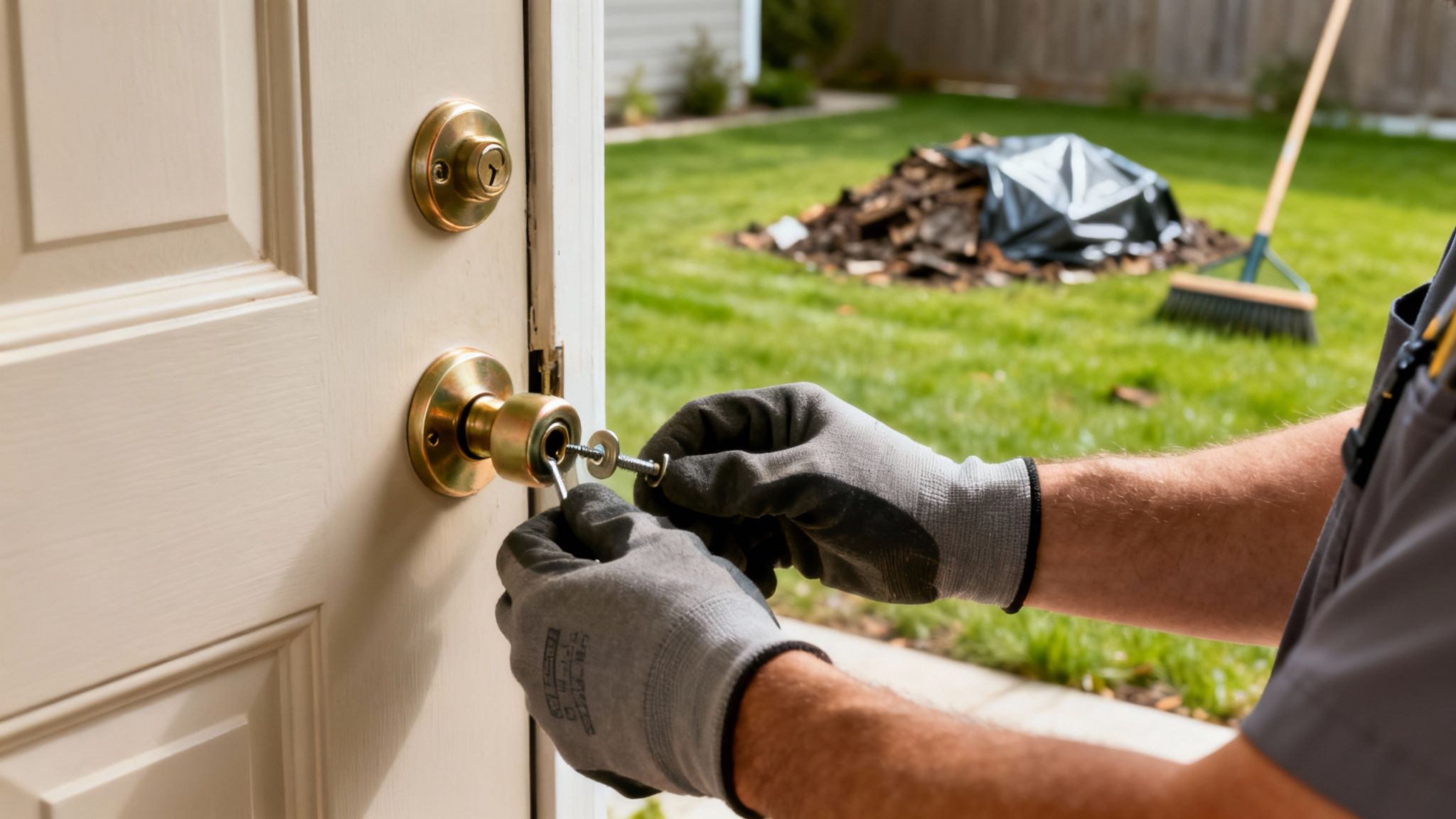
Property preservation isn't just one big task; it's a suite of specific services that work together to protect a vacant home. Think of it like a car's routine maintenance schedule—you change the oil, check the tires, and top off the fluids. Each step prevents a small issue from snowballing into a major, expensive breakdown.
These services form a protective shield around the property, addressing all the common vulnerabilities of an empty house. From stopping trespassers in their tracks to preventing the slow, silent damage from weather and neglect, a solid preservation plan has all the bases covered. Let's dig into the essential tasks that make it all happen.
Securing the Property
The absolute first step is to secure all points of entry. An unlocked or easily accessible home is a magnet for vandals, thieves, and squatters, which can become a legal and financial nightmare for the owner. This initial lockdown is more than just turning a key; it's a methodical process to completely seal the property from unauthorized access.
This almost always involves:
- Changing the Locks: Every exterior door gets a new lock or is re-keyed. This ensures that old keys held by former tenants or owners are useless.
- Installing a Lockbox: A contractor's lockbox is placed on the property so that authorized people—like real estate agents, appraisers, or maintenance crews—can get in without compromising security.
- Boarding Up Windows and Doors: If a home has broken windows or is located in a high-risk area, professionals will board up openings according to FHA specifications. This is one of the strongest deterrents to break-ins.
Locking down the property immediately slashes the risk of something going wrong. It’s a clear visual cue that the home is being managed and monitored.
Winterization and Protecting the Plumbing
In a place like Utah where temperatures regularly drop below freezing, winterization is non-negotiable. If water is left in the pipes, it can freeze, expand, and burst them, causing catastrophic flooding and damage that can easily run into the tens of thousands of dollars to fix. In fact, water damage and freezing are consistently among the most common and costly insurance claims for homeowners.
A professional winterization looks like this:
The main water supply to the house is shut off completely.
The entire plumbing system is drained—that means the water heater, toilets, and all the supply lines.
Compressed air is used to blow out any stubborn water still hiding in the pipes.
A small amount of non-toxic antifreeze is poured into toilet bowls and sink P-traps to prevent any remaining water from freezing and cracking the porcelain.
This simple preventative service is a must-do for any vacant property in a cold climate. It's the only way to guard against the silent but devastating threat of a major pipe burst.
Debris and Hazard Removal
It's common for vacant homes to be left full of personal belongings, old furniture, and straight-up trash. This isn't just an eyesore; it can be a serious safety hazard and can quickly lead to citations for violating local health codes. Debris removal, often called a "trash-out," is the process of completely clearing out a property to make it safe, clean, and marketable.
A clean, hazard-free property is not just about aesthetics. It’s about mitigating risks, from pest infestations drawn to garbage to trip-and-fall liabilities for anyone entering the premises. Removing these hazards is a foundational step in responsible property stewardship.
Crews come in and haul away everything from old couches to hazardous materials, making sure to follow all local disposal regulations. This service essentially hits the reset button, turning a neglected space into a clean slate.
Landscape and Exterior Maintenance
An overgrown, weed-choked lawn is the number one sign that a house is empty. It looks bad, attracts pests, and can get you fined by the city or an HOA. Consistent landscape maintenance is critical for keeping up appearances and making it look like the property is occupied and cared for.
This service typically includes:
- Lawn Mowing: Regular mowing, edging, and trimming to keep things looking tidy.
- Weed Abatement: Pulling or treating weeds in flower beds, driveways, and walkways.
- Shrub and Tree Trimming: Cutting back overgrown bushes or tree branches that could damage the roof or siding.
- Snow Removal: During the winter, keeping sidewalks and driveways clear of snow is often required by local city ordinances to ensure public safety.
By simply keeping the outside of the property neat, you make it a less appealing target for crime and avoid costly fines. It's a straightforward but incredibly effective way to protect the home's value.
How Preservation Protects Your Bottom Line
Property preservation is much more than just ticking off a maintenance checklist; it's a direct financial strategy to protect a major investment. For lenders, asset managers, and investors, these services are one of the most effective tools for mitigating loss. A vacant property left to fend for itself is an asset in a freefall, but proactive maintenance can stop this financial erosion dead in its tracks.
Think of an empty house like a classic car stored in a garage. If you just leave it sitting there, things go wrong. Seals dry out, the battery dies, and rust finds its way in. A house is no different. It needs constant attention to prevent a small drip from becoming a ceiling-collapsing disaster that completely tanks its market value.
This kind of proactive care is what turns a potential liability back into a valuable, marketable asset.
Preventing Value Deterioration
The most immediate financial win from property preservation is stopping the clock on neglect. An unmaintained property is a magnet for a whole host of problems that can easily wipe out tens of thousands of dollars in value.
Here are the common culprits that preservation services are designed to prevent:
- Water Damage: Water is a home’s number one enemy, whether it's a slow leak from a failing roof or a catastrophic pipe burst in a winter freeze.
- Pest Infestations: Vacant homes are a five-star resort for rodents, insects, and other critters that can cause serious structural and sanitation issues.
- Vandalism and Theft: An obviously empty house is an open invitation for thieves to strip copper piping, steal appliances, or just cause senseless damage.
- Mold Growth: All it takes is a little moisture and some stagnant air to create the perfect breeding ground for mold, which is a nightmare to remediate.
By getting ahead of these risks with regular inspections and swift maintenance, property preservation acts as a shield, protecting both the physical structure and its financial worth.
A modest, consistent investment in preservation is the financial equivalent of preventative medicine. It helps you avoid the emergency surgery of massive, last-minute repairs, which are always more expensive and bring the sale of the property to a screeching halt.
Industry data backs this up. Property preservation provides real, measurable financial protection. By preventing accelerated decay and neighborhood blight, it ultimately lowers the repair and holding costs servicers face before a sale. We've seen it time and again: simply securing a property and performing routine maintenance can drastically cut down on incidents of severe vandalism, water intrusion, and pest damage. This leads to smaller repair bills and gets the property sold faster.
Reducing Liability and Compliance Risks
Beyond just protecting the building itself, property preservation is a critical risk management tool. An unsecured, neglected property is a legal minefield waiting to explode. Imagine a neighborhood kid wandering onto the site and getting hurt, or a squatter deciding to move in. Both scenarios can lead to incredibly expensive legal battles and place a huge financial liability on the owner.
Securing the property—changing the locks, boarding up broken windows—is the first and most important step in shutting down these risks. But it doesn't stop there. Consistent landscape maintenance isn't just about curb appeal; it’s about staying on the right side of the law.
Municipalities all across Utah County, from Orem and Provo to Lehi, have strict codes for property upkeep. If you don't comply, you can start racking up fines and even have liens placed against the property.
Common code violations to watch out for:
- Overgrown lawns and noxious weeds.
- Piles of trash or debris in the yard.
- Failing to clear snow from public sidewalks.
- Unsecured structures, like a broken fence or an open shed.
These fines can pile up alarmingly fast, creating an unnecessary financial drain that eats directly into the asset's bottom line. Regular preservation services ensure the property stays compliant, avoiding these penalties altogether.
Maximizing Marketability and Sale Price
At the end of the day, the goal is always to sell the property for the best possible price, as quickly as possible. A well-preserved home is infinitely more attractive to potential buyers than one showing obvious signs of neglect. In real estate, you truly never get a second chance to make a first impression.
A property with a neatly trimmed lawn, clean windows, and a secure, cared-for appearance immediately tells buyers that this home is a solid investment. This builds confidence and leads directly to stronger, faster offers. Beyond the basics, think about the details. For example, you can enhance property appeal with professional window cleaning to make a place feel brighter and more inviting.
Contrast that with a home that has peeling paint, a jungle for a yard, and visible damage. That property is going to attract one thing: lowball offers from flippers looking for a steep discount. The money spent on preservation is almost always earned back—and then some—through a higher final sale price and a much smoother closing.
Understanding The Property Preservation Workflow
So, what happens when a property becomes vacant? It’s not a random scramble. Think of it more like an emergency response protocol for a home. The moment a property is confirmed to be empty, a clear, logical workflow kicks in to stabilize the asset and stop problems before they start.
This whole process is highly structured. Every action is deliberate, done in the right order, and meticulously documented. From the minute a servicer gets the green light, the clock is ticking. The goal is to protect the property's value from day one, turning a potentially chaotic situation into a managed, orderly maintenance plan.
The first few steps are all about rapid response. This visual breaks down how these actions work together, moving from securing the asset to maintaining it, all with the goal of getting it ready for a successful sale.
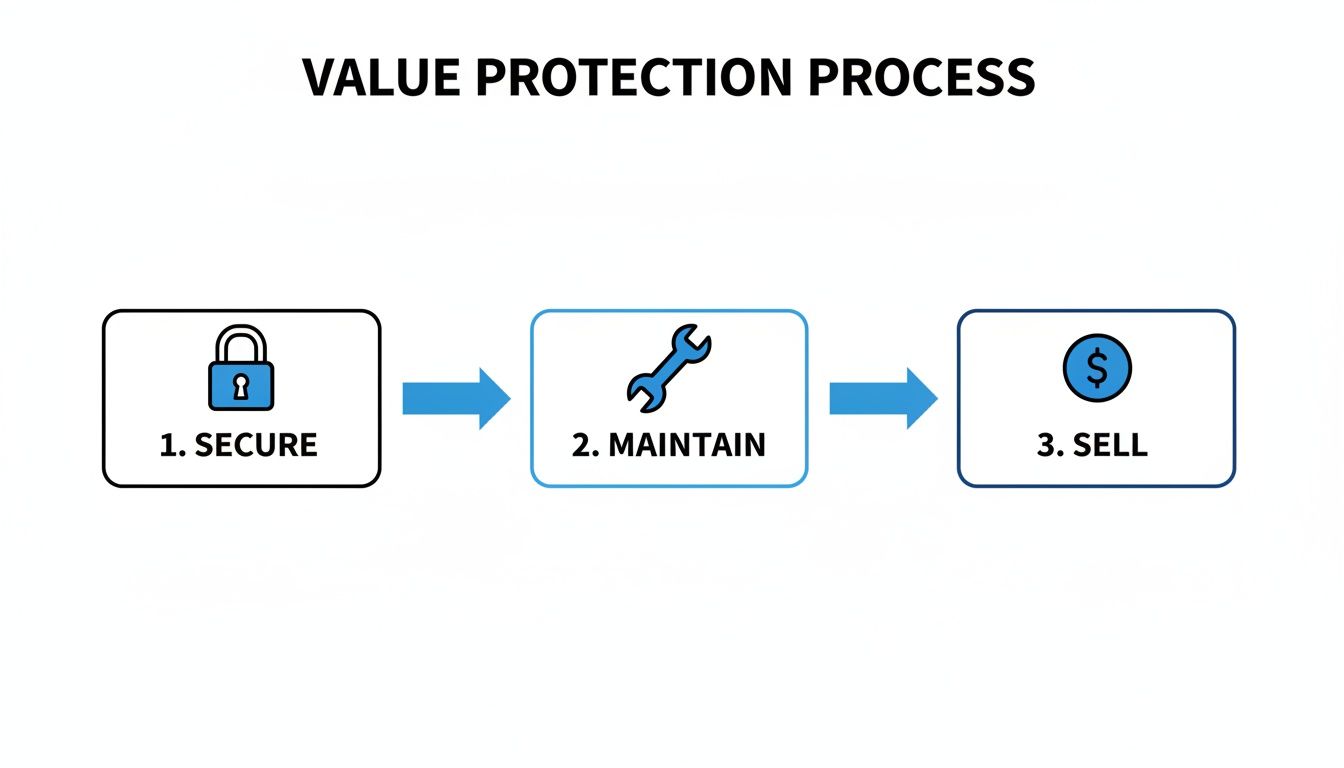
This simple flow—Secure, Maintain, Sell—drives home the point: every task is a direct investment in the property's final marketability and sale price.
The Initial Securing And Inspection
The first 24 to 72 hours after a vacancy is confirmed are absolutely critical. This is when the property is at its most vulnerable, so the immediate goal is to lock it down and make it safe. A preservation team is dispatched right away to change all the exterior locks, install a secure lockbox for authorized access, and board up any broken windows or other unsecured entry points.
At the same time, the crew performs a comprehensive initial property inspection. This isn't just a quick walk-through. They document the property’s condition from top to bottom with hundreds of photos and detailed notes, flagging any existing damage, potential hazards, or repairs that need immediate attention. This report creates the baseline for all future work.
This first step is the foundation of the entire preservation process. It establishes a secure perimeter and creates a detailed, evidence-based record of the property's condition, which is essential for insurance, compliance, and strategic planning.
This level of detailed documentation is non-negotiable. The entire process is heavily influenced by strict regulatory and market standards, which dictate the timeline for every action. These guidelines create a predictable and auditable sequence of events.
Here's a look at what a typical timeline involves after a property is confirmed vacant.
Typical Property Preservation Timeline
This table outlines the sequence and timing of key preservation actions that take place.
| Initial Securing | Within 24–72 hours of vacancy notice |
| Initial Inspection & Report | Within 7–14 days |
| Initial Services (Debris Removal, Lawn Cut) | Within 14–21 days |
| Recurring Inspections | Every 30–90 days, depending on requirements |
Following this timeline isn't just good practice; it's often a requirement for compliance, ensuring that the property is protected systematically from the very beginning.
Initial Services And Establishing A Routine
Once the property is secure and the initial condition is on record, the team tackles the most pressing issues found during the inspection. This almost always starts with debris removal, often called a "trash-out," to clear away any abandoned belongings, garbage, or potential hazards left behind.
Other common initial tasks include:
- Initial Lawn Cut: Taming an overgrown yard to bring it up to local code standards.
- Emergency Repairs: Fixing urgent problems like a leaky roof or a broken handrail to prevent further damage or liability issues.
- Winterization: If it’s that time of year, the plumbing system is immediately drained and prepped to prevent frozen and burst pipes.
After these initial cleanup and repair jobs are done, the property transitions into a recurring maintenance schedule. This ensures the home stays in a stable, compliant, and marketable condition for the long haul. This methodical approach is a key part of successful proactive maintenance solutions, shifting the focus from reactive fixes to a predictable and manageable plan. Regular visits for lawn care, exterior checks, and snow removal become part of a steady workflow, making sure the property never looks neglected again.
Navigating Property Preservation in Utah
Property preservation isn’t something you can handle with a generic, one-size-fits-all approach. Local knowledge is everything. Here in Utah, our unique climate and specific city codes create a whole different set of challenges for anyone managing a vacant property, whether it’s in a bustling Provo neighborhood or a new development in Saratoga Springs.
If you want to protect your asset effectively, you’ve got to understand what you’re up against locally.
The biggest factor, by far, is Utah's brutal winter. We're not talking about a "maybe it'll freeze" situation; it's a guarantee. It only takes one night below freezing for water left in the plumbing to expand, burst a pipe, and cause thousands of dollars in water damage, rot, and mold.
The Critical Role of Winterization
For an empty home anywhere in Utah County, a thorough winterization isn't just a good idea—it's the single most important thing you can do to prevent a disaster. And just turning off the main water valve doesn't cut it. A professional service will make sure every last drop of water is drained or blown out of the supply lines, toilets, and water heater. This is how you protect the entire system from a catastrophic failure.
Think of it this way: skipping a professional winterization in Utah is like betting your entire savings on a single roll of the dice. The small cost of the service is nothing compared to the massive expense of cleaning up after a burst pipe.
This one proactive step is foundational to keeping the property’s value intact through the cold months and is a key part of any solid seasonal home maintenance checklist.
Local Compliance and Landscape Rules
Beyond the weather, every city has its own rulebook. In places like American Fork and Orem, local ordinances are very clear about standards for lawn care, weed control, and—most importantly—snow removal. A property with knee-high weeds or an icy, un-shoveled sidewalk isn't just an eyesore; it's a magnet for code violations and fines.
These aren't empty threats. Municipalities will absolutely issue penalties for non-compliance, and those fines can stack up fast, creating a financial headache that was completely avoidable.
Common local requirements you'll see include:
- Prompt Snow Removal: Most cities demand that public sidewalks are cleared of snow within 24 hours of a storm. It's a matter of public safety.
- Weed Control: Ordinances often set a maximum height for weeds and require you to get rid of noxious species before they spread to the neighbors.
- General Upkeep: Keeping the exterior looking tidy is non-negotiable if you want to avoid having the property declared a public nuisance.
Having a local preservation partner who knows these city-specific rules is a game-changer. They’ll make sure your property stays compliant, secure, and protected from both the elements and the city inspector’s clipboard.
Choosing the Right Preservation Partner in Utah
Picking the right company for your property preservation needs is a critical decision. You're not just hiring someone to mow a lawn; you're entrusting a major financial asset to a team that needs to be its guardian. A solid partner in Utah doesn't just prevent physical damage—they shield you from potential liability and the nightmare of compliance issues.
Get it wrong, though, and you could be looking at missed services, expensive code violations, and a property that's losing value by the day. Think of a great preservation company as your eyes and ears on the ground, giving you genuine peace of mind that your investment is secure and ready for its next chapter. So, what should you really be looking for?
Key Qualities of a Top-Tier Partner
When you're vetting potential companies, there are a few things that are absolutely non-negotiable. These are the tell-tale signs of a professional, reliable team that gets the nuances of property preservation right here in Utah.
Your checklist should include:
- Proven Local Experience: Do they know the difference between codes in Orem, Provo, and Lehi? Do they really understand what a Utah winter can do to a vacant property?
- A Full Suite of Services: You want a one-stop shop. Find a company that handles everything from the initial lock-change and winterization to hauling away debris and keeping up with the landscaping.
- Transparent Reporting: The best companies use technology to give you real-time updates. You should expect clear photos and detailed reports after every single visit.
A partner’s ability to provide comprehensive, well-documented service is the true test of their professionalism. Vague updates and a lack of photographic evidence are major red flags that should not be ignored.
Questions to Ask a Potential Vendor
Don't be shy when you're interviewing a potential vendor. Dig in with tough questions. How they answer will tell you everything you need to know about their process and how seriously they take asset protection. A pro will welcome the scrutiny.
Make sure you ask them point-blank:
What’s your typical response time for an initial securing request?
Can you show me some examples of your inspection reports and photo documentation?
How do you keep up with municipal code changes in places like American Fork and Saratoga Springs?
What kind of quality control systems do you have in place to verify the work was done right?
Finding a partner who can answer these questions with confidence is essential. You need a team that not only does the work but also delivers the rock-solid documentation you'll need for any compliance or auditing purposes. That’s how you ensure your property is truly protected and its value is maintained.
Frequently Asked Questions About Property Preservation
Even after you get the basic idea, it's normal to have a few more questions, especially if this is your first time dealing with a vacant property. Let's dig into some of the most common things people ask to clear up any lingering confusion and help you move forward with confidence.
What’s the Main Difference Between Property Preservation and Property Management?
It’s a great question, and one we hear all the time. While the names sound alike, they are two completely different jobs with opposite goals.
Property management is all about the people inside the house—the tenants. A property manager is focused on the day-to-day of a rental: collecting rent, handling tenant repair requests, showing the unit, and keeping it occupied to generate income. It's a relationship-based service.
Property preservation, however, kicks in when there are no tenants. The focus shifts entirely to the physical building itself. We're not worried about rent; we're worried about securing the asset, keeping it from falling into disrepair, and protecting it from vandalism or code violations. Think of it this way: property management is about tenancy, while property preservation is about asset protection during vacancy.
How Much Do Property Preservation Services Cost?
There's no simple, one-size-fits-all price tag. The cost really depends on the specific situation of the property, which is why you won't find a standard rate sheet for these services.
A few key things will move the needle on the final cost:
- Property Size and Condition: A sprawling home or one that's been neglected for years is going to demand more work and materials than a small, well-maintained house.
- Location: Labor rates and even disposal fees can differ from Orem to Saratoga Springs. Local ordinances might also require specific actions that add to the cost.
- Scope of Work: Are we just changing the locks, or do we need to haul away truckloads of debris and winterize the entire plumbing system? Each task has its own cost.
- Frequency of Maintenance: A property might need weekly lawn care or bi-weekly check-ins, and that ongoing schedule is a big part of the overall budget.
The only way to get a real number is to have a professional walk the property. They'll assess what needs to be done and give you an itemized bid detailing the exact tasks and costs involved.
How Quickly Can a Property Be Secured After It Becomes Vacant?
Speed is absolutely critical here. Lenders and asset managers want vacant properties secured almost immediately to cut off potential risks. The industry standard is to have a crew on-site to change the locks, secure all openings, and post notices within 24 to 72 hours of getting the assignment.
This initial rush is for a good reason. A property is at its most vulnerable in the first couple of days of being empty. A fast, professional lockdown is the single best way to protect it from squatters, theft, or vandalism right from the start.
Navigating the specifics of property preservation requires a partner with deep local knowledge and a commitment to protecting your investment. At Northpoint Construction, we provide reliable, well-documented preservation services across Utah County. Contact us today to ensure your property is secure, compliant, and protected.