
What Is the Best Flooring for Basements in Utah
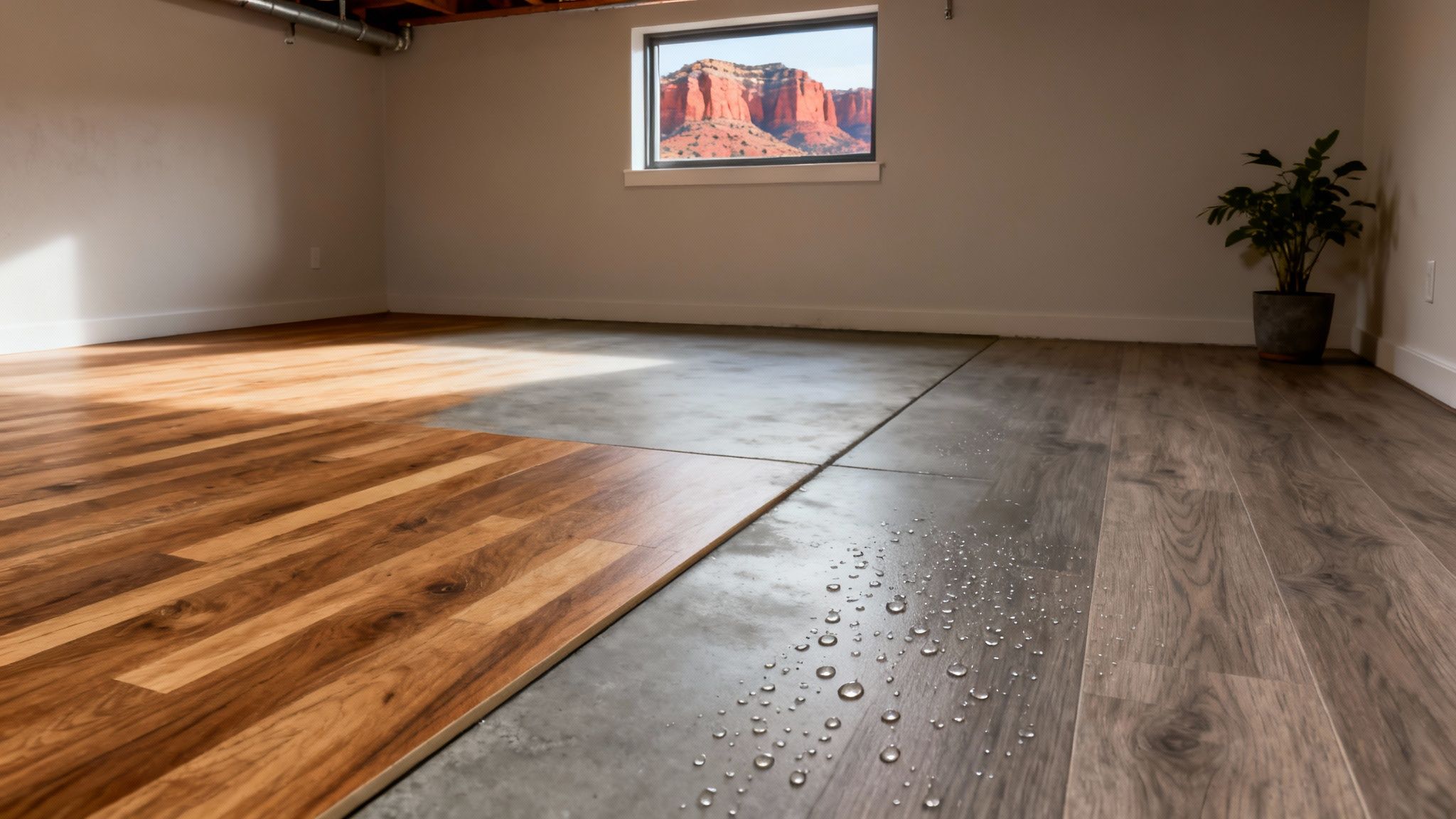
So, what's the best flooring for a basement? That's the million-dollar question, and the right answer always starts with one thing: moisture. Here in Utah, for most homeowners we work with, the hands-down winners are Luxury Vinyl Tile (LVT) and Sealed Concrete. They simply offer the toughest defense against the water damage that plagues so many basements.
A Roadmap To Choosing The Right Basement Floor
This guide isn't just theory; it’s built from years of hands-on experience helping homeowners in Orem, Provo, and across Utah County turn their basements into livable, functional spaces. We'll get into why waterproof options are so critical in our local climate, where our unique soil and dramatic temperature swings can be a floor's worst enemy.
We'll also cover why classic choices like solid hardwood or certain types of carpet are a serious gamble below ground. Think of this as your practical guide to finding a floor that not only looks great but is tough enough to last. Your basement is the foundation of your home, and its floor needs to be up to the job.
Navigating Your Key Decisions
The path to the perfect basement floor really begins with a single question: what's your moisture risk? Answering that honestly will instantly eliminate bad choices and point you in the right direction. After that, you can start layering in the other factors to find the perfect fit for your home.
- Moisture Resistance: This is your non-negotiable. You need a floor that can handle the constant humidity, potential condensation, or even a minor leak without failing.
- Comfort and Warmth: Let's face it, basements are naturally cool. Your flooring can either make it feel like a chilly cavern or contribute to a cozy, warm atmosphere.
- Intended Use: How you plan to use the space matters. A basement gym floor has entirely different demands than one for a family media room or a kids' play area.
- Budget: Costs can swing pretty wildly, from economical sealed concrete to more high-end luxury vinyl planks.
This decision-making process can be visualized to make things a bit clearer. The flowchart below shows exactly how moisture risk should guide your initial choices.
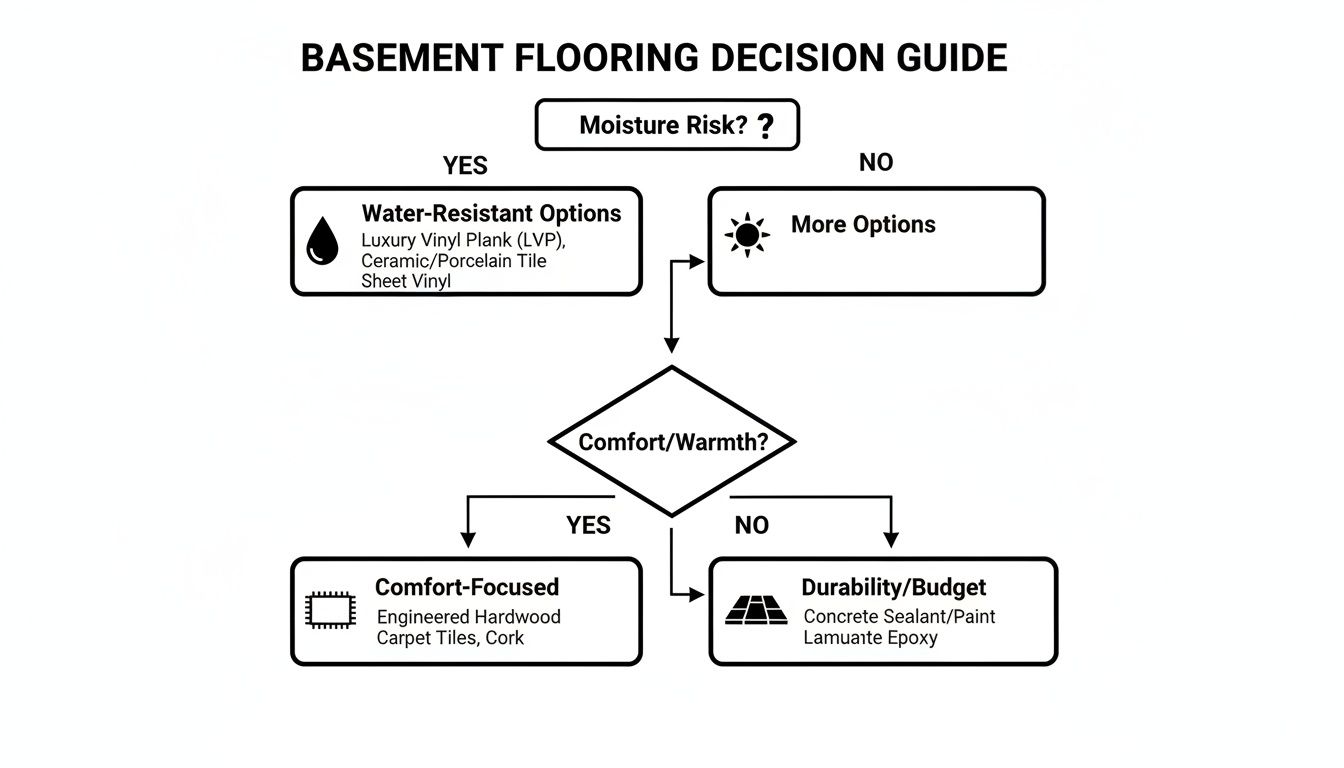
As you can see, tackling the moisture question head-on is the most important step you can take. To explore a wider range of options, this definitive guide to the best waterproof flooring for basements is an excellent resource.
To simplify things even further, let's break down the top contenders for Utah basements.
Utah Basement Flooring Options at a Glance
This table gives a quick snapshot of the most popular choices, helping you see how they stack up against each other at a glance.
| Luxury Vinyl (LVT/LVP) | Excellent | Very High | $4 - $12 | All-purpose living areas, gyms, home theaters |
| Sealed/Epoxy Concrete | Excellent | Extreme | $3 - $15+ | Utility spaces, gyms, modern industrial look |
| Engineered Hardwood | Fair | Good | $5 - $15 | Dry basements with proper subfloor/vapor barrier |
| Tile (Ceramic/Porcelain) | Excellent | Very High | $5 - $20 | Bathrooms, laundry rooms, high-moisture areas |
| Carpet Tiles | Good (Synthetic) | Moderate | $3 - $8 | Playrooms, bedrooms (easy to replace stained tiles) |
Ultimately, the best choice balances your home's specific conditions with your budget and how you want to live in the space.
Why Moisture Is Your Basement's Biggest Enemy
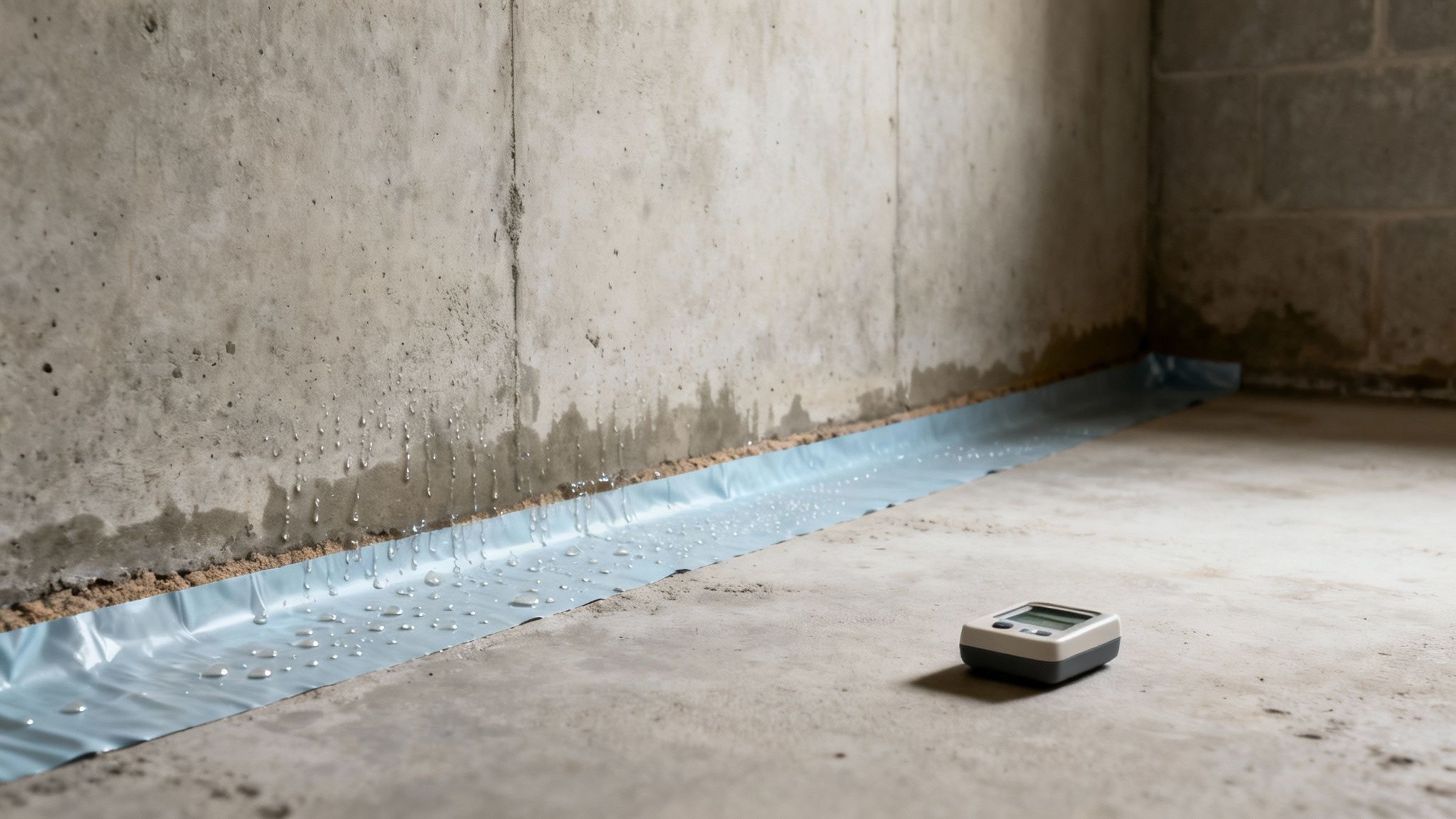
Before you start dreaming about flooring samples, we need to have a serious talk about what a basement really is. It’s not just another room. It's the foundation of your home, buried in the ground and surrounded by damp earth. Think of it as the hull of a boat—it's constantly exposed to moisture.
Picking the wrong floor for this space isn't just a design misstep; it's practically rolling out the welcome mat for mold, mildew, and that classic musty smell that can ruin your home's air quality. Over time, that dampness can even start to eat away at the structure itself, leading to repairs that are anything but cheap.
This is why you have to win the war against water before a single plank or tile goes down. Your beautiful new floor will only ever be as good as the dry, solid concrete it’s sitting on.
The Hidden Sources of Basement Water
Moisture is sneaky. It doesn't always show up as a dramatic flood. More often, it creeps in from places you wouldn't expect. Figuring out where it’s coming from is the first step to stopping it.
You're typically up against three main culprits:
- Interior Moisture: This is the "inside job"—a leaky pipe, a steamy shower in a bathroom without a fan, or even a dryer that isn't vented properly. These are usually the easiest to spot and fix.
- Condensation: Ever seen a cold drink "sweat" on a hot day? The same thing happens in your basement when warm, humid air hits those cool foundation walls and floors.
- Exterior Seepage: This is the big one. When heavy rain or melting snow soaks the ground outside, it creates immense hydrostatic pressure. This pressure literally shoves water through microscopic cracks and pores in your concrete.
"A concrete basement floor should have a moisture content below 4% before flooring installation. Anything higher is a significant risk for mold growth and flooring failure, and it could even void your product warranty."
A good dehumidifier can handle condensation, but stopping water from seeping through the foundation requires a real strategy. For a much deeper look at this, our guide on the best waterproofing for your basement breaks down exactly how to keep your foundation dry.
Protecting Your Flooring Investment
Once you've got any active water problems under control, the next job is to build a wall between the concrete slab and your new floor. This is where subfloor prep is absolutely non-negotiable.
A quality vapor barrier is your first line of defense. It’s a thin sheet of impermeable material that stops moisture from wicking up through the concrete and destroying your floor from below. Skipping this step is one of the most common—and most expensive—mistakes we see homeowners make.
At the end of the day, the best flooring for any basement is one that’s installed on a properly sealed and protected surface. It’s this proactive work that makes your investment look great and last for years. And should the worst happen, knowing how to fight for a fair water damage claim settlement can be a huge financial lifesaver.
Meet Luxury Vinyl Tile: The Unbeatable Waterproof Champion
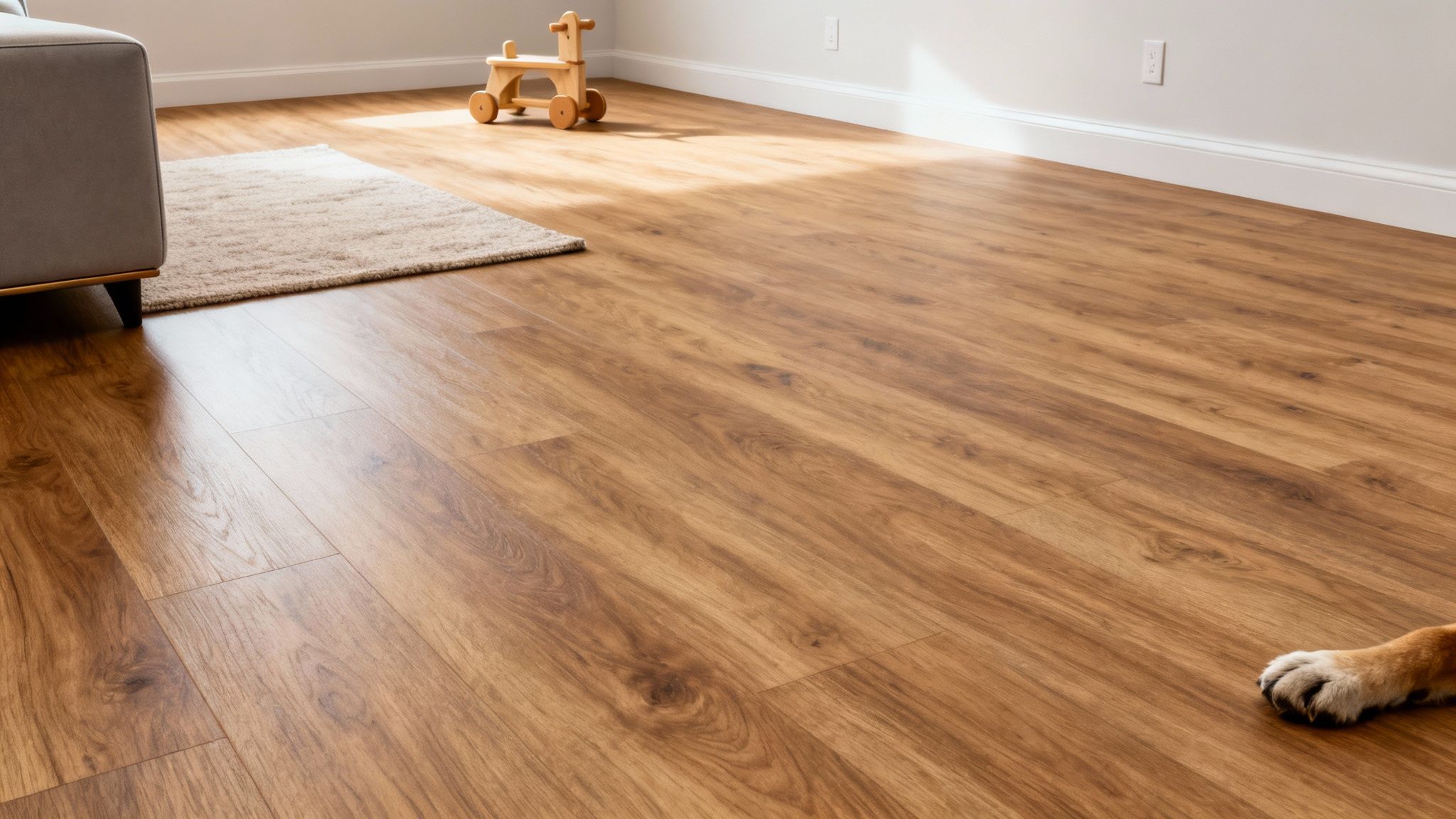
When clients ask me, "what is the best flooring for basements," one answer comes up more than any other: Luxury Vinyl Tile, or LVT. Let's be clear, this is not the flimsy sheet vinyl you remember from your grandmother’s kitchen. Today’s LVT is a sophisticated, multi-layered flooring system engineered from the ground up to handle the unique challenges of a below-grade space.
Think of LVT as the ultimate problem-solver for basements. Its core is made from materials that simply don’t care about water, making it 100% waterproof from the surface all the way through. This is the single biggest reason LVT has become the go-to choice for transforming damp, chilly basements into beautiful, functional living areas.
Unlike floors that only resist moisture on the top layer, LVT is waterproof to its core. A burst pipe or a sump pump failure won't cause it to swell up, buckle, or fall apart. It’s a true peace-of-mind investment that protects your floor and your home.
High-End Looks Without the High-Maintenance Headaches
One of the best things about LVT is its incredible versatility. It’s tough enough for a high-traffic area but has the aesthetic grace of materials that would typically be a nightmare in a basement.
- Built to Last: LVT comes with a rugged wear layer designed to fend off scratches, scuffs, and dents. That makes it a fantastic choice for a basement that needs to be a kids' playroom, a home gym, and an entertainment space all at once.
- Looks Deceivingly Real: Thanks to modern printing technology, LVT can convincingly mimic natural materials. You can get the warm, inviting vibe of hardwood or the refined look of slate and marble without any of the moisture-related baggage.
- Maintenance is a Breeze: Let's face it, no one wants to add more chores to their list. LVT is ridiculously easy to clean; a quick sweep and an occasional damp mop are all it takes to keep it looking brand new.
This powerful blend of strength and style makes LVT a no-brainer for just about any basement project. You get the premium look you want without the premium price tag or the constant worry about water.
Where Comfort and Practicality Come Together
Beyond being waterproof, LVT offers a massive upgrade in comfort compared to cold, hard concrete. It’s a much warmer and softer surface underfoot, which is a key part of making a basement feel like a real extension of your home.
LVT is a game-changer for basement comfort. It acts as a thermal break, preventing the chill of the concrete slab from radiating into the room. This small detail makes a huge difference in creating a cozy and inviting atmosphere year-round.
That extra warmth is a big deal here in Utah, where basements can get frigid during the winter. For homeowners from Lehi to American Fork, choosing LVT means creating a space the whole family will actually want to use, whether it’s for movie night or a morning workout. To see how different options stack up, check out our detailed guide on various floor finishes for basements.
The demand for this kind of flooring is booming. The global flooring market is expected to grow from USD 349.66 billion to USD 652.38 billion by 2034, largely because homeowners are prioritizing waterproof solutions in their remodels. Better yet, statistics show that installing vinyl in a basement can slash the risk of mold by up to 70% compared to carpet, making it a much healthier choice for your family.
Is Laminate a Smart Choice for a Cost-Conscious Basement?
For years, laminate flooring has been the go-to for homeowners who crave the timeless look of hardwood without the eye-watering price. It's a champion of budget-friendly style, but when you take it downstairs into the basement, you have to ask a serious question: can it really hold up?
The answer isn’t a simple yes or no. On one hand, laminate has a tough-as-nails, scratch-resistant surface that’s perfect for a high-traffic family room or kids' play area. But its biggest strength is also tied to its biggest weakness—what’s going on underneath that beautiful finish.
Think of a laminate plank like a premium Oreo cookie. The top and bottom layers are tough and resilient, but the creamy filling in the middle—in this case, a core made of high-density fiberboard (HDF)—is what can get you into trouble. If that core gets wet, it acts like a sponge.
Why Moisture is Laminate's Kryptonite
This is precisely why traditional laminate gets a bad rap for below-grade spaces. One burst pipe, a sump pump that decides to take an unscheduled vacation, or even just persistently high humidity can cause the HDF core to swell, making the planks buckle and pull apart at the seams.
Once that kind of water damage happens, it's game over. The flooring is usually ruined beyond repair. This makes it a real gamble in any basement that isn’t bone-dry and climate-controlled all year. For those of us in places like Saratoga Springs or American Fork, where ground moisture can be a seasonal surprise, that’s a risk you need to think about carefully.
The good news is, the industry has been hard at work. Newer types of laminate are now being sold as water-resistant or even waterproof. These aren’t your grandma’s laminate planks; they’re engineered with better core materials and tighter locking mechanisms to stop spills from getting to that vulnerable center.
It's absolutely critical to understand the difference between "water-resistant" and "waterproof." Water-resistant can handle a spilled drink for a few hours, but it won’t survive a flood or constant moisture wicking up from the concrete slab.
Making Laminate Work in Your Basement: The Non-Negotiables
So, if you've got your heart set on laminate, success comes down to two things: picking the right product and preparing your subfloor perfectly. It’s definitely not the right choice for a basement with a history of water problems, but for a dry, well-managed space, it can look fantastic.
If you're going to do it, you have to do it right. Follow these steps without cutting any corners:
- Choose a Water-Resistant Product: Don't just grab any laminate off the shelf. You need to specifically look for planks designed for damp environments, which often have warranties covering topical moisture.
- Lay Down a Serious Vapor Barrier: This is your most important defense. A thick, high-quality plastic underlayment must go down first, creating an impermeable shield between the concrete and your new floor.
- Get Your Subfloor Perfectly Level: The click-lock system that makes laminate easy to install needs a flat surface to work. Any low spots or high points in the concrete have to be ground down or filled in, otherwise the plank joints will be stressed, creating gaps where moisture can sneak in.
This push for better, more durable flooring is a big reason why laminate's popularity for basements is on the rise. In the U.S., its ability to handle up to 80% humidity without warping has made it a top contender in many remodels. This is part of a much larger trend in the global flooring market. You can read the full research about the U.S. flooring market on MarketDataForecast.com.
At the end of the day, laminate demands more caution than a 100% waterproof floor like LVT. But its winning combination of price, durability, and great looks keeps it firmly in the race for the best basement flooring—as long as the conditions are just right.
Sealed Concrete: The Ultimate Unbeatable Solution
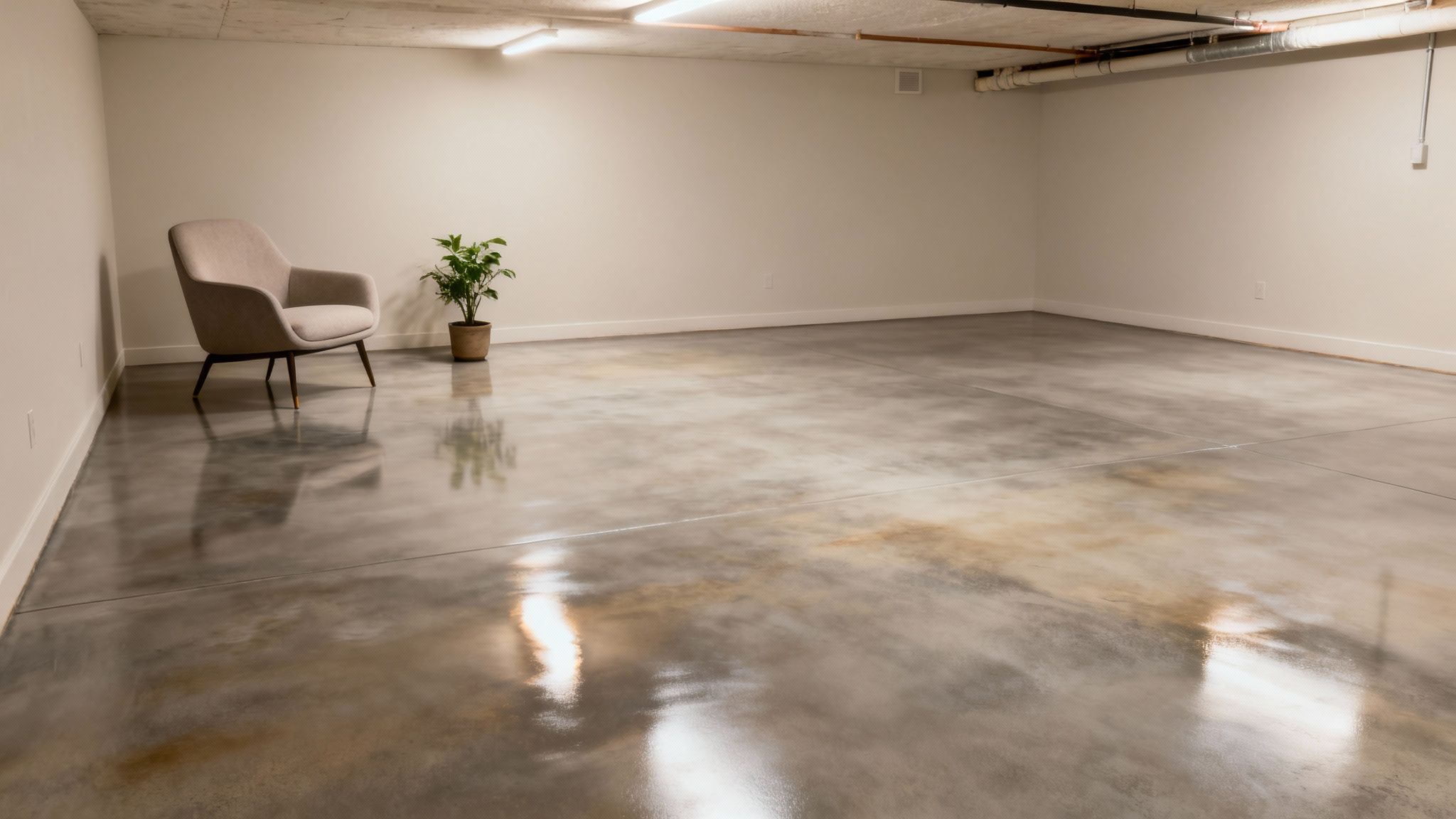
Let's clear the air on a common misconception: concrete floors don't have to be cold, gray, and boring. In fact, when it's finished the right way, sealed concrete can be an incredibly stylish, industrial-chic, and wildly practical floor for your basement. The beauty of this approach is that you’re turning your existing subfloor into the final product—a seamless and ridiculously durable surface.
The biggest win for sealed concrete is its very nature. It’s both the subfloor and the finished floor, all in one solid layer. That simple fact sidesteps the biggest headaches that come with almost every other type of flooring.
Think about it: there is absolutely nothing to warp, rot, or peel away when moisture shows up. Mold and mildew have nowhere to hide or take root, making sealed concrete the undisputed champion of durability in any below-grade space.
More Than Just a Gray Slab
The transformation is what really sells it. With modern finishing techniques, a basic concrete slab can become a stunning design element, adding color, texture, and a ton of personality to your basement.
- Concrete Stains: Acid or water-based stains actually penetrate the concrete, creating rich, deep, translucent tones. This isn’t like paint that just sits on top; it creates a chemical reaction that results in a marbled, one-of-a-kind look.
- Polishing: Using progressively finer diamond abrasives, we can polish a concrete floor to a smooth, high-gloss shine that rivals expensive materials like marble or terrazzo. It's a multi-step process, but the results are breathtaking.
- Epoxy Coatings: Epoxy creates a thick, seamless, and tough-as-nails protective layer. It comes in a huge range of colors, and you can even add decorative flakes or metallic pigments for a custom, high-performance finish you'd see in a showroom.
These treatments let you dial in the exact look you want, whether it’s a clean, minimalist vibe or a rugged, workshop-ready feel.
Why a Professional Seal is Non-Negotiable
The real magic that unlocks concrete's potential is the seal. Untreated concrete is porous—kind of like a hard sponge—meaning it will soak up spills and let moisture seep through. A professional-grade seal closes up those pores, creating a non-porous, impenetrable barrier.
A professionally sealed concrete floor isn't just a design choice; it's a strategic move to protect your home’s foundation. The sealer stops ground moisture from wicking up through the slab, which helps keep the entire basement drier and healthier.
This sealed surface is also incredibly easy to maintain. Dust, dirt, and spills wipe right up, which is exactly why it’s a top pick for home gyms, workshops, and playrooms where messes are just part of life. The durability is simply in a league of its own.
Sealed concrete is an especially smart move when you consider that 60% of U.S. basements deal with moisture. The market for basement concrete sealers in North America has captured a massive 35.4% of the global share—a clear sign of how effective it is in places like Utah. Here, homeowners from Orem to Saratoga Springs lean on this option for its longevity and low upkeep. Plus, as basement conversions become more popular globally, using sealed concrete can speed up a project by 40% because there’s so little prep work. You can find more insights on the concrete sealer market over at ReportsAndData.com.
So, when you're asking what is the best flooring for basements, sealed concrete makes a seriously compelling case. It’s tough, waterproof, low-maintenance, and surprisingly stylish—a smart and lasting investment for any home.
When to Partner with a Professional
Picking out the perfect flooring is the fun part. But it's the installation—the flawless execution—that really makes or breaks your basement project. While the DIY spirit is strong in many homeowners, basement flooring is a different beast entirely. It’s packed with unique challenges that can quickly turn a weekend project into a costly, frustrating ordeal.
Knowing when to hang up your toolbelt and call in an expert is honestly one of the smartest calls you can make for your home.
Think of a pro not just as an installer, but as a strategic partner. Their real value isn't just in laying down planks or tiles perfectly. It's in their ability to diagnose what's happening under the floor, ensuring your new investment is built on a solid, dry foundation. This is especially true for us here in Orem, Lehi, and across Utah, where our unique soil and moisture conditions can throw some serious curveballs.
Non-Negotiable Signs You Need an Expert
Some issues are just too risky to tackle yourself. If you spot any of these red flags in your basement, it’s a clear signal to bring in someone who truly understands the complexities of below-grade spaces.
These are the big ones:
- Visible Water Stains: See any dark, discolored patches on the concrete floor or at the base of the walls? That’s proof of a water problem that has to be solved professionally before a single piece of flooring goes down.
- Foundation Cracks: Even tiny, hairline cracks can be a superhighway for moisture. An expert can tell you if it's a simple settlement crack or a symptom of a much bigger structural problem.
- Uneven or Sloping Subfloor: A concrete slab that isn't perfectly level will wreck almost any flooring you put on top of it. It’s the root cause of gaps, buckling, and a floor that fails way too soon.
- Persistent Musty Odors: That classic "damp basement" smell is a dead giveaway. It means there's hidden moisture or mold lurking, and you'll need expert remediation to make the space healthy and safe.
A professional assessment is your best insurance policy. From accurate moisture testing to meticulous subfloor prep and the final install, an expert makes sure your investment is protected and your warranty stays valid. Cutting corners on prep to save a few bucks now almost always leads to much bigger bills later.
The Value of Professional Guidance
A seasoned contractor shows up with a truck full of specialized tools and a head full of hard-won experience. They can perform precise moisture tests on your concrete slab and use laser levels to find and fix every little dip and bump in your subfloor.
Most importantly, they know exactly which vapor barriers and underlayments are right for your specific basement's needs. This painstaking prep work is the real secret behind a floor that looks incredible and performs flawlessly for years to come.
For homeowners aiming to turn a tricky basement into a beautiful, functional living area, a professional consultation is the smartest first move. It helps you dodge common pitfalls and guarantees the job is done right the first time. If this is part of a bigger renovation, knowing how to find a great home remodel contractor is key to a smooth and successful project.
Your Basement Flooring Questions, Answered
Planning a basement remodel always brings up a few questions. It’s only natural. Here are some of the most common things we get asked by homeowners, with straight-to-the-point answers to help you make the right call.
Can I Just Put Flooring Directly on My Concrete Basement Floor?
This is a classic question, and the answer is a firm "it depends." While some flooring types, like LVT, are designed for it, you can't just slap them down and hope for the best. You absolutely have to know what you're dealing with first.
The first step, always, is to test for moisture. If your concrete has a moisture reading above 4%, that's a major warning sign. The slab also needs to be squeaky clean, perfectly level, and free of any major cracks or pits. Even if everything looks good, we almost always recommend installing a high-quality vapor barrier. Think of this thin sheet as an insurance policy—it's your floor's number one defense against the sneaky, persistent moisture that can seep up from the ground and ruin your investment from below.
What’s the Most Budget-Friendly Waterproof Flooring for a Basement?
If you're looking for the absolute most cost-effective option, it's hard to beat sealed concrete. You're essentially working with the floor you already have, which saves a ton on materials. It's incredibly durable, totally waterproof, and with modern stains and polishes, it can look surprisingly high-end.
But if you’re after a more traditional look for a finished living space, Luxury Vinyl Tile (LVT) is the undisputed champion. It offers a fantastic mix of affordability, toughness, and 100% waterproof construction. You get the look of beautiful hardwood or stone without the price tag or the constant worry about moisture. It's the go-to for a reason.
How Do I Stop My Basement Floor from Feeling So Cold?
Hard floors are practical in a basement, but nobody likes that chilly feeling underfoot, especially in the winter. The best way to combat the cold is to think in layers, right from the very start.
Here's how to build warmth from the ground up:
- Start with a good underlayment. Don't skip this. A quality underlayment with thermal properties creates an insulating layer between the cold slab and your flooring. It makes a huge difference you can actually feel.
- Embrace area rugs. Rugs are a game-changer in a basement. They add instant warmth, comfort, and sound absorption, and they’re perfect for defining spaces like a TV lounge or a play area.
- Pick warmer materials. Some hard surfaces are just naturally warmer than others. LVT and water-resistant laminate feel much more comfortable to the touch than options like ceramic tile or bare concrete.
Is Engineered Hardwood a Smart Pick for a Basement?
Engineered hardwood is definitely a step up from solid hardwood for below-grade spaces. Its layered design makes it much more stable against changes in humidity. But let's be clear—it's still a risk.
At the end of the day, its core is still wood, which means a serious leak, a sump pump failure, or just consistently damp air can still cause it to warp, swell, or delaminate. It can be done in a bone-dry, climate-controlled basement with a top-notch vapor barrier, but it's far from a "set it and forget it" solution. For anyone who wants the genuine look of wood without the anxiety, a high-quality, waterproof LVT that mimics wood grain is a much safer, more durable choice.
Ready to transform your basement with flooring that’s both beautiful and built to last? The experts at Northpoint Construction have the experience to guide you through every step, from moisture testing to flawless installation. Contact us today for a consultation and let's create a space your family will love for years to come.