
What to Know Before Building a House
Building a new home is one of the biggest projects you'll ever take on, and like any huge undertaking, your success hinges on the planning you do upfront. Before you even think about breaking ground, there are five critical areas you need to nail down: financing, land selection, design, team assembly, and navigating the maze of regulations.
Getting these pieces right from the start is the difference between a smooth, exciting journey and a stressful, budget-busting nightmare.
Your Pre-Construction Blueprint for Building a Home
The idea of building a custom home can feel a bit daunting, but it becomes much more approachable when you break it down into a clear, step-by-step process. Think of this pre-construction phase as drafting the master blueprint for your entire project. Every decision you make now lays the foundation for what comes next, ensuring you have a rock-solid plan before a single shovel touches the dirt.
This guide is designed to walk you through that exact process, from a vague idea to a permit-ready set of plans.
The Five Pillars of Pre-Construction
Every successful home build stands on five foundational pillars. If one is weak, the whole project can become wobbly, leading to costly delays and frustration. You have to tackle them methodically, as each one directly influences the others.
- Financing and Budget: This is ground zero. It's not just about securing a construction loan; it's about building a realistic budget that covers everything from land to light fixtures, plus a contingency fund (we recommend 10-15%) for those inevitable surprises.
- Land Selection and Due Diligence: The perfect spot is more than just a pretty view. It requires a deep dive into soil tests, zoning laws, utility access (water, sewer, power), and any potential restrictions that could derail your plans.
- Design and Engineering: Here’s where your vision starts to take shape. You'll work with professionals to translate your dream home into detailed architectural plans and structural drawings, making sure it’s both beautiful and buildable.
- Team Assembly: You can't do this alone. Assembling a trustworthy team—including an architect, a general contractor, and maybe a designer—is arguably the most important decision you'll make.
- Permits and Regulations: This is the final gatekeeper. Navigating local building codes and securing all the necessary permits from the city or county is a non-negotiable step that ensures your home is legal, safe, and up to code.
This infographic gives a great visual overview of how these steps typically flow from one to the next.
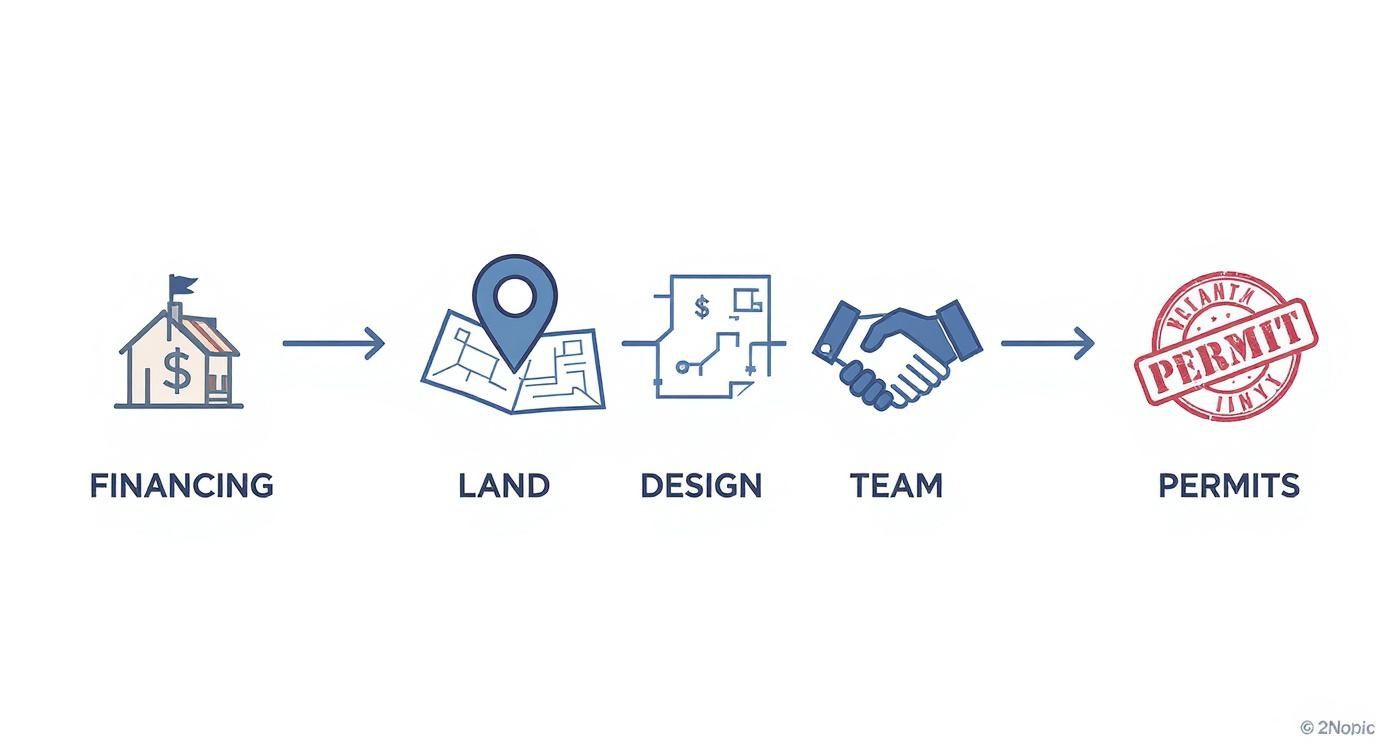
As you can see, these phases are interconnected. Your budget will influence your design, your land will dictate what you can build, and your team will guide you through the permitting process.
To give you a clearer picture, here's a quick look at the major milestones you'll encounter before construction begins.
Pre-Construction Milestones at a Glance
| Financial Planning | Getting pre-approved for a loan, setting a total budget, and establishing a contingency fund. | 1-2 Months |
| Land Acquisition | Finding a suitable lot, performing due diligence (surveys, soil tests), and closing the sale. | 2-4 Months |
| Design Phase | Working with an architect/designer to create floor plans, elevations, and construction documents. | 3-6 Months |
| Builder Selection | Interviewing and vetting general contractors, reviewing bids, and signing a construction contract. | 1-2 Months |
| Permitting | Submitting plans to local authorities and waiting for approval to begin construction. | 1-3+ Months |
This table highlights how each stage requires dedicated time and attention. Rushing any of these steps often leads to problems down the road.
One of the most critical parts of your planning is protecting your investment while it's being built. A standard homeowner's policy won't cover a house under construction. For that, you'll need a complete guide to builders risk insurance, which shields you from losses due to fire, theft, or vandalism on the job site.
If you'd like a more detailed look at the entire journey from start to finish, be sure to check out our overview of the https://buildnp.com/blogs/custom-home-building-process/ for more insights.
Getting Your Finances in Order: Budgeting and Loans
Before you even think about floor plans or paint colors, you need to get real about the numbers. Your budget is the single most important document in this entire process. It’s not just a number; it’s the blueprint for your financial decisions, keeping your project grounded and on track from day one.
Think of it this way: your main loan is the fuel in your car's primary tank—it's meant to get you through the planned parts of the journey. But every smart road-tripper has a reserve can of gas in the trunk for the unexpected. That’s your contingency fund, and it's just as critical as the main loan.
What Really Goes Into a Home Building Budget?
One of the biggest mistakes first-time builders make is underestimating the true cost. The price of the physical structure is just one piece of the puzzle. All the "other" stuff—the administrative fees, site work, and finishing details—can easily add 25% or more to your total.
To build a budget that won't bite you later, you have to account for everything. Break it down into these buckets:
- Land Costs: The purchase price, closing costs, surveys, and any initial assessments needed to make sure the lot is buildable.
- Site Prep: This is the money it takes to get the ground ready. We're talking soil tests, clearing trees, grading the land for drainage, and digging the foundation.
- Hard Costs (The Build): This is the big one. It covers every bit of material and labor for the house itself—foundation, framing, roofing, plumbing, electrical, and your HVAC system.
- Soft Costs (The Paperwork): Don't forget the administrative side! This includes fees for architects and engineers, building permits, city impact fees, construction insurance, and the interest you'll pay on your loan during the build.
- Finishing Costs: This is what turns a structure into a home. Think flooring, paint, cabinets, countertops, appliances, and all the light fixtures.
- Exterior and Landscaping: The job isn't done when the inside is finished. You still need to budget for a driveway, sidewalks, sod, trees, and maybe a deck or patio.
It’s also smart to keep an eye on the bigger economic picture. The global construction market is expected to grow to $12.1 trillion from $11.4 trillion, an annual growth rate of about 5-6% over the next few years. That growth means rising material costs and inflation, which will absolutely trickle down to your project. You can find more on this in the latest construction industry outlook to stay ahead of the curve.
Construction Loans are a Different Beast
You don't just walk into a bank and get a normal mortgage for a new build. The financing is structured differently because, well, the house doesn't exist yet. You'll start with a construction loan.
A regular mortgage is a one-and-done deal: the bank pays the seller, and you start paying the bank. A construction loan, on the other hand, is a short-term loan that pays out in phases, called "draws." Your builder gets a check after the foundation is poured, another after the framing is up, and so on. At each major step, a bank inspector will come out to verify the work before releasing the next payment.
The thing to remember is that you're asking a lender to finance a house that's still just an idea on paper. That's a bigger risk for them, so be prepared for a much more detailed approval process. They'll want to see everything—your personal finances, the builder's credentials, and a line-by-line budget for the entire project.
Once the house is finished and you have the certificate of occupancy, the construction loan typically rolls over into a familiar, long-term mortgage.
The All-Important "Just in Case" Fund
I can't stress this enough: no project goes exactly as planned. It's just the nature of construction. Your crew might hit a massive boulder while digging the foundation, the price of lumber could suddenly spike, or you might see a countertop you simply have to have. That's what a contingency fund is for.
A good rule of thumb is to set aside 10% to 20% of your total construction cost. So for a $500,000 build, that’s an extra $50,000 to $100,000 sitting in a separate account. It sounds like a huge number, but having that cash buffer is the difference between a small hiccup and a project-stopping catastrophe. It's the best financial peace of mind you can buy.
2. Choosing Your Land and Navigating Regulations
Finding the perfect piece of land is about more than just a great view. It's the literal foundation for your entire project, and getting it wrong is one of the costliest mistakes you can make. You have to be part detective and part visionary, looking past the surface to see the hidden challenges and opportunities.
Think of your land as an active partner in your home's design. How it slopes will dictate your foundation costs and drainage plan. Its orientation to the sun determines which rooms get flooded with natural light. A poor choice here can lead to a decade of fighting a damp basement or wishing your living room saw the morning sun.
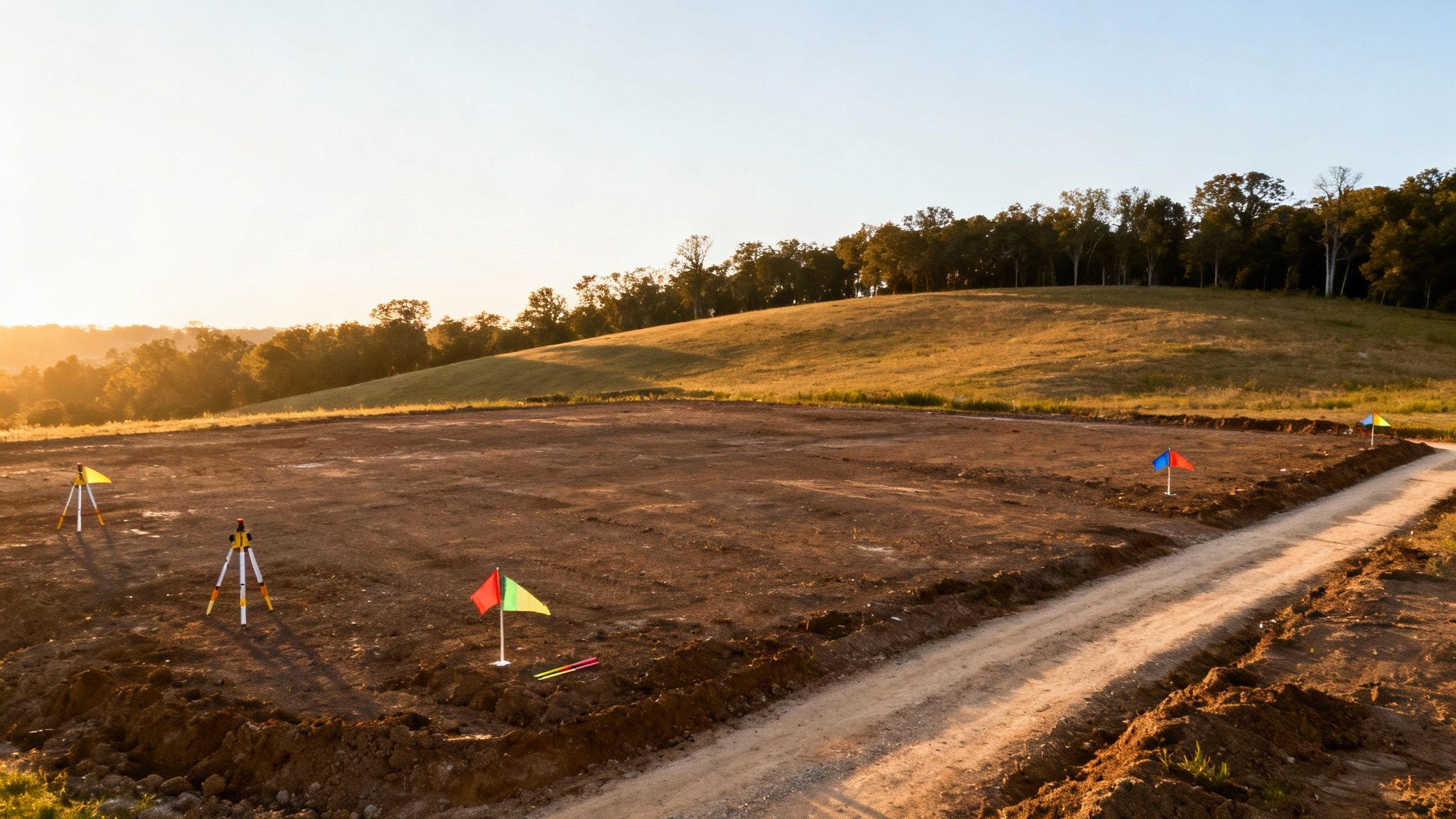
Evaluating Your Potential Building Site
Before you let yourself fall in love with a property, you need to put it through its paces with a thorough site evaluation. This isn't just a walk-around; it's a deep dive to make sure the land can actually support your dream home without wrecking your budget.
Here are the absolute non-negotiables to check off your list:
- Soil and Stability Tests: Get a geotechnical engineer involved. They'll tell you if the soil can hold a foundation or if you're looking at expensive fixes. You don't want to find out you're building on mush after you've already closed on the land.
- Drainage and Water Table: Walk the property and see where the water wants to go. That beautiful low-lying spot could become a swamp after a big storm, and a high water table might make a basement impossible—or impossibly expensive.
- Utility Access: Where are the water, sewer, electric, and gas lines? If they’re not at the property line, you could be on the hook for tens of thousands of dollars just to run them a few hundred feet. That’s a budget-killer.
- Property Orientation: Pay attention to how the sun moves across the lot. A south-facing home can soak up natural light and heat in the winter, which can seriously cut down your energy bills for years to come.
Understanding Zoning Laws and Property Lines
Once you've cleared the physical hurdles, it's time to tackle the red tape. Every city and county has a thick rulebook dictating what you can build, where you can build it, and how. Trying to ignore these rules is a fast track to legal headaches and expensive do-overs.
Zoning laws are the city's way of keeping things orderly—they make sure a factory doesn't suddenly appear next to your new backyard.
Think of zoning laws and setbacks as the invisible fences around your property. You might own the land, but these rules define the exact building envelope you must stay within. Violating them can halt your project indefinitely.
Here’s what you need to dig into:
- Property Line Setbacks: These rules tell you exactly how far your house has to be from the front, back, and side property lines.
- Easements: This is a legal right for someone else (often a utility company) to use a specific part of your land. You can't build on top of an easement.
- Height Restrictions: Your local codes will likely have a limit on how tall your house can be, which can affect plans for a two- or three-story home.
The Non-Negotiable Permitting Process
Getting all the right permits is often the biggest time-sink in the pre-construction phase. Everything from your foundation footings to the last light switch needs an official stamp of approval. The number of privately-owned housing units authorized by building permits recently hit a seasonally adjusted annual rate of 1,312,000, which gives you a sense of the volume officials are dealing with.
In some urban areas, just securing all the permits can easily add three to six months to your timeline. It's a good idea to explore additional housing permit statistics to get a feel for current trends and potential delays in your area.
Your builder will usually manage the paperwork, but you need to know what's happening behind the scenes. You’ll need separate permits for building, electrical, and plumbing, and maybe even one for a septic system if you’re not on a city sewer line. The city reviews your plans to make sure they meet local building codes for safety and quality. It might feel like a pain, but this step is your guarantee that the home is being built right, protecting both your family and your investment.
5. Assembling Your Dream Team of Architects and Builders
Let’s be honest: building a house is a monumental task, and you absolutely can't do it alone. The people you hire—specifically your architect and your builder—aren't just vendors. They become your partners and your expert guides, the hands and minds responsible for taking a dream on paper and making it stand up in the real world.
Choosing the right team is, without a doubt, the most critical decision you'll make during this whole journey.
Think of your architect as the creative visionary and your builder as the practical maestro. The architect is all about the what and the why—they’re the one crafting the blueprints that give every room its purpose and feel. The builder, on the other hand, is the master of how. They conduct the complex orchestra of subcontractors, materials, and schedules to bring those meticulously drawn plans to life.
Architect or a Design-Build Firm?
Right out of the gate, you have a big decision to make about how your design and construction teams will work together. There are two primary routes, each with its own rhythm.
The Traditional Architect-Then-Builder Path: Here, you hire an architect first. They work with you to create a complete set of construction plans. Once those blueprints are finished, you own them. You can then take these plans to several builders to get competitive, apples-to-apples bids. This approach often gives you more creative control and a very clear way to compare costs.
The Integrated Design-Build Firm: This is your all-in-one option. A design-build firm puts the architect and builder on the same team, under a single contract, from day one. This integration can dramatically streamline communication and often speeds up the timeline, since design tweaks and construction realities are sorted out internally from the start.
So, which is for you? If you crave deep involvement in a highly customized design and want to pit builders against each other for the best price, the traditional route is a great fit. If you value a smoother, more unified process with a single point of responsibility, a design-build firm is likely your best bet.
How to Find and Vet Your Professionals
Finding the right people takes some serious homework. You're not just hiring someone for a job; you're starting a long-term relationship, so you need to be sure about trust and expertise. Don’t just stop at a quick Google search.
Kick things off by asking for referrals. Talk to friends, family, or local real estate agents who’ve been through the new construction wringer. Once you have a shortlist, your goal is to interview at least three different candidates for each role (architect and builder).
When you sit down with them, go beyond the surface-level questions:
- How do you handle budget surprises or unexpected problems on site?
- What’s your system for keeping clients updated and answering questions?
- Can you show me exactly how your change order process works?
- How many other projects will you be running at the same time as mine?
A portfolio shows you what a builder can do. References tell you how they do it. Call their past clients and ask the tough questions: "Did they stick to the budget? Were they responsive? If you could do it again, what would you do differently?"
Of course, looking at their past work is essential, but checking their credentials is non-negotiable. Verify that they have both general liability insurance and workers’ compensation coverage. This is your financial shield against any accidents that might happen on your property. For a much deeper look at the vetting process, check out our guide on how to choose a general contractor.
To help you stay organized during your interviews, we've put together a simple comparison table. Use it to take notes and see how each potential builder stacks up.
Essential Criteria for Comparing Builders
Use this checklist to systematically evaluate and compare potential home builders on key professional attributes.
| Years of Experience | |||
| Local Orem/Utah Expertise | |||
| License & Insurance Verified | |||
| Portfolio Quality/Style Match | |||
| Client References (Feedback) | |||
| Communication Style | |||
| Subcontractor Relationships | |||
| Initial Bid Clarity/Detail | |||
| Personality/Gut Feeling |
By the time you fill this out, a front-runner will likely emerge, not just based on price, but on a complete picture of their professionalism and fit for your project.
Understanding the Contract and Warranties
After all that work, you’ve finally picked your builder. Now it’s time to get everything in writing. The construction contract is the legal backbone of your entire project, and it’s there to protect both you and the builder. It needs to be incredibly detailed, leaving zero room for interpretation.
A rock-solid contract should always include:
- A detailed scope of work, listing specific materials, finishes, and even brand names (e.g., "Kohler faucets," not just "faucets").
- A clear price structure, whether it’s a fixed price or a cost-plus arrangement.
- A payment schedule that ties payments to completed construction milestones.
- A formal change order process that defines how any changes to the plan are priced and approved.
- An estimated timeline with projected start and completion dates.
- Specific details on all warranties, which should cover workmanship and materials for at least one year.
Never, ever sign a contract that feels vague or leaves things open-ended. This document is your most important tool for ensuring your home is built exactly the way you envisioned it.
Designing a Home for Today and Tomorrow
This is where the magic happens—where your ideas start looking like a real home. But great design is about so much more than just picking pretty finishes. It's about creating a space that works for your life right now and holds its value for decades to come. Think of it as building a legacy, not just a house.
The design process is like storyboarding your family's life. Your floor plan is the stage, setting the scene for everything from chaotic weekday mornings to quiet Sunday afternoons. A smart layout eliminates wasted hallways, creates a natural flow between rooms, and cleverly carves out storage to keep life from getting too cluttered.
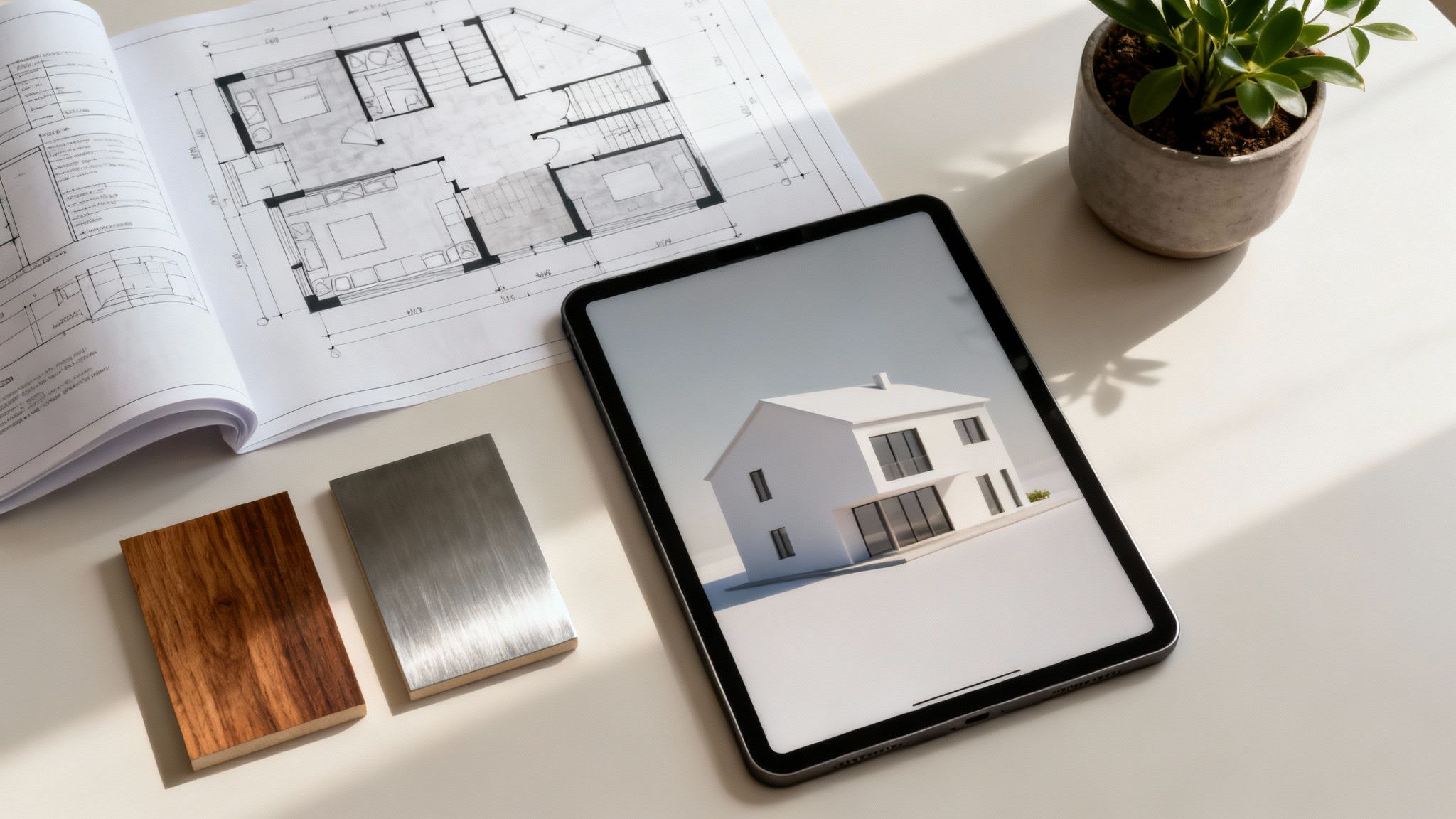
Beyond the Blueprint: Functional Choices
Once the layout feels right, it's time to think about the home's outer shell—its armor against the elements. Your choices in siding, roofing, and windows are a balancing act between initial cost, durability, and how much maintenance you're willing to do down the road.
- Siding: Vinyl is a budget-friendly and low-maintenance option. Fiber cement, on the other hand, costs more but offers incredible durability and fire resistance. Natural wood looks beautiful and classic but be prepared for regular staining or painting.
- Roofing: Asphalt shingles are the go-to for a reason—they're affordable and easy to install. But a metal roof, while a bigger investment upfront, can easily last 50 years or more with very little upkeep.
- Windows: Don't skimp here. High-quality, energy-efficient windows are one of the smartest investments you can make. Double- or even triple-pane windows with low-E coatings will noticeably cut your heating and cooling bills, eventually paying for themselves.
A thoughtfully designed home is ready for the future. By including universal design features—things like wider doorways, no-step entries, and a primary suite on the main floor—you ensure the home remains comfortable and accessible for anyone, at any age.
Planning for Long-Term Value and Sustainability
Building a new home is the perfect opportunity to plan for the future. Thinking ahead now will boost your property's value and slash your running costs for years. This means wiring for smart home tech, even if you don't install it all right away. Run extra ethernet cables and install smart thermostats and lighting from the get-go.
Energy efficiency is key. It's not just about being green; it's about being smart with your money. Excellent insulation, a high-efficiency HVAC system, and good window placement work together to create a home that’s cheaper to run and more comfortable year-round. A big part of this is choosing the right eco-friendly building materials from the start. For more ideas on smart upgrades, our guide on https://buildnp.com/blogs/how-to-increase-property-value/ has some great strategies.
It’s also crucial to understand where the market is headed. With the global residential construction market projected to hit $4.25 trillion and grow at nearly 5% annually through 2027, demand is strong. More importantly, the demand for green, sustainable homes is exploding. By aligning your build with these trends, you aren't just creating a place to live—you're making a wise financial investment.
Your Final Pre-Construction Checklist
You’ve made it. The design is perfect, your team is in place, and the financing is sorted. You're right on the edge of the most exciting part—watching your home come to life. But before the first shovel breaks ground, it's time for one final, deliberate check to make sure nothing has been missed. This last review is often what separates a smooth-running project from one that gets bogged down by completely avoidable headaches.
Think of it like a pilot's pre-flight checklist. They wouldn't even consider taking off without confirming every system is ready, and neither should you. This is your chance to dot the i's, cross the t's, verify every document, and make sure everyone is on the same page for the journey ahead.
Document and Permit Verification
First things first, let's get all the paperwork in order. The success of your build rests on a solid foundation of official documents. One missing signature or an unfiled permit can bring the entire project to a screeching halt for weeks, so it's absolutely critical to confirm you have everything now.
Make sure you have a complete file—digital or physical—with all of the following:
- Signed Contracts: This means your main agreement with the general contractor and any contracts you have with your architect, designer, or other key players.
- Finalized Blueprints: Double-check that you have the latest, officially approved version of all architectural and engineering plans. No outdated drafts allowed.
- Proof of Insurance: You need to have copies of your builder's general liability and workers' compensation policies, plus your own builder's risk insurance.
- All Approved Permits: Get your hands on every single required permit—building, electrical, plumbing, you name it—and make sure it has the official stamp of approval from the city.
Setting Up Communication and Expectations
Consistent, clear communication is the absolute lifeblood of any construction project. This is the moment to decide exactly how you, your builder, and the rest of the team are going to stay connected. Vague plans lead to misunderstandings, so setting a clear routine now is the best way to keep everyone aligned.
Don’t just assume good communication will happen on its own. Be proactive. Set up a standing weekly check-in call or an on-site meeting with your builder. Having that dedicated time on the calendar ensures your questions get answered, decisions get made, and you always know exactly what's going on.
During this kick-off meeting, you’ll want to establish a few ground rules. Talk about how change orders will be documented and approved, clarify who your main point of contact is for daily questions, and agree on how you'll be notified of any potential delays. Getting this figured out now saves a ton of stress down the road.
Anticipating and Planning for Delays
Finally, a bit of realism is essential. Even with the most meticulous planning, things can go sideways. A supply chain hiccup might delay your windows, or a solid week of rain could throw off the foundation schedule. In fact, a recent survey revealed that over 75% of construction projects run into delays, so it's far more likely to happen than not.
The key is to plan for disruptions instead of being surprised by them. Chat with your builder about potential bottlenecks. Which materials have the longest lead times? Is there a backup plan if a critical subcontractor gets sick? Building this kind of flexibility into your timeline and your mindset from the very beginning turns a potential crisis into a manageable bump in the road.
Once you’ve methodically ticked off these final items, you can move forward with confidence, knowing you’ve truly laid the groundwork for a successful build.
Common Questions About Building a New Home
As you get closer to breaking ground, a handful of questions will inevitably start circling in your mind. This is a good thing. Thinking through these common concerns ahead of time is a huge part of being prepared, giving you the clarity and confidence you need as the project kicks off.
Let's walk through some of the questions we hear most often.
How Long Does It Really Take to Build a House?
You’ll often hear an average of 7 to 12 months for a new single-family home, from the first day of construction to move-in day. But that number can be seriously misleading because it completely ignores the crucial pre-construction phase.
All the essential prep work—finalizing designs, securing your financing, and navigating the permit process—can easily add another 2 to 6 months to your total timeline. And that's before factoring in things that can slow a project down, like complex custom designs, a bout of bad weather, or a backed-up local inspections office. A large, fully custom home? It's not uncommon for those to take well over a year to complete.
What Is a Contingency Fund and How Much Do I Need?
Think of a contingency fund as your project's financial safety net. It’s a dedicated chunk of your budget set aside specifically for the unexpected, and it’s not optional—it’s an absolute must-have for a healthy construction budget. This is the money that covers you when the excavator hits solid rock, material prices suddenly jump, or you decide to make a last-minute design change.
It's basically project insurance. You really hope you never have to use it, but when something inevitably goes sideways, you'll be incredibly glad it’s there. Without a contingency, a small hiccup can quickly spiral into a major financial headache.
Most builders and financial experts recommend setting aside 10% to 20% of your total construction cost. So, for a $500,000 project, that means having an extra $50,000 to $100,000 ready to go.
Should I Choose a Custom Home or a Production Home?
This decision really boils down to balancing your budget, your timeline, and how much you want to personalize your space. Knowing the difference is key.
- Production (Tract) Home: These are built by a developer who works from a limited menu of pre-designed floor plans, usually within a specific community. This path is almost always faster and more affordable, but your choices are typically restricted to finishes like paint colors, countertops, and flooring.
- Custom Home: This is a truly one-of-a-kind house, designed from scratch just for you, on a lot that you own. It gives you total freedom to bring your vision to life, but it comes with a higher price tag and a much longer, more hands-on process.
There's no wrong answer here; it all depends on what matters most to you. If speed and a predictable budget are top of your list, a production home is a fantastic choice. If you're after a home that's uniquely yours, a custom build is the only way to get there.
How Involved Should I Be During Construction?
The sweet spot is to be engaged without getting into micromanagement. Your main job is to make decisions on things like fixtures, paint, and tile when your builder needs them and to stay up-to-date on the overall progress. You hired a team of professionals for a reason—trust them to manage the day-to-day work.
A great way to do this is to schedule weekly site visits and regular check-in meetings with your builder. This creates a rhythm for communication, giving you a dedicated time to see the progress, ask questions, and catch any potential issues before they become real problems. It’s a proactive approach that keeps your project aligned with your vision while respecting your builder’s expertise and workflow.
Are you ready to turn your vision for a custom home into a reality? The team at Northpoint Construction has the expertise to guide you through every step of the process, from initial design to final walkthrough. Let's build your dream home together.