
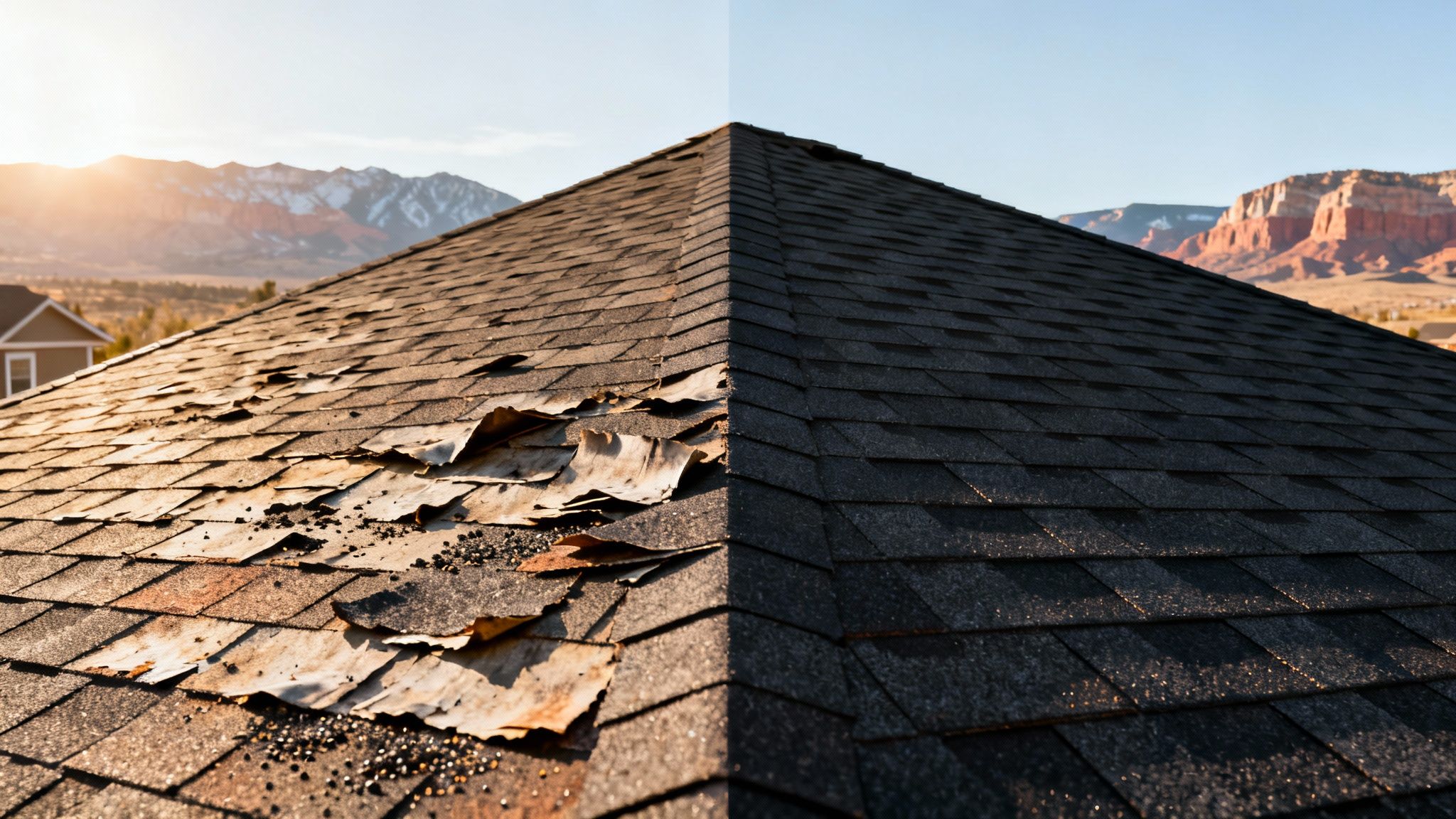
When to Replace Roof Shingles in Utah
Most roof shingles will give you a good 15 to 30 years of service, but that number really depends on the material and your local weather. When you start seeing widespread curling, cracking, a ton of tiny granules in your gutters, or your roof is just getting old, it's time to start thinking about a full replacement.
How Long Do Roof Shingles Really Last?
Before you can spot a roof that’s on its last legs, you need to know what you’re looking at in the first place. Think of your roof's lifespan like the mileage rating on a new set of tires—it's a solid starting point, but how you drive and the roads you're on make all the difference. A shingle warranty gives you a baseline, but it's no match for Utah's intense sun and heavy snowfalls.
Knowing the expected service life for your specific shingle type is the first step. It basically sets the clock, letting you know when you need to start paying closer attention and scheduling regular inspections.
Understanding Shingle Lifespan Ratings
Here's a quick guide to what you can realistically expect from the most common shingle materials you'll find on homes in our area.
Average Lifespan of Common Roof Shingle Types
| 3-Tab Asphalt | 15-20 years | Budget-conscious projects and starter homes. |
| Architectural Asphalt | 25-30 years | Homeowners wanting a balance of durability, style, and value. |
| Metal | 40-70 years | Maximum longevity and resistance to extreme weather. |
| Wood Shake | 20-40 years | Achieving a natural, rustic aesthetic. |
| Composite/Synthetic | 40-50+ years | Mimicking high-end looks with superior durability and low maintenance. |
As you can see, the difference is significant. A standard 3-tab shingle is your basic, entry-level option, while architectural shingles are a big step up in both looks and durability. This is backed up by industry data; you can dig into the details in this market analysis on asphalt shingle lifecycles, but the takeaway is clear: you get what you pay for.
Factors That Influence Real-World Durability
A shingle's advertised lifespan is based on perfect lab conditions. Out here in the real world, especially in a place with a climate like Utah's, several things can cut that timeline short.
Think of your roof's lifespan as a countdown timer. The manufacturer sets the initial time, but factors like intense sun, heavy snow, and poor ventilation can make that clock tick a whole lot faster.
Here are the big ones to watch out for:
- Sun Exposure: All that glorious Utah sunshine isn't so great for your roof. Constant, direct sun, especially at our higher altitudes, bakes the essential oils right out of asphalt shingles. This makes them brittle and ready to crack.
- Attic Ventilation: This is a huge, often overlooked, factor. A poorly ventilated attic traps a massive amount of heat, basically slow-cooking your shingles from the inside out. It accelerates aging and granule loss like nothing else.
- Installation Quality: A great shingle installed poorly is a failed roof waiting to happen. Proper installation is non-negotiable. If the nailing pattern is off or the underlayment is wrong, even the best materials won't last.
- Maintenance (or Lack Thereof): Small problems become big problems when you ignore them. Letting leaves and debris pile up in valleys can trap moisture, and failing to fix a few damaged shingles can let water get into the underlying structure, compromising the entire system.
By understanding both the type of shingle you have and the unique pressures your roof is under, you can get a much more accurate idea of when it's time for a replacement. A little proactive knowledge is your best defense against a sudden, expensive roofing emergency.
7 Visual Signs Your Shingles Are Failing
Beyond your roof's age, the most reliable warnings of trouble are the ones you can see for yourself. Your shingles give off clear, tangible clues when they're at the end of the line. Learning to spot these signs is the best skill a homeowner can have to stop a small problem from snowballing into a catastrophic, expensive failure.
Think of this as your field guide for a DIY roof health check. These are the seven most common and critical signs telling you it’s time to start thinking about a roof replacement.
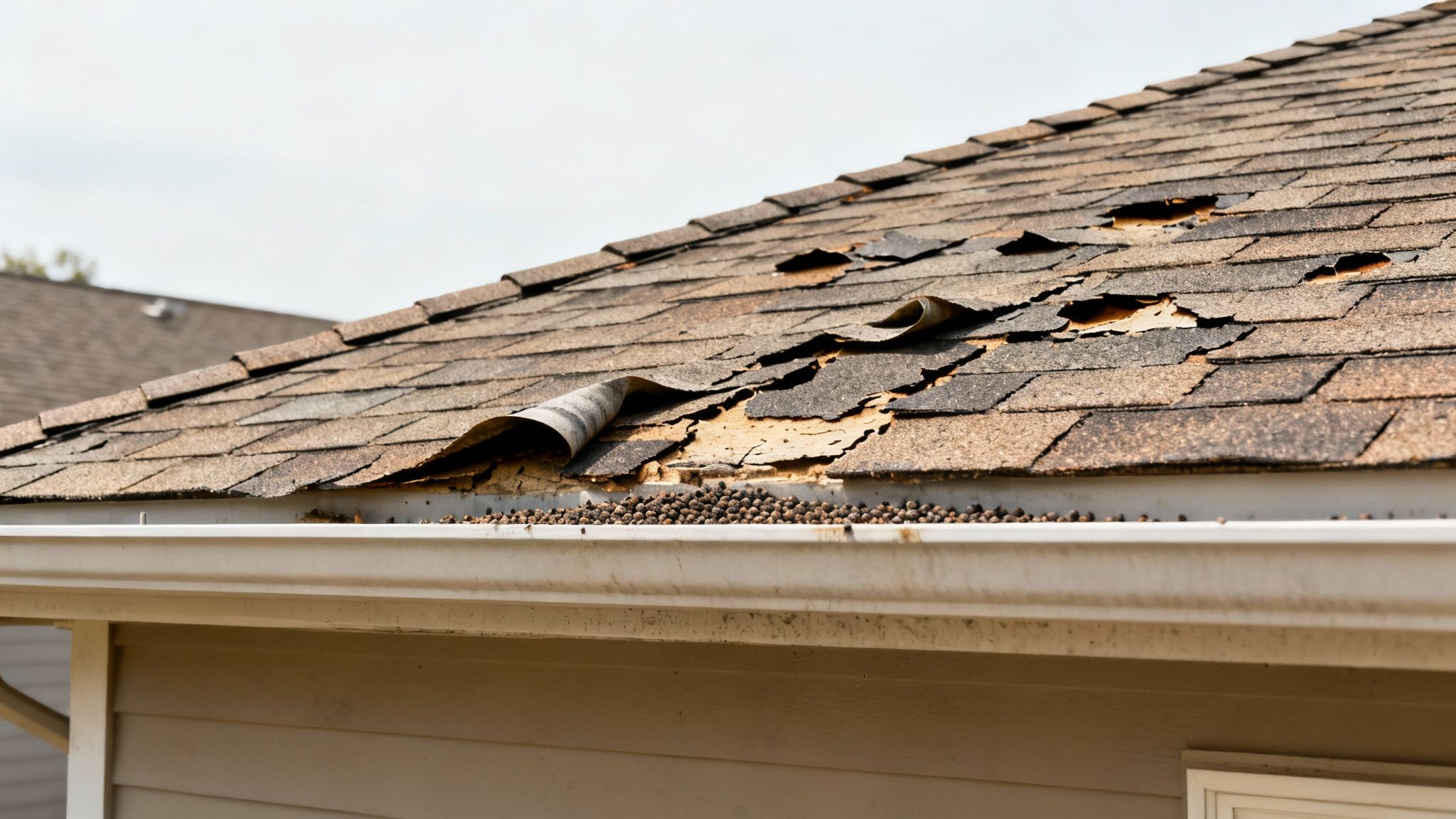
1. Curling or Clawing Shingles
One of the first things you'll notice on an aging roof is the way the shingles start to deform. You might see the edges turning upward (curling) or the middles starting to pop up (clawing). This isn't just a cosmetic quirk; it’s a sign of structural breakdown.
When a shingle curls, it’s a telltale sign that it has lost its moisture and is becoming brittle. More importantly, it lifts the shingle away from the roof, breaking that critical watertight seal. Once that seal is gone, wind and rain have an open invitation to get underneath, leading to torn-off shingles and leaks. It's your roof's way of waving a white flag.
2. Cracked and Brittle Shingles
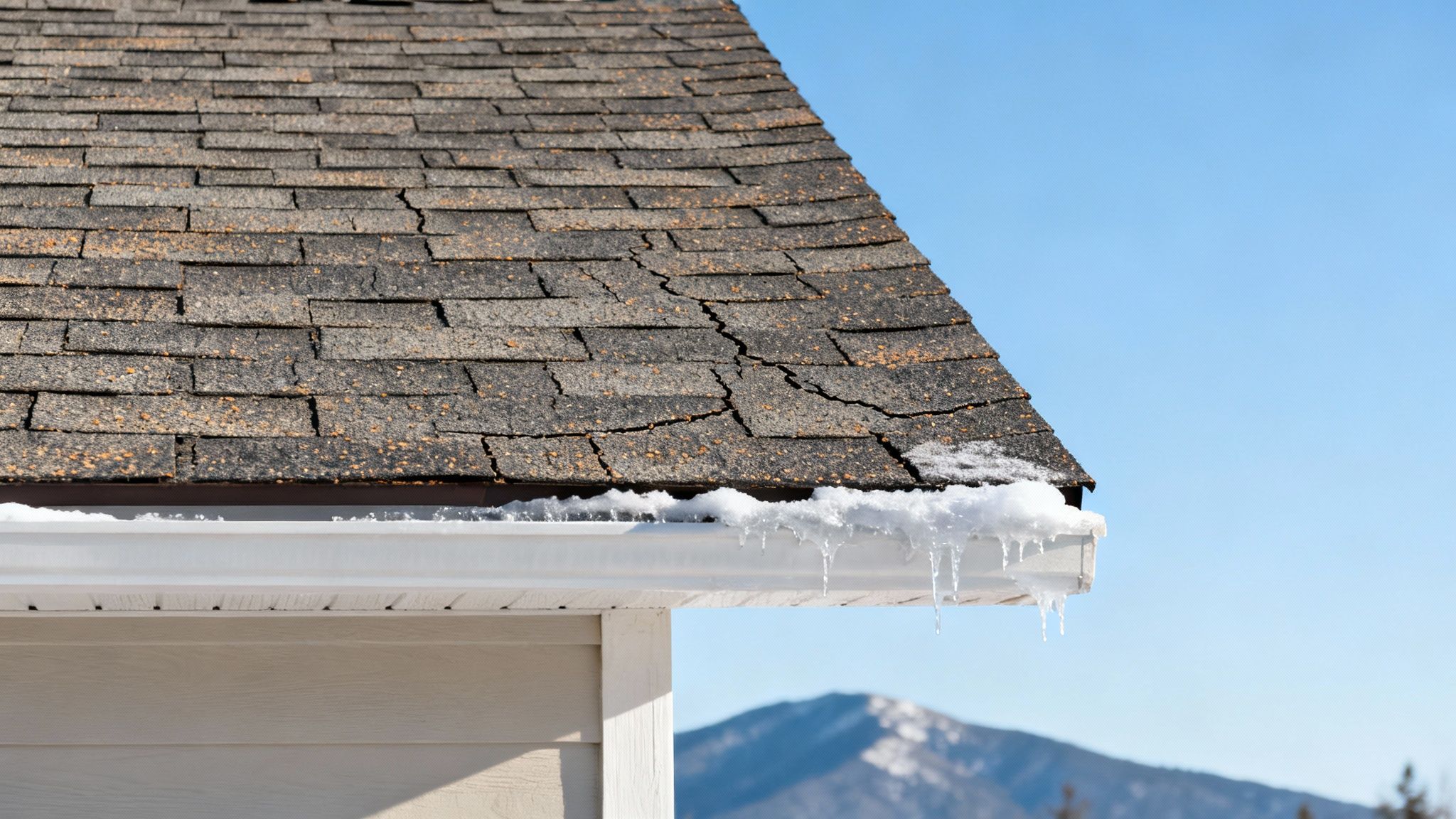
After years of battling Utah's intense sun and punishing freeze-thaw cycles, asphalt shingles lose their flexibility. They get stiff and brittle, sort of like an old rubber band you find in a drawer. This makes them incredibly vulnerable to cracking from wind or hail.
A few random cracks might not be a huge deal, but if you see widespread cracking across large areas of your roof, that’s a major red flag. Every single crack is a direct path for water to get to the underlayment and decking below. Ignoring this is a roll of the dice; a single heavy storm can exploit those weak spots and cause serious damage inside your home. In fact, these types of issues are some of the most common home inspection problems that pop up unexpectedly.
3. Widespread Granule Loss
Ever cleaned out your gutters and found them full of coarse, sandy grit? Those are the protective granules that have worn off your asphalt shingles. Their job is crucial, and seeing them in your gutters is one of the clearest signs that your roof is aging and becoming vulnerable.
Think of shingle granules as sunscreen for your roof. They are specifically designed to shield the underlying asphalt layer from the damaging effects of UV radiation. When the granules wear away, the asphalt is left exposed, causing it to dry out, become brittle, and deteriorate rapidly.
A little bit of granule loss is totally normal, especially right after a new roof is installed. But if you're seeing big patches on your roof that look dark or "bald," or if your gutters are constantly clogged with granules, it means your roof's main line of defense is gone.
4. Missing or Bald Shingles
This one is pretty hard to miss. If you can look up at your roof and see spots where shingles are completely gone, you've got a serious problem on your hands. These bald spots leave the much more sensitive underlayment and roof deck directly exposed to everything—sun, rain, snow, and ice.
So, what causes this?
- High Winds: Strong gusts can get under older, poorly sealed shingles and rip them right off.
- Failed Sealant: The tar strips that glue shingles together get weak over time, making them easy targets for wind.
- Physical Damage: A falling tree branch or other debris can easily knock old shingles loose.
While you might be able to repair one or two missing shingles, seeing multiple bald spots often points to a system-wide failure. At that point, just patching it is like putting a band-aid on a broken arm.
5. Dark Streaks or Moss Growth
Those dark streaks you see running down a roof might just look like dirt, but they're usually a type of blue-green algae called Gloeocapsa magma. It actually feeds on the limestone filler in many types of asphalt shingles. While it’s mostly a cosmetic issue, it can suggest that your shingles are holding onto moisture, which is never a good thing.
The real troublemaker is moss. Moss, especially on the north-facing slopes of your roof that get less sun, can be destructive. It acts like a sponge, holding water right up against the shingle surface, and its roots can lift the shingle edges, creating a perfect entry point for wind and water.
6. Sagging or Spongy Roof Deck
Stand back from your house and take a good look at the ridgeline. Is it perfectly straight, or does it look like it's dipping or sagging in the middle? A sagging roof line is a five-alarm fire. It’s a sign of a deep structural problem, almost certainly meaning the underlying wood decking is rotting and has lost its strength.
If you were to walk on it (which we strongly advise against!), a failing deck would feel soft or spongy. This is a critical warning sign that moisture has been trapped in the roofing system for a long time, likely from an undetected leak. A sagging roof needs immediate professional attention because the problem has gone way beyond just the shingles.
7. Water Damage in the Attic
Sometimes, the most undeniable proof of a failing roof is found inside your house. On a bright, sunny day, head up to your attic and turn off the lights. Can you see any slivers of daylight poking through the roof boards? If light can get in, you can bet water can too.
While you're up there, check the underside of the roof deck and the insulation for:
- Water Stains: Look for dark, streaky, or circular stains on the wood.
- Damp or Wet Spots: Feel for any moisture, especially if it has rained recently.
- Mold or Mildew: A musty smell or visible mold is a dead giveaway of a long-term moisture issue.
Finding water damage in the attic is the final confirmation. It proves that your roof's defenses have been breached and that the problems you see on the outside are actively damaging the structure of your home.
How Utah's Climate Wears Down Your Roof
That lifespan number on your shingle warranty? It’s a best-case scenario. Here in Utah, our roofs face a unique gauntlet of extreme weather that can shave years off that estimate. A roof that might last 30 years in a mild climate often won't stand a chance against our intense sun, heavy snow, and wild temperature swings.
Understanding how our local climate attacks your roof is crucial. It’s the difference between a proactive replacement and an emergency call when water starts dripping into your living room. From the high-altitude sun beating down in July to the heavy snow piling up in January, every season is a stress test.
The Intense Summer Sun
We love our sunny Utah days, but your asphalt shingles definitely don’t. The constant, high-altitude UV radiation literally bakes the essential oils right out of them. These oils are what keep the shingles flexible and waterproof.
Once those oils are gone, the shingles become brittle and weak. This is a process called thermal shock. Think of it like an old rubber band left out in the sun—instead of stretching, it just cracks and snaps under pressure. That’s exactly what happens to your roof, leading to widespread cracking long before the warranty is up.
The Weight and Threat of Winter Snow
Our epic winters bring a double-threat to your roof. First, there’s the immense weight. A cubic foot of fresh snow can weigh up to 20 pounds, and that number climbs as it gets wet and compacted. All that weight puts a constant strain on your entire roof structure, from the shingles all the way down to the rafters.
The bigger problem, though, is the formation of ice dams. This happens when heat escaping from your attic melts snow on the roof. The water trickles down to the cold eaves and refreezes, creating a literal dam of ice along the edge of your roof.
An ice dam essentially plugs your roof's drainage system. As more snow melts, the water has nowhere to go but backward—underneath your shingles. This trapped moisture rots the decking, ruins insulation, and can cause some serious water damage inside your home.
The Relentless Freeze-Thaw Cycle
If there’s one thing that truly destroys a Utah roof, it’s our dramatic temperature swings, especially in the spring and fall. A warm, sunny afternoon can melt snow and ice, only for it to refreeze as soon as the sun goes down. This constant freeze-thaw cycle is brutal on shingles.
Here’s the breakdown of how it works:
- Water Penetrates: Meltwater seeps into tiny, almost invisible cracks in your shingles.
- Ice Expands: As temperatures drop overnight, that water freezes and expands by about 9%, forcing the small cracks to become slightly larger.
- The Cycle Repeats: The next day, more water gets into the newly widened crack, and the process repeats itself, night after night.
It’s like a tiny, powerful jackhammer constantly working to pry your shingles apart. This cycle is a primary cause of granule loss and can create major cracks in a surprisingly short amount of time. It’s why paying attention to your roof here isn't just a good idea—it’s a necessity. Our weather simply doesn't give it a break.
Your Step-By-Step Roof Inspection Checklist
Knowing what a failing roof looks like is one thing, but actually getting out there and checking for yourself is what really counts. The good news? You don’t need to haul out a ladder and climb up there to get a solid idea of your roof’s health.
You can do a surprisingly thorough inspection with both feet safely on the ground. Think of this as a regular health check-up for your home's first line of defense. I recommend doing this twice a year, usually in the spring and fall, to catch small issues before they spiral into expensive, headache-inducing problems. It’s all about peace of mind.
Start With a Ground-Level Walkaround
First things first, get the big picture. Take a slow walk around the entire perimeter of your house. Step back far enough that you can really see the whole roofline from a few different angles. You’re hunting for the big, obvious problems.
Here’s what to keep an eye out for:
- A Sagging Roofline: Look at the main ridge of your roof. Does it look straight and true, or is there a noticeable dip or bow in the middle? A sagging roof is a serious structural red flag that could point to rotted decking underneath.
- Obvious Damage: Scan for any glaring issues. Are there big patches of missing shingles? Any major discoloration? What about damage from a fallen tree limb you might have forgotten about?
- Chimney and Vent Issues: Pay close attention to anything that pokes through the roof—your chimney, plumbing vents, or skylights. Look for cracked sealant or loose flashing (the metal strips that seal these joints).
This quick walkaround sets the stage. If you spot any of these large-scale issues, it’s a clear signal to dig deeper or maybe even call a pro right away. A great way to build this into a habit is to tack it onto a regular maintenance routine, like a seasonal home maintenance checklist.
Get a Closer Look with Binoculars
Okay, now it’s time to zoom in without the risk. Grab a good pair of binoculars—they’re an incredibly useful tool for any homeowner. Find a few different spots around your yard where you can stand comfortably and methodically scan your roof, section by section.
You're looking for the more subtle signs of aging. Focus on things like shingles whose edges are starting to curl up or crack. Look for "bald" spots where the protective granules have worn away, leaving dark patches exposed. Pay special attention to the valleys (where two roof planes meet), as this is where water and debris love to collect, causing shingles to wear out much faster.
Using binoculars turns a simple glance into a real analysis. You can spot the kind of detail a professional would, like hairline cracks and granule loss, that you’d never see from the ground otherwise.
Check Your Gutters for Clues
Your gutters are telling a story about your roof. They're a treasure trove of clues. After a good rain is a great time to look, but you can check them anytime. What you're looking for is a pile-up of shingle granules.
These look like coarse, black sand. Now, it's normal for a brand-new roof to shed some of these granules, but if you're consistently finding handfuls of them in your gutters, it’s a bad sign. It means your shingles are losing their protective layer against the sun, becoming brittle and weak.
Conduct an Interior Attic Inspection
The final piece of the puzzle is to check things from the inside. Your attic will give you the most direct, undeniable evidence of a leak. Pick a bright, sunny day, head up into the attic, and turn off the lights. Give your eyes a minute to adjust.
This is your mission:
Beams of Light: Look up. Do you see any slivers or pinholes of daylight coming through the roof deck? Even the tiniest speck of light is an open door for water.
Water Stains: Grab a flashlight and inspect the underside of the wood sheathing. You’re looking for dark stains, streaks, or water rings that are tell-tale signs of past or current leaks.
Moisture and Mold: Check the insulation for any damp spots or the beginnings of mold and mildew. If you get a whiff of a musty smell, that’s an immediate red flag for a moisture problem.
If you find any of these things in your attic, the problem is no longer "potential"—it's active. It means water is getting in, and your roof needs attention, stat.
Deciding Between a Roof Repair and a Full Replacement
You’ve given your roof a once-over and spotted some trouble. Now for the million-dollar question every homeowner asks at some point: can you get away with a simple repair, or is it time for a full-on replacement? The right answer usually boils down to two things: the age of your roof and how widespread the damage really is.
Think about it like this: is it better to patch a tire or buy a whole new set? A single nail in a brand-new tire? Just patch it. But if all four are bald, cracked, and losing air, patching one is a waste of time and money—not to mention a safety risk. Your roof works on the same principle.
When a Roof Repair Makes Sense
Sometimes, a targeted repair is all you need. It’s the smart, cost-effective move when the damage is contained and the rest of your roof is still holding up strong.
A repair is probably your best bet if you’re seeing:
- Minor, Localized Damage: A few shingles got ripped off in a storm, but their neighbors are still sealed down tight.
- A Younger Roof: Your roof is still in its prime, maybe less than 10-15 years old, and nowhere near the end of its expected lifespan.
- Isolated Flashing Problems: The issue is confined to the metal flashing around a chimney or vent, while the main field of shingles is perfectly fine.
In situations like these, a pro can patch things up and restore your roof's integrity without the massive cost of a full replacement. You fix the immediate problem and get to squeeze every last bit of value out of your existing shingles. For a closer look at this choice, check out our guide on roof repair vs replacement.
When a Full Roof Replacement is the Smarter Investment
On the flip side, trying to patch up an old, failing roof is just throwing good money after bad. When the problems are systemic, it’s a clear sign that the entire roofing system is on its last legs, and a full replacement is the only logical path forward.
It’s time to start thinking about a replacement under these conditions:
- Widespread or Systemic Damage: You’re finding curling, cracking, or bald spots from granule loss all over different sections of the roof.
- Your Roof's Age: The roof is closing in on or has already passed its 20-year anniversary. Shingles get brittle with age and just can't do their job anymore.
- Multiple Leaks: If water is getting in through more than one spot, you’re looking at widespread material failure, not just a one-off fluke.
This isn’t just opinion, either. Performance studies back it up. The Insurance Institute for Business & Home Safety (IBHS) has found that a roof’s risk of major failure skyrockets as it gets older. Their research shows that most roof replacements start happening after about 15 years, and older roofs take a much bigger beating in even moderate storms.
This flowchart can help you visualize the thought process, taking you from a quick look on the ground all the way up into the attic.
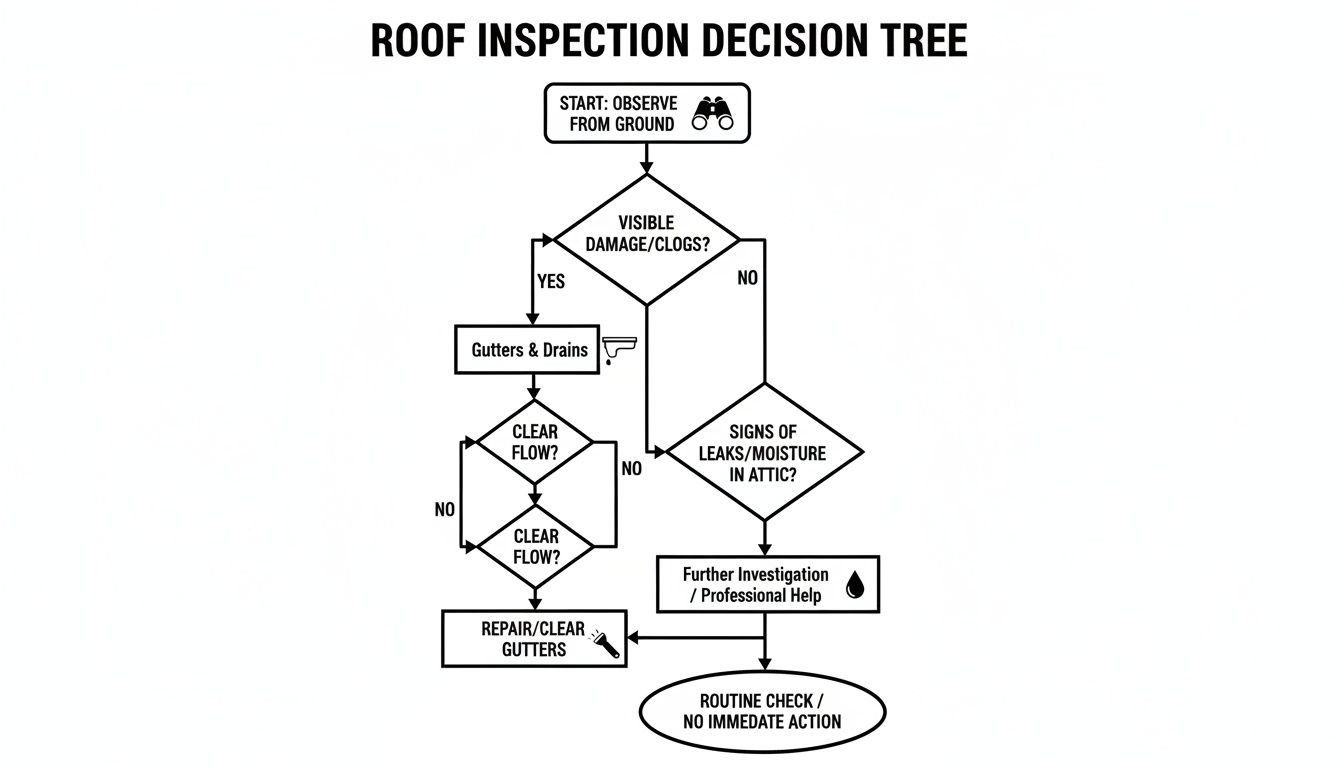
As the chart shows, a small, isolated issue might point to a repair. But if you start finding systemic problems at any stage—whether you're looking from the driveway, checking the gutters, or poking around in the attic—all signs point to a replacement.
What to Expect During Your Roof Replacement
Thinking about a full roof replacement can feel like a huge deal, but knowing what's involved can take a lot of the stress out of the equation. A professional job is a surprisingly well-oiled machine, designed from start to finish to protect your home and give you a roof that will last for years to come.
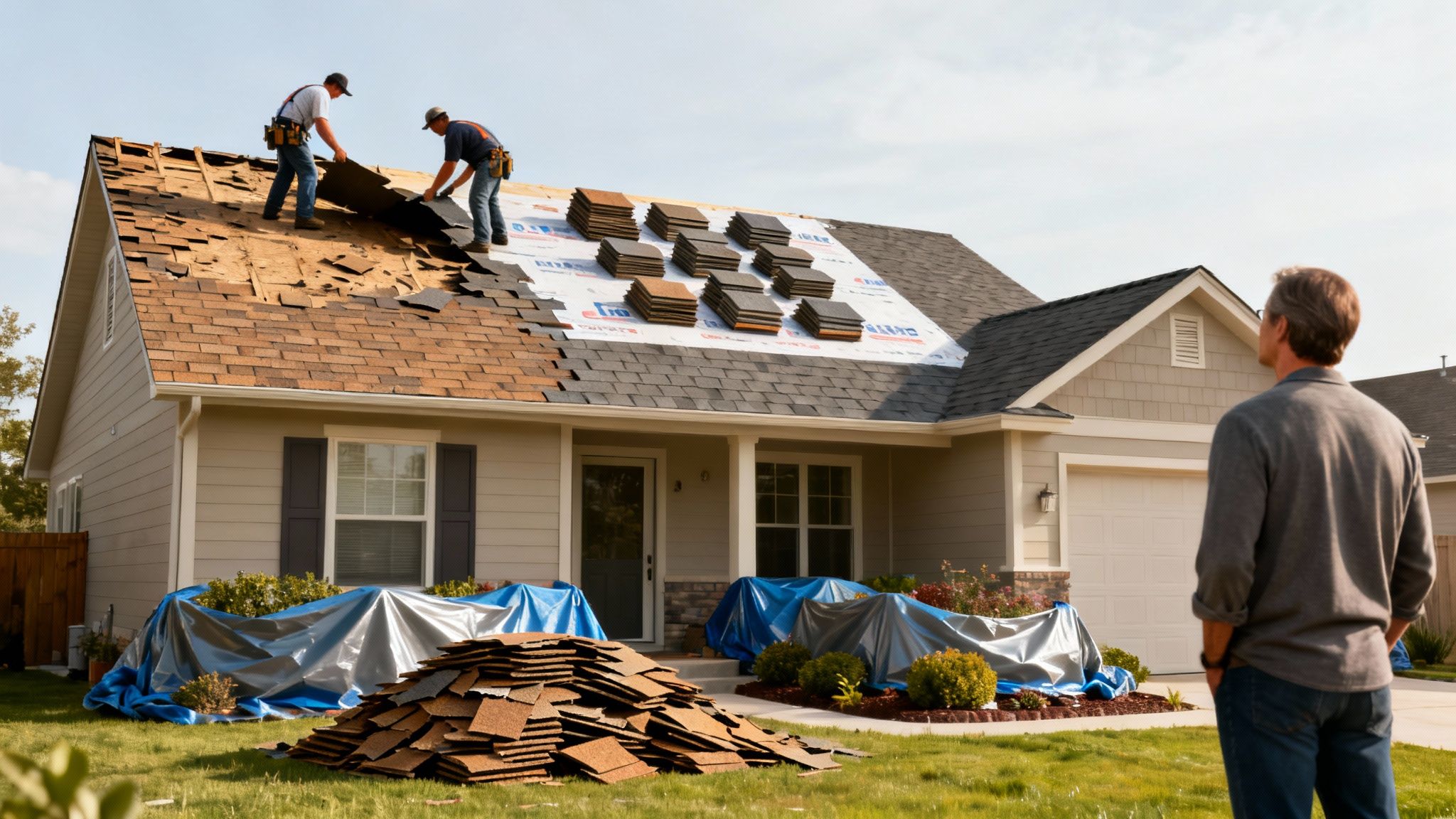
It always starts with a detailed inspection and a clear, upfront quote. Once you give the green light, the first thing the crew does on-site is prep your property. They’ll carefully cover your landscaping, siding, and windows with tarps to make sure everything is shielded from falling debris.
From Tear-Off to Final Cleanup
The real work kicks off with the tear-off. This is where the crew strips away all the old, worn-out shingles, exposing the wood decking underneath. You can't skip this step—it’s the only way to get a good look at the decking and fix any rot or damage before laying down the new materials.
With the old roof gone, the team installs the underlayment, which acts as a critical water barrier. Then comes the careful installation of your brand-new shingles. The final touch? A top-to-bottom cleanup. Good crews use magnetic rollers to sweep for stray nails, leaving your yard looking just as good as it did when they started.
A professional roofing project is defined by more than just the quality of the shingles; it's about the comprehensive care taken to protect your property from start to finish. This includes site safety, property protection, and an immaculate final cleanup.
Of course, figuring out the financial side of things, like dealing with insurance, is a big piece of the puzzle. If you need help navigating that process, this Property Insurance Claims for Homeowners Guide is a fantastic resource for understanding the steps involved.
Your Top Roof Replacement Questions, Answered
Thinking about replacing your roof often brings up a handful of practical, real-world questions. I get it. This is a big investment for your home. To help you feel more confident about the process, here are some straightforward answers to the questions I hear most often from homeowners here in Utah.
How Long Does a Roof Replacement Take?
For most standard-sized homes around here, a full asphalt shingle roof replacement is usually a one to three-day job. That can change, of course. A steeper, more complex roof, bad weather, or having to tear off multiple layers of old shingles can add some time.
Any professional crew worth their salt will give you a clear, honest timeline before they start, so you know exactly how long your home life might be disrupted.
Can I Just Repair One Section of My Roof?
Sometimes, yes. A small, targeted repair makes perfect sense if you've got isolated damage—say, from a fallen branch—and the rest of your roof is still in great shape. The one hiccup is that matching new shingles to your existing ones can be tricky. Years of sun exposure fade shingles, so a new patch can stick out like a sore thumb.
But here's the thing: if the damage is all over the place or your roof is already getting up there in years, a full replacement is almost always the smarter, more cost-effective move. Patching an old roof is often just a temporary fix that kicks the can down the road, sometimes leading to bigger issues later.
What Is the Best Time of Year for a Roof Replacement in Utah?
The sweet spot for roofing in Utah is usually from late spring through early fall. The warm, dry weather is ideal. It allows the sealant strips on the new shingles to properly activate and create that critical watertight seal before winter hits.
That said, a good, experienced crew can work outside that perfect window. We're used to Utah's unpredictable climate and will always find a time that works for your schedule while making sure the job is done right.
How Much Does a New Shingle Roof Cost?
The price tag on a new roof can vary quite a bit, and it really comes down to a few key things: the size and pitch of your roof, the specific shingle you pick (a basic 3-tab shingle costs less than a high-end architectural one), and the complexity of the job.
Instead of guessing, a reputable roofer will always start with a free, thorough inspection. After they've been up on your roof, you should get a detailed, line-by-line estimate. That way, there are no hidden fees or surprises, and you know exactly what you're paying for.
When it comes to protecting your home, you need a partner you can trust. At Northpoint Construction, we specialize in high-quality roof replacements that stand the test of time. Get your free, no-obligation inspection today!